Cloud Solutions Architect | CDF Ambassador | Author
I share conceptual and tangible knowledge on #DevOps, #MLOps, and sometimes on #Science, #Technology.
Indestructible Mold: Because quartzite is so tough and resistant to chemical weathering, these ancient ripple marks survived the intense pressures of Himalayan tectonic uplift without being crushed or eroded away.
Literally walking on ancient history at Jogal Khadd, Kangra. 🪨 I believe, these sandstone ripples were carved by the powerful currents of a very early massive Himalayan river millions of years ago when the mountains were still rising. #HimachalPradesh#Geology
Deep Silica Cementation: Over millions of years, as thousands of feet of sediment buried the layer, mineral-rich groundwater flooded the sand gaps, depositing pure silica (quartz) that fused all the sand grains into a single, rock-hard unit.
Want to become a better programmer? Start by spotting the habits that create messy code, failed reviews, endless bugs, and frustrated teammates. Learn what not to do—and why avoiding these mistakes matters. #Programming#SoftwareDevelopment#Coding
🔗 https://t.co/CgTkg9WZ14
SonarQube Advanced Security is now available on the SonarQube Cloud Team plan 🔍
Dependency risk analysis, SCA, and malware detection, all built into the code quality gates and IDE you already use — no separate security tool needed.
Details: https://t.co/0PNxwVtXuh
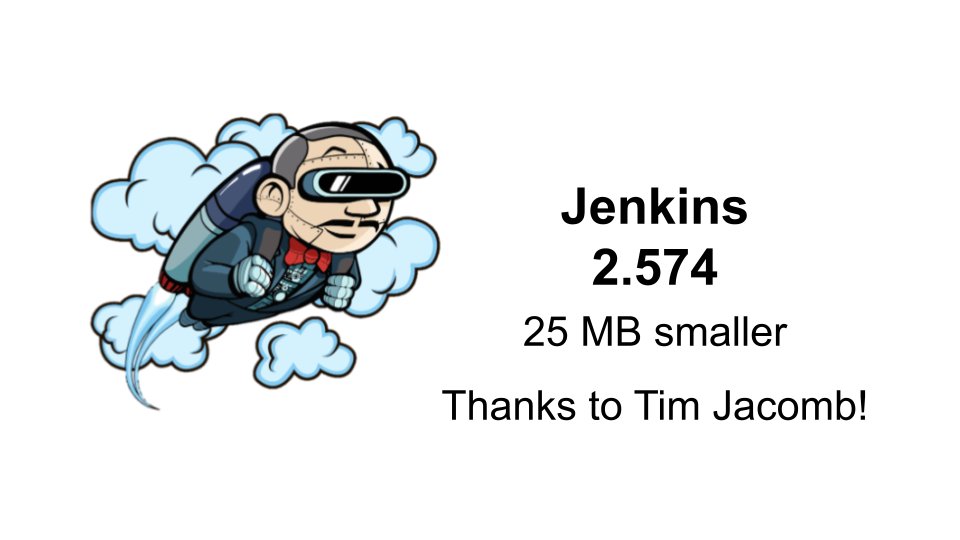
Special thanks to Tim Jacomb for improvements to Jenkins core that have reduced the size of the Jenkins war file by 25 MB. Details are available in the Jenkins 2.574 changelog at https://t.co/k3gluXT0SJ
Beyond the perhaps superficial semantic distinction between "reasoning" and "pattern matching", there is a fundamental gap in the practical capabilities and behavior of these systems. You don't create an invention machine by iterating on an automation machine.
🎉 Congratulations to all the contributors accepted to @GoogleOSS Summer of Code 2025! 🚀 Your hard work, passion, and dedication have paid off — excited to see the amazing open source impact you'll make this summer. 💻🌍 https://t.co/p8f1rX5nLL
I'm willing to die on this hill: You can't become a good Data Scientist without excellent Software Engineering skills.
For those of you who want a step-by-step breakdown of what you need to become a Data Scientist:
1. Learn Python ← this is key
2. Learn how to use Jupyter notebooks
3. Learn basic data wrangling and visualization
4. Learn SQL and how to work with relational databases
5. Learn the basics of data structures (arrays, lists, trees, graphs) and algorithms (sorting, searching, etc.)
6. Learn Object Oriented Programming
7. Learn how to build simple CI/CD pipelines to automate testing, deployment, and integration.
8. Get a foundation of linear algebra, probabilities, and statistics
9. Time to get into the fundamentals of Machine Learning
I know it seems like a lot right now, but I started from zero one day, and so did thousands of others.
@Udacity just released a revamped Data Science Nanodegree program. Everything you need is here, step by step, organized in the following major blocks:
1. Supervised Machine Learning
2. Software Engineering for Data Scientists
3. Data Science Pipelines
4. Unsupervised Machine Learning and Recommendation Systems
They know what's up: notice how they spend time teaching you how to think like a Software Engineer.
A "data scientist" who doesn't understand software is as useful as a wine bottle without a corkscrew.
I'm linking to the Udacity program below so I don't get throttled.
Jenkins has been selected as a finalist in the Most Innovative DevOps Open Source Project category for the 2024 #DevOpsDozensAwards! 🏆 Please VOTE for Jenkins!🏆 Voting ends Dec. 31,2024. https://t.co/IDy9dcTl3z
We had @RealGeneKim on the podcast, and he shared the percentage of DevOps leaders he's talked to who are now in charge of GenAI projects in complex organizations.
Full Video Interview: https://t.co/k3MNw1KMNb
Full Audio Interview: https://t.co/Lpr5ie9mCz
At #TheDEVOPSConference, Kripa Shetty and Priyanka Syal will discuss integrating #DevSecOps practices within the SDLC and demonstrate how they can improve Agility and security postures without compromising regulatory requirements.
https://t.co/kCyixKsdf1
#DevOps
How does a Chief Technology Officer (CTO) navigate the vast complexity of it? In the first part of his blog series on #platformengineering, Dan Grøndahl Glavind answers this question as a #DevOps consultant portraying a CTO.
Give it a read below:
https://t.co/L7HiYWR3Cv