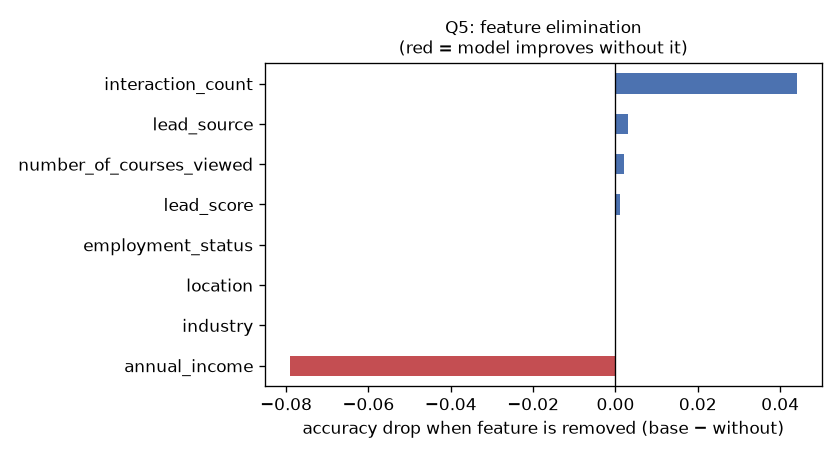
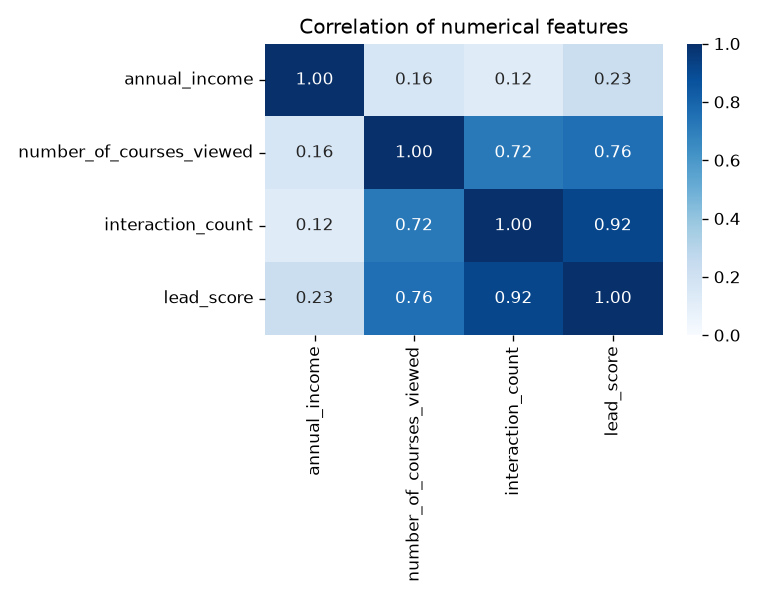
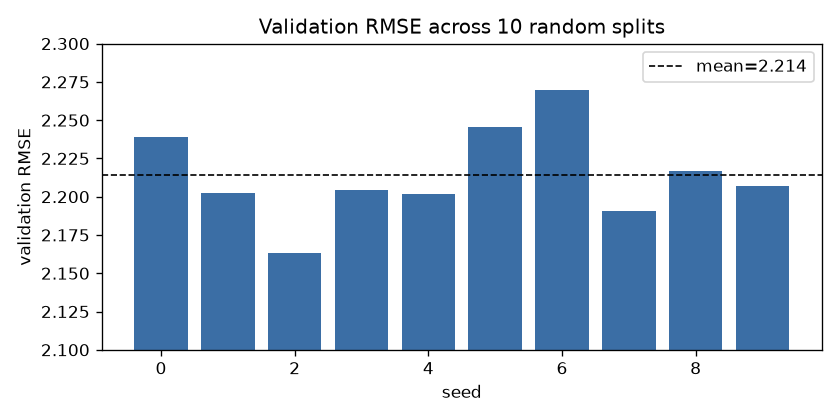
My model scored 0.732, losing to its single feature lead_score (0.783). Unscaled income broke L2 regularization; a StandardScaler fixed it to 0.788.
Always beat your best single feature first.
https://t.co/AcruCLlgtN
cc @Al_Grigor@DataTalksClub#mlzoomcamp
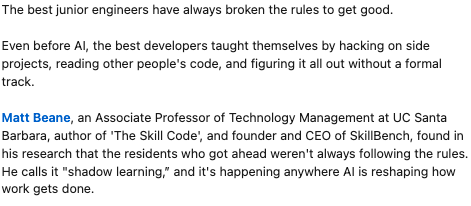
AI engineering and agentic engineering often get confused.
Hugo Bowne-Anderson has a simple way to separate them:
- In agentic engineering, you build software with agents. The agent is part of the dev team. Your job is specification, delegation, review, and orchestration
- In AI engineering, you build agentic search, RAG, or an agent. AI is part of the product. You think about models, prompts, evals, harness engineering, and agentic loops
In practice, you do both: you build AI-powered products with agents.
I see this confusion in my courses too. People join a course about AI engineering wanting to learn how to use AI for coding. There's a lot of overlap, but the work is different.
Last week, Hugo and I ran an Ask Us Anything webinar. I turned the AI engineering half into a newsletter:
- What monthly scrapes of AI engineering job postings show
- Which skills will stay valuable
- What to focus on if you want to become an AI engineer
- The course Hugo and I want to build
-> https://t.co/wGHwPccWoC
The agentic engineering half comes in the next issue.
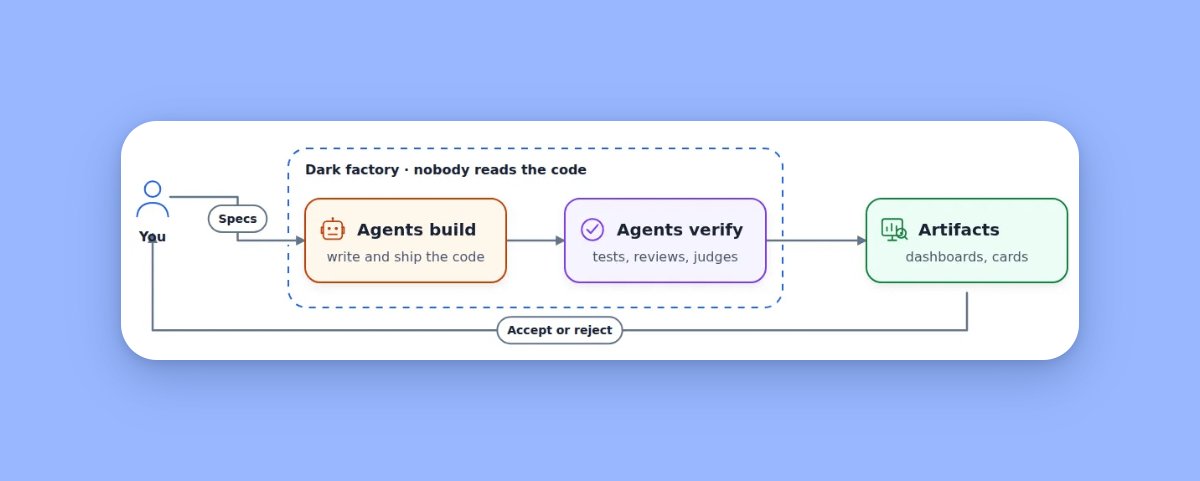
In a dark software factory, humans never see the code.
1. You give specs
2. Agents build and verify
3. You get artifacts to validate outcomes and make business calls
It's not for everyone, but soon it'll be cheaper to stop reading code and focus on the business.
We explored this in my webinar with Hugo Bowne-Anderson.
I wrote two articles from the webinar. The first was about AI engineering. The second, out now, is about agentic engineering:
- Using one agent to review another's code and designs
- Giving agents rules for coding and writing
- Organizing agents into teams and larger hierarchies
- Running software factories where humans focus on outcomes
More in my newsletter: https://t.co/wUVlqhEJ6K
Module 3 of #mlzoomcamp ✅
Logistic regression for lead conversion → 0.645 val accuracy.
TIL: dropping annual_income gave 0.724. Unscaled income (~54k) swamps L2-regularized LR, and StandardScaler gets 0.728.
Thanks @Al_Grigor@DataTalksClub 🙏 https://t.co/HiKbRTHRcF
Module 2 of #mlzoomcamp ✅ Linear regression from scratch in NumPy → test RMSE 2.236 mpg.
TIL: ridge made it worse because the lecture code penalizes the intercept, and unscaled model_year needs w0 ≈ −154.
https://t.co/75V64flfn5
Finished HW4 of the AI Dev Tools Zoomcamp by @DataTalksClub! Built an automated incident loop using OpenTelemetry, Grafana, and a Claude Code agent that fixes bugs autonomously. Big thanks to Alexey Grigorev! Check out the repo: https://t.co/0rUB2GZnjU
🤖 Built a Django app with AI in @Al_Grigor's AI Dev Tools Zoomcamp!
📝 Spec first, code second
🗂️ Backlog-driven implementation
✨ Household chores app from scratch
✅ Tests
My repo: https://t.co/BBs2N2M452
Zero Django knowledge → working app in one session!
Tech bootcamps, if you take money to teach programming, please teach programming.
This habit of adding “with AI” to courses and you celebrate students “vibe coding” projects on socials, is basically lying to them.
If they wanted to prompt they couldn’t have needed to pay 100k+