Will Smith said buying everything you want works like drinking salt water, the more you take in, the thirstier you get. Barbara Hutton spent a lifetime proving the point. She inherited about $50 million in 1933, worth more than a billion dollars today, and died in 1979 with $3,500 to her name.
Her grandfather built the Woolworth five-and-dime empire. By 21 she could buy anything, so she did. Among her jewels was a pearl necklace once owned by Marie Antoinette, about a million dollars' worth in 1933. She added palaces and titles, then married seven times, most husbands leaving richer than they came. One of them, the playboy Porfirio Rubirosa, walked off from a brief marriage with $3.5 million and a converted World War II bomber plane. The press called her the Poor Little Rich Girl, and it fit.
There's a name for the wall Hutton kept hitting. In 1978, three psychologists tracked down 22 recent winners of major lottery prizes and compared them to ordinary neighbors. The winners were not measurably happier. They also got less pleasure than their neighbors from everyday things, a good meal, an unexpected compliment. The win had reset their baseline, and ordinary life landed flat against it. Psychologists call it the hedonic treadmill: each gain quietly raises the floor of what you expect, so the gap you are chasing never closes.
For decades that was the accepted story. Then the measurements got sharper. In 2010, Daniel Kahneman and Angus Deaton studied 450,000 Americans: happiness rose with income to about $75,000 a year, then flattened. Matthew Killingsworth later pinged people on their phones in real time and saw it keep climbing, no ceiling. The findings collided, so in 2023 the two camps reanalyzed both sets of data together under a neutral referee. Both were right, about different people. For most people, more money keeps lifting happiness, with no stopping point. But an unhappy minority, in every income bracket, sees happiness climb to about $100,000 a year, then stop cold. Being rich and miserable is the one case where the extra money does nothing.
Which is what Smith means by salt water. For the people it fits, the ones whose floor rises as fast as their fortune, the number was never the problem. Hutton had over a billion in today's dollars and forty years of evidence that none of it would reach the part of her that stayed thirsty.
Will Smith says his Google-listed $350,000,000 net worth means nothing because he has bought everything he ever wanted and it still could not make him happy
Speedy: “A quick Google search says that your net worth is $350,000,000, is that actually accurate?”
“Will Smith: I don't even know, man. I don't, I don't discuss such things.”
“What what happens is you just realize none of it can make you happy. And you know, once you've bought everything you want and there's literally nothing on Earth else that you want to buy, you know, I just wish that was a gift that everybody could have.”
“Because there's nothing that material can do to satisfy you. It's like drinking salt water, you'll just never get enough, you're just going to make yourself more and more thirsty.”
“That can actually be scary when you realize that no relationship, that no money, that no kids, like there's literally nothing that can make you happy. That happy is an internal, full frontal contact with your Dark Night of the Soul.”
#ShortsofMaths
En un sistema caótico no es que desaparezca la causalidad; lo que desaparece es la posibilidad de atribuir un evento individual a una única causa.
Hay múltiples causas actuando simultáneamente y una sensibilidad extrema a las condiciones iniciales.
@thisguyknowsai I am enrolled in this course currently.
It is online right here:
https://t.co/L49NJGbVt7
Now, it's not free. It's $49 to take the course, but I will say it is definitely worth the investment.
“When our genes could not store all the information necessary for survival, we slowly invented brains. But then the time came, perhaps ten thousand years ago, when we needed to know more than could conveniently be contained in brains. So we learned to stockpile enormous quantities of information outside our bodies. We are the only species on the planet, so far as we know, to have invented a communal memory stored neither in our genes nor in our brains. The warehouse of that memory is called the library.
A book is made from a tree. It is an assemblage of flat, flexible parts (still called ‘leaves’) imprinted with dark pigmented squiggles. One glance at it and you hear the voice of another person - perhaps someone dead for thousands of years. Across the millennia, the author is speaking, clearly and silently, inside your head, directly to you. Writing is perhaps the greatest of human inventions, binding together people, citizens of distant epochs, who never knew one another. Books break the shackles of time, proof that humans can work magic.”
— Carl Sagan
The Disease That Made Its Own Enemies.
In the remote highlands of Papua New Guinea, the Fore people practiced endocannibalism , eating their dead during funeral rites as an act of grief and love. Women and children participated most heavily. By the 1950s, women and children were dying at catastrophic rates from a disease they called kuru, meaning "trembling." It began with joint pain, escalated through a loss of coordination, then took away the ability to swallow. Death came within a year of onset. At its peak, kuru was killing up to 200 Fore per year. Some villages had lost so many adult women that men outnumbered them four to one.
American physician Daniel Carleton Gajdusek arrived in 1957 and identified kuru as the first known human prion disease , caused by a misfolded protein that triggers a chain reaction of misfolding in the brain until it turns spongy and stops working. He won the Nobel Prize in Medicine in 1976. When the Australian colonial administration banned the mortuary feasts, the practice stopped, and kuru began its long decline. Researchers continued following the survivors, particularly the elderly women who had attended the most feasts and somehow lived.
In November 2009, Simon Mead and colleagues at University College London published a study in the New England Journal of Medicine that changed what the story was actually about. Among the highest,exposure survivors , women who had attended many feasts and never fallen ill , they found a genetic variant of the prion protein gene (PRNP) that had never been documented anywhere else in the world. The variant, G127V, was absent in all 152 people who had died of kuru. It was present at the highest frequency in the valleys of greatest exposure.
Genealogical and genetic analysis placed the origin of G127V at a single Fore individual born roughly 200 years ago , just before the epidemic began. When kuru peaked, the families carrying this mutation watched their neighbors die while they didn't. Under the selection pressure of a fatal disease, the mutation spread. Mead called the discovery "the most clear,cut evidence of human evolution in action in modern times" , a novel prion resistance allele selected, from a single accidental origin, across the span of a century, during events people were still alive to describe.
No population anywhere in the world carries G127V except in the Fore region of Papua New Guinea. The epidemic created it. Or more precisely: the epidemic found it, and then ran out of people who didn't have it.
The disease ran out of victims by building them.
Scientists have identified specific gut bacteria that appear to trigger multiple sclerosis (MS).
In a groundbreaking study conducted at Ludwig Maximilian University of Munich, researchers examined 81 pairs of identical twins in which only one sibling had MS. This unique design allowed them to control for genetic and environmental factors, isolating the role of the microbiome.
The team found that two bacterial species, Eisenbergiella tayi and Lachnoclostridium, were significantly more abundant in the twins with MS. When these microbes were transferred into mouse models, they directly induced MS-like autoimmune symptoms, providing strong causal evidence.
This is the most precise identification of microbial triggers for MS to date and adds powerful support to the gut-brain axis in autoimmune disease. The discovery raises hope for new approaches to early detection, prevention, and treatment — potentially by targeting or modulating these specific bacteria before symptoms appear.
While human clinical trials are still needed, the findings represent a major step toward microbiome-based therapies for MS and other autoimmune conditions.
[Yoon, H., Gerdes, L. A., Beigel, F., Sun, Y., Kövilein, J., Wang, J., Kuhlmann, T., Flierl-Hecht, A., Haller, D., Hohlfeld, R., Baranzini, S. E., Wekerle, H., & Peters, A. (2025). Multiple sclerosis and gut microbiota: Lachnospiraceae from the ileum of MS twins trigger MS-like disease in germfree transgenic mice—An unbiased functional study. Proceedings of the National Academy of Sciences, 122(18), e2419689122. DOI: 10.1073/pnas.2419689122]
Cuando tengas un día en el que odies tu trabajo, prueba esto:
Acércate a tu farmacia, ve a la sección de termómetros y compra un termómetro rectal de la marca Johnson & Johnson.
Asegúrate de comprar esta marca.
Cuando llegues a casa, cierra las puertas con llave, corre las cortinas y desconecta el teléfono para que no te molesten.
Ponte ropa cómoda y siéntate en tu sillón favorito. Abre el paquete, saca el termómetro y colócalo sobre una superficie plana para que no se astille ni se rompa.
Ahora empieza lo divertido.
Saque la documentación de la caja y léala atentamente. Observará que en letra pequeña hay una declaración:
"Cada termómetro rectal fabricado por Johnson & Johnson es probado personalmente y luego desinfectado."
Ahora, cierra los ojos y repite en voz alta cinco veces: "Me alegro mucho de no trabajar en el departamento de control de calidad de termómetros de Johnson & Johnson".
The most terrifying detail about Noah's Ark isn't the size of the flood. It is the design of the boat. If you look closely at the blueprints God gave Noah in Genesis 6, He was extremely specific. He gave the exact length, width, and height. He specified the type of wood and the pitch to seal it. But God left out one crucial component: no steering wheel, no sail, and no engine.
Think about how scary that is. Noah built a massive vessel to survive a global storm, but he had zero control over it or where it went. He couldn't steer away from rocks, turn into the waves, or aim for dry land. He was completely at the mercy of the water. The Ark was designed for floating, not navigation. Noah's job was to be the passenger, not the captain. God was the Captain.
This is your life right now. You are trying to put a steering wheel on a situation that God wants you to simply float on and allow Him to lead and take control.
This blessed me. I hope it blesses you too. 🙏🏾
ESCRUPULOS
¿De dónde vienen los escrúpulos?
De una piedra en el zapato.
Literalmente.
La palabra “escrúpulo” proviene del latín scrupulus, que no significaba otra cosa que :
“Una piedra pequeña y afilada”.
Los soldados romanos lo sabían bien.
En sus largas marchas, las piedritas se colaban dentro de sus sandalias (kaligae) y causaban un dolor constante.
Entonces, los legionarios debían decidir:
¿Sigo marchando con dolor… o me detengo para sacarla, arriesgando retrasar a todo el grupo y recibir castigo?
Esa incomodidad constante, ese dilema entre actuar o no actuar, dio origen al concepto de :
“Tener Escrúpulos”.
Con el tiempo, el término salió del ejército y se instaló en la vida civil.
Pero he aquí el giro:
senadores, jueces y políticos romanos no caminaban
Viajaban a caballo, en carruaje o en litera.
Como los políticos de hoy, que van en auto con chofer.
Nunca tuvieron piedras en los zapatos.
Por eso, tampoco tuvieron escrúpulos.
I'm Italian. Greece has been my second country for years.
The Greeks I know rarely spend their summers on the cruise islands. Not Santorini. Not Mykonos. Not Crete. Not Rhodes.
They take the ferry from Piraeus to islands the world hasn't found, or drive into a continental mainland that foreign lists never mention.
Greece is the most layered civilization in Europe.
10 underrated places where the kafeneio is real, the ouzo is local, and history isn't behind glass.
🧵
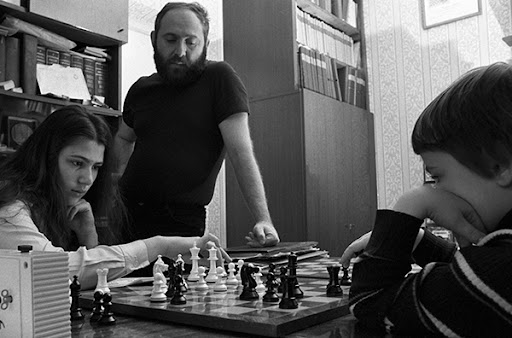
A Hungarian psychologist raised three daughters to prove that any child could become a chess grandmaster through early specialization. He succeeded. Two of them became grandmasters. One became the greatest female chess player who ever lived.
Then a sports scientist looked at the data and found something nobody wanted to hear.
His name is David Epstein. The book is called "Range."
The Polgar experiment is one of the most famous case studies in the history of deliberate practice. Laszlo Polgar wrote a book before his daughters were even born arguing that geniuses are made, not born. He homeschooled all three girls in chess from age four. By their teens, Susan, Sofia, and Judit were dominating tournaments against grown men. Judit became the youngest grandmaster in history at the time, breaking Bobby Fischer's record. The story became the gospel of early specialization. Pick a domain young, drill it hard, and you can manufacture excellence.
Epstein opens his book by telling that story honestly and then quietly demolishing the conclusion most people drew from it.
Chess works that way. Most things do not.
Here is the distinction that took him four years of research to articulate, and that almost nobody who quotes the 10,000 hour rule has ever read.
There are two kinds of environments in which humans develop expertise. Psychologists call them kind and wicked. A kind environment has clear rules, immediate feedback, and patterns that repeat reliably. Chess is the cleanest example. Every game ends with a winner and a loser. Every move is recorded. The board never changes shape. The pieces never invent new ways to move. A child who plays ten thousand games will see most of the patterns that exist in the game, and pattern recognition is exactly what chess mastery is built on.
A wicked environment is the opposite. Feedback is delayed or misleading. Rules shift. The patterns that worked yesterday may be exactly the wrong patterns to apply tomorrow. Most of the real world looks like this. Medicine is wicked. Investing is wicked. Building a company is wicked. Scientific research is wicked. Almost every job that involves a complex changing system with humans in it is wicked.
The Polgar sisters trained in the kindest environment any human can train in. Their success was real and the method was correct. The mistake was generalizing the method to fields where the underlying structure of the environment is completely different.
Epstein's research is what made the implication impossible to ignore.
He looked at the careers of elite athletes outside of chess and golf and found that the pattern was almost the inverse of what people assumed. The athletes who reached the very top of their sports were overwhelmingly people who had played multiple sports as children, specialized late, and often switched disciplines well into their teens. Roger Federer played squash, badminton, basketball, handball, tennis, table tennis, and soccer before tennis became his focus. The kids who specialized in tennis at age six and trained year-round for a decade mostly burned out, got injured, or topped out at lower levels of the sport.
The same pattern showed up everywhere he looked outside of kind environments. Inventors with the most patents had worked in multiple unrelated fields before their breakthrough work. Comic book creators with the longest careers had drawn for the most different genres before settling. Scientists who won Nobel Prizes were dramatically more likely than their peers to be serious amateur musicians, painters, sculptors, or writers.
The skill that mattered in wicked environments was not depth in one pattern. It was the ability to recognize when a pattern from one domain applied unexpectedly in another. That kind of thinking cannot be built by drilling a single subject. It can only be built by accumulating mental models from many subjects and learning to move between them.
The deeper finding is the one that should change how you think about your own career.
Specialists in wicked environments often get worse with experience, not better. Epstein cites studies of doctors, financial analysts, intelligence officers, and forecasters showing that years of experience in a narrow domain frequently produce more confident judgments without producing more accurate ones. The expert builds elaborate mental models that feel comprehensive and turn out to be increasingly disconnected from the actual structure of the problem. They stop noticing what does not fit their framework. They mistake fluency for understanding.
Generalists do better in wicked domains for a reason that sounds almost mystical until you understand the mechanism. They have less invested in any single mental model, so they abandon broken models faster. They are used to being a beginner, so they are not threatened by the discomfort of not knowing. They have seen enough different domains that they can usually find an analogy from one field that unlocks a problem in another. The technical name for this is analogical thinking, and the research on it is one of the most underrated bodies of work in cognitive science.
The single most useful sentence in the entire book is the one Epstein puts almost as a throwaway.
Match quality matters more than head start.
A person who tries six different fields in their twenties and finds the one that genuinely fits them will outperform a person who picked one field at fourteen and stuck to it on willpower alone. The lost years were not lost. They were the search process that produced the match. Every field they walked away from taught them something they later imported into the field they finally chose.
The reason this is so hard to accept is cultural, not empirical. We tell children to pick a path early. We reward the prodigy who knew at six. We treat the late bloomer as someone who failed to launch on time, when the data suggests they were running an entirely different and often more effective optimization process underneath.
The Polgar sisters were not wrong. The conclusion the world drew from them was.
If your environment is genuinely kind, specialize early and drill hard. If it is wicked, and almost every interesting human problem is, then the people who win are the ones who refused to specialize until they had seen enough to know what was actually worth specializing in.
You are not behind. You were running the right experiment all along.
Jajajaja... Amo a la Lucha Libre mexicana con ciega fe. 😂😂😂
Desde lo técnico del CMLL, hasta lo polémico de AAA y pasando por lo surreal de los independientes, TODO es Lucha Libre.
Una de las tradiciones más bonitas de México.
A gynecologist had grown tired of malpractice insurance, paperwork, and burnout.
Hoping to start a new career where skilled hands would still be useful, he decided to become a mechanic.
He enrolled in evening classes at a local technical college, studied diligently, and learned everything he could.
When the practical exam finally arrived, he prepared carefully and completed it with tremendous skill.
A few days later, he received his results and was shocked to discover he had scored 150%.
Assuming there had been some kind of mistake, he called the instructor.
“I don’t mean to sound ungrateful,” he said, “but I think there may be an error in my score.”
The instructor replied, “During the exam, you took the engine apart perfectly. That earned you 50%.”
“You then put the engine back together perfectly. That earned you the other 50%.”
After a brief pause, the instructor added:
“I gave you an extra 50% because you did the whole thing through the exhaust pipe, and I’ve never seen that done before.”
















![Rainmaker1973's tweet photo. Scientists have identified specific gut bacteria that appear to trigger multiple sclerosis (MS).
In a groundbreaking study conducted at Ludwig Maximilian University of Munich, researchers examined 81 pairs of identical twins in which only one sibling had MS. This unique design allowed them to control for genetic and environmental factors, isolating the role of the microbiome.
The team found that two bacterial species, Eisenbergiella tayi and Lachnoclostridium, were significantly more abundant in the twins with MS. When these microbes were transferred into mouse models, they directly induced MS-like autoimmune symptoms, providing strong causal evidence.
This is the most precise identification of microbial triggers for MS to date and adds powerful support to the gut-brain axis in autoimmune disease. The discovery raises hope for new approaches to early detection, prevention, and treatment — potentially by targeting or modulating these specific bacteria before symptoms appear.
While human clinical trials are still needed, the findings represent a major step toward microbiome-based therapies for MS and other autoimmune conditions.
[Yoon, H., Gerdes, L. A., Beigel, F., Sun, Y., Kövilein, J., Wang, J., Kuhlmann, T., Flierl-Hecht, A., Haller, D., Hohlfeld, R., Baranzini, S. E., Wekerle, H., & Peters, A. (2025). Multiple sclerosis and gut microbiota: Lachnospiraceae from the ileum of MS twins trigger MS-like disease in germfree transgenic mice—An unbiased functional study. Proceedings of the National Academy of Sciences, 122(18), e2419689122. DOI: 10.1073/pnas.2419689122]](https://pbs.twimg.com/media/HKIT6zTWsAAuP-_.jpg)