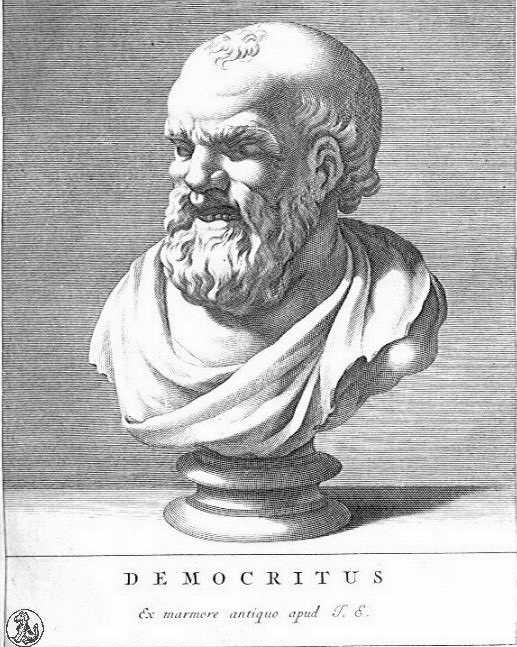
If Aelian is to be believed, not only Aristotle dressed like a pimp:
Οἱ πάλαι Ἀθηναῖοι ἁλουργῆ μὲν ἠμπείχοντο ἱμάτια, ποικίλους δὲ ἐνέδυνον χιτῶνας· κορύμβους δὲ ἀναδούμενοι τῶν ἐν τῇ κεφαλῇ τριχῶν, χρυσοῦς ἐνείροντες αὐταῖς τέττιγας καὶ κόσμον ἄλλον πρόσθετον περιαπτόμενοι χρυσοῦ προῄεσαν. καὶ ὀκλαδίας αὐτοῖς δίφρους οἱ παῖδες ὑπέφερον, ἵνα μὴ καθίζωσιν ἑαυτοὺς εἰκῇ καὶ ὡς ἔτυχε. δῆλον δὲ ὅτι καὶ ἡ τράπεζα ἦν αὐτοῖς καὶ ἡ λοιπὴ δίαιτα ἁβροτέρα. τοιοῦτοι δὲ ὄντες τὴν ἐν Μαραθῶνι μάχην ἐνίκησαν.
-
The ancient Athenians wore purple cloaks and colorful tunics, they bound their hair on top of the head and kept it in place with golden cicada ornaments. They put on other golden jewelry as well when they went out. Their slaves carried camp chairs so their masters wouldn’t have to sit just anywhere. Evidently their eating habits and the rest of their lifestyle was also rather luxurious. Such then were the men who prevailed at the Battle of Marathon.
Varia Historia 4.22
https://t.co/XjLX2Xh2mK
In the late Roman Empire Romans stopped reading.
Nobility began seeing learning as an inconvenience for their careers and daily life. They rather chose to go through short cuts, abandoning rhetoric, philosophers like Socrates, Homer’s works and history.
Ammianus Marcellinus, a 4th century historian notes, that nobles began regarding reading as poison. They only engaged with light satire, but abandoned classical works.
This resulted in decline of libraries and 99% of ancient sources.
Once nobles stopped patronizing book copiers, the old works that constantly required to be rewritten to survive papyrus, began to erode.
And as Romans struggled with their culture, their Empire began to slip away.
Today’s article is about why Romans stopped reading, what consequences it brought and what can we do to avoid the same fate.
Only on our newsletter:
https://t.co/OEOApkHGL0
So Google is attempting to push us all to use AI by destroying its own (already much degraded) product, putting obstacles in the way of human discernment and making decades of information search skills obsolete overnight. https://t.co/CHZ8h2FMrV
David Butterfield tells us everything that is known about the life of Lucretius. The Fowler Lecture 2026.
Set aside an hour to listen, learn, and enjoy!
https://t.co/B1LlOfu7Oc
I am excited to announce the completion of my Habilitation at the @unihh! After years of research my work on the vibrant world of ancient Buntschriftstellerei, a unique literary form that presents knowledge in a varied, and entertaining manner- is finally complete.
In an age where we are flooded with information, it is fascinating to see how people in the Roman Empire managed the abundance of knowledge through deliberate variety and associative storytelling.
According to Diogenes Laertius, Democritus would date his written works to the fall of Troy. “He says that the Lesser Diacosmos was compiled 730 years after the capture of Troy.”
I’m composing this Tweet 3,208 years after the fall of Troy.