Politiken (@politiken) is a leading Danish newspaper. They today published an article about PanFlights.
The main focus of the article is on how PanFlights can help you to reduce travel emissions.
https://t.co/vv3zlZD8hF
I wrote on another tweet how I solve global warming by changing visibility algorithms.
I first made an example website to show the first step - replacing indirect flights with train plus flight combos.
Like Washington DC to Paris not with indirect flights, but direct train to EWR and cheap direct flight to Paris. People love it and there is much less warming.
But, that is obviously not the option they find when going to big search - visibility platforms show what profits the most.
It would be so easy for World leaders to lead the way by example here, to do this thing and cut their travel emissions.
But as you say, they fly private jets.
Or like to COP30 last year, they flew from Europe to Rio. And from there to Belem. Instead of taking the direct flight from Lisbon to Belem with much less emissions. That pretty much says it all.
What we can do is to hold them accountable and ask why they choose to travel like that.
@levelsio The trick is to own a media house. Then you can promote side businesses through clickworthy articles with language that conveys them as owning authority and market leadership.
Also wondering about that. Deletions isn't the worst though... I spent years helping people find cheaper and more sustainable travel routes online. A single reply to where you might plan those cheaper flight + train routes was often enough to get banned from a sub.
I appealed to mods after one such, but this is not recommended. It ended with a sitewide ban for "breaking the rules" (direct quote) and a trustpilot review with fake allegations.
I made a site that shows many of the routes using faster, cheaper and more sustainable transport options. As combos of direct flight+train or bus
But it wasn't much of a business model. A major problem was that some of the big US airlines would only have their prices shown with metas that stoke a deal with them
And I know of only one such meta that can show price calendars for those airlines
So if people at COP31 wonder why it's so difficult to find more sustainable travel options I suggest looking into such deals
I solved global warming with route optimization. #COP31
Replace indirect ✈️✈️ with 🚆+✈️. Much lower emissions
Think Philadelphia to Paris as train to EWR + direct ✈️ to Paris instead of indirect ✈️ ✈️ via Toronto
It works because it's convenient and cheaper. People prefer to travel this way
The obstacle becomes the visibility platforms. They show you indirect flights - as those are more profitable the industry can buy more ads
Travel is just an example. The principle extends to other fields as well
@MagneBjella Hjelper ikke å kutte sjøkablene. Vi vil uansett selge vannkrafta til de utenlandske datasenterne slik at prisen går opp i 10 kroner kilowattimen for norske bedrifter
Det posive er jo at de med herskapshus i Holmenkollåsen og hytte på Hafjell vil motta enda mer i strømstøtte
@carlhendy@CyrusShepard It's a helpful story though.
Many focus on writing great content for training the LLMs instead of just buying links, hoping for the long term benefits.
@toeye15@Arbeiderpartiet@Aftenposten De fleste politiske partier støtter opp om boligskatteparadiset. Og den medfølgende forflytningen av oljeformuen til eiendom i sentrale strøk. Til hinder for investering i verdiskapende virksomhet.
Emission reduction is a question of better organization of information.
Today the greener solutions aren't available to people. Because media pushes affiliate products, ignoring sustainable solutions.
Take travel for instance. A trip from COP26 Glasgow to COP31 Istanbul.
Conventional trip planners show this as the most sustainable options with indirect flight at 232 kg CO2.
That's the best people can be expected to find.
While the sites media don't write about and search engines don't rank show this as train to London in 5hr + direct flight for 175 kg CO2.
https://t.co/5kzFoxmvJY
@jeffrey_coyle@lilyraynyc The definition of black hat isn't clear. For instance, I made a site that shows cheaper, faster and more sustainable travel routes. Think 🚆+ ✈️ instead of just flights
That sounds pretty scary for companies maximizing ad sales
I guess it's black hat. Just check the curve
@PeterMindenhall@tehseowner I guess creating targeted content would help with that. I've seen a lot of AI mentions that made me think that mashing up such content is more important than making actually useful sites, ranking wise.
Thanks, I follow you too, with great interest.
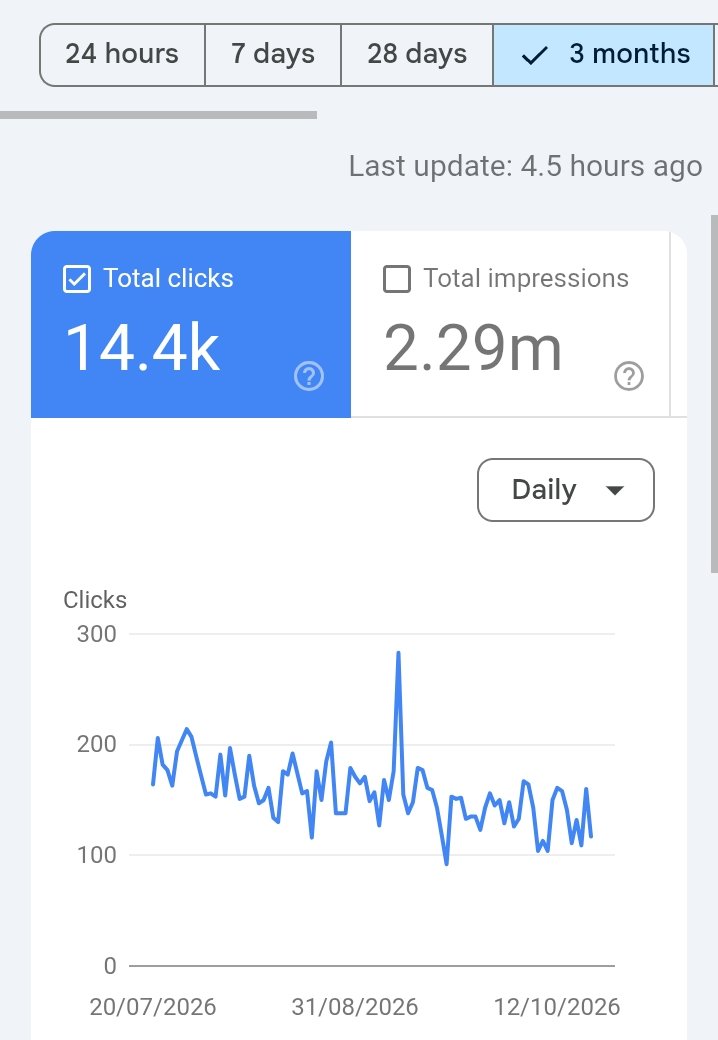
Traffic is growing and my site sometimes ranks in the top 10 for generic searches like "flights". That's a sign their algo is improving, but only for organic search. The LLM which takes over is highly authority skewed, and most flight search related queries list the same top five brands
Still, thin wrappers rank ahead of my site, and the reason is SEO. And even being in the top ten doesn't give clicks or traction now
Like someone wrote in a Y combinator forum: "B2B is dead right now. Travel is extra dead"
@makroblogger Når bare 320 boliger reguleres handler det kanskje om egeninteresse.
Antakeligvis ønsker man ikke at det bygges mer. Det bremser jo prisfesten.
De fleste i systemet er tungt posisjonert i Oslos boligmarked.
@PeterMindenhall@tehseowner I went all in with sustainable travel search
As a former world leader in lossless compression I have a thing to say here
For DC to Paris, think direct train to EWR, then direct lowcost to Paris
While large aggregators show either really expensive direct, or indirect flights
Ikke helt. Qatar ligger på topp i eksportert CO2. Vi tar sølvplass
Her er Geminis liste over landene rangert basert på eksportert CO₂-utslipp fra fullstendig sluttforbrenning av eksportert olje og gass per innbygger:
Qatar: ~180 t CO2 per innbygger/år
Norge: ~95 t CO2 per innbygger/år
Guyana: ~90 t CO2 per innbygger/år
Kuwait: ~85 t CO2 per innbygger/år
Brunei: ~70 t CO2 per innbygger/år
UAE: ~55 t CO2 per innbygger/år
Saudi-Arabia: ~42 t CO2 per innbygger/år
Trinidad & Tobago: ~32 t CO2 per innbygger/år