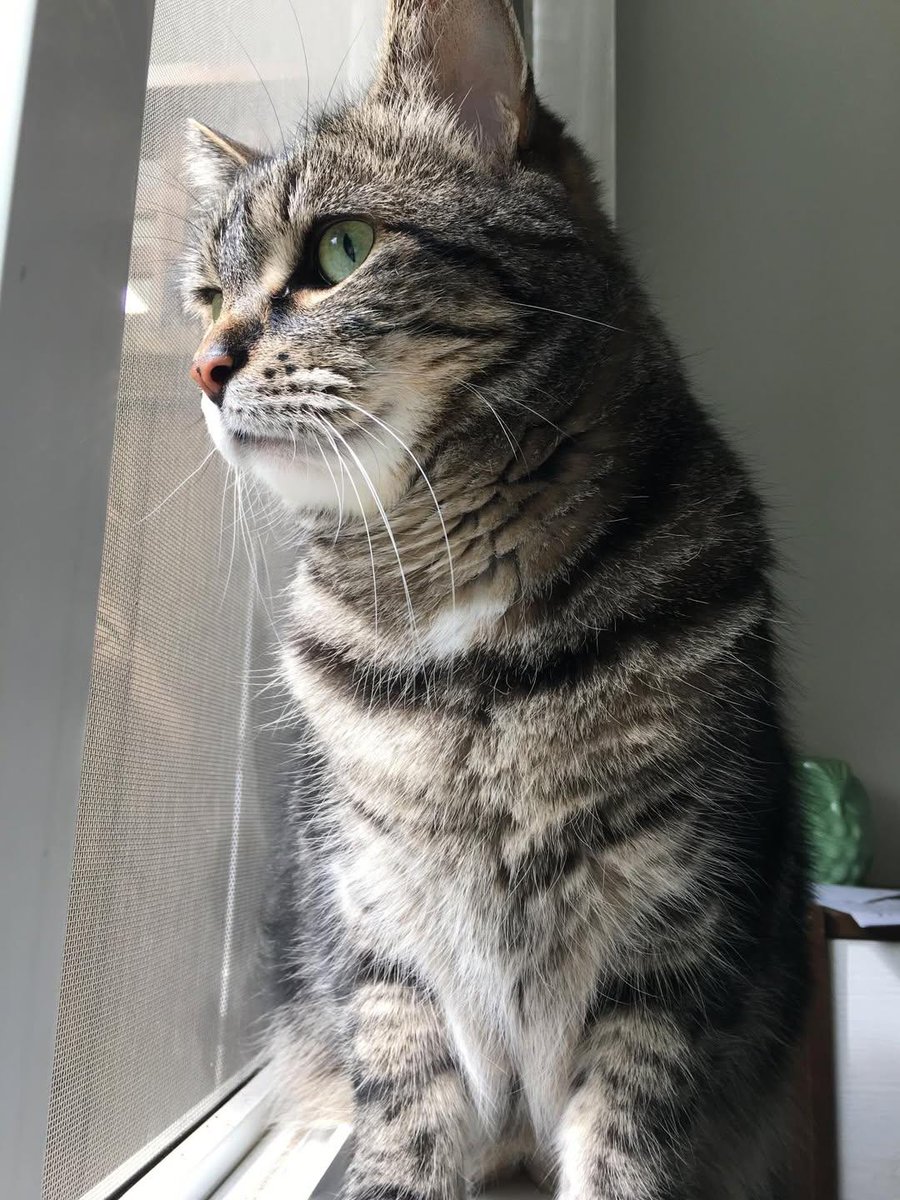
My beautiful cat at the age of 18 died on Saturday. I thought I would be okay, but I’m not. Just wanted to maybe say it out loud and share a picture of my handsome perfect cat. The best boy. This was Casso.
Bill Howard (centre) served on HMS Bellona during D-Day.
He once told me: “The noise was absolutely deafening.”
His words brought home the raw, visceral reality of battle... something no photograph or film can truly capture.
Burnham talks endlessly about “good growth” and rewiring Britain for investment, but the people actually deploying capital are saying his approach is doing the opposite.
When Premier Miton’s CEO spells out that uncertainty on tax and the timing of the Budget has a direct “knock‑on impact on growth”, that is real‑world feedback from the firms he claims he wants to energise.
Investors delay decisions, businesses freeze plans, and consumers pull back whenever they think the tax regime might be about to change without warning.
Burnham has been urged to hold a Budget quickly if he enters Downing Street, not to sit on it until later in the year, precisely to minimise that drag.
Yet his political instinct seems to be to hoard announcements, keep key appointments under wraps and continue teasing reforms like higher warehouse rates, land taxes and CGT changes without locking them into a coherent timetable.
You don’t deliver “good growth in every postcode” by keeping investors in the dark and then springing surprise redistributive taxes on them. That’s how you deliver capital flight and a slow‑motion investment strike.
Yes, Burnham really is this stupid.
To avoid breaking Labour’s manifesto pledge on income tax, VAT and NI, he thinks he’s found a clever workaround! whack more tax on warehouses.
Except warehouses are part of the supply chain.
So the cost gets passed on through goods, deliveries, storage, fulfilment and distribution.
Meaning this isn’t really a tax on “big business”.
It’s a tax on the public, increasing the cost of living! … he just hopes you won’t notice.
Just when you think this government cannot get any madder, it goes and publishes a truly mental green paper -- my latest @Spectator column on Labour’s plans to force social media platforms to boost 'trusted' media sources like, er, the BBC. https://t.co/HFwNhIgwKs
Think about the chain of cowardice - yes, cowardice - here: Germany convicts him for terrorism and bans him for two decades; he’s not sent back to Iraq; he doesn’t want to return; he heads for Britain because he knows we talk a big game and do nothing.
At Dover he’s welcomed, given fresh clothes and a health check, and shipped off to Manston where his lies are politely processed – the only thing that finally trips him up is cold, mechanical fingerprints, not human judgment.
Our political leaders have outsourced national security to databases and luck because they’re too busy cutting immigration videos and giving interviews about “toughness” to care about reality.
If Britain can be penetrated this easily by someone with an IS conviction, the phrase “border security” has become a sick joke.
The US warning about a possible Russian provocation against Poland is a serious moment.
What I will say is that NATO/JEF's strength has always been the certainty that we stand together. Our job in Parliament and in government is to make sure that certainty is never in doubt.
This is exactly why I've been saying defence is not just a departmental budget line. It's the foundation everything else sits on.
The threat is real… we must not take our freedom for granted. In a crisis we all need to know our part in the plan, with the seriousness the moment demands and the honesty to bring the public into the picture about what we're actually dealing with.
Gerald has a robin. Or, to be precise about the hierarchy, a robin has Gerald.
It turned up in autumn and simply took possession, the way robins do, and now it treats a nine-hundred-kilogram bull as its personal estate, its transport, and its dinner service. It rides on his back. It perches on a horn like a figurehead. It supervises the grazing from the gate with the stern air of a foreman. When Gerald moves to fresh grass, the robin moves with him, because Gerald is, frankly, the best thing that ever happened to it.
There is an ancient bargain underneath it. Long before there were gardeners for robins to pester, there were great grazing beasts, wild cattle and boar and bison, turning the earth and flushing out insects wherever they went. That famous robin boldness, the way one sits a foot from your spade with an expectant eye, was never about you. It is about the enormous animal you are standing in for. For thousands of years, a robin's finest meal ticket was to shadow something huge, heavy, and permanently eating.
Gerald is that something. Every hoof-fall in the wet grass turns up a beetle, a grub, a startled spider, and the robin is there to collect the rent. Gerald neither minds nor notices, which in his case comes to the same thing.
So one of the oldest partnerships in the country plays out in a field near Hereford. The little red tyrant, convinced he owns the bull. The bull, serenely letting him believe it.
Gerald grazes. The robin rides. Neither has read a word about the other, and between them they have it perfectly worked out, which is more than most of us can say.
Why did you not add the information about the Cure that Thomas Seyfried proposes? He proposes to bring the patient in ketosis and the pulse down the glucose and glutamine. This can be done by giving insulin injection and disrupting the glutamine pathway by ivermectine. Then, for a period, the blood is without glucose and the glutamine can't be processed. This is fatal for cancer cells. They die, while all other cells use ketones and oxygen.
See @tnseyfried for the details.
In the 1920s a German scientist noticed cancer cells doing something bizarre. They stop breathing.
Otto Warburg, who took the Nobel Prize in 1931 for working out how cells turn fuel into energy, saw that tumour cells abandon the elegant oxygen-powered machinery every healthy cell depends on and fall back on a crude, ancient fermentation instead, guzzling sugar like a flooded engine. He believed this broken metabolism sat near the very root of the disease. Then molecular biology arrived, the gene took centre stage, and cancer was quietly recast as a fault in corrupted DNA. Warburg's observation was filed under historical curiosity and left to gather dust.
Enter Thomas Seyfried, professor of biology at Boston College, who has spent decades hauling that old idea back into the light. His case, laid out in a dense and serious book called Cancer as a Metabolic Disease, is that the establishment has spent a fortune chasing the wrong suspect. If the fault is metabolic, sitting in the cell's own power plants, you might strike the tumour by changing what you feed it. Cancer cells gorge on glucose and an amino acid called glutamine. The fuel they struggle to run on is ketones, the very fuel a body makes once you strip the carbohydrate away. Starve the tumour of sugar while healthy cells switch contentedly to fat, the theory goes, and you have a line of attack with no hair falling out and no poison in the drip.
Now the honest part, because it matters and I have no interest in overselling it. This is no magic diet that melts tumours over breakfast. Seyfried himself is blunt that going keto alone is not a cancer treatment, that it belongs under proper medical supervision as one arm of a wider protocol, and that the science is still being fought over hard. Anyone selling you a cure in a smoothie is lying to your face.
But watch how the machine reacts to the question being asked at all. A serious scientist revives the work of a Nobel laureate, points at something nobody can patent, and is met not with curiosity but a shrug and a sneer. The genetic theory has set like concrete, and concrete hates being asked for its receipts after half a century and untold billions, with the death rates for the big cancers barely moved.
So ask the plain question. If the answer turned out to be a diet, who funds the trial to prove it? A cure you eat refills nobody's quarterly report.
The cell was trying to tell us something a hundred years ago. We were too busy selling the alternative to listen.
's Werelds eerste koolstofafvanginstallatie kostte €4 miljoen om 900 ton CO₂ af te vangen. Dezelfde hoeveelheid CO₂ kan worden vastgelegd door voor ongeveer €7.000 bomen te planten. De zwendel is zo absurd, het is belachelijk.
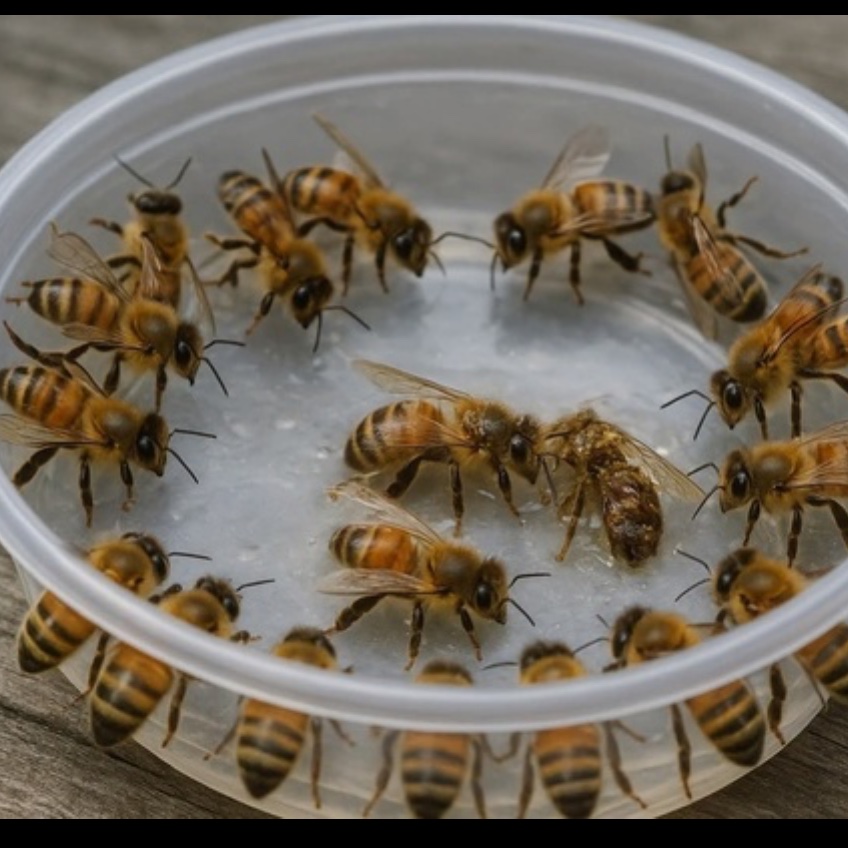
My dad has bees. Today, when I visited him, he showed me the honey he had harvested—an entire five-gallon bucket! As I lifted the lid, I noticed three tiny bees perched on the honey, struggling and nearly drowning. They were covered in sticky goo, barely able to move.
I asked if we could help them, but my dad shook his head. He was sure they wouldn't survive. "They're casualties," he said. I insisted once more—at least to spare them from suffering. After all, he himself had taught me that sometimes compassion means helping an animal—or even an insect—come to a dignified end. He finally agreed. He took the bees out and placed them in an empty yogurt container outside.
Because of the honey harvest, the yard was already bustling with activity, with bees flying everywhere. We left the small survivors on a bench and walked away.
A while later, my dad called me over to witness something incredible. The three sticky bees were now surrounded by their sisters. The others were tending to them—gently wiping the honey off their tiny bodies, refusing to abandon them. When we checked again later, only one bee remained, still being cared for. And finally, before I left, we checked one last time: the container was empty. All three had been rescued and were able to fly again.
They lived because they weren't alone. They lived because their family never gave up. They lived because their community believed in helping them until the very end.
Sister bees. Companion bees. United bees.
We could all learn from them.
Always—be kind. 🐝💛
Hose Pipe bans are starting to come into effect even though it’s rained most of the year 🙄
How come other countries manage to cope with the weather?
Rain here = flooding
Sunshine here = droughts
Snow here = everything closes down
This sums up our country nowadays
In 1945, the world witnessed the harrowing reality of war through the lens of a camera, capturing the fragile existence of 19-year-old American soldier Joe Demler. Having been captured during the intense and brutal fighting of the Battle of the Bulge, Joe was thrust into a German prisoner-of-war camp where he endured months of systematic starvation and unimaginable deprivation. By the time of his liberation, the toll of his captivity was devastating; he had been reduced to a skeletal state of skin and bone, a physical manifestation of the extreme horrors he had survived.
The photograph taken shortly after his rescue—now known as the poignant image featured in became a haunting yet powerful symbol of the Second World War. It serves as an enduring record of human suffering, yet for Joe, that image represented something far greater: the refusal to surrender to despair and the persistent, unshakable hope of returning to his home in Wisconsin.
Defying the overwhelming odds stacked against him, Joe embarked on a remarkable journey of recovery. Upon returning to civilian life, he did not allow the shadow of his wartime trauma to define his future. Instead, he rebuilt his life around the virtues of resilience, the love of his family, and a dedicated commitment to serving his community. Eschewing the spotlight and fame, he lived his post-war years with a quiet, profound gratitude for the life that had been saved.
Joe Demler passed away in 2020, but his legacy remains firmly etched in history. His story serves as a timeless reminder that even in the deepest and darkest moments of human conflict, the light of courage and the strength of the human spirit can endure. His photograph remains more than just a historical artifact; it is a profound testament to the indomitable power of survival and the resilience of the human soul.
Would you like me to adjust the length or focus of this narrative further?