Soy editora asociada de varias revistas científicas y hay algo que no deja de llamarme la atención: la cantidad de manuscritos, revisiones y versiones corregidas que llegan durante los fines de semana y las vacaciones.
Es una observación anecdótica, desde luego, pero creo que dice bastante sobre cómo estamos organizando la vida universitaria.
Durante la semana, entre clases, reuniones, tareas de gestión, correos y burocracia, cada vez nos queda menos tiempo para leer, pensar, investigar y escribir. Es decir, para algunas de las actividades que deberían estar en el centro de nuestro trabajo.
Las vacaciones y los fines de semana terminan convirtiéndose en una especie de reserva de tiempo para hacer lo que no conseguimos hacer durante la jornada ordinaria. ¡Menuda paradoja! Resulta que necesitamos dejar de trabajar para poder hacer nuestro trabajo.
La organización cotidiana de la vida universitaria está dejando cada vez menos espacio para las actividades que justifican su existencia: investigar, estudiar y preparar buenas clases.
¿Qué hemos hecho con la vida universitaria para que tantas de las cosas que le dan sentido tengan que hacerse cuando la universidad está cerrada?
#VidaUniversitaria #AcademicLife #HigherEducation #AcademicWork
This is absolutely brilliant, by legendary Australian investor John Hempton, who explains the core financial paradox at the heart of the AI story (and which also, to some extent, may explain the Jensen Huang story).
The numbers say that about $7 trillion in AI compute is set to be built by 2030. For the industry to earn that back, given those chips have a roughly 5-year lifespan and cost a lot to run, they need to generate about $2 trillion of AI revenue a year.
Hempton says the only way you can get to these sorts of numbers is by selling AI as a productivity tool to businesses, meaning replacing workers.
And since, for reasons he explains in the video, no company fires people to save just 10% in costs, the savings have to be about double what businesses pay for the AI: roughly $4 trillion in savings on wages a year.
What does firing $4 trillion worth of workers mean concretely? Hempton calculated this equates to roughly 10% of the OECD’s total wage bill of about $40 trillion: one in every ten dollars paid to workers across the OECD’s 38 member countries.
Which, naturally, when you suddenly take that much income out of people’s pockets, would trigger a massive global recession.
And here's the paradox: in a massive global recession, there's no way businesses will pay $2 trillion a year for AI, so the return disappears anyway.
In other words, AI's only possible path to success given the numbers requires destroying the very economy that is supposed to pay for it.
HOWEVER - and here's where the Nvidia/Jensen Huang story might come into play (and, to be clear, this is now me speaking and not Hempton given this interview is prior to the whole Nvidia saga) - this all rests on a core assumption: that compute stays super expensive. Which in practice means Nvidia keeping its pricing power, with a 75% gross margin on its chips.
Break Nvidia's pricing power, and the $7 trillion bill, the $2 trillion in revenue and the 10% of jobs all shrink with it.
This would also put the whole China story in a different light. Maybe it's not so much a "we don't want the Chinese to be competitive with similar chips to us" story as it is a "we don't want Chinese demand to drive up chip prices" one. Or probably both.
And, as such, you could actually think about the US export controls not as a national security measure but as a good old subsidy for US AI players (together with a handicap for their Chinese competitors), a way to limit the price of chips.
This holds even with China itself blocking Nvidia imports, since Chinese firms simply rent the chips abroad instead, in places like Southeast Asia, which is precisely what this whole Alice Huang/Megaspeed story is about.
The main obstacle for all this was, of course... Jensen. Obviously, the guy wanted the exact opposite: as many buyers as possible, Chinese players included, to keep chip prices and Nvidia’s margins sky-high. He was also the one man with the clout to make that happen.
All hard to prove, of course, but I can imagine that quite a few corks popped this week in Anthropic's offices: nothing like the news that the man keeping your biggest cost sky-high is out when you're a week away from a $1.2 trillion IPO.
Can we all just acknowledge for a minute that a day without irrelevant email and purposeless Teams meetings is a breath of productive fresh air ! Can actually concentrate on things for a change .. I’d be quite happy if it never revives itself and we go back to 1992 ..
Surprisingly low %
Surprised carba is the highest!
Treatment-emergent resistance to definitive therapy occurred in 1% (5/342), 2% (3/129), and 3% (4/115) of patients treated with cefepime, piperacillin/tazobactam, and carbapenems, respectively #IDXposts
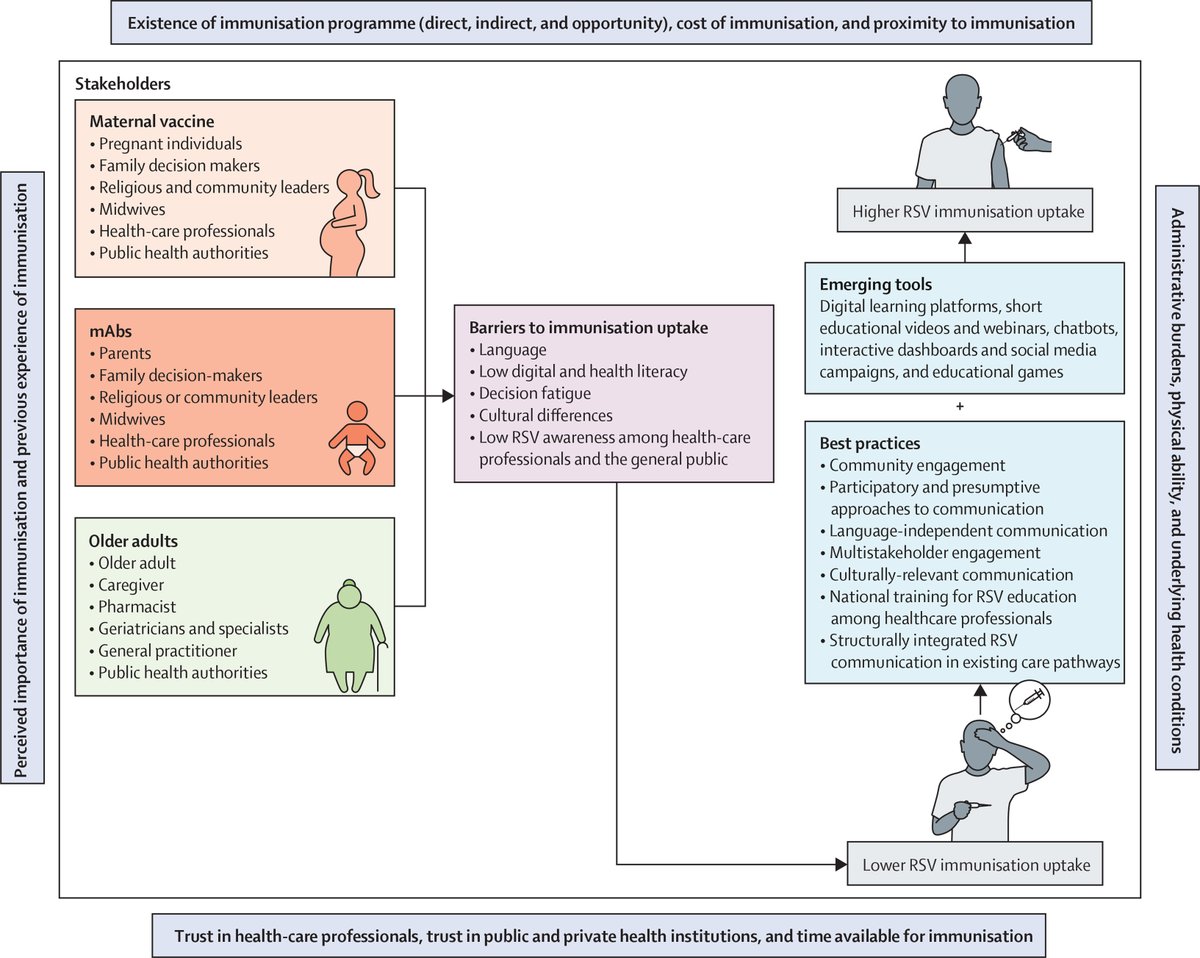
Respiratory syncytial virus (RSV) is a major cause of acute lower respiratory tract infection.
In @TheLancetInfDis, authors summarise RSV preventive products, real-world effectiveness and uptake, and the opportunity of using communication in translating RSV prevention into impact: https://t.co/Jy80zuD9VO
Grant applications have become a lottery. A 60% growth in applications to one of the world’s most prestigious research-grant programs is resulting in an exceptionally low success rate
I think this is one of the major problems of AI--it's creating tsunami of grant applications and turning the decision process into chaos.
Grant decisions already felt fairly random and this seems to make the system worse.
https://t.co/aisA2twl4a
Seeing a potential benefit of high blood sugar is unusual, to say the least.
High blood glucose improved T cell (CD8+) function to take on cancer, in experimental models and in vitro with human cells, with a mechanistic explanation
https://t.co/ofeTWzQTU2
Obama is now our Grandpresident. He doesn't president us directly, but shows up every now and then with jokes and stories and little gifts, and it really pisses off Trump when we ask if we can just stay and live with Obama instead.
The spread of gram-negative antimicrobial resistance is driven by human, environmental, and other factors. Pranita D. Tamma, MD, reviews clinically important pathogens, mechanisms driving resistance, and strategies for treatment.
Read the Review Article “Gram-Negative Bacterial Resistance”: https://t.co/XCUH767k4m
Lots of debate this week on whether journals should ban AI in peer review.
We actually tested this in our new preprint, and the results were pretty clear to me.
For context, I've reviewed for most of the big journals and evaluated 1,000 human reviews as an editor. I love to read and evaluate science.
TLDR: From now on I won't do any peer review without AI. For clinical trials, I'd even call human-only review dangerous 🧵
🆕🔥Excellent Review by @ErinMcCreary
+ many 🌟s
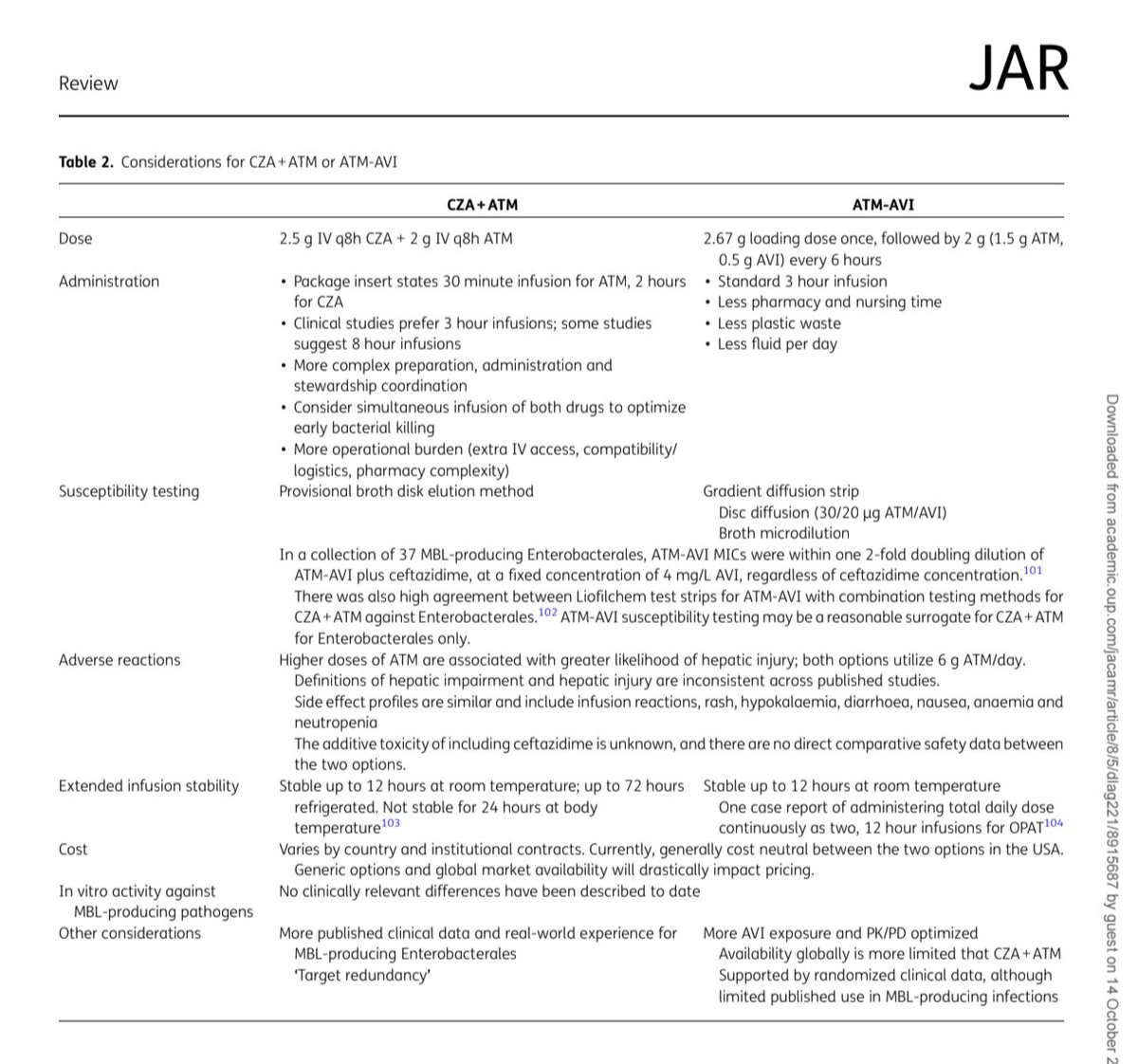
Global epidemiology and treatment of metallo-β-lactamase-producing gram-negative pathogens #idxposts#NDM#MBL https://t.co/w6P5xvi1Lx
As an Editor, in past ~6mo, we are receiving an avalanche of unsolicited review articles (“scoping” “systematic”, narrative, NOS) on topics and ?s NO ONE EVER has asked and clearly with heavy AI lift. Even the cover letters all read the same…alarming and sad. #publishing
🧫🟢 ¿Por qué un hongo puede ser "susceptible" en el laboratorio 🔬, pero el paciente no mejora? 🏥🤔
📖 The Lancet Infectious Diseases explica por qué la concentración mínima inhibitoria (CMI) no predice por sí sola la respuesta clínica.
#Micología#Antifúngicos
🍄🧬 La respuesta depende de múltiples factores:
🔬 Especie fúngica
💊 Exposición al antifúngico
📍 Foco de infección
🦠 Biopelículas y persistencia
🛡️ Inmunidad del paciente
📊 Los autores proponen un algoritmo para investigar las discrepancias entre laboratorio y evolución clínica.
🩺🔍 ¿Qué hacer?
✅ Integrar datos clínicos y farmacocinéticos.
💊 Monitorizar el antifúngico cuando esté indicado.
🎯 Controlar el foco infeccioso.
💡 👇🏻 https://t.co/o3rMyisYvl
#Microbiología #InfeccionesFúngicas @SEMicrobiologia
Disruption of cAMP Signalling and RNA Regulation Confers Cefiderocol Resistance in Acinetobacter baumannii - more complexities in susceptibility testing and treatment of these tricky pathogens ... @fordebm@LabSchembri@davidantibiotic https://t.co/OgYcj1UEER
Apparently Russian servers have been hit by a Ukrainian strike and immediately massive online hard right chatter has collapsed.
This particular chatter was in support of Germany’s AFD, their equivalent to Reform, but similar patterns are being seen in hard right movements everywhere, including the UK.
If anyone needed anymore evidence that Russia are driving a massive wave of hard right propaganda in Europe, this is it.
So, all you “patriots” - you’ve been duped by Russia, and you are about as far from patriotic as anyone can be. You are easily brainwashed though. This is how propaganda works.
When Ukraine destroys Russian data centers, hoards of aggressive right-wing bots disappear, and Twitter becomes much friendlier. Isn’t that interesting? So much of our politics is driven by the internet, and so much of the internet is driven by Russians who want to hurt us. Shouldn’t we do something about that, given that we know it?
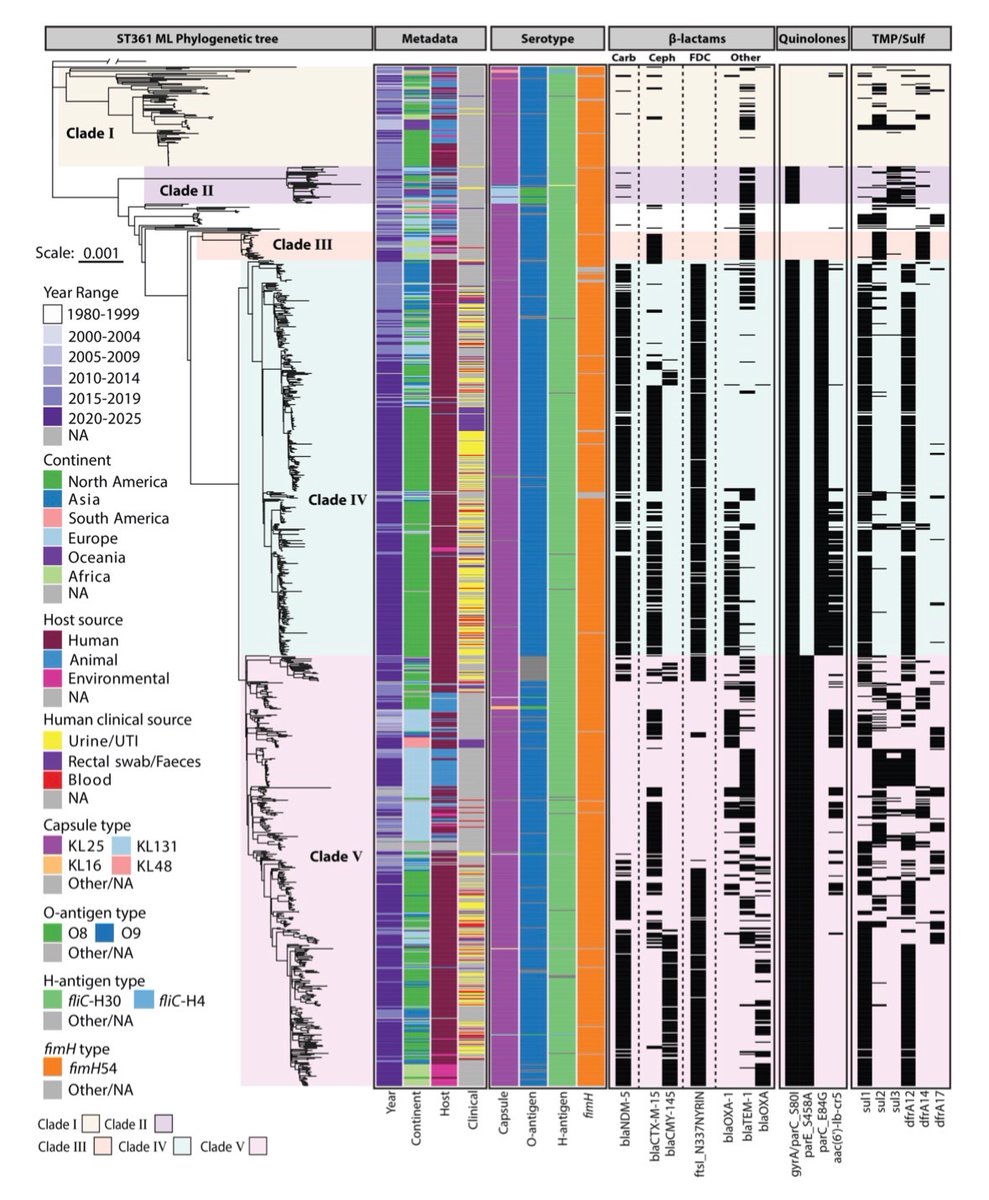
Cross-species convergence of surface polysaccharides shapes the virulence of an atypical carbapenem resistant uropathogenic E coli clone. @LabSchembri@UQ_News@fordebm
https://t.co/4Pa9NLFsb4
Incredible work [and nice to see my Bristol NHS colleagues names in the NEJM]. It seems shorter is better in this setting [quite a lot of AE in longer duration pop]