Du mouvement à l’organisation : le défi du premier congrès du Pastef Les Patriotes
Lorsque nous avons créé PASTEF-LES PATRIOTES en 2014, nous n’avions ni les moyens financiers des grands partis ni les relais d’influence dont disposent habituellement les forces politiques établies. Nous avions cependant une conviction : les difficultés du Sénégal ne pouvaient être réduites à des questions de personnes ou à de simples défaillances de gouvernance.
Derrière la corruption, le chômage, la pauvreté, les inégalités sociales et les difficultés de notre économie se trouvait une réalité plus profonde : une souveraineté inachevée.
Notre pays était indépendant depuis plus d’un demi-siècle. Il disposait d’institutions reconnues, d’un drapeau respecté et d’une stabilité politique enviée. Pourtant, trop souvent, les décisions les plus importantes demeuraient tributaires de dépendances économiques, financières, technologiques et culturelles héritées de l’histoire et entretenues par les mécanismes de l’ordre postcolonial.
Nous avons alors posé une question simple : à quoi sert l’indépendance politique si un peuple ne maîtrise pas pleinement son destin ?
C’est cette interrogation qui a donné naissance au Manifeste des Patriotes, puis à l’Appel aux Patriotes. Dès l’origine, notre ambition n’était pas de créer un parti de plus dans un paysage politique déjà saturé. Nous voulions construire un instrument capable d’organiser une reconquête de la souveraineté nationale.
Pour nous, la souveraineté n’a jamais été un slogan. Elle est une méthode de gouvernement. Elle concerne la gestion de nos ressources naturelles, nos choix budgétaires et monétaires, notre politique agricole, notre système éducatif, notre modèle de développement, notre culture et notre place dans le monde.
Les années qui ont suivi ont confirmé que cette aspiration était largement partagée par les Sénégalais. Mon élection à l’Assemblée nationale en 2017 a constitué une étape importante dans notre parcours. Pour la première fois, je disposais d’une tribune institutionnelle pour porter au cœur du débat national des questions longtemps reléguées au second plan : la souveraineté sur nos ressources naturelles, la lutte contre la corruption, la justice sociale, la transparence dans la gestion des affaires publiques et la défense de la dignité nationale. Cette expérience parlementaire m’a permis de mesurer plus concrètement les blocages de notre système politique, mais aussi de constater combien l’aspiration au changement était déjà profonde dans le pays.
En 2018, j’ai publié Solutions pour un Sénégal nouveau. Ce livre n’était pas conçu comme un simple programme électoral. Il était une tentative de mettre en cohérence les analyses que nous développions depuis la création du PASTEF et de proposer une vision globale de la transformation du Sénégal. J’y défendais l’idée qu’un autre chemin était possible, fondé sur la souveraineté, la production, la valorisation de nos ressources, la justice sociale, la bonne gouvernance et la confiance dans les capacités de notre peuple.
Puis vint l’élection présidentielle de 2019. Ce qui devait, aux yeux de beaucoup, rester une candidature marginale révéla en réalité l’émergence d’une nouvelle force politique et d’une nouvelle génération citoyenne. Des centaines de milliers de Sénégalais se reconnurent dans cette volonté de rupture. Derrière le score électoral, je percevais déjà quelque chose de plus profond : une prise de conscience collective. De plus en plus de nos compatriotes refusaient désormais de considérer la dépendance, les inégalités et la résignation comme des fatalités. Une nouvelle espérance politique était en train de naître.
Puis il y a une accélération de l’histoire.
Quand le peuple entre dans l’histoire
Entre 2021 et 2024, le Sénégal a traversé l’une des périodes les plus intenses de son histoire récente. Les mobilisations populaires qui ont traversé l’ensemble du territoire ont exprimé bien davantage qu’une contestation politique. Elles ont révélé une aspiration profonde à un changement de cap. Une génération entière refusait désormais le statu quo et l’idée selon laquelle notre avenir devait toujours être pensé ailleurs.
Les arrestations, la dissolution du parti, la répression et les restrictions des libertés publiques n’ont pas interrompu cette dynamique. Elles ont, au contraire, contribué à élargir la prise de conscience nationale.
La victoire de 2024 n’a donc pas été une alternance ordinaire. Elle a constitué l’aboutissement démocratique d’un long processus de maturation politique et populaire.
Le temps du congrès
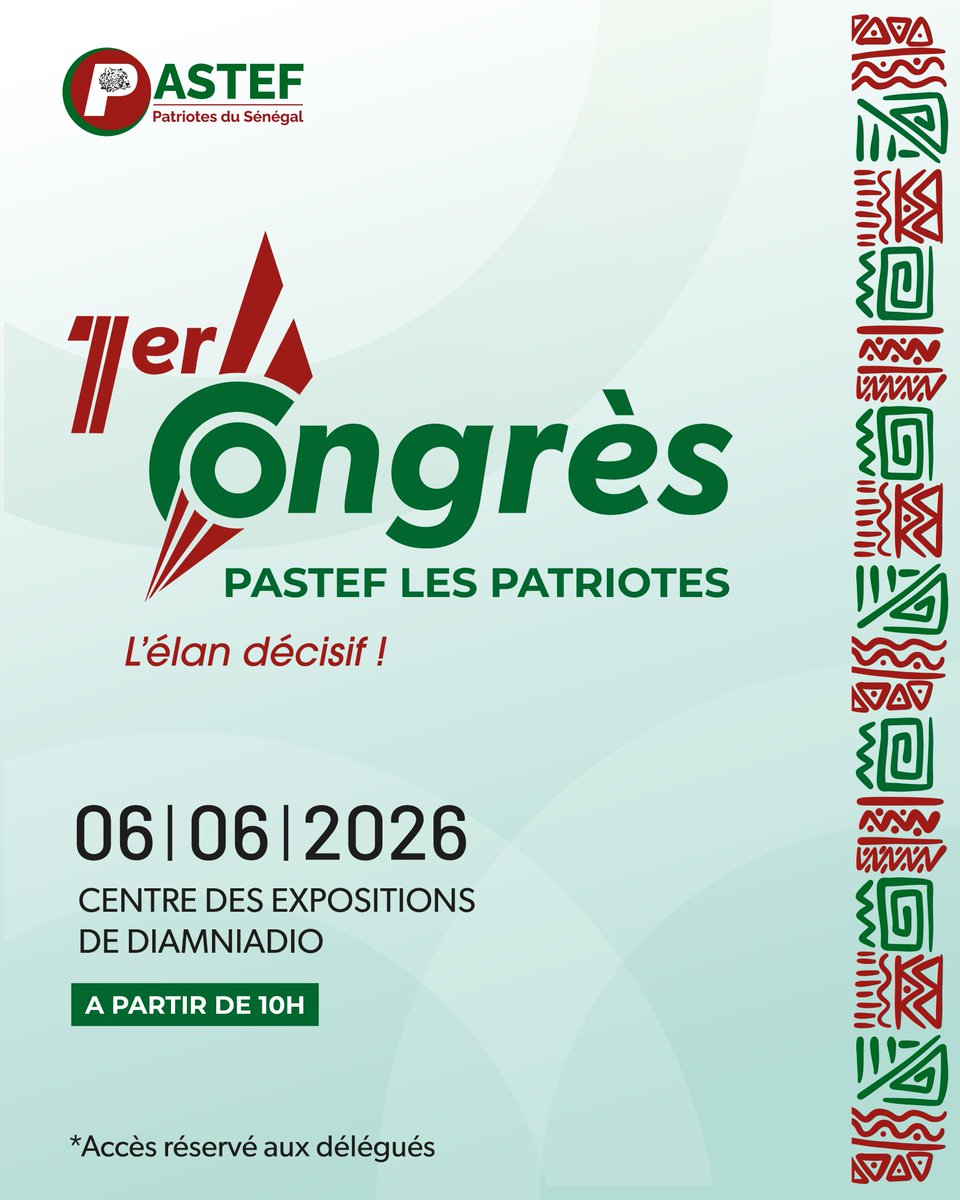
Dans quelques jours, le samedi 6 juin 2026, PASTEF-LES PATRIOTES tiendra son premier congrès ordinaire. Des délégués venus des sections du Sénégal et de la diaspora s’y retrouveront pour débattre, amender et adopter des textes essentiels : un document d’orientation stratégique, une charte idéologique, des thèses sur le parti, une résolution générale et des résolutions spéciales. Ce congrès ne sera pas une simple formalité statutaire. Il devra marquer le passage d’un mouvement de rupture, devenu force électorale victorieuse, à un parti pleinement organisé pour conduire la transformation historique du Sénégal.
Ce moment est décisif parce qu’il répond à une question simple : que faisons-nous après la victoire ?
L’histoire enseigne que les ruptures politiques peuvent être absorbées lorsqu’elles ne se dotent ni d’une doctrine claire, ni d’une organisation solide, ni d’une stratégie de long terme. Le congrès devra donc fixer une ligne : organiser la souveraineté, structurer le bloc populaire, former les cadres, renforcer les cellules, clarifier le rapport entre le parti et l’État, et inscrire la révolution démocratique sénégalaise dans la durée.
Les documents qui y seront adoptés auront cette fonction : transformer une expérience politique, des sacrifices militants et une victoire populaire en orientation collective. Ils diront ce que nous sommes, ce que nous voulons construire et comment entendons-nous le faire : un Sénégal souverain, productif, juste, démocratique, enraciné dans son peuple et ouvert sur l’Afrique et le monde.
Organiser la souveraineté
Pour autant, nous ne considérons pas les victoires électorales de 2024 comme un aboutissement. Elles marquent le début d’une responsabilité historique.
Notre ambition n’est pas de gérer plus efficacement l’ordre existant. Elle est de transformer les structures qui entretiennent la dépendance et empêchent le Sénégal de mobiliser pleinement son potentiel.
Cette transformation suppose un État stratège, une économie productive, une administration efficace et une lutte résolue contre la corruption et les logiques de rente. Elle exige également de replacer le travail, le savoir, la science, l’innovation et la production au cœur du projet national.
Mais la souveraineté ne se limite pas à l’économie. Elle est aussi culturelle. Un peuple qui pense exclusivement avec les catégories produites par d’autres peine à construire une autonomie historique véritable. C’est pourquoi la bataille pour la décolonisation des imaginaires, la valorisation de nos langues, la réappropriation de notre histoire et la maîtrise des technologies du futur constitue une dimension essentielle de notre projet.
Cette transformation ne pourra être portée par l’État seul. Elle exige un peuple organisé. Elle exige la mobilisation de la jeunesse, des femmes, des travailleurs, du secteur privé, des paysans, des pêcheurs, des artisans, des intellectuels, des Cultes, de la diaspora et de toutes les forces patriotiques attachées à l’avenir du Sénégal.
Elle exige aussi un parti. Non un appareil électoral vivant au rythme des échéances politiques, mais une organisation capable de former, d’éclairer, de mobiliser et d’organiser durablement le bloc populaire de la souveraineté.
Enfin, notre projet dépasse les frontières du Sénégal. Nous sommes convaincus que l’avenir de notre pays est intimement lié à celui de l’Afrique. La souveraineté nationale doit s’articuler à une souveraineté africaine fondée sur l’intégration économique, la coopération scientifique, la circulation des savoirs, la transformation locale des ressources et la solidarité entre les peuples.
Le PASTEF n’est pas né d’une ambition de pouvoir. Il est né d’une ambition de transformation.
Notre responsabilité est désormais de démontrer qu’il est possible, en Afrique, de conduire une révolution démocratique, populaire et souveraine dans le respect des institutions, des libertés et de la volonté du peuple.
Tel est le sens de notre engagement. Telle est la tâche de notre génération.
The creator of Claude Code teaches more about vibe-coding in 30 minutes than most tutorials do in hours.
Save this — it'll change how you build forever.
Le Sénégal, Champion d’Afrique de la Statistique !
Une reconnaissance majeure pour notre pays !
Selon les Indicateurs de Performance Statistique (IPS) publiés par la Banque mondiale, le Sénégal se classe 1er en Afrique pour la dernière année sous revue (2024) avec un score de 81,4/100, devant l’Afrique du Sud, l’Île Maurice et l’Égypte.
Cette performance témoigne des progrès réalisés par le Système Statistique National (SSN) et de l’engagement constant de l’ANSD et de ses partenaires pour une statistique publique de qualité, accessible et au service du développement.
Consultez le classement complet : https://t.co/uq4nOWKFXD
#ANSD #IPS #MEPC #ChampionDafrique
#Statistiques #DonnéesFiables #Economie #BanqueMondiale
Bayes’ theorem is probably the single most important thing any rational person can learn.
So many of our debates and disagreements that we shout about are because we don’t understand Bayes’ theorem or how human rationality often works.
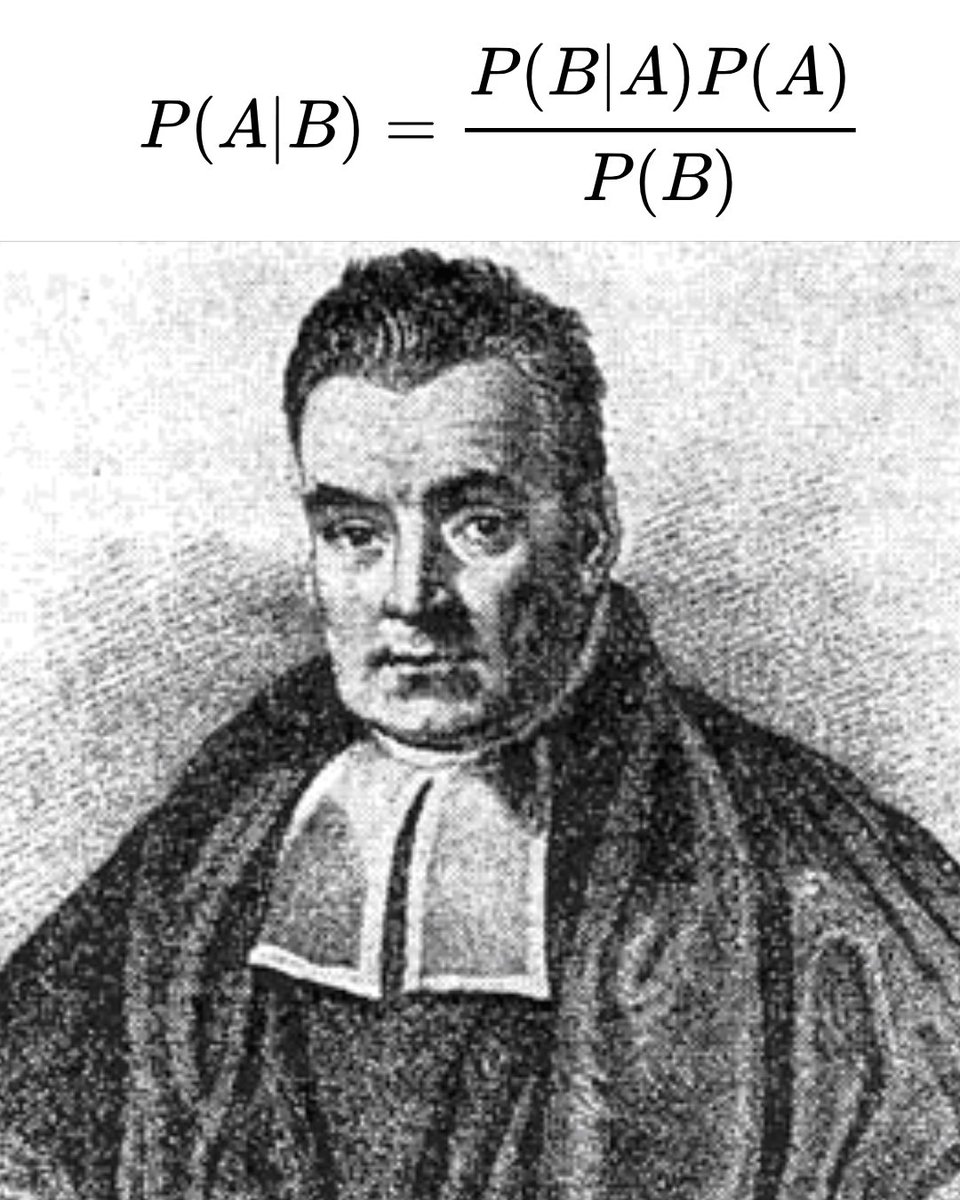
Bayes’ theorem is named after the 18th-century Thomas Bayes, and essentially it’s a formula that asks: when you are presented with all of the evidence for something, how much should you believe it?
Bayes’ theorem teaches us that our beliefs are not fixed; they are probabilities. Our beliefs change as we weigh new evidence against our assumptions, or our priors. In other words, we all carry certain ideas about how the world works, and new evidence can challenge them.
For example, somebody might believe that smoking is safe, that stress causes mouth ulcers, or that human activity is unrelated to climate change. These are their priors, their starting points. They can be formed by our culture, our biases, or even incomplete information.
Now imagine a new study comes along that challenges one of your priors. A single study might not carry enough weight to overturn your existing beliefs. But as studies accumulate, eventually the scales may tip. At some point, your prior will become less and less plausible.
Bayes’ theorem argues that being rational is not about black and white. It’s not even about true or false. It’s about what is most reasonable based on the best available evidence. But for this to work, we need to be presented with as much high-quality data as possible. Without evidence—without belief-forming data—we are left only with our priors and biases. And those aren’t all that rational.
Bonjour les champions d’Afrique ⭐️⭐️
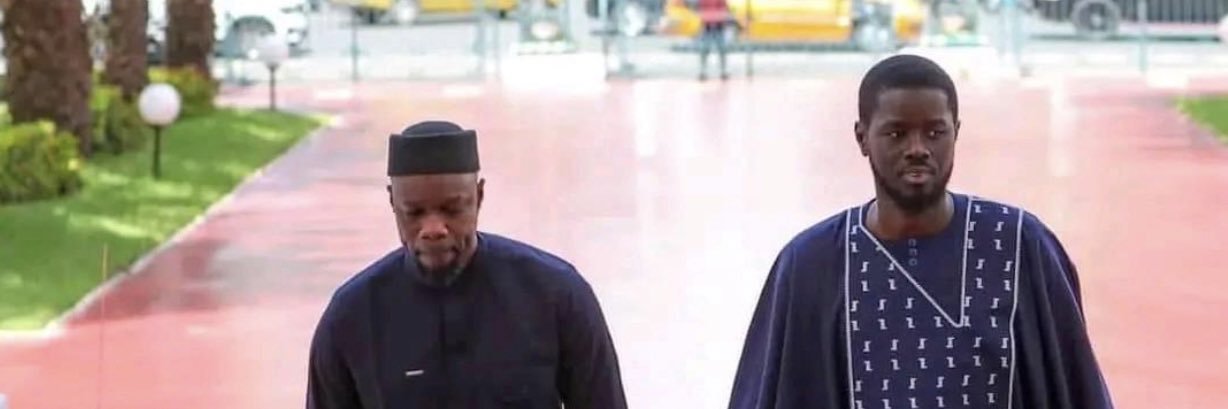
Au cœur du sacre des Lions de la Teranga : revivez les moments forts de ce match historique depuis le Palais ! Hier, le @PR_Diomaye et le PM @SonkoOfficiel ont vibré pour la finale, puis partagé la joie immense avec les milliers de sénégalais.
We know the algorithm is dumb and needs massive improvements, but at least you can see us struggle to make it better in real-time and with transparency.
No other social media companies do this.
Il ne faut en aucun cas laisser prospérer les « communiqués tâter le pouls » de la FIFA/CAF.
On a fait ce qu’on devait faire, il faut avancer et préparer la meilleure prestation d’une équipe africaine aux compétitions à venir.
Tout le lobbying et la communication nécessaires.
🏭 Industrie locale - CAR International Sénégal, spécialisée dans la menuiserie aluminium, inaugure une nouvelle ligne de production entièrement numérique.
L’entreprise affiche une capacité de 350 portes et fenêtres, et 200 pièces de double vitrage par mois.
📺 RTS, JT 7 déc. 2025
La Justice sociale/ la Justice, est la clef de voûte mystique du développement durable.
En l’absence de Justice, rien n’aboutira.
Un éternel cercle vicieux de recommencement politique.
Le sang et l’honneur sont sacrés, et lourds sur le sol africain ancestral.