The hot water that runs through the showers and faucets in your home can be a breeding ground for harmful bacteria if it’s not managed carefully. A new water heater design developed at NIST can help keep warm water safe.
Learn more: https://t.co/g3beaITBVw
This is why conventional building has a kind of cartoon like perfection. It’s a caricature of vernacular; a poorly interpreted lane in the theme park called hometown America, fresh out of the cellophane.
There has to be something slightly haphazard about vernacular for it to be truly successful, but there also has to be enough material substance and gravitas there to afford it.
St. Augustine gets so much right.
In the core, the streets are narrow, and the buildings are charmingly human scaled. Flagler College brings grandeur in its monumentality, and the beach ensures a steady stream of returnees.
Small, but among America's best places!
Have Americans finally had it with this mass surveillance system? Reason’s @BessByers has reported on Flock before, and if there’s one thing people in the comments can unite on, it’s their hatred for this.
USA. Summer. It is 95 degrees outside, and I am shivering inside a sandwich shop.
I have discovered how Americans forge strong souls.
Outside, the sun is trying to kill everyone. Inside this small restaurant, it is winter. My breath does not fog, but it is thinking about it. A man near me is eating a cold sandwich while wearing a jacket. In summer. Indoors.
In Japan we would simply turn it down. Americans do not turn it down. And now I understand them better than they understand themselves.
This cold is not an accident. This cold is a gift.
The owner has built, inside his shop, a second season. He invites you in from the brutal heat and hands you the one thing the sun has denied you all day: a reason to be cold. To endure it is to be tempered. You walk in soft and sweating. You walk out sharp and clear, a slightly stronger person than you were.
So I did not complain. I removed my outer layer and offered it to the woman at the next table, who was hugging herself. She said, "Oh, no, I'm fine, thank you." She was not fine. Her lips were blue. But she, too, understood the training. She would not break first. I respected her deeply.
The owner asked if everything was okay.
"It is perfect," I said, through my teeth, which were chattering. "Thank you for the winter."
He said, "...I can turn the AC down if you want?"
I told him no. A man does not ask the mountain to be shorter.
I stayed two hours. I ordered a hot coffee to survive. Then a second one, to hold. By the end I could no longer feel my hands, but my spirit had never been clearer.
So now, on the hottest days, I seek out the coldest rooms. I sit. I shiver. I sharpen.
And when I finally step back out into the summer heat, and it wraps around me like a warm bath, I feel it.
Reborn.
A man who has survived the winter, in August, indoors, for the price of a sandwich.
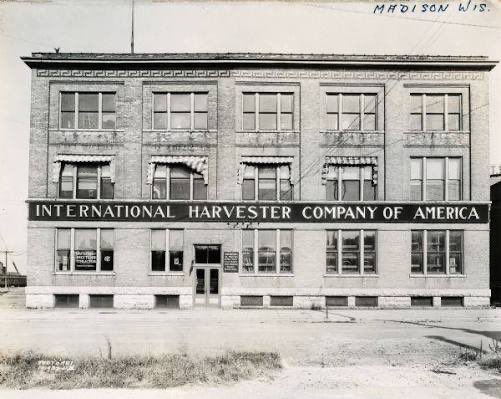
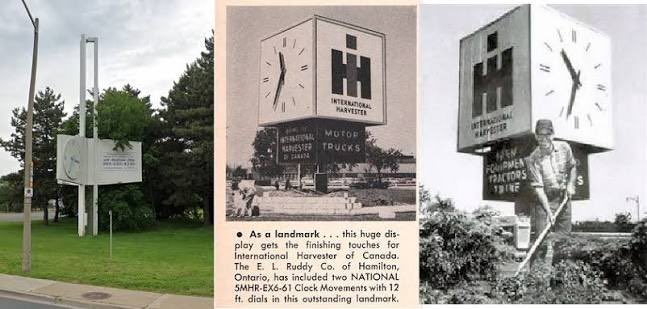
International Harvester once employed over 100,000 people and operated dozens of plants across the Midwest. Chicago, Rock Island, Fort Wayne, Louisville, Indianapolis, Springfield. Foundries, engine plants, transmission shops, test farms, steel stamping, casting, machining.
For decades, International Harvester helped mechanize American agriculture itself. The tractors, combines, and trucks coming out of those plants didn’t just move products. They changed how millions of acres were planted, harvested, transported, and fed into the global economy.
Entire towns organized themselves around that reality. High schools taught shop classes because there were actual jobs waiting afterward. Local machine shops survived off supplier contracts. Diners filled up before sunrise with welders, toolmakers, and line workers covered in metal dust and hydraulic oil.
Then the system started breaking apart.
Foreign competition increased. Leadership failures piled up. The 1979 strike hit hard. Farm debt exploded in the 1980s. Plants closed. Suppliers disappeared. Skilled workers scattered.
And something deeper disappeared with them. America used to treat mechanical competence like a civic asset. A person who could rebuild an engine, run a lathe, diagnose a hydraulic system, or keep industrial equipment alive carried real status in a town.
International Harvester’s collapse wasn’t just economic. It marked part of the moment America started separating intelligence from physical work.
That collapse changed rural America more than people realize. One closed plant, one lost supplier, one empty storefront, one auction at a time.
Tiny bee-inspired drones could soon navigate the world on their own | Knowridge
Honeybees may hold the secret to the future of drone technology.
Researchers in Europe have developed a new navigation system inspired by the way honeybees find their way home, allowing tiny drones to travel long distances while using very little memory or computing power.
The study, published in the journal Nature, was led by scientists from Delft University of Technology in collaboration with researchers from Wageningen University and Carl von Ossietzky University of Oldenburg.
The team created a navigation system called “Bee-Nav,” which copies how honeybees learn and remember their surroundings.
The goal was to help small robots and drones navigate independently without needing large computer systems or detailed digital maps.
Modern drones can already perform many impressive tasks, from inspecting buildings and monitoring crops to delivering packages.
But navigation remains one of the biggest challenges. Most drones rely on GPS or complicated mapping systems that require powerful processors, large memory storage, and a lot of energy. This makes drones heavier, more expensive, and less efficient.
Honeybees, however, solve the same problem with brains smaller than a grain of rice.
Despite their tiny brains, honeybees can fly far from their hive along winding routes and still return home successfully. Scientists believe they do this using a combination of odometry and visual memory. Odometry is a way of estimating movement by tracking direction and distance, similar to counting steps while walking. But odometry becomes less accurate over time, so bees also memorize what their environment looks like near important places such as their hive.
The researchers designed Bee-Nav around this idea. Just like a young honeybee, the robot first performs a short learning flight close to its home location. During this flight, it captures panoramic images of the surroundings. A small neural network then learns to estimate the direction and distance back home using those images.
Surprisingly, the system required extremely little memory. In some tests, the neural network used only 3.4 kilobytes of memory. Even in larger outdoor tests, the full navigation system required only 42 kilobytes, far less than traditional drone navigation systems.
The researchers tested the drones in both indoor and outdoor environments. In one outdoor experiment at the Dutch drone testing site Unmanned Valley, the drone successfully flew more than 600 meters away and still returned home. Indoor tests were highly successful, while outdoor tests in windy conditions had a success rate of about 70%.
The scientists found that strong wind made navigation more difficult because it tilted the drone and distorted the images it used to recognize its surroundings.
Even so, the researchers believe the technology has great potential. One possible use is greenhouse monitoring, where lightweight drones could safely inspect crops for pests or disease without posing risks to nearby workers.
The study may also help scientists better understand how real honeybees navigate the world. By studying insects more closely, researchers are discovering that nature may already contain elegant solutions to some of technology’s biggest problems.
https://t.co/dy9nY7Ezzj
A woman backed into an older American’s mustang
You see these little dents?
The woman had USAA insurance and they are totaling his car because of these small dents
He has no option to keep the car, an auto shop told him these dents could be easily repaired but the insurance company says no, he can’t keep the car
The insurance company is taking his car
This is a scam
The reason this happened is because let say your car is worth $3,000 and an accident happens. If the repair is $3,000, the insurance company will likely just total your car
Insurance companies prefer this because it’s cheaper for them to pay you the Actual Cash Value, minus your deductible, and sell the wrecked car for parts and scrap
But now you don’t have a car and just take the check that’s likely below what you need to buy a similar car
The Doomer Demoralization Psyop is really simple:
- Complain about a problem
- Complain that "nothing is happening" to solve the problem
- The problem gets solved/addressed with favorable results
- Declare that the favorable results are actually unfavorable results
- Rinse and repeat.
They want you to believe everything is a failure when the complete opposite is true.
It's a coordinated demoralization campaign and it couldn't be more obvious.
Alexander Solzhenitsyn gave the most controversial speech *against* Western Civilization at Harvard in 1978.
As a survivor of the Russian Gulags, they expected him to praise the West. Instead, he made a jarring accusation:
The West is a dying civilization. If it doesn't change its ways, it is doomed to collapse.
In fact, he said this has been the case for 500 years, when the West made a crucial mistake:
"How did the West decline from its triumphal march to its present debility?
...the mistake must be at the root, at the very foundation of thought in modern times. I refer to the prevailing Western view of the world which was born in the Renaissance…
I refer to humanism — the proclaimed autonomy of man from any higher force above him."
Solzhenitsyn said humanism made man autonomous from God, Truth, and objective morality.
If all morality is subjective, then man has nothing to live nor die for. Naturally, he loses his courage, embraces materialism, and grows effeminate to modern evils.
So, what is the solution?
A return to belief in a transcendental morality under God:
"If, as claimed by humanism, man were born only to be happy, he would not be born to die. Since his body is doomed to death, his task on earth evidently must be more spiritual…
The fulfillment of a permanent, earnest duty so that one’s life journey may become above all an experience of moral growth: to leave life a better human being than one started it."
All cultures live, or die, based on their respect of the True, Good, and Beautiful.
To save the West, Solzhenitsyn says start with beautifying your soul, for that is both how you live well, and begin to make civilization itself beautiful again.
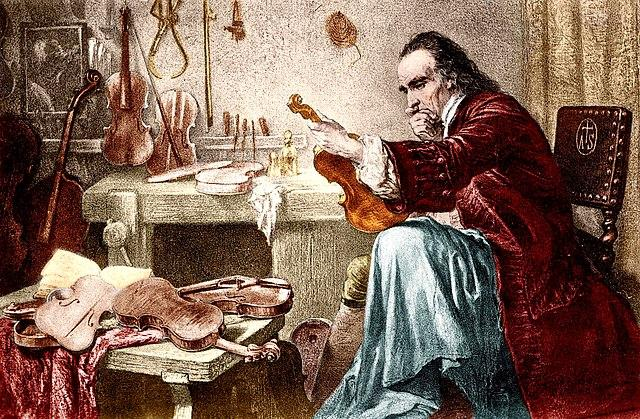
Every Stradivarius violin is a recording of 17th-century weather
The spruce Stradivari used grew during the Little Ice Age between 1645 and 1715
Cold decades, slow growth, rings so dense the wood vibrates at a frequency no tree grown since can match
When you hear a Stradivarius played in a concert hall, you are not hearing a craftsman
You are hearing a frozen era of Earth's climate
The instrument cannot be replicated
Not because the knowledge is lost
Because the weather that made it will not return
Jesus rose from the dead and the first person He went to was His brother who thought He was crazy.
Not Peter. Not John. Not the twelve.
James.
His kid brother. The one who grew up sharing a room with God and didn’t know it.
Think about James for a second. His older brother is Jesus. Not “Jesus the Christ.” Not “Jesus the Savior.” Jesus the guy who worked in the carpenter shop and came home smelling like sawdust and sweat. Jesus who snored. Jesus who ate too fast. Jesus who their mother treated different and James never understood why.
Because Mary kept her mouth shut.
Luke 2:19. She kept all these things and pondered them in her heart. Angels showed up at His birth. Shepherds fell on their faces. Wise men brought gold. And Mary told nobody. She just watched her firstborn grow up in a ghetto in Nazareth and kept the secret in her chest like a coal she couldn’t put down.
James didn’t know his brother was God.
He knew his brother was weird.
He knew his mother looked at Jesus different. He knew Joseph moved the whole family to Egypt when they were little and never fully explained why. He knew that one time his parents lost Jesus at the temple and found Him three days later arguing with rabbis like He owned the place. Twelve years old. Already gone.
Then Jesus grew up. Worked the shop. Paid the bills.
Because Joseph died — the Bible doesn’t say when but Joseph disappears from the story — and in Jewish custom the eldest son takes over. So Jesus wasn’t posing for paintings in that carpenter shop. He was feeding His family. Putting bread on the table for His mom and His brothers and sisters in a town so poor Nathanael said “can anything good come out of Nazareth?”
Then one day He left.
Walked away from the shop. Walked away from the family. Left James holding the hammer and the bills and the responsibility for a widowed mother.
James was pissed.
Mark 3:21. His own family went to collect Him because they said He was out of His mind. That’s James. That’s the brothers. Showing up to bring the crazy one home before He embarrasses the family worse.
John 7:5. His brethren did not believe in Him.
His own blood. Ate dinner with Him for thirty years. Didn’t believe.
Then Wednesday happened.
The brother James thought was insane got arrested at night by temple guards. Got beaten until His face swelled shut. Got whipped until His back looked like raw meat. Got nailed to wood and hung up on a garbage hill outside the city.
And James had to stand somewhere — maybe in the crowd, maybe at home, maybe hearing it secondhand — and process the fact that the brother he called crazy just died like a criminal.
Three days and nights of silence.
Three days of James sitting with the guilt of every eye roll. Every argument. Every time he told people “I don’t know what’s wrong with Him.” Every time he showed up to drag Jesus home because He was embarrassing the family name.
Then Sunday morning.
Jesus rose. Conquered death. Walked out of the tomb.
And He went to James.
1 Corinthians 15:7. He appeared to James.
Not in a crowd. Not at a distance. He went to His brother. The one who didn’t believe. The one who thought He was crazy. The one who was pissed that He left the family behind.
He showed up and let James see the holes in His hands.
Matthew 28:10. Go tell my brethren. Not my servants. Not my followers. My brethren.
John 20:17. My Father and your Father. My God and your God.
He rose to the highest position in the universe and His vocabulary didn’t change.
Most men get a promotion and stop returning phone calls. Jesus conquered death and called the brother who doubted Him family.
James went from “He’s out of His mind” to leading the church in Jerusalem.
James went from trying to drag Jesus home to writing a book of the Bible.
James went from skeptic to martyr. They threw him off the temple wall and when he survived the fall they beat him to death with a club. He died for the brother he once thought was insane.
That’s what happened when Jesus showed up after the resurrection and said brother.
One word changed everything.
He’s not calling you servant today.
He’s not calling you subject.
He’s calling you what He called James.
Brother.
The same James who didn’t believe. Who rolled his eyes. Who showed up to take Him home. Who sat in the dark for three days choking on regret.
He went to THAT guy first.
If He went to James, He’ll come to you.
❌CORRECTING THE RECORD❌
Rumor: “Burt Jones gave a 40% increase to himself for his retirement fund”….”he is lining his pockets”
Truth and ACTUAL legislation: The "40% increase" claim about Georgia's retirement funds is a misleading political attack ad narrative run by the anonymous dark money group "Georgians for Integrity", not a factual blanket boost to pensions or "self-enrichment" by officials. These ads (titled things like "Pay Day") specifically target Lt. Gov. Burt Jones in the 2026 GOP gubernatorial primary, claiming: "Burt voted to raise his own taxpayer-funded pension by 40%."
Here's what the actual legislation says: These are routine updates to public pension formulas for future service only. They are not retroactive raises, not a flat 40% hike to existing funds/retirees, and not limited to politicians—they affect broader state systems and often come with higher employee contributions.
- HB 891 (Georgia State Employees’ Pension and Savings Plan / GSEPS under the Employees’ Retirement System): Increases the benefit accrual rate for service after July 1, 2026 (e.g., from 1% to 1.5% per year in related plans).
It also raises employee contribution rates to help fund it. This applies to eligible state employees overall, not just elected officials.
→ Official tracking & summary: [https://t.co/RhbjzKsoAS](https://t.co/RhbjzKsoAS)
→ Bill document: [https://t.co/B8fcCrO9MX](https://t.co/B8fcCrO9MX)
- HB 895 (Legislative Retirement System / LRS): Raises the monthly multiplier for certain legislators from $50 to $75 per year of creditable service.
Similar authority appears in related bills like SB 198 (allowing board increases tied to the system's funded ratio). Again, this is for qualifying future or post-2022 service.
→ Official tracking: [https://t.co/Mms9P6B8pn](https://t.co/Mms9P6B8pn)
→ Full details in legislative reports: [https://t.co/Dh9THo0mql](https://t.co/Dh9THo0mql)
The bills went through actuarial studies, apply prospectively, and align with other updates (e.g., enhanced law enforcement matching, COLA restoration efforts via SB 339, or one-time retiree supplements in the budget). No 40% increase to the GA state government has been given for retirement funds.
Bottom line
This is classic campaign distortion from an undisclosed dark-money group spending to attack Jones.
The changes modernize outdated multipliers amid inflation pressures (common in public pensions) and affect thousands of state workers—not a secret politician payday. Georgia's retirement systems (ERS, TRS, LRS, etc.) remain actuarially sound with transparent oversight.
For the unfiltered truth, read the bills yourself on the official Georgia General Assembly site (https://t.co/JVAG9rOlHW) or LegiScan rather than believing a 30-second ad. Jones and the state GOP have pushed back hard, filing ethics complaints against the group for hiding donors.
Urgent Alert: Cychlorphine, a synthetic opioid 10x more potent than fentanyl, is infiltrating the illicit drug supply and linked to rising overdoses across multiple states. Not detectable by fentanyl test strips—tiny amounts can be deadly. Know the risks and seek help if needed. #OpioidEpidemic #StaySafe
Read more: https://t.co/7OmEsJl0iV
Will your kids be next to take on the 50 Yard Challenge?
This challenge is open to kids across the USA and beyond! Their mission? Mow 50 free lawns for seniors, individuals with disabilities, single parents, veterans & first responders in their neighborhood. There’s no time limit—plus, they can also rake leaves in the fall and shovel snow in the winter!
We’ve designed the challenge like a Karate System—each child starts with a white shirt, then levels up with a new color every 10 lawns. Orange at 10, green at 20, blue at 30, and red at 40. Once they reach 50 lawns, they’ll earn their black shirt and a brand-new set of lawn equipment—a mower, weed eater, and blower!
So, what do you say? Are your kids ready to step up and change lives, one lawn at a time?
Sign them up here : https://t.co/Z4xjuWhHvg