@maiab Okay cool have been eyeing Quince. I think my issue is that the room is large and I need a 12x15 or similar so the design choices get more slim.
Best rugs for households with kids? Looking for wool but performance, patterns that don’t show stains and don’t cost a small fortune. Is this a thing? @maiab any thoughts?
We just signed a lease for the first humanoid store in the USA! The @REK Shop.
Coming to San Francisco Nob Hill in ~2 months.
Shop during the day, robot fights at night.
If you skip some or all of college to start a startup, it's on you to develop your mind the way college would have. And that's not something that happens by default in most startups.
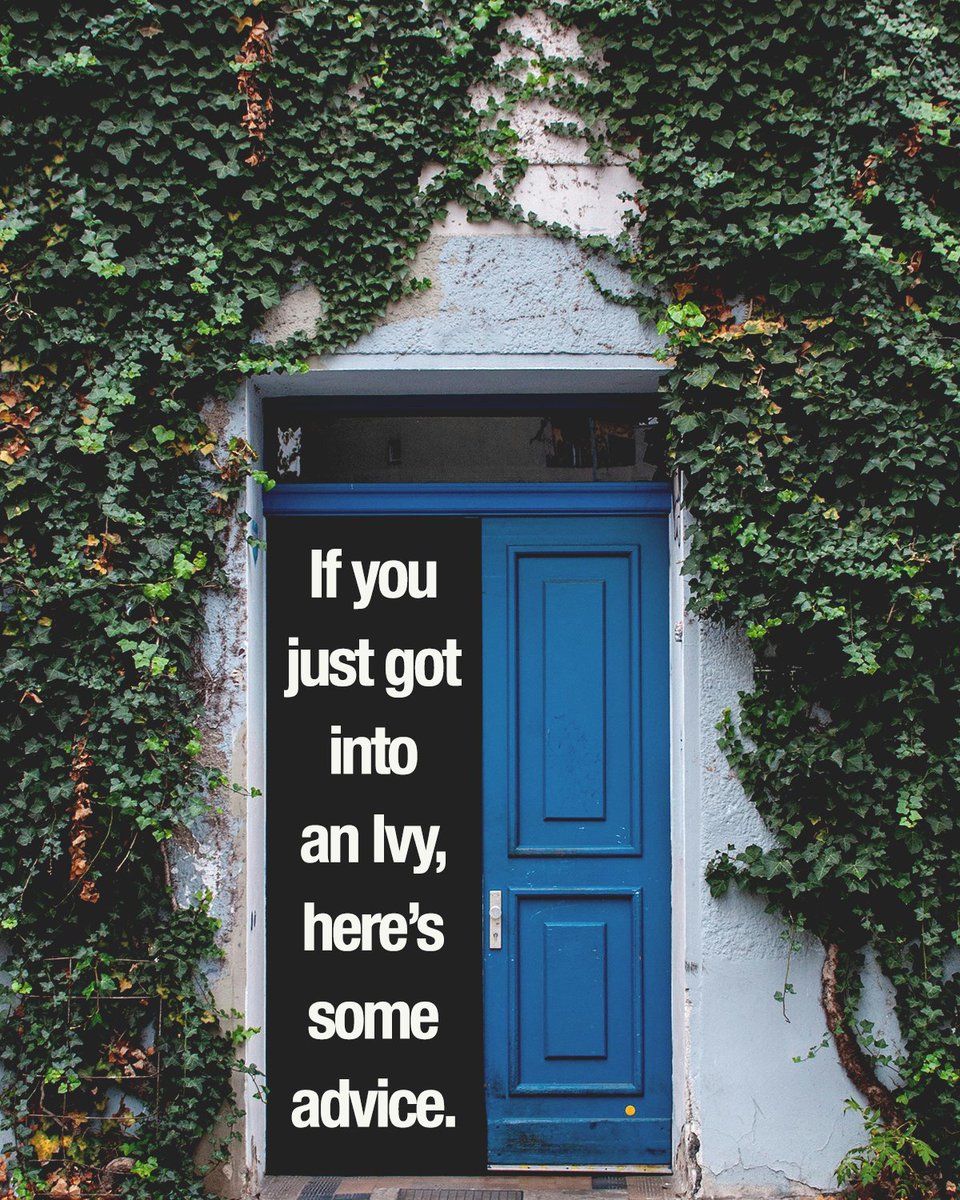
To: Admitted Students on Ivy Decision Day
From: UATX
Congratulations. Getting in was hard and you should be proud. Now here’s some unsolicited advice so you don’t waste the next four years.
Go to class. We know this sounds obvious. But as the New York Times reported recently, Harvard students routinely skip class, rarely speak up when they're there, and focus on their devices instead of the discussion. Faculty say few students do enough preparation to contribute meaningfully. The average college student spends about 20 hours a week on class and studying combined. At UATX, we aim for 50. That’s the difference between a part-time commitment and a full-time job. You (or your parents) are about to spend upwards of $90K a year. If you don't show up, you're paying roughly $250 per skipped lecture for the privilege of sleeping in.
Read the books yourself. Your generation is the first to arrive at college post-literate — raised on short-form video, dependent on algorithms, and increasingly incapable of sitting with a difficult text long enough to let it change your mind. Ninety percent of college students use AI academically. This makes you more reliant on the authority of others. Most professors will also stand between you and the text. They’ll tell you what Marx “really meant,” what Aristotle “failed to see,” as though an academic in 2026 has outsmarted minds that shaped civilizations. The good professors do the opposite: they put you in front of the book and they work with you to find what a great mind has to teach us directly. Find those professors, and read everything yourself.
Say what you actually think. Seventy-three percent of conservative students report withholding their political views in class out of fear their grades will suffer. Our advice isn't political; it's intellectual. If you spend four years learning to say what's expected instead of what's true, you’ll graduate roughly where you started — just older, more credentialed, and more practiced at self-censorship. One study finds that nearly half of students show no measurable gains in “critical thinking” after two years in college. Keep this in mind as you make decisions about which professors to take and how to do your assignments. Taking a small hit on your paper to gain integrity and wisdom is usually worth it.
Ask for real grades. Sixty percent of Harvard undergraduate grades are now A’s. Twenty-five years ago, it was 20%. It got so bad that the legendary Harvard professor, Harvey Mansfield, started giving students two grades: the official one for their transcript, and a private one reflecting what they actually earned. He called the official grades “ironic.” So here's a suggestion: Take your A, but also ask your professors for a “Mansfield grade” so that you know where you stand. And don’t avoid difficult courses to keep your transcript clean for law school.
Get work experience before you graduate. Forty-two percent of recent college graduates are working jobs that don't require a degree. Many employers are projecting the next few years to be the worst college grad job market in years. A degree alone — even from an Ivy — is not a job guarantee. Seek out apprenticeships, internships, and real work starting freshman year. The students at UATX are connected with entrepreneurs and business leaders from day one. Many will graduate with four years of work experience alongside their degree. You can build something similar at your school, but you'll have to do it yourself.
Understand how debt shapes your life. If you're paying full freight or even half, do the math with your eyes open. Your decision to take on debt will quietly reshape the trajectory of your adult life through countless small surrenders: the job you take because it’s safe instead of starting the company. The city you choose to live in. The relationship you delay and the kids you don’t have. For women, a $1,000 increase in student loan debt lowers the odds of marriage by 2% per month in the first four years after graduation. None of that shows up in the college brochure. If you're going to take on debt, treat it like the constraint it is from day one: save aggressively and make sure every dollar is buying something that will actually compound in your favor.
Find the people who take school seriously. The best thing about a great school isn't the lectures or the library. It's the handful of professors and students who are genuinely there to learn — who read ahead, argue in good faith, and push you to be sharper. Find them. UATX is a small community of those who seek a serious education. At a larger university, you have to build this community yourself.
*
The most dangerous thing about an elite university is that it is very easy to do nothing for four years and still come out looking successful. The transcript will say you excelled. The diploma with the fancy crest will open certain doors. Your parents will be proud. And yet you will have coasted — through inflated grades, unread books, and borrowed opinions.
Getting in is an accomplishment. Making the next four years worth it will be harder, and the right decisions will change everything.
We wish you luck.
Also consider who funds those publications, gives them traffic, and gives perks to the journalists. If you go up against one of those entities, prepare for a smear campaign.
Founders: take my advice... do not talk to the press, go direct and do long-form podcasts.
Wired and the NYT are as biased as Fox News and MSNOW these days
This is a function of their need to pander to one side to survive, be it through $ 3-a-month subs or rage-baiting ad-based stories.
Attacking tech gets views (see Karen Swisher)... and views get advertisers (paradoxically, tech advertisers support the folks trashing tech! let that sink in!)
Founders: If you talk to the NYT or WIRED, they will trash and misrepresent you 95% of the time in order to get more subscribers and page views
It is what it is...
It's not just phonics: Schools have failed to teach reading because they ignore 50+ years of findings in cognitive psychology that reading depends on general knowledge. ED Hirsch has been banging this drum for a long time but Ed Schools shut their ears because the whole idea was unromantic & had a vaguely right-wing aroma. Now he joins with Dan Willingham to make a strong case that kids can't read if they don't have the background knowledge that makes sense of the rarer vocabulary, allusions, and understandings that allow us to read between the lines - which all reading requires. https://t.co/l1y4nkJfPO