We engage in capitalism because we agree with Adam Smith that selfish actions of individuals...wonderfully accumulate to the common good. Donella H Meadows
In October 2023, 108 economists, including Thomas Piketty and Gabriel Zucman, signed an open letter warning that Javier Milei would devastate Argentina if he won in November.
Major outlets treated it as settled consensus.
He won, and this is what actually happened. 🧵
A CNN reporter, a BBC reporter, and an Israeli commando are captured by Hamas in Gaza. The leader of the terrorists said he'd grant them each one last request before they were beheaded.
The CNN Reporter said, "I’d like one last hamburger with fries.”
The leader nodded and said it would be done.
The BBC Reporter said, "I want to describe the scene here and what’s about to happen so my government knows I did the job until the end.”
The leader nodded and said it would be done.
Then he turned to the Israeli commando and said, “And what is your final wish?”
“Kick me in the butt,” said the soldier.
“Do not mock me, Jew.”
“I’m not kidding. I want you to kick me in the butt.”
So the terrorist leader shoved him into the open and kicked him in the behind. The soldier went sprawling but rolled to his knees, pulled a pistol they hadn't found, and shot the leader dead. Then he grabbed a rifle from another terrorist and suddenly they were all dead or fleeing.
"You could've done that all along?" asked the Brit.
"Yeah, why did you want to be kicked in the butt?" asked the American.
“If I hadn't," replied the Israeli, “You two would have reported that I was the aggressor."
Meet Dr. Casey Means.
This Stanford-trained physician left surgery to expose how modern medicine ignores the root causes of nearly all chronic diseases.
Here are her top 7 tips to protect your health: 🧵
1. Eat your food in the right order
France-Albert René seized power in Seychelles through a coup in 1977, promising his people the revolutionary paradise that socialism would deliver. He nationalized industries, imposed price controls, and centralized economic planning across the island nation of just 60,000 people. The results arrived swiftly and predictably.
By the mid-1980s, Seychelles faced economic collapse. State-controlled agriculture produced chronic food shortages despite the islands' fertile soil and favorable climate. Tourism, the natural economic lifeline for a tropical paradise, withered under bureaucratic mismanagement and foreign exchange restrictions. The government treasury emptied as subsidized state enterprises consumed resources without producing value. Black markets flourished while official commerce stagnated.
Rene confronted an unavoidable choice: watch his country sink into poverty or abandon the socialist experiment. In 1991, he chose pragmatism over ideology. The man who had imposed single-party rule and Marxist economics suddenly embraced multiparty democracy and free markets. He privatized state enterprises, eliminated price controls, opened the economy to foreign investment, and established the Seychelles as an international financial center.
The transformation was immediate and dramatic. GDP per capita surged from roughly $4,000 in 1990 to over $15,000 by 2010. Tourism exploded as private operators could finally respond to market signals and customer demands. The Seychelles developed a thriving offshore banking sector, attracting international capital with competitive tax rates and regulatory efficiency. Agricultural productivity increased as farmers could sell their crops at market prices rather than government-mandated rates below cost.
Private property rights, enforced contracts, and competitive markets accomplished what central planning never could. Entrepreneurs opened luxury resorts, developed fishing operations, and created service businesses that employed thousands of Seychellois. Foreign investment flowed into telecommunications, transportation, and financial services. The islands became one of Africa's wealthiest nations measured by per capita income.
Rene's conversion represents more than one dictator's pragmatic pivot. His experience validates every prediction free market economists make about socialist central planning. Price controls create shortages. State ownership destroys incentives. Central planners lack the information that market prices provide. Bureaucrats cannot allocate resources efficiently across millions of individual decisions.
The Seychelles experiment also exposes the intellectual poverty of those who claim mixed economies or "democratic socialism" avoid these problems. Rene tried gradual reforms first. He attempted to maintain state control while improving performance through better management and more resources. These half-measures failed because the fundamental issue was not incompetent administration but the absence of market mechanisms.
When Rene finally embraced capitalism, prosperity followed not because he was particularly wise or skilled but because free markets work regardless of who implements them. Private ownership creates incentives for productive behavior. Competitive pricing allocates resources to their most valued uses. Profit and loss guide entrepreneurs toward satisfying consumer preferences.
The most remarkable aspect of the Seychelles transformation was Rene himself remaining in power through 2004. Voters rewarded him for delivering economic growth even though he had initially imposed the socialism that created their poverty. His political survival demonstrates that people care more about results than consistency.
Today, the Seychelles ranks among the world's highest-income countries. Visitors enjoy world-class resorts, pristine beaches, and efficient services that market competition provides. The islands that once suffered under socialist mismanagement now prosper as a free market success story.
Rene accidentally conducted the perfect economic experiment: identical geography, climate, and population under two radically different systems. Socialism produced poverty and stagnation. Capitalism delivered prosperity and growth. The results could not be clearer.
@eshanbuilds@aakashgupta Eshan, you are spot on the real problem. Mike Davis' Late Victorian Holocausts lays out the details. Weather caused a harvest problem, institutionalized food theft killed the people.
scaling the 1877 death toll to today's population is the most irresponsible number in this post. the 50 million died because the british raj exported grain during famine and the qing dynasty was collapsing. the weather was the trigger. colonial extraction was the weapon.
the fertilizer convergence thesis is genuinely interesting and underdiscussed. but "commodity futures barely pricing either shock" has two possible explanations. either the market is wrong, or the market has access to forward supply data the post doesn't cite.
grain traders who manage billion-dollar books for a living being wrong about a risk a twitter thread identified correctly would be unusual
The UK just deployed a political weapon it's only used once before in modern history.
And nobody is talking about what it just backfired into.
🚨 🚨 🚨 KEIR STARMER BANNED FOREIGN JOURNALISTS FROM ENGLAND TO STOP A RALLY → IT PRODUCED THE LARGEST ANTI-GOVERNMENT MARCH IN YEARS 🚨 🚨 🚨
The Home Office issued entry bans on 11 foreign nationals ahead of the 16 May 'Unite the Kingdom' rally in central London. Rebel News founder Ezra Levant. Multiple journalists. Commentators. Banned from the country. To stop a march.
Metropolitan Police deployed 4,000+ officers. Live facial recognition. Drones. Dogs. Horses.
The result: tens of thousands — some estimates reaching hundreds of thousands — flooding the streets of London anyway.
THE WEAPON:
→ UK Home Office entry bans — 11 foreign nationals barred from the country
→ Prime Minister publicly labeled the rally "extremist" and "hatred and division"
→ Starmer framed it as "a battle for the soul of our nation" in direct pre-rally statements
→ Police mobilized at a scale typically reserved for state visits or terror threats
→ Live facial recognition deployed across central London
→ Rival pro-Palestine march simultaneously permitted on the same day
→ Metropolitan Police prepared for 50,000 — the actual crowd exceeded preparation
→ Government rhetoric amplified international media attention across the US and Europe
THE TARGET:
→ A march organized around "national unity, free speech, and Christian values"
→ Organized weeks after Reform UK seized 1,350+ council seats and control of 13 councils in the 8 May local elections
→ Reform's gains came primarily at Labour's direct expense — Essex, Sunderland, council after council
THE MATH:
→ Reform UK: 1,350+ seats gained in a single election cycle
→ 13 councils flipped — including Essex with 42 seats
→ Starmer's response: ban journalists, deploy 4,000 officers, call the march extremist
→ Outcome: the bans became the story, the march became a symbol, and the streets filled anyway
Read that again.
💀 Every ban Starmer issued handed organizers a government-censorship narrative
💀 Every officer deployed turned a political rally into a national confrontation
💀 The suppression didn't shrink the movement — it advertised it
⚠️ Reform just proved it can win elections. The march proved it can also fill streets.
⚠️ Starmer called it "a battle for the soul of our nation" — and then lost the visual battle on live television
⚠️ This isn't a fringe moment. This is what a political realignment looks like in the streets.
They're showing you the arrests and the police lines.
They're NOT showing you what this sequence actually means — a government that just lost 1,350 council seats in one night responded to the aftermath by banning journalists and calling a march extremist, and the streets answered with the largest visible opposition mobilization in years.
You don't ban foreign journalists to stop a fringe event. You ban foreign journalists when you're afraid of what the footage will show. And you only deploy 4,000 officers with drones and facial recognition when you already know the crowd is going to be too large to ignore.
Process that.
Most people won't see this. RT to change that. 🔥
I'll keep you updated as this unfolds, turn on notifications this is EXTREMELY important.
@TMcWheezy@SamaHoole@grok was the primary purpose of the 19th cen bison slaughter to destroy the native economy or to open land for settlement and infrastructure.
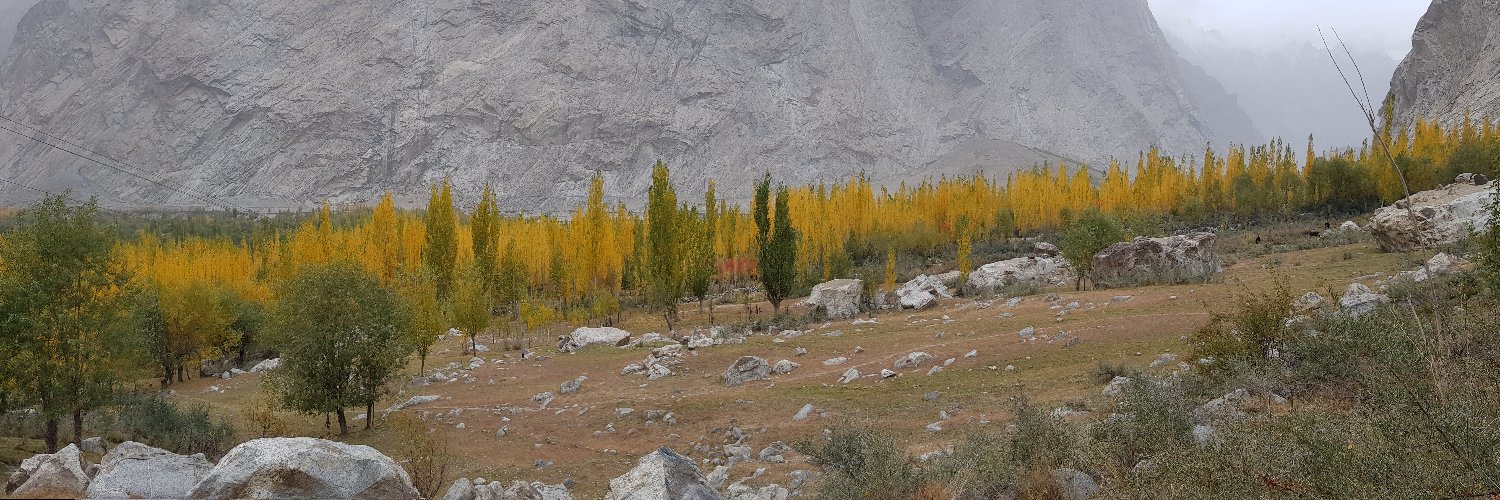
The desert should be dead. But these spirals keep it alive — 1,500 years later.
Fifteen hundred years ago, in one of the driest places on Earth, the Nazca people engineered a hydraulic masterpiece: the Puquios.
They didn’t fight the sun. They went underneath it.
Kilometers of underground aqueducts tapping hidden aquifers. Elegant spiral ventilation shafts — perfectly coiled, almost alien-looking — that pull wind underground to keep water flowing clean and steady without pumps, electricity, or evaporation.
Of the 46 puquios discovered, 32 are still fully operational today. In 2026. Farmers are still growing cotton, beans, potatoes, and corn exactly as their ancestors did.
When these were built, Rome was at its peak or already collapsing. The Inca hadn’t risen yet. Writing, wheels, and iron were still distant dreams for much of the world.
Yet this system — built with flagstones and resilient huarango wood — has outlasted empires, earthquakes, conquests, and relentless drought.
Modern megaprojects crumble in decades. These silent underground rivers refuse to die.
The water is real. The spirals are still turning. The desert tried to kill it. Time tried to bury it.
But the genius of the Nazca keeps flowing in the dark — long after the hands that built it turned to dust.
Some engineering doesn’t just survive time. It quietly defeats the desert.
Sweden's socialist experiment collapsed spectacularly in the early 1990s, forcing politicians to abandon decades of central planning and embrace free markets. The results speak louder than any economic textbook ever could.
By 1990, Sweden's government consumed 67% of GDP. The marginal tax rate hit 87%. Capital flight accelerated as entrepreneurs fled to countries that didn't punish success. The krona crashed. Banks failed. Unemployment spiked to 9.9% by 1997. Sweden's welfare state had priced itself out of reality, just as free market economists predicted it would.
Then came the great reversal. Sweden privatized telecommunications, postal services, railways, and electricity. Politicians slashed the corporate tax rate from 57% to 22%. They introduced school vouchers, allowing parents to choose private schools with taxpayer funding. They partially privatized pensions, letting workers invest in individual accounts instead of relying solely on government promises. Most importantly, they eliminated wealth taxes and inheritance taxes that had driven capital overseas.
The recovery was swift and decisive. GDP growth accelerated. Unemployment plummeted to 6.1% by 2007. Sweden became a tech powerhouse, producing global companies like Spotify and Skype. The Stockholm stock exchange outperformed most European markets. Foreign investment flowed back as Sweden transformed from socialist cautionary tale to Nordic success story.
Today's American progressives love citing "Scandinavian socialism" while ignoring that Sweden's prosperity stems from abandoning socialism when it failed. They want the Sweden of 2023 while implementing the policies of 1975.
In over a decade of urban warfare studies, I've studied hundreds of urban battles and urban centric wars. No military has ever taken as many measures to protect civilian than the IDF has in Gaza and despite all the lies, damn lies, & statistics this @netanyahu statement remains true. https://t.co/uQ2u5lIYu7
You sit 5+ hours a day.
Your lower back is screaming by 3pm.
After 17 years coaching executives and surgeons, here are 5 exercises I prescribe to reverse desk damage in under 10 minutes:
= Thread =
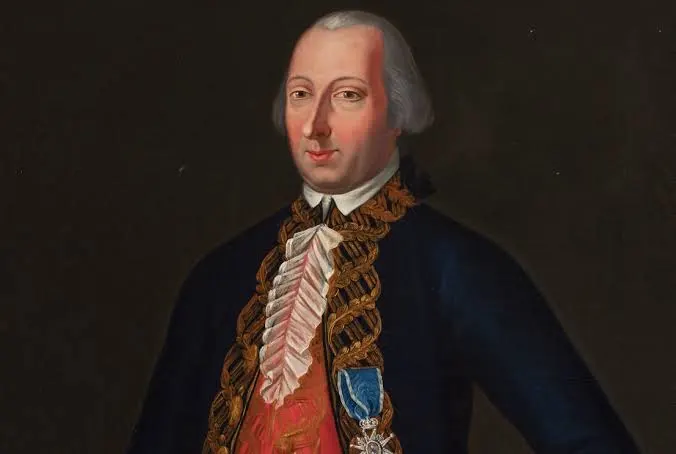
245 years ago today, a 35-year-old Spanish nobleman fired a single artillery shell that redrew the map of North America, broke British power in the Gulf of Mexico, and arguably saved the American Revolution. His name was Bernardo de Gálvez. He's not in your textbook. He should be.
When Spain entered the war against Britain in June 1779, the American cause was bleeding out. Washington's army was unpaid and shrinking. The Continental dollar was worth pennies. The British had taken Savannah and were preparing to take Charleston. France was helping, but France alone couldn't bankrupt the British Empire.
Spain could. And in New Orleans sat the man who would prove it.
Bernardo de Gálvez y Madrid was 33 years old, the governor of Spanish Louisiana, a battle-scarred career officer who had been wounded fighting Apaches in northern Mexico and Algerians in North Africa. The day he learned Spain had declared war, he didn't wait for orders from Madrid. He raised an army of Spanish regulars, Louisiana Creoles, free Black militia from New Orleans, Acadian refugees, German settlers, and Choctaw scouts, and he went on the attack.
In three months he took Manchac, Baton Rouge, and Natchez. The next year he took Mobile. The British presence on the Gulf shrank to one last fortress. Pensacola, the capital of British West Florida, defended by Major General John Campbell with 1,500 redcoats, the 3rd Waldeck Regiment of German mercenaries, loyalist battalions from Maryland and Pennsylvania, and a powerful alliance of Creek and Choctaw warriors led by the brilliant mixed-race chief Alexander McGillivray.
Gálvez arrived off Pensacola in March 1781 with 7,000 men and a fleet. The Spanish naval commander, Admiral Calbo de Irazábal, refused to enter Pensacola Bay. The entrance was narrow, raked by British guns at Fort Barrancas Coloradas, and treacherous with sandbars. So Gálvez did something insane. He boarded his own little brig, the Galveztown, hoisted his personal pennant, and sailed her into the bay alone, in full view of the British batteries, daring the Royal Navy to sink him. The British fired and missed. The Spanish fleet, shamed, followed him in. For this he was awarded the right to put the words "Yo Solo," meaning "I alone," on his coat of arms by the King of Spain.
The siege ground on for two months. Gálvez was shot in the abdomen and the finger directing artillery and refused to leave the field. The British defenses at the Queen's Redoubt, also called the Crescent, held against everything thrown at them. And then, on the morning of May 8, 1781, a Spanish howitzer crew lofted a shell over the parapet. It dropped, by pure luck or perfect skill, directly into the open powder magazine.
The explosion killed roughly 100 defenders in a single instant. Waldeck grenadiers, British regulars, loyalists, all gone. The blast tore the redoubt's wall open like paper. Spanish grenadiers and Louisiana militia poured through the breach within minutes and turned the captured British guns on the inner works. Campbell knew it was over.
The next morning, May 9, white flags went up. By May 10 the entire province of West Florida belonged to Spain. Over 1,100 British troops marched out as prisoners of war.
The strategic consequences were catastrophic for Britain. The Gulf Coast was lost. The Mississippi was a Spanish river from source to sea. Britain could no longer reinforce its southern armies by sea from the Caribbean, and the Royal Navy's Caribbean squadron had to be redeployed. Five months later, Cornwallis surrendered at Yorktown, in a siege funded in part by 500,000 silver pesos that Gálvez and the people of Havana raised in a matter of days to pay French Admiral de Grasse's fleet to come north.
Without that money, no French fleet. Without the French fleet, no Yorktown. Without Yorktown, no independence on those terms.
Gálvez was made Count of Gálvez and Viscount of Galveztown. The bay he charted in Texas still bears his name, Galveston. His portrait hangs in the United States Capitol by act of Congress. In 2014, he was made an honorary citizen of the United States, an honor given to only eight people in American history, including Lafayette, Churchill, and Mother Teresa.
He died of yellow fever in Mexico City at 40 years old, three years after the war ended.
Most Americans have never heard his name.
@felixprehn URA is Direxion Daily Uranium Industry Bull 2X ETF. URNM is the Sprott Uranium Miners ETF while the North Shore Global Uranium Mining ETF was reorganized into the Sprott Uranium Miners ETF (URNM) on April 25, 2022.