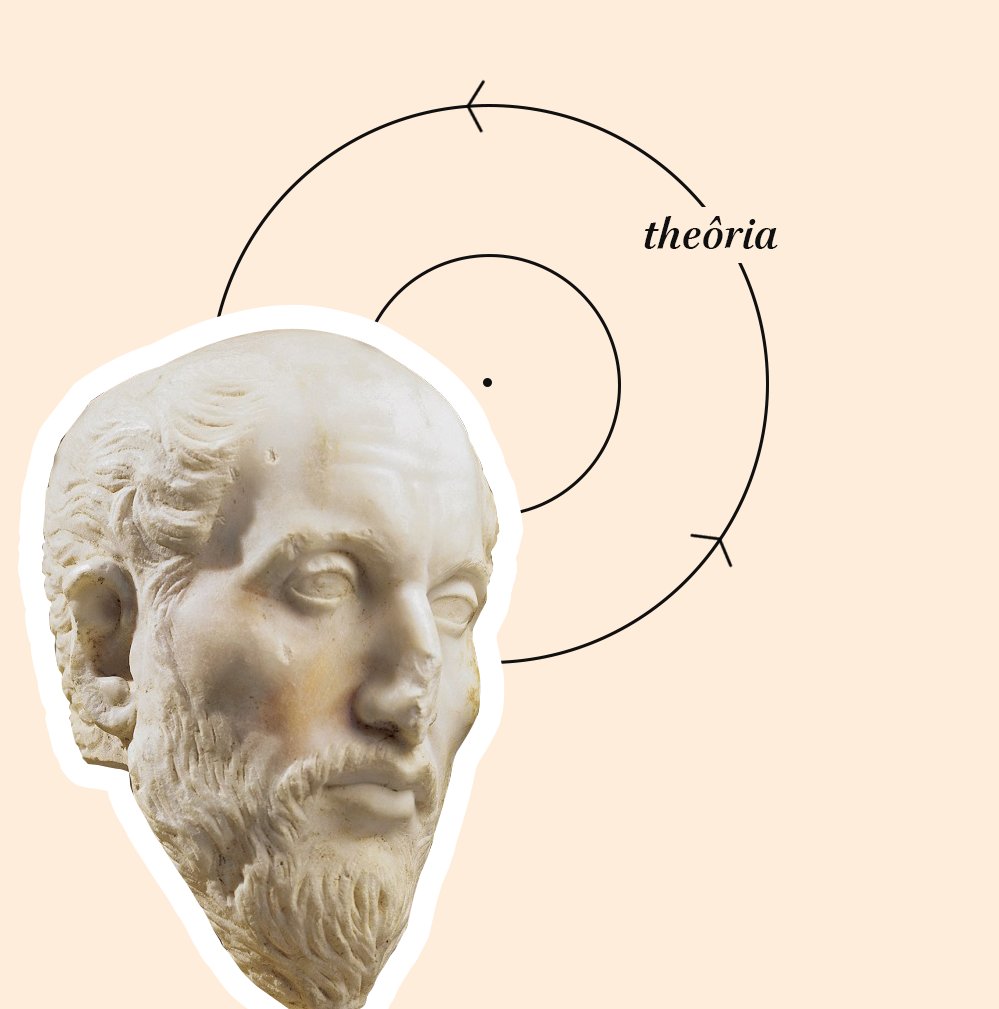
In his Seventh Letter, Plato presents a remodeled divided line comprised of four kinds: name, definition, image, and knowledge. These four pertain to a thing's being or substance [οὐσία], interdependent in the univocity of being.
To this, he adds a fifth, surpassing all four.
"The spirit [approximating temperateness], [subtle] in the highest degree, is especially celestial and has acquired celestial life above the rest from the Divine; and so long as it renders itself and keeps itself like this in all its diet and regimen, to that extent it gains the singular gifts of the celestials."
- Marsilio Ficino (De Vita Libris Tres, III.20.73-76)
📄 Plotinus on Intelligible Love
Plotinus notes a curiosity when speaking about beauty merely in physical form. We commonly speak of the beauty of things symmetrical. Of parts and harmonious proportions. Of symmetry. Yet this seems gravely insufficient to describe beauty.
Virtues [ἀρετή] are forms of the soul's integrity. They are diverse forces in the self; differing in each person.
To be ‘sorted’ into Four Great Houses, each representing one's most potent cardinal virtue, is an initiation into a hidden, esoteric education for self-discovery.
It slowly eats away at the soul, to be surrounded by sycophants and ‘fair-weather friends,’ who only like me for my family's status. I've seen true friendships blossom; being denied of them due to my elitist upbringing. Even then, I wonder if I'm the family's disappointment.
According to legend, St. Albertus Magnus discovered the Philosopher's Stone and passed it to his student, St. Thomas Aquinas. For Christians, the stone symbolized the purgation of the soul: base metal to perfect gold.
My father taught me that this was the true philosopher's aim.
A wiseman once told me that the remedies for goyim fatigue are as those for melancholy: sleep, bathing, jovial music and the company of friends.
But it was cute and moe anime girls he prescribed above all. Without a total eclipse of the heart, one will not be truly blessed.