Thrilled to be able to officially announce that I’ll be starting a new job as Assistant Curator for Science Education at the New Jersey State Museum on April 10!! This gal is heading to the East Coast!!!
#newjob#phdlife#announcement#museums#science
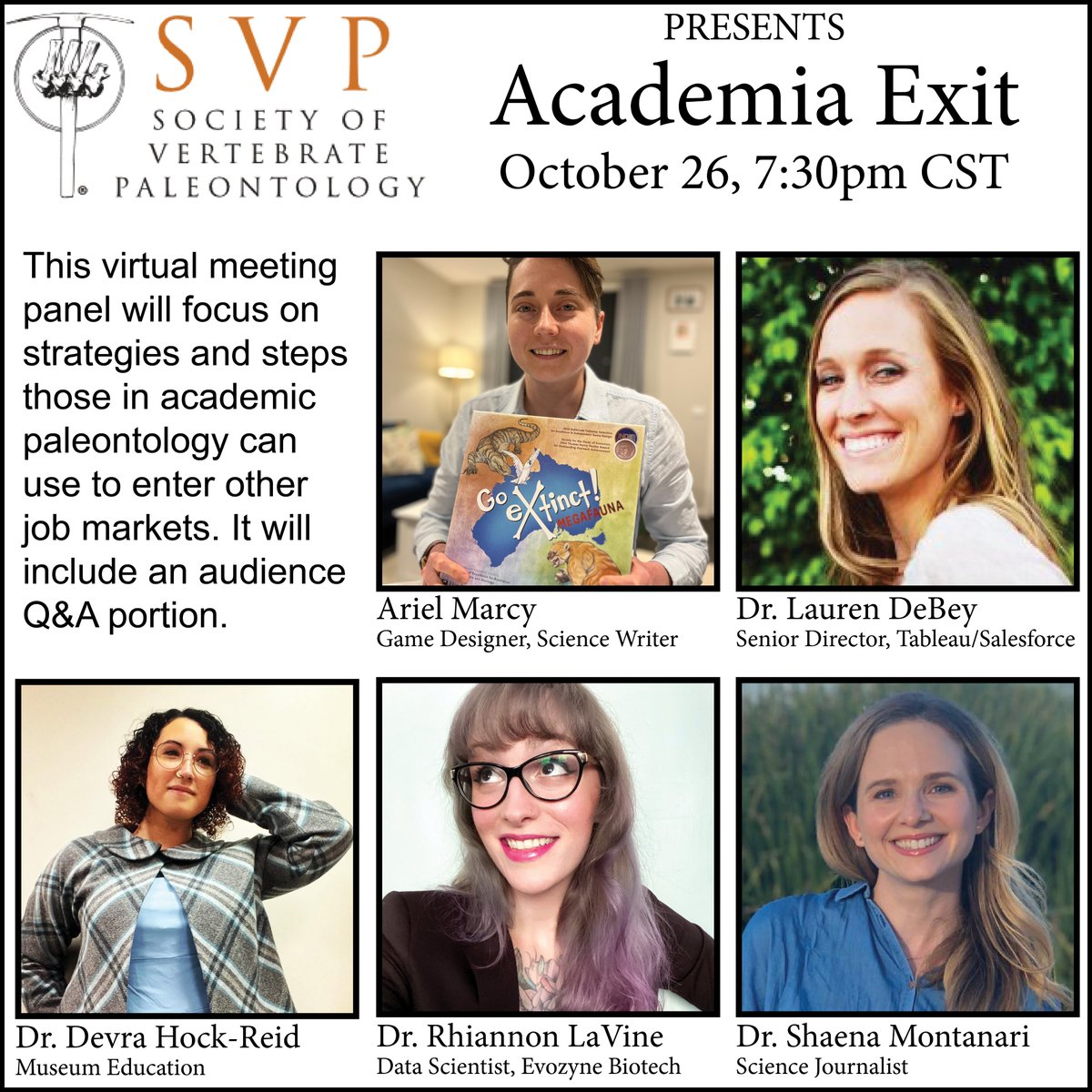
Moderator Dr. Devra Hock-Reid will lead a conversation with four other professionals formally trained in academic paleontology about successfully moving into non-academic career fields. Make sure to bring your questions for the audience Q&A portion!
https://t.co/7pcV4O8hcL
“[…] paleontologists teach us the astonishing breadth of past and present life on Earth and the long history that led to today’s biosphere. Learning this long-term historical perspective is as important as studying the gene and the cell.” https://t.co/odVBGSiJnO
@rachelwarnock Does a recently graduated phd student not in a post doc count? I’m working in museums but would love to still keep some roots in the paleo world!
Shared for @KristaLerista
Do you want to go to grad school in paleontology, biology, or geology? If so join the @SVP_vertpaleo Grad Application Prep Group! We’ll walk you through the application process! Use this form to join! https://t.co/4btJtpf9Bl
Please join us in welcoming @paleogal_devra to our lineup of guest speakers at the upcoming SVP Virtual Meeting!
To learn more about the virtual meeting and sign up to attend, please visit the webpage linked below.
https://t.co/7pcV4O8hcL
@LindsayMasland This was always my language I used: "I'm willing to be flexible with deadlines, but a need must be communicated to me at least 24 hours before."
DO interview your potential advisor if you apply for a PhD or postdoc.
This can save you years of pain, lost dreams and wasted time.
❗ Most students are focused on receiving the offer. But this is the biggest mistake one can make when looking for a position.
▫️
NOT every lab is friendly and has a good mentor in charge. In fact, most professors don’t know how to mentor (as mentorship is not prioritized in academia).
AFTER you get an offer, you can avoid possible problems during your PhD/postdoc through this:
1️⃣ Interview your advisor about the approaches and opinion on:
1. Research advising (how your advisor understands it and how it’s done in the group).
2. Mentoring and personal development during PhD/postdoc.
3. Collaboration - how they do it and what role students/postdocs play in it.
4. Development of your independence and confidence in research.
5. Your participation in conferences and workshops (how often and which types of conferences).
6. How they prepare research publications – authorship, quality, time per manuscript, contributions, etc.
.
2️⃣ Make sure you can talk to the current students one on one (online or in person):
1. Ask about the group culture and support from the advisor
2. Hear their opinion on publication practices and conferences
Ultimately, don’t leave until you understand how you can fit in this group.
.
3️⃣ Talk to alumni (at least 3-4 people):
1. Check out the advisor’s website and find a list of alumni.
2. Google the names of those who went into academia and industry (to hear both sides).
3. Reach out via email or LinkedIn, explain your intentions and politely ask for a quick call.
.
🔴 Why is it important?
Because your advisor is the ONE who can shape your professional skills, motivation and perception of science.
Because the right mentor FORGES your critical thinking and vision.
And a careful search of such an advisor is the starting point.
#AcademicTwitter #AcademicChatter #phdvoice
📢New paper alert!!
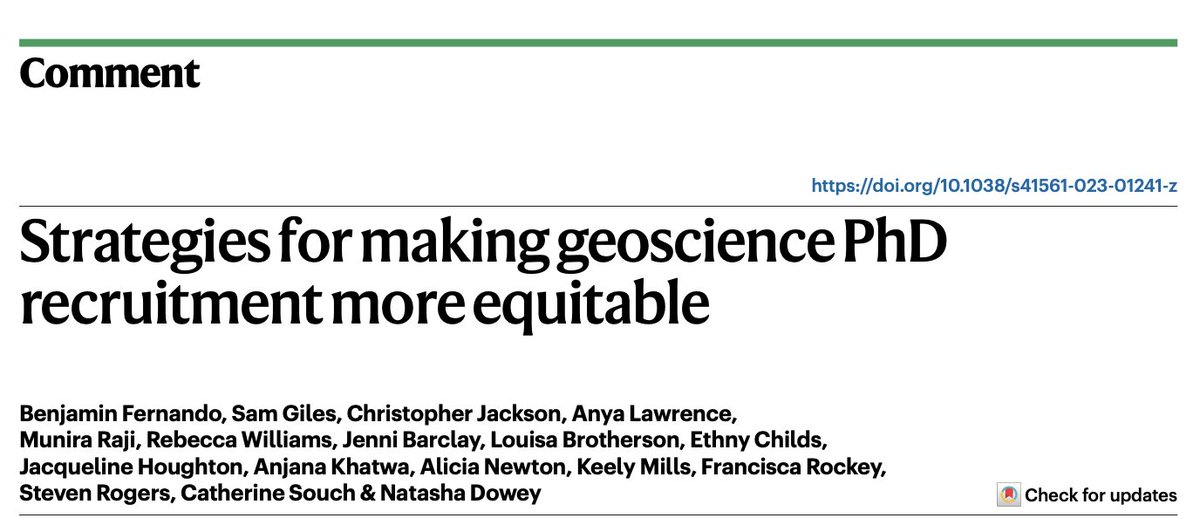
We analysed PhD recruitment processes in the geosciences, and developed recommendations for making the process more equitable.
Now out in @NatureGeosci: https://t.co/R1D5oEuZRp (1/3)🔨🌋☁️
Hiring more people of color doesn’t dismantle structural racism within an organization. A white dominant organization could hire 100 people of color but if the policies and the practices stay the same, that’s 100 more people that can be harmed by them. 1/2
@WryCritic Leaving academia doesn't have to mean abandoning paleontology entirely! There are a ton of ways to stay connected to paleo without being in academia. That being said, make the decision that's right for you!!
As a female geoscentist that has done a LOT of fieldwork, I cannot empahsize enough how much it frustates me, that people still consider this a taboo. Grow up, and be considerate of females, this is part of our biology. https://t.co/FXJ78Xk2xe
To finish, no job is perfect. But there a lot of jobs that are a hell of a lot better for most people than academia, even for those who love science/their research.
I have largely moved out of academia with my new job & I have felt so much stress fall off my plate. I have consistent hours, not required or expected to work outside of those hours, I have a job that pays me well (>4x PhD stipend), long-term job security, full benefits/pension
I came into my job and was given clear expectations of what I needed to accomplish and what my timeframe was. I'm not worried about the ramifications on my work of emailing my supervisor, and I feel like my ideas are valued and listened to.