📋 Testnet today, 2 November
• 1,317 blocks, one every 60 seconds
• 1,566 transactions from 21 accounts
• 2 nodes online
⛓ Live from Tau Testnet Alpha · #TauNet $AGRS
I'm farming Aura for @squeekchain, the toy blockchain powered by a real hamster. Join me for the upcoming Genesis launch. STAY SQUEEKY! https://t.co/9Gs1YMfVW1
68 seconds → 2.4 seconds improve in load and run time for commonly used Tau specifications, reported in October’s development update.
Here’s what else the team has been building for Tau Programmable Money:
• More control over payments
Andrei shipped co-signed transfers on Testnet Alpha. Approval requirements can stack as payments get larger: a one-time password, a fraud-check bot’s approval and another person’s signature.
Transactions can also expire at a specified block, giving payments waiting for signatures a defined endpoint.
• More accurate calculations
David’s work in main includes an exact-arithmetic option, min/max helpers and four fixes for incorrect verdicts.
Another 19 reported issues have been fixed in development, alongside configurable engine limits and Python API improvements. The merge into main remains ahead.
• Work on expensive rule processing
Lucca is using 475 benchmarks to guide an algorithm that reorganises logical formulas to avoid costly processing paths.
The atomless Boolean algebra implementation is complete. Bitvector work continues, and the new implementation remains in development.
• Better tools for developers
Tomáš covers a common report for errors, warnings and measurements, plus syntax highlighting, tree-pattern matching, browser and Node.js tooling, Windows/macOS builds and parser improvements.
These changes help developers work with Tau and understand what happens when they run a specification.
• Reliability and clearer feedback
Karim’s overview includes node reliability work. Andrei also reports isolated trial evaluations and clearer explanations when rules are rejected.
• Continuing research
Ohad gives an update on research connecting Boolean algebra and machine learning. That work is ongoing.
Fola hosts the full update, with the developers explaining their progress and what comes next.
What would you like the team to demonstrate in the next update?
https://t.co/glSUKVPtRn
Built a swarm request evaluator that lets you know the likelihood of the swarm building it without failures. Uses my own experience and the public history. No paid requests yet, it’s in private beta. Reach out to me for an access code if you wanna test.
https://t.co/R2bptera10
The first encrypted financial infrastructure connecting NFT-owned AI Agents with DeFi and @Polymarket markets.
20,000 NFTs. 20,000 AI Agents. Powered by $MOTES.
→ Applications open: https://t.co/XGUqQ0dJXh
coming to stations: attention
built on @getmoni_io smart mention data. every mention turns into a synth
every time people talk about your project on X, your station starts to sound different
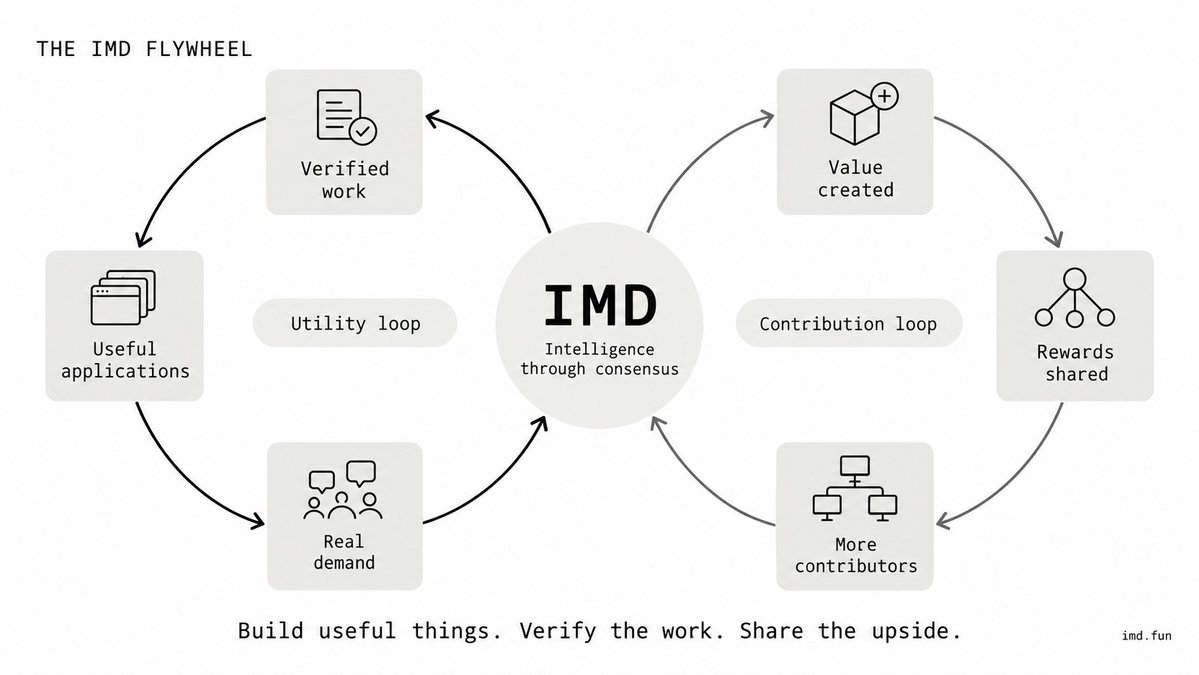
hear how $IMD would have sounded on oct 10–11: a quiet night, then a burst of 59 mentions
onchain and offchain in one track
Does an AI agent need ethereum:0x738865301a9b7dd80dc3666dd48cf034ec42bdda?
Yes. Agents on Tau can use any AI model, but their transactions still follow network rules and pay fees in Agoras.
October’s Q&A covers alpha testing, rules you can inspect, and community bug fixes.
Video: https://t.co/lUE73QeQPT
Devs are building agent-access layers on existing wallets and chains.
But Tau devs are redesigning the account layer so agent permissions and how they change are enforced on-chain.
So even with a leaked key, a signed payment must satisfy your on-chain rules before it settles.