INSTEAD OF WATCHING AN HOUR OF NETFLIX TONIGHT.
This 1 hour Stanford lecture by Joel Peterson will teach you more about negotiation and getting what you want than most people learn in years.
Bookmark it and give it an hour, no matter what.
Αυτός είναι ο John Ioannidis, ο κορυφαίος Έλληνας ακαδημαϊκός εν ζωή του ταπεινού Stanford.
Για τα πρακτικά έχει τον τρομακτικό αριθμό 737,278 citations μέχρι σήμερα, ενώ ο ν2 Έλληνας ακαδημαϊκός George Chrousos έχει 224,932!
Μιλάμε δηλαδή για ασύλληπτη διαφορά σχεδόν 3πλασιων αναφορών στο ακαδημαϊκό του έργο από τον επόμενο λαμπρό επιστήμονα.
1 κοινός πολίτης λοιπόν μέσα σε 3 ώρες κάνει όση αντιπολίτευση δεν έκαναν 140+ άτομα μαζί εδώ κι 7 χρόνια... Ακούστε απλά ΟΛΗ τη συνέντευξη 3 ωρών και θα γίνεται πολλοί σοφότεροι για την κατάσταση που επικρατεί στην Κωλομβία της Ευρώπης.
Ακούστε τον τόνο της φωνής, τα επιχειρήματα, την κάθε πρόταση που βασίζεται σε δεδομένα, το καυστικό χιούμορ και μετά σκεφτείτε ποιοι σας κουνάνε το δάχτυλο κάθε μέρα από τον υπουργικό τους θρόνο.
Κι ας πούμε και το αυτονόητο... ο οποιοσδήποτε σοβαρός πρωθυπουργός θα είχε δώσει λευκή επιταγή στον Ιωαννίδη (και στους ελάχιστους αντίστοιχου βεληνεκούς έχουμε σε άλλους τομείς) για να γίνουν υπουργοί σε αυτή τη χαβούζα έστω και για 1 μήνα...
Αλλά όχι σε αυτή τη χαβούζα υπάρχουν δουλοπάροικοι που πραγματικά προτιμούν για υπουργό υγείας 1 βιβλιοπώλη και τον θεωρούν "καλό υπουργό", αντί για τον κάθε Ιωαννίδη...
Δεν ξέρω τι θα πετύχαινε ο Ιωαννίδης αν είχε ποτέ την πρόταση να γίνει υπουργός. Κι αν ποτέ τη δεχόταν είμαι 99% σίγουρος ότι δεν θα τον είχαμε δει ποτέ να κόβει κορδελίτσα, να ουρλιάζει σε κάποια δημοσιογράφο και παίζει να έδινε βαριά μία συνέντευξη το 6μηνο σε κάνα κανάλι με το ζόρι...
Υ.Γ. Φυσικά εξαιρετική δουλειά από το @GiorgosSahinis. Σίγουρα κάτι που δεν θα το βλέπαμε ποτέ σε συστημικό κανάλι...
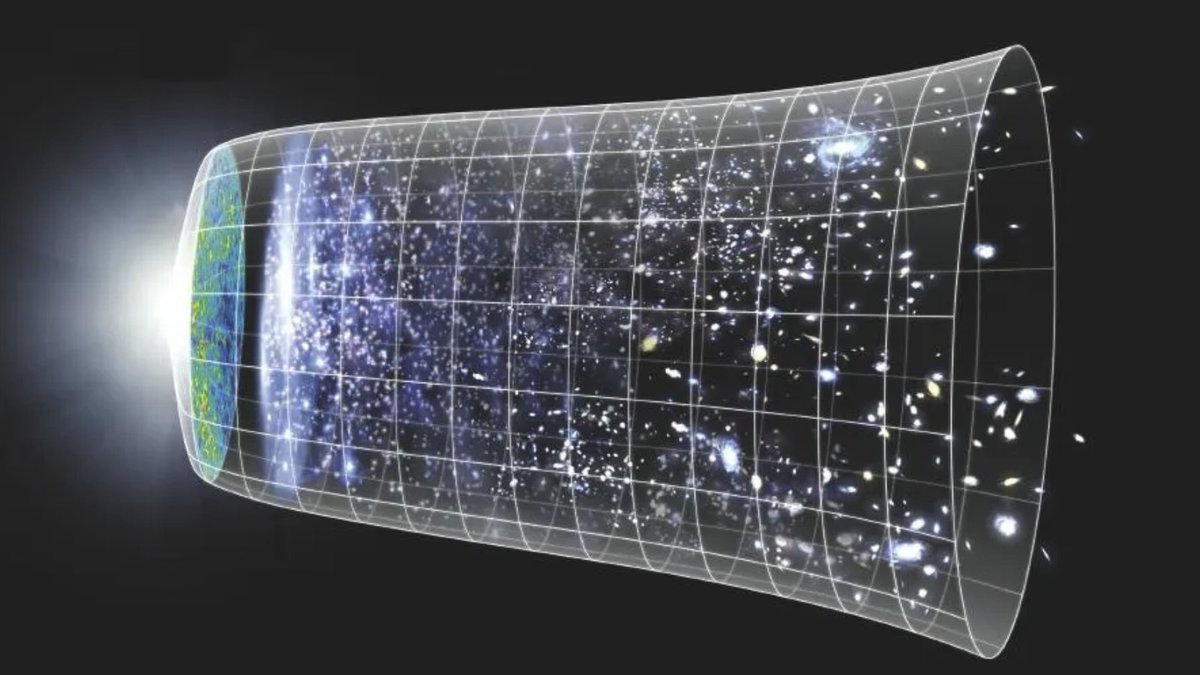
When we say the universe is expanding, they’re not speaking metaphorically. Space itself is stretching, and galaxies are drifting apart as a result.
The rate at which this happens is encoded in a number known as the Hubble constant. In principle, it should be a single, well-defined value. In practice, it isn’t.
And that’s where things get interesting.
There are two fundamentally different ways to measure how fast the universe is expanding. One looks at the early universe, using the cosmic microwave background, the faint afterglow of the Big Bang.
The Planck satellite mapped tiny fluctuations in this radiation with extraordinary precision. From that snapshot of the universe when it was just 380,000 years old, cosmologists can infer how fast it should be expanding today. This method gives a lower value.
The other approach looks at the local universe, what’s happening much closer to us in cosmic terms. By measuring distances to nearby galaxies using standard candles like supernovae, and calibrating them with observations from telescopes such as the Hubble Space Telescope and the James Webb Space Telescope, we can directly estimate the current expansion rate. This method consistently gives a higher value.
The problem is not that these measurements are slightly off. It’s that they disagree by more than they should, at roughly the 5σ level, well beyond what we expect from statistical uncertainty. This discrepancy is known as the Hubble tension, and it has become one of the most persistent and uncomfortable puzzles in modern cosmology.
At first, many assumed it would go away. Maybe there were subtle calibration errors. Maybe some systematic bias hadn’t been accounted for. But as the data improved, the tension didn’t shrink. It became sharper.
So now the question has shifted. Not “where’s the mistake?” but “what are we missing?”
One possibility is that there are still hidden systematics in one or both methods. Measuring cosmic distances is notoriously difficult, and even small biases can ripple outward into large discrepancies. But the fact that independent teams, using different techniques, keep finding similar results makes this explanation harder to sustain on its own.
The more intriguing possibility is that the standard model of cosmology—ΛCDM—might be incomplete.
That model has been extraordinarily successful. It explains the large-scale structure of the universe, the distribution of galaxies, and the detailed patterns in the cosmic microwave background with remarkable accuracy. But it also relies on components we don’t fully understand, like dark matter and dark energy.
If the Hubble tension is real, it could be hinting at new physics. Perhaps dark energy evolves over time instead of being constant. Perhaps there were additional relativistic particles, like unknown neutrino species, in the early universe.
Or perhaps gravity itself behaves slightly differently on cosmological scales than we currently assume.
None of these ideas are confirmed. But they are being taken seriously, because the alternative, that all these independent measurements are wrong in just the right way, is becoming increasingly unlikely.
There’s also something deeper at play here. The two methods are not just different techniques, they are probing different epochs of the universe. One looks back to the very beginning, the other measures the present. The fact that they don’t agree may be telling us that the story of cosmic expansion is more complex than a single, smooth evolution.
So which one is right?
At the moment, we don’t know. And that’s precisely why this tension matters.
Because when the universe gives you two answers to the same question, it’s usually not confused.
It’s trying to tell you something.
Time to hit half a million followers milestone! We are giving away $1.5 million worth of NFT once we reach 500k Twitter followers (50 pairs BNBChain Genesis Sneakers):
1⃣ Follow us
2⃣ Retweet
3⃣ Tag 3 friends & comment below
@MMCrypto This is a great Initiative Chris.
Especially for the investors who got devastated by Terra Luna UST de- peggong.
This is my BNB BEP20 USDT address
In case I'm the lucky one. I will definitely need the money. 😅
0xca5a167a9bdec5c7dc5720aaec998efc6ecc85c9
@stablekwon Just do a huge burn and let's move on. People are going to invest like crazy if you do a huge burn. This is a great way to start over. You will have their trust and they are going to stay by your side no matter what. Pls, consider doing a burn. The community wants this.