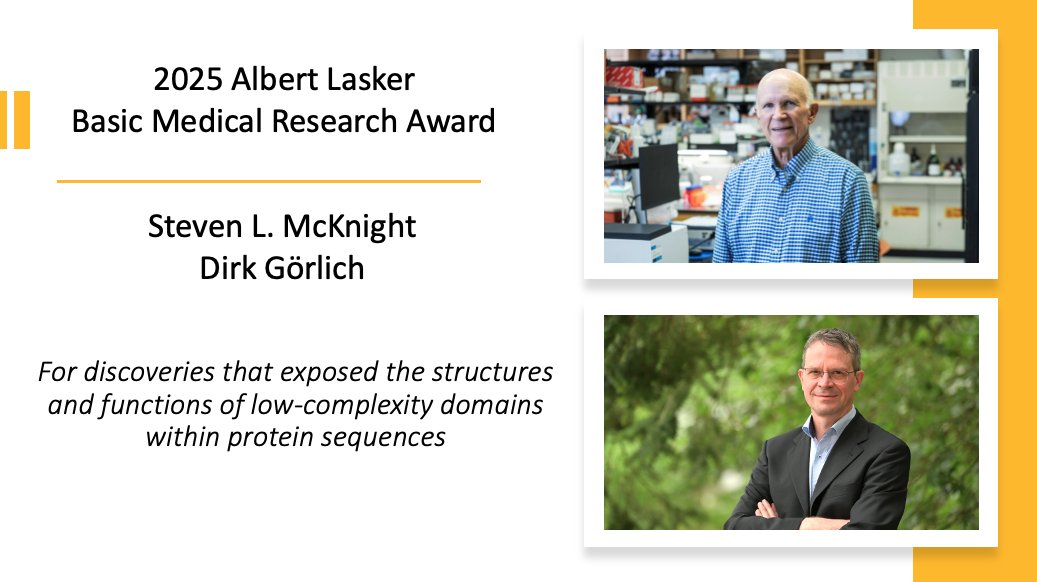
Congratulations to this year’s #LaskerAward winners!
Basic: Dirk Görlich & Steven L. McKnight
Clinical: Michael J. Welsh, Jesús (Tito) González, & Paul A. Negulescu
Special Achievement: Lucy Shapiro
https://t.co/JASQbYI0vK
#Lasker2025#LaskerLaureate
@NiuSanford An additional strategy might be to outsource some of the grant process to private foundations. E.g. match grant funding awarded by foundations such as HHMI etc. The limitation there is to cover all the topics in the NIH research portfolio but could be used for a subset.
Out now in @nature another study on the thiophenyl nicotinamide aka Compound 21 aka Gliocidin which, in a parallel effort, confirms the mechanism of action we published in 6/2024. Importantly, this new study demonstrates efficacy in GBM mouse models. It could be interesting to see if our more potent analogue, compound 9, enhances efficacy. Congratulations to the authors!
https://t.co/nB99E2KZYm
https://t.co/9HYErvi5bO
Congratulations to Zhijian “James” Chen, 2024 #LaskerAward winner! – “for the discovery of the cGAS enzyme that senses foreign and self DNA, solving the mystery of how DNA stimulates immune and inflammatory responses.” https://t.co/hGFSdFMq7E #Lasker2024#LaskerLaureate
(1/2) Welcome to Deepak Nijhawan, M.D., Ph.D., Associate Professor, who joins our department as Vice Chair of Research and Chief of our Section of Molecular Medicine!
Alfred G. Gilman was born #OTD in 1941. He won a #LaskerAward in 1989 for the discovery that #Gproteins carry signals that regulate vital processes within cells. @UTSWMedCenter https://t.co/6HCCUvuWm9
Really sad/unfortunate that this article led to so much unproductive work… However amyloid is probably still one (possibly of many) causes of the disease. There are patients with mutations in the pathway that get the disease early and there are approved drugs that act on beta amyloid which do produce some clinical benefit.
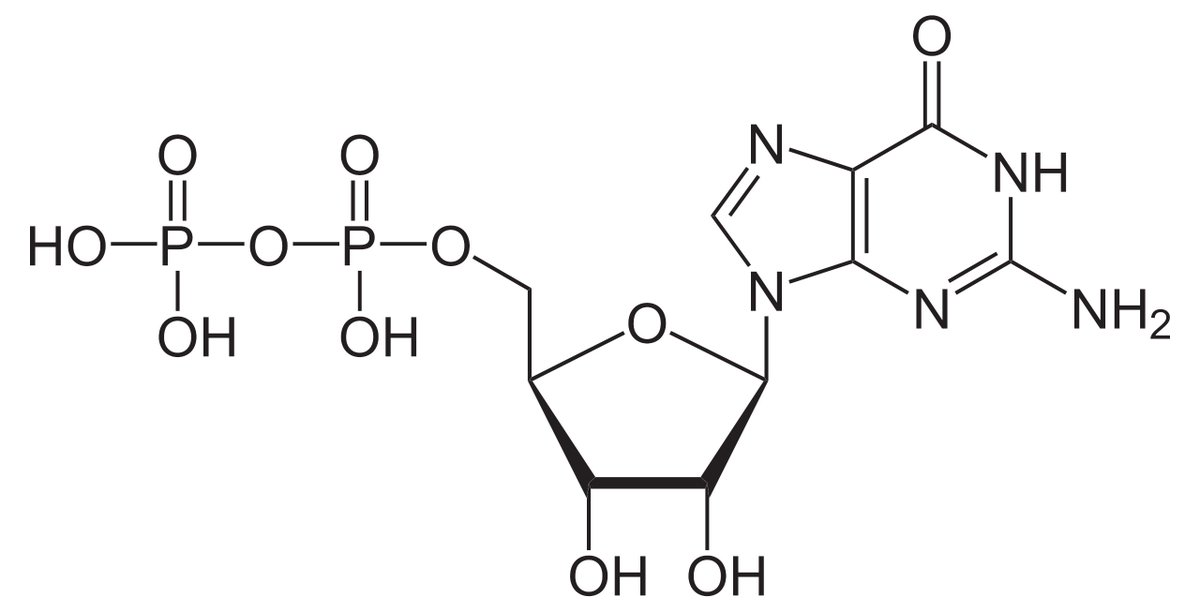
Our newest article is now published online. This solved the mystery of the mechanism of action of a neuronal cancer toxin, “compound 21,” paving the way for future clinical development. Summary 🧵 below 👇
https://t.co/5RJHEIATYQ
@AruS_kinase @SamuelBHume Those seem like reasonable hypotheses and very testable. Alternatively, there might be a difference in the cellular response or detection of shortening telomeres in those cells, which could be interesting.
Reflecting on our recent publication, what a satisfying scientific moment this was. Making a crazy hypothesis about how a molecule kills cells simply based on its chemical structure - and it was very much right. The dose dependent rescue of Compound 21 by nicotinamide (Nam):
@NewsfromScience Very interesting puzzle. Non-essential in cancer cells based on depmap data at least, arguing against some fundamental cellular housekeeping function.