Since Uniswap v3 (concentrated liquidity pools) was launched, I stopped providing liquidity to volatile pools. In most cases, the APR just isn’t enough to make up for the impermanent loss (IL).
Let me give you a simple example. Say ETH is trading at $2000, and you set your liquidity range between $1800 and $2200. Or more generally, let’s say you’re using a [90%, 110%] range around the current price for an altcoin — a very common setup.
Even in this setup, just a 1% move in price within a single day can lead to an IL of around 0.25%. If the price moves 2%, that IL jumps to about 1%. That’s almost the same as needing a 90% to 360% APR just to break even, which is completely unrealistic.
Staying in that pool for a longer time under these conditions feels less like managing risk, and more like gambling. Do you really think this is something we can manage effectively?
Concentrated liquidity is definitely clever. But sometimes, the high APR numbers feel like bait — tempting LPs in without clearly showing the risks.
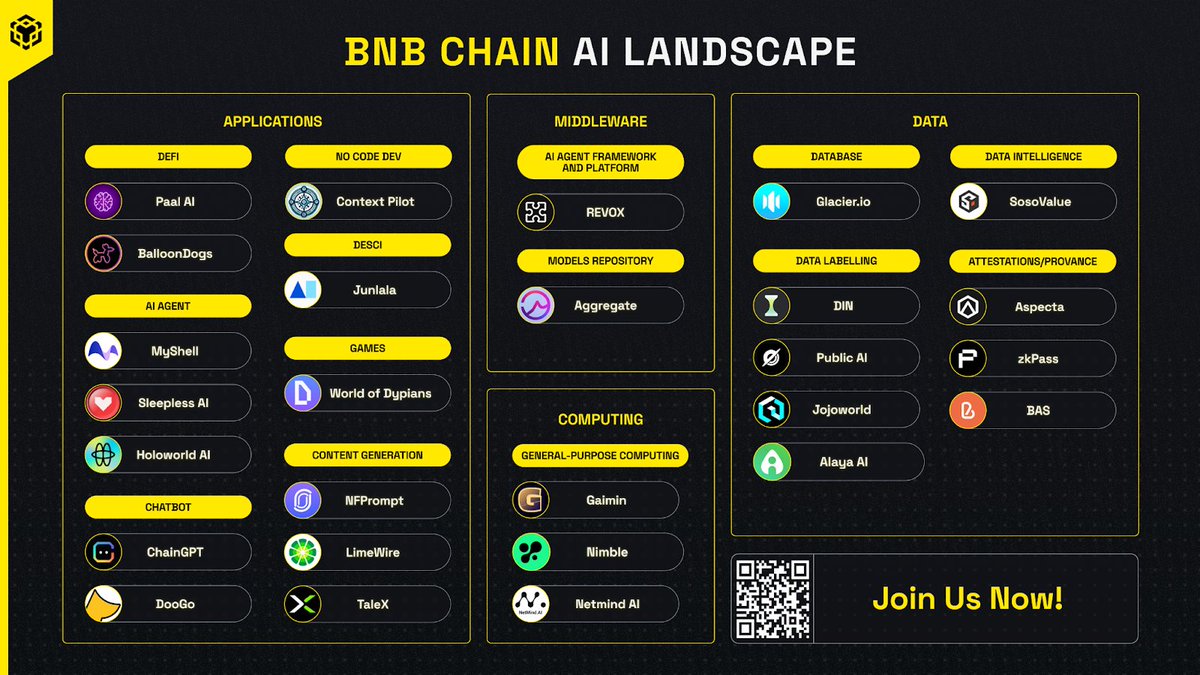
BNB Chain supports over 20 AI-focused projects, from chatbots to data marketplaces.
Builders are leveraging tools like AI AgentKit and MPC wallets to create the future of decentralized intelligence.
Check out the landscape 👇
Introducing Evoq: A Modular Money Market Optimizer
Evoq is currently leveraging the @VenusProtocol Core Pool on @BNBCHAIN in its initial version. We welcome your interest and feedback! 💡
Introducing Evoq:
A Modular Money Market Optimizer 🪐
Discover how Evoq is transforming decentralized lending with optimized rates and enhanced capital efficiency.
https://t.co/ZjsTn5rOnk
DeFi lending protocols will evolve to prioritize capital efficiency through better liquidity management, optimized interest rates, and increased integration with real-world assets. As traditional finance merges with DeFi, the demand for trustless, automated solutions will drive the next wave of growth.