@RnaudBertrand They still believe they are democratic by doing things this way. And point their finger to and accuse others are authoritarians or dictators.
🇺🇸🇮🇱 Vice president JD Vance has had enough and threatens Israel:
“If I was in the cabinet of the Israeli government, I might not be attacking the only powerful ally that I have left
2/3 of the defensive weapons that have protected your homeland have been built by American hands and paid for by American tax dollars.”
So the G7 is morphing from “values club” into a global supplier-complaints forum 🤣
Meanwhile China’s rare earth ban on Japan isn’t “economic coercion” — it’s calculated strategic deterrence Nikkei Asia https://t.co/sVbIB9mFCS doesn't want to explain
The US wants to throw a fit at the G7, demanding China resume rare earth exports to Japan, screaming about “broken global supply chains” and “unfair trade practices”
This is total imperialist Copium at its finest!
First, let's look at the context Nikkei Asia erases entirely:
This ban is not arbitrary. It’s a calibrated, long-term response to Japan’s rampant neo-militarism and anti-China posturing under PM Takaichi
Together with the US, Japan is militarizing the First Island Chain + Philippines with offensive weapons, building overlapping fire zones for explicit war preparedness against China
Worse: Tokyo is colluding to bypass China and push illegal maritime delimitation negotiations east of Taiwan with the Philippines, directly interfering in China’s core internal sovereignty and territorial affairs while doubling down with reckless Taiwan contingency statements
China’s rare earth controls are a targeted, proportional countermeasure — not random economic punishment
Now for the US laughable double standard:
Washington condemns China’s mineral export restrictions as “unfair”…
While the US has sets the standards with decades of unilateral sanctions and economic coercion restricting critical mineral exports (oil, uranium) and weaponizing tech bans to strangle China’s industrial development 🤡
The US frames its resource/tech export restrictions as statecraft protecting its “national security” — When China is doing the exact same thing it is portrayed as “aggression.” Classic imperialist rules for thee, not for me
Then we have Japan’s sad strategic paradox the Nikkei Asia completely misses:
Tokyo desperately craves strategic autonomy to reassert regional power…😭 But it is completely dependent on US diplomatic clout to fix its rare earth supply crisis.
Japan’s so-called independence is pure illusion. It remains a US vassal state, trapped in America’s Indo-Pacific containment bloc with zero room for self-determined policy
Furthermore, Japan’s high-tech industry is now a hostage in US–China competition. The article frames MRI scanners as collateral damage, but misses the deeper point: Japan’s role as a high-end manufacturing hub and re-industrialization force for the US is contingent on Chinese inputs 😉
This isn’t a trade dispute...It’s a microcosm of the dying US unipolar order
China is leveraging its dominance in industrial resources to counter the militarization efforts of the US-led bloc and to resist interference in its sovereignty and immediate periphery. Why should China provide critical resources to Japan and the US, which would then be used to produce weapon systems and a offensive missile network that would encircle and threaten China?
Any G7’s coordinated pressure isn’t “defending free trade” — it’s desperate imperialist damage control to preserve Western hegemony in the Indo-Pacific
One of the darkest moments of our time has been captured on video,
The horrifying moment when tents sheltering displaced families in the Al-Mawasi area of Khan Yunis, southern Gaza, were struck, resulting in the deaths of hundreds of civilians,
A tragedy that should never be erased from memory, and a video the world must never forget.
XPENG’s aircraft fleet conducts synchronized test flights.
Following steady progress in batch trial production, multiple flying cars have completed coordinated formation flights, demonstrating the maturity of our production systems and flight control capabilities.
China is planning to spend around 2 trillion yuan ($295 billion) over the next five years to build data centers across the country
At least 80% of all AI chips must come from domestic suppliers, primarily Huawei.
Nvidia and AMD are locked out by design.
Nvidia once held a 95% market share in China's AI market.
Now? Zero.
America did not lose China’s AI chip market because China “closed its doors,” but because America chose to weaponize chips, sanctions, export controls, entity lists, national security hysteria, and technological apartheid against its own largest customer.
Washington took the world’s largest chip consumption market — a market that could have funded American semiconductor dominance for another generation — and taught it the most important lesson:
Never let your future depend on a supplier that can be turned off by one paranoid empire.
So China did what any serious civilization-state would do.
It localized.
It substituted.
It built its own stack.
It turned a customer relationship into a sovereignty project.
And the same people who tried to choke Huawei are watching Huawei become the backbone of China’s AI infrastructure.
This is a textbook own goal.
America thought it was denying China the future.
In reality, it compelled China to architect the future beyond America.
Why is there so much overlap in languages and other cultural factors between Chinese, Japanese, Korean and Vietnamese? East Asian culture is rooted in the Sinosphere, historians say
China Warns EU Over Possible Sanctions on Third-Country Companies
The EU really needs to understand one thing:
China is not a small country waiting to be disciplined by Brussels.
You want to sanction Chinese companies, Turkish companies, Indian companies, and whoever else refuses to obey your anti-Russia script?
Fine.
But do not act shocked when China responds.
Unilateral sanctions without international law or UN authorization are not “rules.”
They are power politics dressed up as morality.
And the problem for Europe is simple:
China is not defenseless.
China has the industrial capacity, market size, supply chains, and countermeasures to make sanctions hurt both ways.
Europe keeps acting as if it still commands the world economy.
It does not.
If Brussels wants to turn sanctions into a habit, China can turn countermeasures into one too.
Do not pick a fight with the factory of the world and then cry when the factory checks your supply chain.
🚀🇮🇷 Iran’s Khatam Al-Anbiyaa Central Command:
“The aggressor Zionist regime, by repeatedly violating the ceasefire, is increasing its evils against the oppressed people of Lebanon with a green light and the support of the criminal America and the silence of international forums day by day, and is committing war crimes using banned weapons, including phosphorus bombs.
Despite previous warnings from the Islamic Republic of Iran, the child-killing Zionist regime has targeted the suburbs of Beirut by crossing all red lines and increasing attacks in southern Lebanon.
We had previously warned that if the crime in the suburbs of Beirut spreads, we will attack targets in the occupied territories.
The Zionist army must stop its attacks on southern Lebanon and the suburbs, and if it expands its attacks on that region or responds to Iran's actions, it will face more crushing and regrettable blows and attacks Destruction will begin against the regime and its supporters."
The Nanjing Massacre was a brutal crime committed by Japanese militarism in which many civilians and prisoners of war were killed, and its evidence is irrefutable and must not be distorted, FM spokeswoman Mao Ning said. Her remarks came in response to reports that Nagasaki city plans to change exhibition panels at the Nagasaki Atomic Bomb Museum this year, and that wording related to the Nanjing Massacre is expected to be revised from "massacre" to "the Nanjing Incident".
Francis Fukuyama, known for his "end of history" thesis, recently admitted in an interview with the Frankfurter Allgemeine Zeitung that if China maintains its current development momentum, his predictions about China four decades ago would be incorrect.
Fukuyama's "end of history" thesis has long been cited by some in the West to attack socialist theories and China's system. His recent shift in attitude reflects a broader, ongoing trend. Watch the video. @FukuyamaFrancis@Opinion_Xpress@zhaomanfeng
🇨🇳 The West loves to lecture China about “democracy” while their own voters get more fed up with every election.
Politicians come and go, campaigns make all kinds of amazing promises. But once the votes are in, nothing really changes. The same groups stay in control and regular people are left waiting. Is that really what they call freedom of choice?
China operates on a completely different model. One that can be hard to understand and easy to misinterpret.
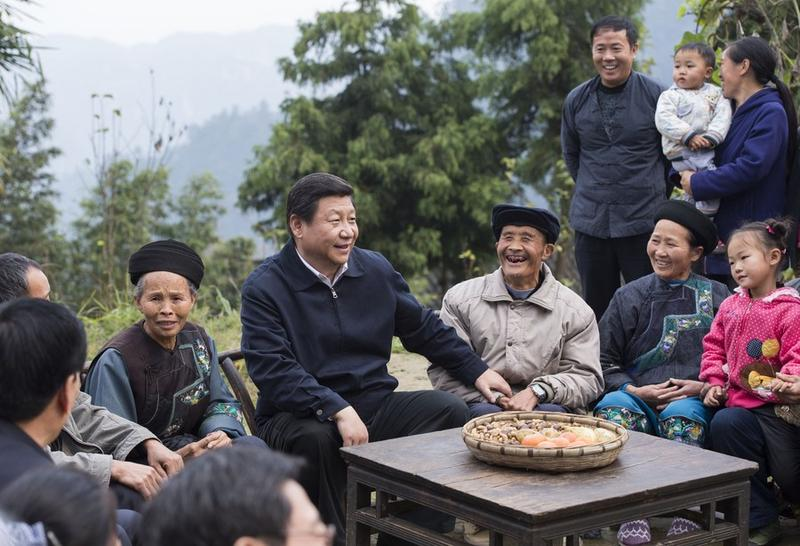
President Xi Jinping didn’t gain power through inheritance or wealth. He worked his way up for over forty years, serving at every tier: villages, counties, cities and provinces. He has spent his life governing, not just running for office. Top leadership is elected by the National People’s Congress, while local residents choose their community representatives, with the entire system built from the grassroots up.
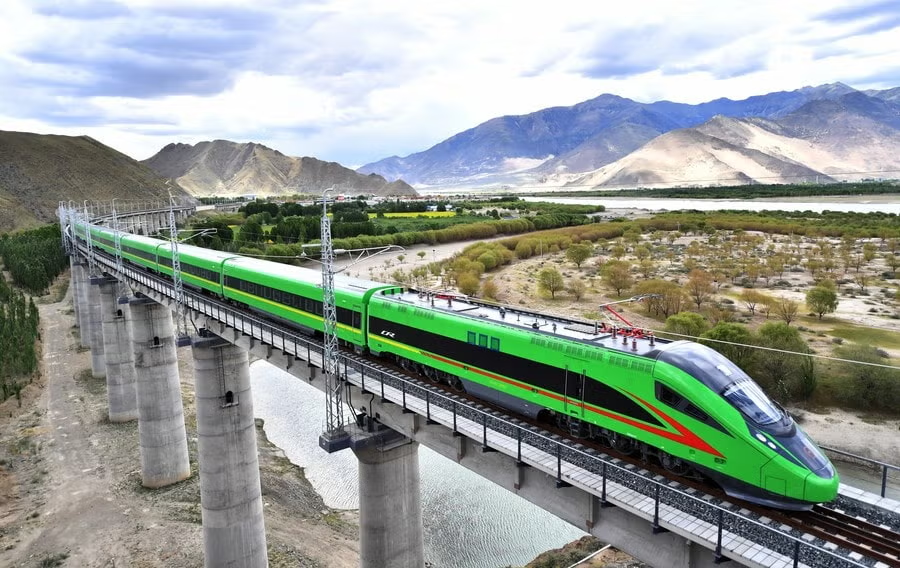
The Communist Party of China is the world’s largest political organisation, with almost 100 million members rooted in communities nationwide. Its five-year plans aren’t just empty promises either; they get delivered. This is how China pulled hundreds of millions out of poverty, built the planet’s most extensive high-speed rail network and now takes the lead in electric vehicles, renewable energy and key cutting-edge technologies.
The country’s leadership has a clear mission: to rejuvenate the nation and work for the Chinese people. When people see real progress being made, the system stays stable, rather than cycling through one disappointment after another.
This is supported by the polls. Long-running research from Harvard Kennedy School shows Chinese public satisfaction with the government consistently sits above 90 percent. Edelman’s global trust surveys record government trust at 89 to 91 percent among the highest worldwide. National happiness scores range from 70 to 79 out of 100. Considering everything, it’s reasonable to argue he’s among the most effective national leaders in the world right now.
It’s understandable why the critics target this; after all, China keeps achieving things their nations simply cannot. If you witness this steady progress firsthand while living here in China, the reality is simply astonishing.
At the end of the day, I have to wonder: does that so-called Western freedom of choice truly deliver better lives for ordinary people, or is it just better marketing?