Imagine your leader takes 300k students and engineers to war without announcing it.
That's Putin's plan. I know him, I paid with 10 years for opposing him. 🧵Follow me and read on
🚨 Man stelle sich vor, Russen und von Russland besetzte Ukrainer dürften ihre eigene Meinung über Putins Russland sagen …
🤦🏻♀️ Glücklicherweise gibt es die vom Regime erzwungene Video-Gegendarstellung am nächsten Tag.
🤡 Was für ein lächerliches Land …
A short analysis of the downing of a Saudi F-15 fighter by the Houthis in Yemen, as of today, September 16, 2026. In the following analysis, I relied on examining the thermal-camera footage published by the Yemeni war media:
- First, the means of detecting the aircraft: In most cases, Ansar Allah previously relied on the Ultra-8500 thermal camera. More accurately, it is a multi-camera airborne surveillance sensor turret, rather than a single camera. It was commercially described as a quasi-military civilian system. Yemen received multiple such turrets in 2008, and the Houthis installed them on the ground to guide converted air-to-air missiles and to detect aerial targets in general.
The turret contains a spherical housing with a daylight camera and a thermal camera.
The detection range of the FLIR thermal camera is approximately 4–8 km for a human, 8–15 km for a vehicle, 15–25 km for a helicopter, and approximately 20–30 km for a fighter aircraft such as the F-15.
However, in today's video, the green tracking marker that locks onto the aircraft is clearly visible and appears to correspond to the Iranian Sadid system, which is intended for electro-optical/thermal imaging and also incorporates a laser rangefinder. This indicates that new systems may have reached the Houthis.
- The pilot initially performed a sharp maneuver, which indicates that the aircraft's warning systems detected some kind of threat. The F-15E Strike Eagle carries the AN/AAR-57 system manufactured by the British company BAE Systems, whose primary function is to detect approaching missiles using electro-optical/infrared sensors that detect the exhaust plume of an incoming missile and the infrared radiation it produces.
The F-15 also carries the AN/ALQ-239, an RWR system designed to provide warning of radar-guided threats by detecting hostile radar emissions and radar lock-on.
- The pilot then released chaff five consecutive times. These are specialized aluminum strips/fibers intended to deceive hostile radars. The F-15 carries the AN/ALE-47, which is capable of dispensing both chaff and thermal flares.
Each chaff cartridge disperses immediately after being released, rapidly forming a large cloud containing millions of very fine metallic fibers. This cloud is what deceives the radar.
It is reasonable that the aluminum strips and fibers would normally not appear on thermal imaging, but they may have temporarily acquired heat from the fighter's engines and therefore appeared for only a few seconds. If they had been flares, however, they would have appeared as an extremely intense thermal glow. I will include evidence from an incident in Yemen in 2018 showing what flares look like.
The second indication is that the missile struck the fighter in its forward section rather than tracking the heat of the engine.
- The pilot engaged the afterburner in an attempt to escape at maximum speed. This is dangerous if the incoming missile is an infrared-guided weapon.
- The Yemeni missile flew for 24 seconds before exploding, according to the video. The average speed of a surface-to-air missile during the terminal/intercept phase—that is, after passing the initial boost phase—is approximately 650–850 m/s. A simple calculation gives:
24 seconds × 700 m/s ≈ 17 km
This represents the missile's flight path, with an uncertainty of approximately ±3–4 km, depending on whether the fighter was flying laterally, approaching the missile, or moving away from it.
Based on the distance covered by the missile and the 24 seconds of flight time, I can rule out the following air-defense systems with 100% certainty:
Iranian Majid AD-08, Igla, Strela-1, Strela-2, and the R-60 and R-73 air-to-air missiles converted to surface-to-air use by the Yemenis (Thaqib-1). All of these are incapable of maintaining a 24-second flight time.
🇷🇺🇺🇦⚡️The war isn't always fought from a trench.
Frenchie, a French national serving with Ukrainian forces as a drone operator, has been documenting his rotations toward advanced positions.
His footage shows a brutal change in battlefield logistics: according to his account, vehicles can no longer safely reach some forward positions. Personnel are dropped far away and continue the journey on foot.
Sometimes, the distance is reportedly up to 20 km with artillery, mines and FPV drones making even the journey to a position dangerous.
That’s the part of modern warfare that rarely makes the headlines.
It’s not just tanks and explosions. It’s long walks, exhaustion, drones overhead, mined ground and the constant uncertainty of reaching your position alive.
Swedish aerospace company GKN Aerospace has developed a compact, 3D-printed turbojet engine free of U.S. parts or data for Project Otto, a long-range UAV demonstrator capable of carrying up to 300 kg over 600 km or 100 kg over 1,000 km. https://t.co/knd6rTKaod
New footage shows an H-60M Black Hawk rocket-launching Anduril's Altius-700 tube-fired loitering munition.
The significance is the math, Apache pilots today are boxed in by the Hellfire's 11 km reach or the JAGM's 16, but the Altius-700M carries that same kill capability out to roughly 160 km, and the unarmed variant scouts as far as 460 km.
Strapping that onto a Black Hawk, rather than the traditional Apache gunship, signals the Army's real ambition, push sensing and strike far out ahead of the formation while keeping the crewed aircraft, and the people in it, out of range of what they're hunting.
🇺🇸 US Army Bradley fighting vehicle was filmed carrying five small AI powered robotic swarm units during exercises at Fort Hood, highlighting a future where armored vehicles could serve as motherships for expendable ground robots.
The FireAnt robots reportedly weigh around 27 kg each and can carry ISR sensors, electronic warfare payloads, or anti armor warheads. One operator can control 6 to 10 robots simultaneously via a mesh network.
Szef CIA w Moskwie - to zły znak
Wszystko wskazuje na to, że dyrektor CIA John L. Ratcliffe złożył wczoraj niespodziewaną wizytę w Moskwie, pierwszą podróżą szefa CIA do Rosji od wizyty Williama Burnsa w Moskwie pod koniec 2021 r., ostrzegając rosyjskie kierownictwo przed inwazją na Ukrainę. Czy jest to związane z jakimiś negocjacjami pokojowymi? Zapewne niedługo się przekonamy. Samolot na Flightradar wyświetlił się jako transportowy C-17A, ale przypuszczalnie leciał on nieoznakowanym, cały biały C-40 Clipper (wojskowa wersja pasażerskiego Boeinga 737). Co ciekawe, C-17A też lądował i są z jego lądowania filmy w runecie (rosyjskim internecie). Co ciekawe, przyleciał z Rygi (Łotwa), co moim zdaniem jest ważne.
Ostatnie trzy lata spędziłem w Oddziale Łącznikowym Biura Ataszatów Wojskowych (wrzesień 1997- maj 2000). W tym czasie od lipca 1998 do lipca 1999 byłem obserwatorem wojskowym w misji UNIKOM w Iraku i Kuwejcie, a do listopada 1999 byłem na zaległych urlopach, więc zostaje 1,5 roku w OŁ BAW. W tym czasie oddelegowano mnie do analiz wywiadowczych (Basia, później Zosia, czy BSiA - Biuro Studiów i Analiz, a następnie ZSiA - Zarząd Studiów i Analiz WSI) gdzie miałem praktyki. Wtedy mieliśmy komórkę łącznikową CIA. Poznałem ich służbowo, ale tutaj zakończę dalszą część tej story. Poznałem też niemal wszystkich ówczesnych attache, czyli właściwie oficjalnych oficerów wywiadu swoich państw, z czego oczywiście w pełni zdawałem sobie sprawę, a przełożeni zadbali o to, żebym nigdy tego nie zapomniał.
W każdym razie, jeśli DYREKTOR CIA leci do Moskwy to nie na kawę. To nie pocieszny i wiecznie wszystko przekręcający handlarz nieruchomości Steve Witkoff który w swoich dyplomatycznych wyczynach stał się memem. To osoba, która rzadko kontaktuje się z potencjalnym wrogiem. Ostatni raz inny dyrektor CIA William Burns był w Moskwie 2 i 3 listopada 2021 r. I coś im powiedział. Jak to mawiał mój ulubiony bohater, czyli "Brudny Harry" (Clint Eastwood): "wiem, co knujecie, smoluchy. Lepiej sobie darujcie, bo jak nie to będziecie mieć do czynienia z nami trzema: Smith, Wesson i ja."
Ostrzegł Rosję, że wie o rosyjskich planach inwazji na Ukrainę. Nie posłuchali. Zrobili swoje, ale jak wiemy wtopili, bo Putin wierzył własnej propagandzie a nie swojemu szefowi wywiadu (Siergiej Naryszkin). Wtedy William Burns był w Kijowie 4 i 5 listopada 2021 r.
Odwrotnie, można powiedzieć, najpierw Moskwa, a potem Kijów, a teraz najpierw Ryga, a potem Moskwa. Ciekawe, prawda?
Smoluchy piszący cyrylicą szykują coś grubego. Coś, z powodu czego trzeba wysyłać dyrektora CIA ze specjalną misją do Moskwy, o szczegółach której się w ogóle nie mówi oficjalnie. Ale co?
Emerytowany i dość moim zdaniem dość kontrowersyjny gen. bryg. Grzegorz Grodzki podejrzewa, że chodzi o uderzenia jądrowe. Mało tego, mówi o Polsce.
Nie, nie chodzi o uderzenia jądrowe na Polskę. Choć prawdopodobieństwo użycia przez Rosję broni jądrowej rośnie i może nawet przekracza już ze dwa promile, to będzie to inne użycie, niż myślimy. Będzie to spektakularna ostrzegawcza próba, jakieś pieprznięcie ładunku na środku Morza Czarnego z dala od jakiegokolwiek statku. W taki sposób, że w sumie nie będzie wiadomo kto, choć wszyscy będą wiedzieli kto. Czyli takie: wszyscy wiedzą kto, ale przed sądem tego nie udowodnisz. Jak słynne zielone ludziki.
Dlaczego tak? Bo ludzie w Europie wpadną w panikę. Bezwzględnie wymuszą na własnych władzach natychmiastowe zaprzestanie pomocy wojskowej dla Ukrainy. Ludzie oszaleją, będą masowe demonstracje, rozróby, petycje, politycy z określonych ugrupowań z różnych państw i rosyjska agentura wpływu ruszą z niespotykaną dotąd ofensywą informacyjną. I pewnie dopięli by swego.
Z tą opcją wiąże się jednak wielkie ryzyko. Wiele rzeczy może pójść nie tak, a reakcja NATO może być absolutnie inna od oczekiwanej. Rosja mogłaby dostać takimi działaniami odwetowymi (na poziomie konwencjonalnym oczywiście), że rumakowanie by się skończyło.
Dlatego uważam, że RACZEJ chodzi o coś innego. PRAWDOPODOBNIE, jeszcze przed końcem wojny w Ukrainie, Rosja sięgnie po Państwa Bałtyckie. Na Łotwie mają gotowy konflikt i właściwie Casus Belli, czyli kwestię tzw. "nieobywateli" - rosyjskiej mniejszości w tym państwie, stanowiącej znaczny odsetek społeczeństwa. Oczywiście nie oznacza to szybkiego wtargnięcia. Po prostu najpierw wywołają tzw. anomię społeczną, czyli stan kiedy państwo nie funkcjonuje, a obywatele nie wierzą i nie wspierają instytucji państwowym (kryzys legitymizacji). Kiedy Łotwa i może Estonia będą odpowiednio spreparowane wojną hybrydową (będą bezładną galaretą, a nie zwartym społeczeństwem, państwem w stanie rozkładu i paraliżu), dopiero wtedy sobie wjadą. Zrobią to tak, jak nie zrobili w Ukrainie, która nie była w stanie anomii i rozkładu, o czym się boleśnie przekonali. Spartolili głównie okres PRZEDwojenny, choć w samych działaniach wojennych się nie popisali. Ale i tak zostali powstrzymani dopiero 15 km przed Kijowem. W OSTATNIEJ CHWILI I NADLUDZKIM WYSIŁKIEM. CUD NAD DNIEPREM. O czym zapominamy, że tak niewiele brakowało.
To HIPOTEZA. PRZYPUSZCZAM, że MOŻE chodzić o to. Bo możliwe są też inne opcje, na przykład selektywne uderzenia rakietami na cele w Polsce (przez pomyłkę nawigacyjną systemu oczywiście) albo jakieś na serio akty dywersji. Ale raczej stawiam na Państwa Bałtyckie. One są następne w kolejce po Ukrainie (lub jeszcze w trakcie, tam najłatwiej). A my w sensie pełnoskalowego ataku, dopiero po Ukrainie i po Państwach Bałtyckich.
Uwaga: idiotyczne komentarze usuwam, a autorów blokuję. Zajmie to około pięciu sekund. Jak nie znajdziecie więcej tego konta, to znaczy, że ktoś przeholował.
Na zdjęciu: sowiecki żołnierz w Wilnie, 1991 r.
Fot. Redit
Jeśli chcecie, żebym poświęcał swój czas na te wpisy, jeśli w ogóle chcecie je czytać, to poproszę o kawkę. To tylko kilka złotych, a mnie rekompensuje włożony w tę pracę czas. https://t.co/pPHnCSlfpS
Difference between Russian and Ukrainian tactics.
Russia uses infiltrations and mass, forgoing armor (mostly). Russian forces suffer 80% casualty rates, and sometimes takes weeks to accumulate a force capable of action.
Ukraine continues extensive use of battle taxis - IMVs, MRAPs, APCs, and IFVs. Ukraine is able to deploy a platoon sized force, supported by EW, drones, and artillery. The widely distributed groups of Russian troops hiding in basements and dugouts are too small for major resistance. Artillery support is nonexistent because the Russian Ministry of Defense believes the area is already secured. Drones are limited for the same reason.
These small platoon to company sized localized offensives are effective in large part due to Russian commanders' lies up the chain of command.
Komar-Velyka Novosilka-Huliaipole is the clearest example. But there has also been success at Komar, the outskirts of Vovchansk, and...
The UK became the first foreign nation to gain access to Ukraine’s vast trove of battlefield data in a deal designed to train artificial intelligence models and develop fresh military capabilities https://t.co/qXzTu4UMWA
Armenian PM Pashinyan:
"For two centuries, Armenian-Russian relations have been built on the foundation and understanding that Russia is the guarantor of the security of the Armenian people and the Armenian state.
I have never questioned Russia’s commitment to fulfilling this role, but the developments of 2021, 2022 and 2023 showed that, due to its own security challenges, the Russian Federation can at times face significant limitations in its ability to perform this role.
We saw this in September 2022, and we saw it again in September 2023. And this is where we once again came face to face with the fact that we have failed to learn the lessons of our history."
He said Armenia will apply to join the EU and would not object to being expelled from CSTO.
🇷🇺🇺🇦 WILD DRONE VIDEO!! Russian forces released FPV drone footage of a deliberate strike on an unarmed civilian cyclist near Kramatorsk.
The video from the 3rd Shock unit tracks a man in civilian clothes riding a bike on a rural road in real time. No weapons appear in the footage.
This matches a repeated pattern of Russian drone attacks on non-combatants in the Donetsk region.
The rules of war have changed dramatically, and civilians are feeling the brunt of it more than anyone.
Writer: Jamie
China is landing at the Moon's south pole, launching tomorrow.
The yellow star at the bottom is their intended site, 23 miles from the pole. The top image is where the US is targeting to land, fairly soon. Lots of overlap.
Power and water are key. The hilltops have near-permanent sunshine for power. The black craters are always in shadow, likely with frozen water in them.
An important moment in history as we start to settle the Moon. It's the 8th continent, bigger than Africa. How we choose to cooperate matters. @openlunar
You do not hate them enough.
russian soldiers are killing little grandmas sat reading books in their garden with a fucking FPV drone.
THIS is who russians are.
Fuck them all 🤬🤬🤬
#Kherson
“Rusia solo entregó ayuda humanitaria a las fuerzas prorrusas de Ucrania”.
Este vídeo muestra como varios tanques T-64BV rusos 🇷🇺 fueron cargados en el Aeropuerto de Krasnoyarsk 🇷🇺 y transportados hasta Taganrog 🇷🇺, cerca de la frontera ucraniana 🇺🇦.
Posteriormente, estos tanques rusos 🇷🇺 fueron avistados en Ucrania 🇺🇦. La estrategia del Kremlin 🇷🇺 con el envío de estos tanques T-64BV fue bastante clara: Camuflar su ayuda militar activa a los separatistas prorrusos 🇷🇺, ya que el ejército ruso 🇷🇺 no utilizaba estos tanques pero el ejército ucraniano 🇺🇦 si que seguía utilizándolos, así que podían argumentar ante la comunidad internacional que estos tanques simplemente habían sido capturados.
Sin embargo, el Kremlin 🇷🇺 no contó con que los propios soldados rusos 🇷🇺/separatistas prorrusos 🇷🇺 publicaran tantas fotos a las redes sociales, lo que permitió que varios analistas identificaran que los tanques vistos en Rusia 🇷🇺 y posteriormente en Ucrania 🇺🇦 eran exactamente los mismos.
I am bewildered, and not very impressed, by the visceral, naked, irrational hatred spat out by some defenders of Jason Arday. If a Cambridge professor is accused of being an unqualified charlatan, the accusation might be racially motivated. On the other hand it might not, depending on the evidence. The correct question to ask is not, ”What is the colour of his skin” but “Is it in fact true that he is an unqualified charlatan?” Please examine the evidence before leaping to the assumption of racism.
As for the idea that journalists “piled in on him” and “hounded him to his death”, most attacks were against Cambridge University. Jason himself was widely regarded as an unfortunate victim of foolish promotion way beyond his ability to cope. In appointing him to a professorship for which he was manifestly unqualified – in ludicrously describing him as “the best in the world” – certain senior members of the university showed a level of patronising condescension towards black people that could fairly be described as racism, while at the same time making him tragically vulnerable to such attacks as came his way.
BILD reports NATO planners developed a land-war concept for a possible Russian attack on the Baltics. It envisages suppressing Russian missile systems, including in Kaliningrad, establishing an autonomous zone along the Russian and Belarusian borders where drones and unmanned vehicles would fight, and later striking airfields, defense plants, bridges and railways inside Russia. NATO would aim to halt the offensive and push Russian troops back to the border, not occupy Russia. #NATO
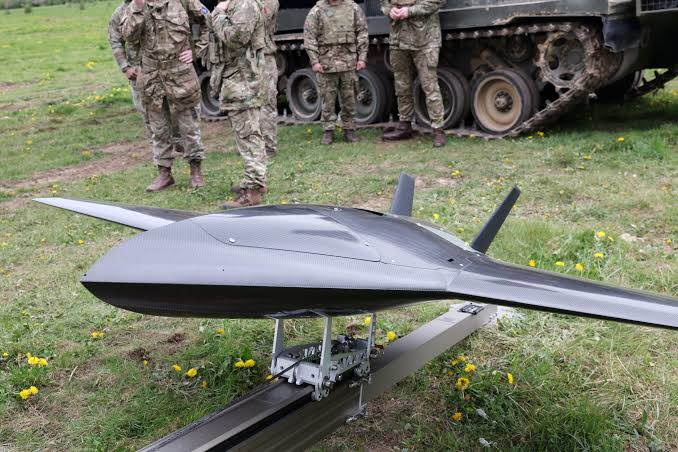
The Times says Ukraine has been using UK-made Nyan jet drones for deep strikes inside Russia over the past six months, including hits on refineries in Volgograd and Yaroslavl.
Sources say they can fly close to 1000km, are cheaper than Western missiles at £50k to £100k, and can be launched in large swarms to overload Russian air defenses. Storm Shadow range is about 250km.
https://t.co/c48SIcZRoc