Dangote Refinery just absorbed 52.6 million of the 53.7 million barrels of crude supplied to local refineries in Q2 2026.
That delivered 97.4 percent DCSO performance and an 88 percent surge from the 28.5 million barrels in Q1.
One refinery took nearly the entire volume Nigeria’s local refining sector received.
While most billionaires collect trophies this man is quietly securing the crude that powers Africa’s largest refinery.
If you own shares in his listed companies you are not just investing in Nigeria. You are inheriting Africa’s industrial future.
The cost of living is rising faster than your salary ever will. Only investments beat inflation.
Your choices: invest now, stay broke slowly OR invest now, build wealth slowly.
Both are slow. One works.
To determine your exact emergency fund target, investment banks usually assess 3 key variables: your essential monthly burn rate, age, and your income risk profile
If you’re from a poor background, that’s your reality, accept it!
There is nothing you can do to change the situation overnight. As a matter of fact, it may take more than one generation to change your situation, so the earlier you start, the better.
🔥🏆 Nigeria’s biggest stock by market cap is printing a fresh 52-week high.
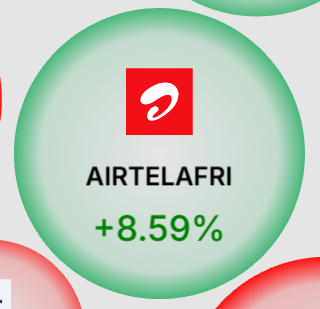
AIRTELAFRI is trading at ₦6,300, up 8.59%, pushing its market cap to ₦21.8 trillion.
Turnover has reached ₦956.75 million with 151.85k shares traded.
The key signal is not just the price move... volume is running 898% above its 30 day average.
FINANCE TIP
Never ever borrow to start a business from scratch.
Never.
You will be frustrated. It’s not always as it seems on paper.
Always have something on ground before taking a loan for that business.
@Morris_Monye Sleep is the number one medicine. For someone who is no longer growing, eat less.
I brought down my blood sugar levels from 22.9 mmol/L without taking a pill. Just proper diet and lifestyle.
OPay is worth $4 billion. PalmPay is worth over $1 billion.
Almost every naira of that value was created by Nigerian users, agents, and merchants.
Yet OPay is preparing to list in the US. PalmPay is eyeing Hong Kong.
Why?
Because the people who own and financed these companies are largely Chinese. When it is time to cash out or raise serious capital, they go to the markets that can pay the highest price with the least friction.
Nigeria’s stock market is still too thin. Daily liquidity is limited. Institutional money is smaller. A $4 billion company would struggle to find enough local buyers at the valuation the foreign investors want. Add naira volatility and capital controls, and the decision becomes even clearer for them.
The business succeeds here. The ownership and the big exit are structured elsewhere.
That gap is real. Locals generate the revenue and the growth. Foreign shareholders capture most of the equity upside.
The NGX boss already asked government last week to push these fintechs to offer shares to Nigerians as well. The conversation is open.
Should companies that build their entire fortune on Nigerian soil be required to list a meaningful portion locally, or is this simply how global capital works?
🇳🇬 First 11 business titans in the stock market Formation 4-3-3
Karl Toriola Adegbite Falade Roger Brown Femi Otedola AIG
Ayodele Abioye Jim Ovia Segun Agbaje
Rabiu Dangote Elumelu
I genuinely believe financial transparency between couple or to be couple will save them more stress than they can imagine.
For context, I started my career on a 35k naira salary, my girlfriend then who is now my wife knew my salary and by extension, my affordability, saves me lots of stress.
When she graduated and started working as well, the precedence has been set already, she also has no reason not to be transparent about hers and this was helpful and that’s how we have been living our lives.
I don’t have the stat but most couple around me who are transparent about their finances and talk more about money, seems to be doing well. This is purely my observation.
Have you noticed this? or what are your thoughts?
Fun thread, but worth flagging the parts that don't survive contact with reality. A 5-20% down payment for a non-resident foreign buyer usually requires a strong credit history in that country, proof of income there, or a much larger deposit than a local buyer would need, US and UK lenders in particular are cautious with foreign nationals. Dubai is more accessible for foreign buyers but comes with its own service charges that eat into yield fast.
Then there's the FX side nobody mentions. You're taking on mortgage debt in dollars, pounds and dirhams while your income and the rent you eventually pay in Nigeria is in naira. If the naira weakens further, your foreign obligations get heavier in real terms even if nothing changes abroad.
Add property management fees, vacancy periods, insurance, and foreign property taxes, and "rental income covers Nigerian rent" is doing a lot of quiet heavy lifting in this plan.
Not saying don't do it. Saying the actual execution needs real numbers, not four bullet points and a P.S.