Task Force X-Arctic is underway 🧊 🥶 NATO is testing how networked uncrewed systems, under human control, can strengthen awareness across the Arctic and the High North.
📆🚢18 months of experimentation begin now: testing, refining and integrating autonomous systems in real Arctic conditions so they can reach Allied forces at the speed of relevance.
📖 More → https://t.co/ARJcOVNmK1
#NATO #TaskForceXArctic #WeAreNATO
DARPA launched a program to build military batteries 8x more powerful than what's in today's drones. Same weight, 8x the range. The goal: cut the fuel supply lines that get soldiers killed in contested environments.
https://t.co/Zhvf1jhw4f
Jamming & spoofing UAVs: how to turn a student’s SDR into a military anti-drone system. 👨🏻💻📡ᯓ🛩️💥
More details on:
LinkedIn: https://t.co/hnsweOEoVX
Substack: https://t.co/nc5Ouu8JS0
Single Crystal CVD Diamond
Have no doubt, you are at the dawn of an industrial revolution. There is a string of breakthroughs happening throughout upstream industries that all compound.
Diamond manufacturing is now able to produce CPU size single crystals wafers.
Currently these are marketed as heat spreaders because they have thermal conductivity of 2,200 W/mK which means they move heat incredibly effectively.
However, that somewhat misses the wood for the trees…
Diamond has physical and electrical properties that exceed traditional silicon, making it uniquely suited for high demand applications.
Thermal Conductivity: Heat is the enemy of electronics. Diamond conducts heat better than almost any other known material, about 5 times better than copper and over 10 times better than silicon.
A diamond chip can act as its own heat sink.
Ultra Wide Bandgap: Diamond can handle massive amounts of voltage and operate at incredibly high temperatures without electrical breakdown.
This makes it perfect for high power applications like electric vehicle inverters, power grids, and aerospace technologies.
High Frequencies: Electrons move very quickly through diamond, allowing chips to operate at much higher frequencies, which is ideal for advanced telecommunications and radar.
Radiation Hardness: Diamond is incredibly resilient to radiation, making diamond based chips ideal for satellites, space exploration, and nuclear facilities.
To make a material act as a semiconductor, you have to "dope" it. To do this you inject impurities into the crystal lattice to create a positive (p-type) or negative (n-type) charge.
Diamond's atomic structure is so tightly packed that forcing other elements into it is hard. While p-type doping (with boron) has been figured out, reliable n-type doping (with phosphorus) remains a massive hurdle.
Theoretical ceilings
Band gap
Silicon wafer = 1.1 eV
Diamond CVD wafer = 5.5eV
Clock speed
Silicon wafer = 5-6 GHz clock wall
Diamond CVD wafer = 1-2 THz clock wall
Max Running Temp
Silicon wafer = 150°C
Diamond CVD wafer = 1,000°C
Whilst we etch silicon with photolithography and Extreme UV light, this doesn’t really work with chemically inert diamond.
Diamond CVD is currently etched with oxygen plasma etching, but this lacks the precision of EUV.
However, we can etch diamond to extreme precision with electron projection lithography. EPL was invented in the 90s by Bell Labs, IBM and Nikkon but abandoned as it was harder than EUV.
Electrons repel each other so the beams blurrs too readily.
What if we built a femto electron beam?
What if we built it to extreme such that it was a ‘single electron’ pulse?
What if we build a microscopic "bed of nails" containing millions of nanoscale tungsten or silicon tips (photocathodes). You shine a massive, highly complex femtosecond laser system across the entire array.
Every time the laser pulses, millions of tiny tips each fire a single, perfectly straight electron at the exact same time.
Turns out, research teams at likes of MIT and Stanford are currently experimenting with exactly this, laser driven nanotip electron emitters.
Pair that tool with Diamond CVD substrate tech and we approach the material limits of both semiconductors and nanotechnology.
Would require asynchronous logic to escape fatal clock skew and operate at full capability.
But I think I will live to see it.
Muon Space Unveils Condor-Ultra, Starship-Class Spacecraft Platform Built for Scale
Muon Space, the Mission Foundry for high-performance satellite constellations, today unveiled Condor-Ultra, its newest spacecraft platform developed for high-power, networked constellations of hundreds to thousands of satellites.
Optimized for stackable mass-deployment from SpaceX's Starship, Condor-Ultra anchors communications, sensing and data-center class compute missions with the most demanding power, aperture and data requirements at unprecedented scale and unit economics.
Configurations for today's medium-lift launch vehicles, including Falcon 9 and Rocket Lab's Neutron, are also available.
Under the contract, SpaceX is scheduled to field “a constellation of satellites” by 2028, though the Space Force did not specify how many the company would deliver.
MORE: https://t.co/MmooIIoscW
#SpaceForce#Guardian
Daily Hard Tech Headlines:
- @GoToImpulse secured a $500M Series D led by 137 Ventures and BANNER VC. The LA startup develops in-space mobility technology.
- @westmagco secured $11M in funding led by Andreessen Horowitz. The SF startup is building American robot actuators and drone motors.
- @layupparts secured a $42M Series A led by Marlinspike. The Orange County startup is building software-enabled manufacturing for rapid custom composite parts production.
- The Whiskey Project Group is delivering expeditionary watercraft for the U.S. Navy, with six vessels to be delivered under a deal totaling $17.5M.
- @DroneShield has secured a $24.9M deal focused on delivery of mobile and fixed C-UAS systems to Joint Interagency Task Force 401, the DoW C-UAS group.
- @HelsingAI, the European defense tech firm, has launched RX-1, a quadruped robotics platform that will be made available to academic institutions and robotics labs across Europe to advance European robotics research.
- Atana Elements raised a $27.5M seed round led by @lowercarbon. The startup develops an AI-powered exploration platform for critical minerals found in subsurface brines and flowing mineral systems.
- @cone_labs secured a $1.5M pre-seed round led by Spatial Capital. The Canadian startup develops physical infrastructure inspection technology.
- Aluminium Bahrain, the Gulf-based aluminum producer and smelter, is acquiring Aluminium Dunkerque, the French aluminum smelter, for approximately $2.2B.
- Voyager Technologies is acquiring Astrobotic for up to $300M. The Pittsburgh company develops lunar landing, delivery, and surface power technology.
- @urencousa is investing billions to expand America’s uranium enrichment capacity, adding 2.1 million SWU at its New Mexico facility to strengthen the domestic nuclear fuel supply chain.
- @OndasHoldings secured a $4.8M initial contract to provide high-altitude balloon systems for a U.S. Navy SOUTHCOM maritime domain awareness program.
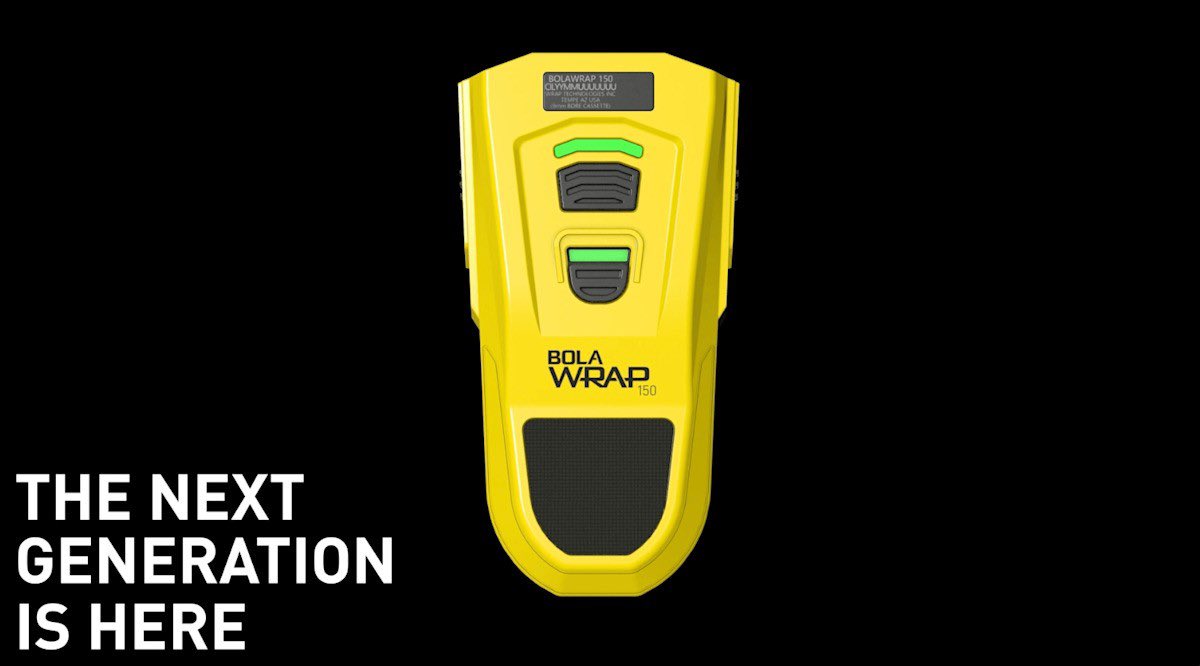
U.S. company WRAP has unveiled plans to develop drone-mounted laser dazzler payloads designed to counter threats using non-lethal directed-energy effects, expanding its autonomous response and public safety technology portfolio.
#USA#CounterDrone#Laser#UAV#DefenseTech
bir site keşfettim, e-ticaret yapan herkesin bilmesi gereken türden. kim kimden mal alıyor hepsi ortada.
büyük markaların tedarikçisini, oturduğun yerden ücretsiz öğrenebileceğini biliyor muydun?
kimse anlatmıyor ama bu yıllardır var.
şöyle çalışıyor. abd'ye gemiyle giren her ürün için resmi bir belge doldurulur. bu belge kimin kimden, ne aldığını yazar. ve bu kayıtlar kamuya açık.
importyeti diye bir site var, 70 milyondan fazla bu kaydı toplamış. ücretsiz.
merak ettiğin markanın ismini yazıyorsun. karşına çıkıyor:
> hangi fabrikadan mal alıyor
> hangi ülkeden geliyor
> ne sıklıkla, ne kadar
yani rakibinin ya da hayran olduğun markanın tam olarak kimden ürün aldığını görüyorsun. sonra aynı fabrikaya sen de ulaşıyorsun.
büyük şirketler bunu yıllarca gizli silah gibi kullandı. çünkü eskiden bu veriye ulaşmak hem pahalı hem zordu. artık değil.
bu sadece etsy değil. ürün satan, tedarik yapan herkes için aynı.
tedarikçi gizli değil. sadece kimsenin bakmadığı yerde duruyor.
For 19 years, GPS satellites have secretly broadcast a “numbers station” in their public signals. We decoded 12M messages: a 2011 flash where 31 of 32 satellites flipped in hours, “ghost” substrings repeating years apart, and a “TEXT” prefix spreading now. https://t.co/xz3svmqiDa
See the top ranked papers in AI, ML, Robotics, Quantum Physics, and more on @kurateorg. Hundreds of arXiv preprints ranked daily by scientific impact through pairwise tournaments judged by Claude, GPT, and Gemini.
🇫🇷 ENTRETIEN | Le champ de bataille est désormais gouverné par les mathématiques, et non plus par le verbe. La pépite française @Comand_AI en a fait sa thèse fondatrice.
Née en 2023 de la conviction qu'une équipe d'ingénieurs de rang mondial pouvait refonder le logiciel de commandement militaire européen, la pépite française teste aujourd'hui son C2 nouvelle génération, Prevail, en conditions réelles en Ukraine, en Allemagne et en France.
Loïc Mougeolle, son co-fondateur, nous raconte comment. Sur le mythe du #ChatGPT militaire, les leçons du terrain ukrainien, pourquoi copier #Palantir serait une erreur fatale, la place de @MistralAI dans une architecture de défense souveraine, le niveau d'investissement nécessaire pour que la #BITD européenne ne décroche pas face aux Américains, et une levée de fonds conséquente qui sera annoncée dans quelques jours à #Eurosatory.
https://t.co/IWlvH45ajA