Purpose-built AI to analyze millions of financial data points, uncover market patterns, and generate actionable investment insights—all tailored to you
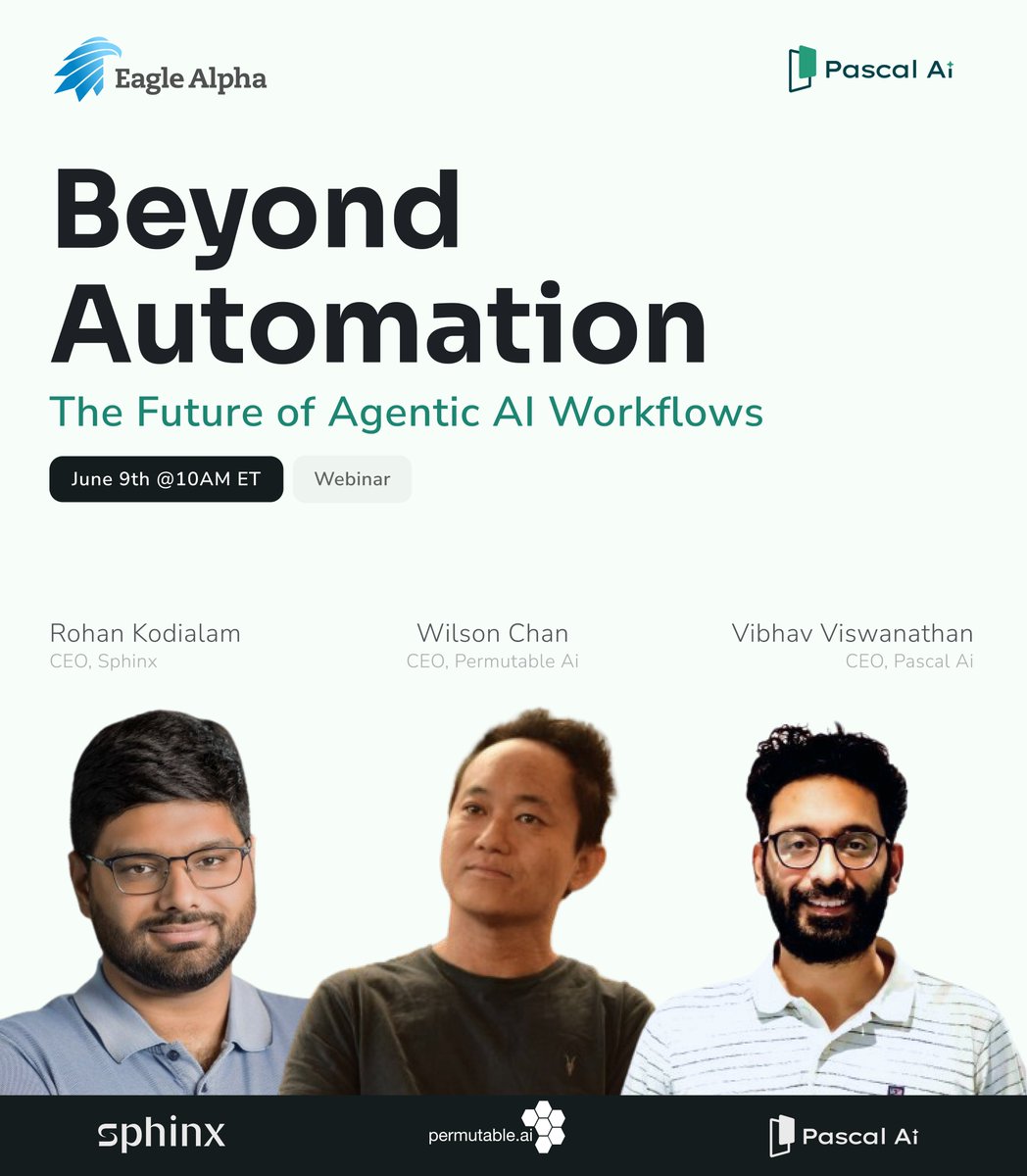
Our Founder & CEO, Vibhav Viswanathan (@v_vibhav), will be speaking at an upcoming webinar hosted by @DollarEagle.
Explore how investment teams are moving beyond AI copilots and experimenting with agentic systems.
Fill the form to request a spot: https://t.co/MmRv6O4rb4
We are thrilled to announce that Pascal AI is deploying its AI infrastructure with @ICICIPruMF across the fund house's institutional investment workflows. Know more - https://t.co/Z0WcWmZG0K
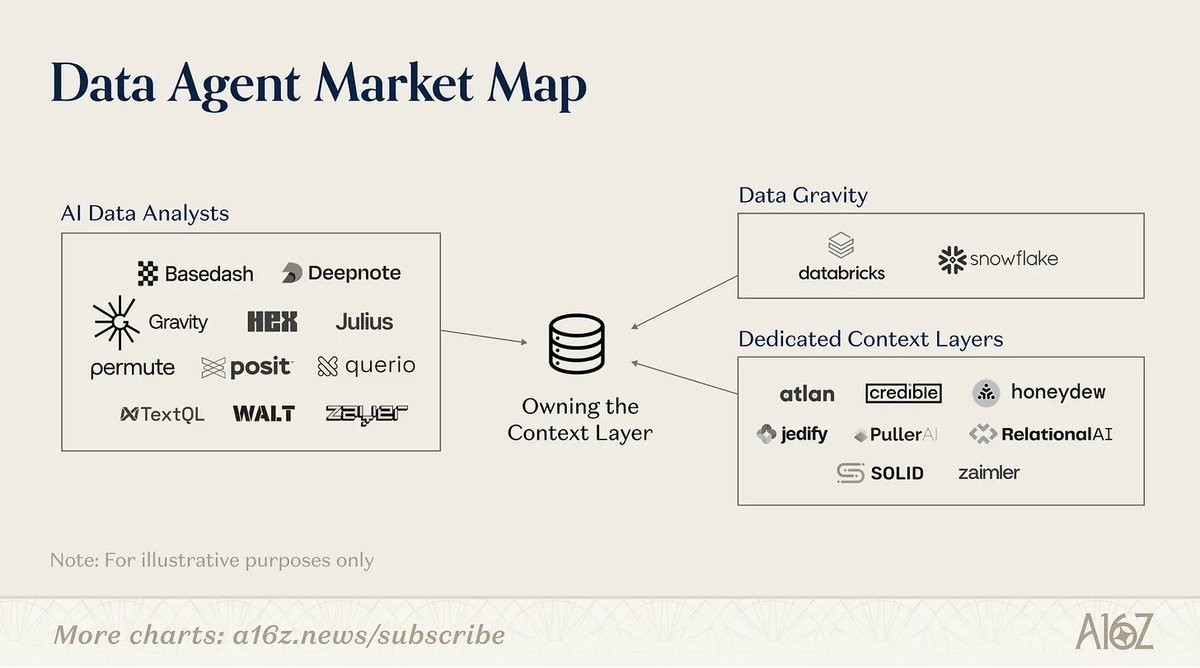
@a16z mapped the context layer market well, but with a missing dimension: vertical depth.
Horizontal context layers surface documents. They can't capture how a thesis evolved over 3 years, or what assumptions drove the last IC decision.
That's the context layer for investing.
Frontier models are exceptionally efficient, intelligent, and useful. For agents, context is now the bottleneck.
Enter the context layer, which bridges the gap from an enterprise's messy data to actionable context, packaged for agents.
We're seeing three distinct verticals emerge in the context layer space:
- Data gravity platforms
- Existing AI data analysts
- New, dedicated context layer companies
Read the full piece by @JasonSCui and @JenniferHli: https://t.co/ftyF4lYIFK
The grunt work was always a mask. It made mediocre analysts look busy and kept great analysts held back.
AI has destroyed the middle ground. The gap between a "model builder" and a "judgment-driven analyst" has now become wider than ever.
“half of analyst seats gone in 5 years” misses what gets cut first.
analyst work is two jobs: grunt work and judgment work. they’re paid the same but they aren’t worth the same.
the grunt work — comp tables, model builds, deck formatting — was already being outsourced to India at $15/hour. AI just made it free and instant.
the judgment work — reading a CFO in a room, knowing which assumption kills a deal, feeling when something’s wrong before the model says so — that’s not in the plugin list.
the seats disappearing were already commodities. the ones that remain just got more leverage.
The line in the sand is clear: Infrastructure wins. Applications get repriced.
This becomes even clearer when it becomes harder to beat a firm in returns that is building the knowledge graph and getting the yields of its compounding.
Palantir is currently one of the most volatile stocks on NASDAQ. Since Feb 2, we’ve seen a massive post-earnings surge followed by a sharp 23% dip from its highs.
But if you’re looking at the price, you're missing the signal in the noise. 🧵
But what does it mean for investment firms?
Your institutional memory is currently leaky, it’s scattered in PDFs and analysts' notes.
A world where every company analyzed connects to your thesis and outcomes. Where your research is a living knowledge graph holding the context.
There is value in being consistent with your own past decisions. Don't let recency bias erase years of research traces.
How are you acting differently this earnings season? Are you still auditing manually?
Let us know below. 👇
#Earnings#AI#Investing#Accenture
AI Agents for 2026 Earnings Season?
Analysts are still burning out manually auditing 100s of pages.
But the real issue isn't even the workload.
We suffer from recency bias: reacting to what the CEO says now, while forgetting past promises.
Example of an Agentic Audit👇
This is powered by our new Agentic workflows:
1️⃣ Executive Narrative Tracker: Benchmarks current commentary against past strategic priorities.
2️⃣ Guidance vs Actuals: Systematically reconciles results against explicit forward guidance.