The answer is a definitive NO. You aren't having a seizure. You are actually experiencing a fascinating glitch in human evolution called a Hypnic Jerk and it happens because your brain is actually trying to save your life.
Here is the exact mechanism. I have explained it under 3 subheadings:
1. The Paralysis Switch: To safely enter deep sleep, your brain must flip a chemical switch to temporarily paralyze your muscles (this stops you from physically acting out your dreams). Your body goes entirely limp and your breathing slows down.
2. The Evolutionary Glitch: When you are highly stressed or sleep-deprived, your brain's survival center stays hyper-alert. As your muscles suddenly drop into that limp, paralyzed state, your over-stressed brain misreads the data. It doesn't think you are falling asleep; it literally thinks your bodily systems are failing or that you are physically in free-fall.
3. The Emergency Override: Panicking, your brain hits the emergency override button. It fires a massive electrical shock down your spinal cord to snap your muscles tight, forcing you to "brace for impact" and wake up.
FOLLOW ME for more such posts.
Today, India takes a defining step in its civil nuclear journey, advancing the second stage of its nuclear programme.
The indigenously designed and built Prototype Fast Breeder Reactor at Kalpakkam has attained criticality.
This advanced reactor, capable of producing more fuel than it consumes, reflects the depth of our scientific capability and the strength of our engineering enterprise. It is a decisive step towards harnessing our vast thorium reserves in the third stage of the programme.
A proud moment for India. Congratulations to our scientists and engineers.
@IRCTCofficial@RailMinIndia could you please confirm if the #rescheduling of tickets is available or in plans? The #AI replies show it's already available, even mentioning steps to utilise the feature! I wasn't able to see in the app for travel in June.
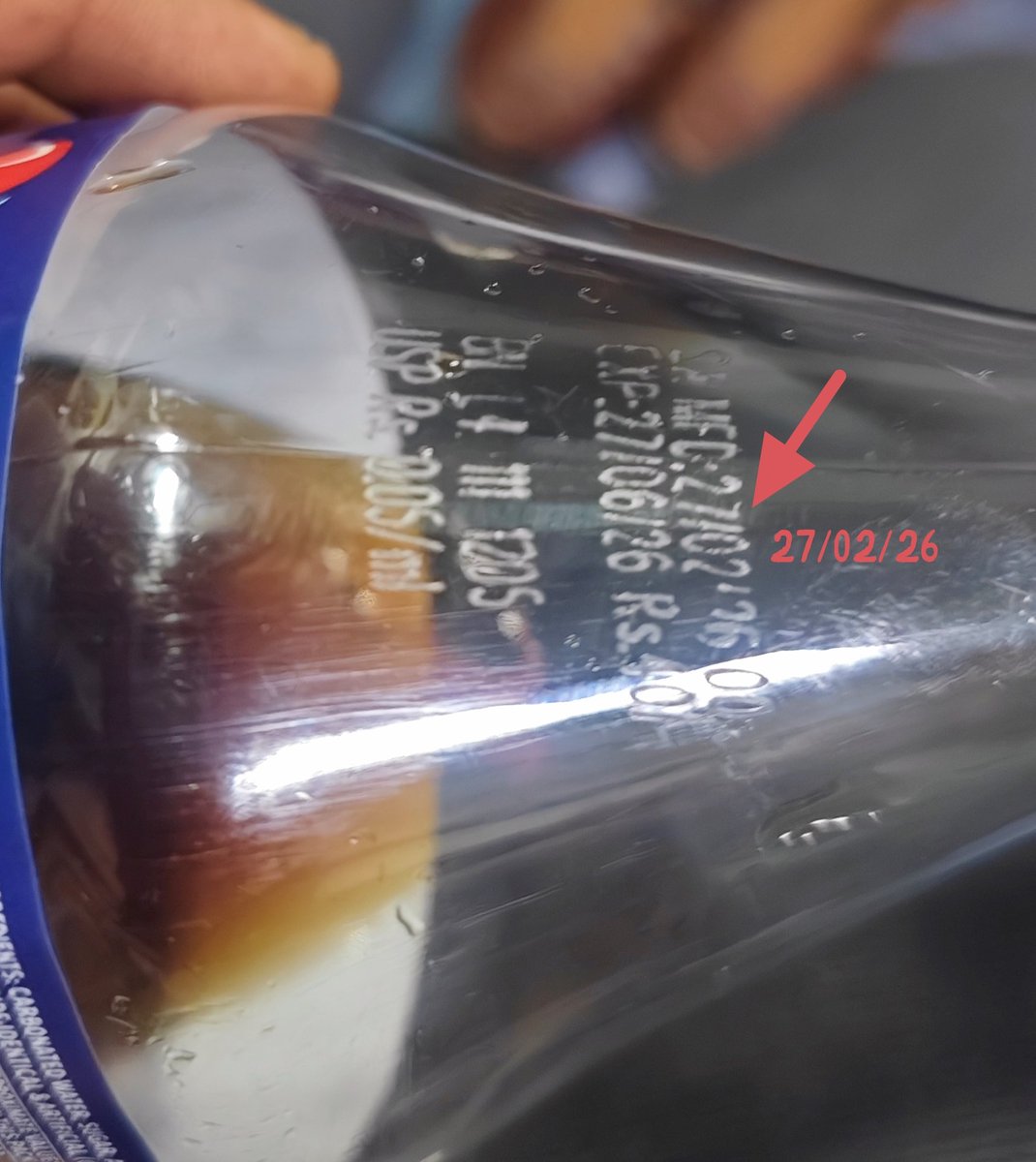
@ThumsUpOfficial mfg 27/02/26 and label of offer that is valid till 28th Feb 2026! So on the day it is manufactured, it would be supplied, transported and sold to the end consumer within 48 hours. Either very strong confidence on consumption OR #unplannedprocess for labelling?
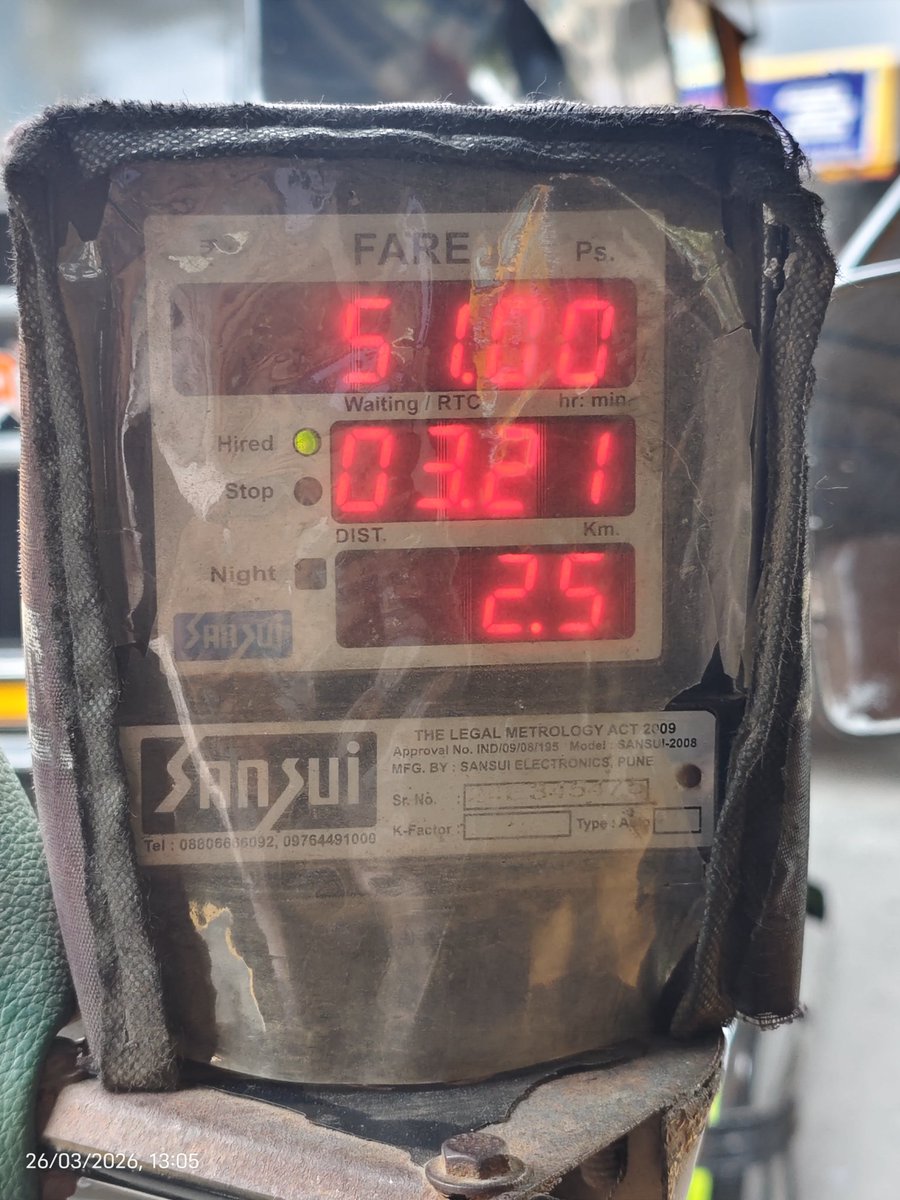
@Autowaaleh_Bhai at around 1: 10pm in the afternoon, how is the fare calculated? We have the tarrif card for distance wise. Enlighten on how to calculate the wait time addition. 3:21 is the wait time here
@RailMinIndia@RailMadad Where is the option to get a paper ticket from #RailOne app? It goes to unreserved e-ticket, & has 2 options :"outside stn" (paperless) and "at stn" (scan QR), but no option to choose source station manually if I want to book before reaching station!
Ever wondered how astronauts stay fresh in space? Of course you have — it's one of the questions I get asked most. So let's settle it once and for all.
The short answer: there are no showers up here. The long answer: personal hygiene in microgravity is a surprisingly elegant little science experiment.
It starts with this unassuming bag. Inside sits a washcloth pre-loaded with disinfecting shampoo — compact, efficient, and decidedly unglamorous. Add water, and the cloth becomes fully saturated. Tear open the bag, and you've got yourself the world's most expensive sponge bath.
Once you're done, the towel goes to its designated spot, where the moisture it holds gets pulled into the station’s water reclamation system — because in space, not a single drop goes to waste.
So no, it's not a hot shower after a long day. But for 250 miles above Earth, it gets the job done.
Interestingly, did you notice I left my phone suspended mid air for some time. You do not need a mobile holder in Space.
#shux #space #axiom4 #shubhanshushukla #india
When the Government of India announced the Padma Shri for Dr. Tapan Kumar Lahiri,
the protocol required him to travel to Rashtrapati Bhavan in New Delhi to receive the honor from the President.
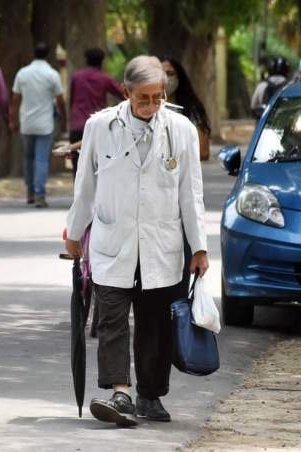
However, Dr. Lahiri was hesitant to go. His reasoning was simple: "If I go to Delhi, who will look after my patients in the OPD?" For him, a day away from the hospital wasn't a holiday; it was a day his patients—many of whom traveled from Bihar and rural UP—would go untreated.
Finally he did go given the prestige associated with the event.
Who is Dr Tapan Lahiri?
Dr. Tapan Kumar Lahiri is a legendary Indian cardiothoracic surgeon and professor commonly referred to as the "Saint of BHU". Dr. Lahiri has done FRCS and MCh and working in BHU.
Dr. Lahiri’s commitment to the poor is extraordinary.
In 1994, when his salary (including allowances) exceeded ₹1 lakh, he stopped taking it entirely, directing the university to use the funds for the treatment of underprivileged patients.
After retiring in 2003, he continued this practice with his pension. He keeps only enough to cover two simple meals a day and donates the remainder to the BHU patient fund.
Even in his 80s, he has been known to walk to the hospital at 6:00 AM daily, carrying a simple bag and a black umbrella, to check on his patients.
As he says
"With the grace of Lord Vishwanath and Maa Annapurna, I will keep serving patients till my last breath."
When 740 children were condemned to the sea and the world said “no,” one man said “yes.”
The year was 1942.
In the Arabian Sea, a ship drifted like a floating coffin.
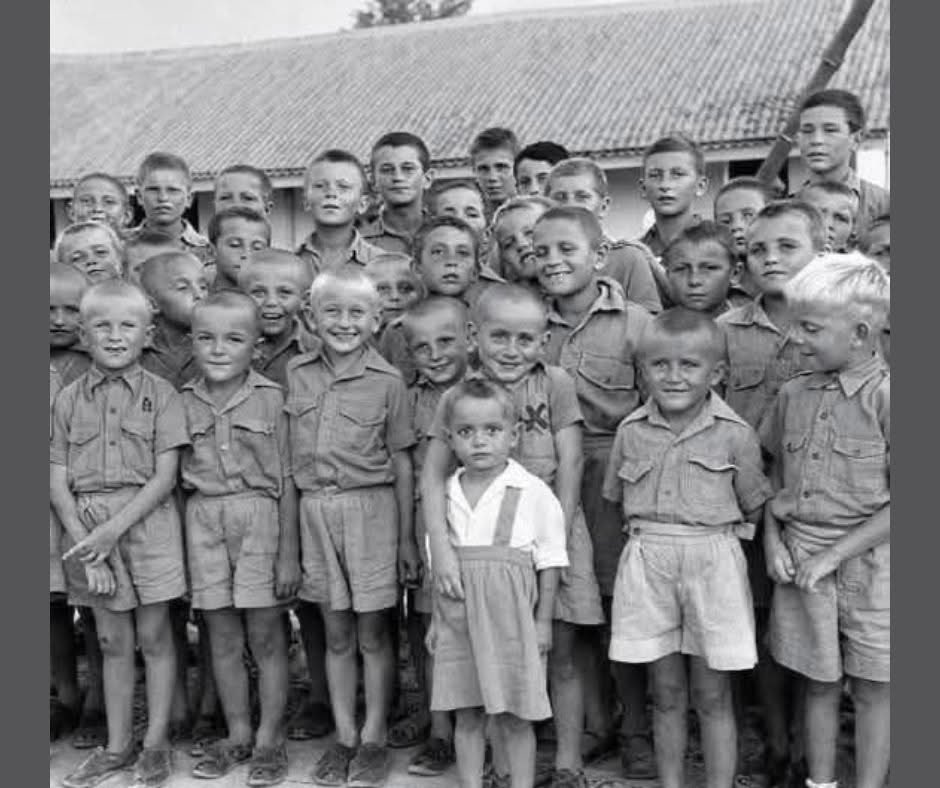
On board were 740 Polish children—orphans, survivors of Soviet labor camps where their parents had died of hunger, disease, and exhaustion. They had escaped through Iran, but the worst still lay ahead: no one wanted them.
Port after port along the Indian coast, the British Empire—the greatest power of the time—shut its doors.
“Not our responsibility. Sail away.”
Food was running out. Medicines were gone. Hope itself had become dangerous.
Twelve-year-old Maria held the hand of her six-year-old brother. She had promised her dying mother she would protect him. But how do you protect someone when the whole world decides he does not deserve to live?
Then the news reached the small palace of Navanagar, in Gujarat.
The ruler was Jam Sahib Digvijay Singhji—a minor prince in a British-dominated empire, with no army, no real control over the ports, and no obligation whatsoever to act.
His advisers told him:
— “Seven hundred and forty children are trapped at sea after the British refused to take them.”
He asked calmly:
— “How many children?”
— “Seven hundred and forty, Your Highness.”
There was a brief silence. Then he said:
— “The British may control my ports.
But they do not control my conscience.
Those children will dock at Navanagar.”
They warned him:
— “If you defy the British…”
— “Then I will face them.”
And he sent the message that saved 740 lives:
“You are welcome here.”
In August 1942, the ship entered the harbor under the merciless summer sun. The children disembarked like shadows—too weak to cry, trained by suffering to expect nothing.
The Maharaja was waiting for them on the dock. Dressed in white, he knelt to meet the children at eye level and, through interpreters, spoke words they had not heard since their parents died:
— “You are no longer orphans.
You are my children now.
I am your Bapu—your father.”
And he did not build a refugee camp.
He built a home.
In Balachadi, he created a small Poland on Indian soil: Polish teachers, food that tasted of memory, childhood songs, classrooms, gardens, and a Christmas tree beneath the tropical sky.
— “Suffering tries to erase you,” he told them.
“But your language, your culture, your traditions are sacred.
Here, they will live.”
For four years, while the world burned in war, those children lived not as refugees—but as family.
He visited them, remembered their names, celebrated birthdays, comforted those who wept for parents who would never return. He paid for doctors, teachers, clothing, and food from his own fortune.
When the war ended and the time came to leave, many wept. Balachadi was the only true home they had ever known.
Today, those children have become doctors, teachers, parents, and grandparents. In Poland, squares and schools bear the name Jam Sahib Digvijay Singhji. He received the country’s highest honors.
But his true monument is not made of stone.
It is 740 lives.
And they still tell their grandchildren the story of an Indian king who, when the entire world closed its doors, looked at suffering and said:
“They are my children now.”
@siszinei@pickover "γ₁ = first locking → the equatorial great circle (one disc)
γ₂ = second harmonic → orthogonal meridian (second disc)
γ"
But we are talking about surface area and not volume and circumference. So we should not fit the disc "inside", rather wear it.
The double slit experiment has haunted physicists for over 200 years.
When you shoot a single photon through two slits in a barrier, it doesn't choose one hole. It goes through both simultaneously, interferes with itself, and lands on the screen as a wave pattern, as if the particle somehow knew both paths existed and took all of them at once.
The moment you place a detector to watch which slit it goes through? The wave pattern vanishes. The photon suddenly behaves like a solid particle. The act of observation collapses the quantum superposition into a single definite reality.
Physicists called this "wave-particle duality" and for generations, we treated it as a quirk of space. A particle's relationship with physical barriers, physical gaps, physical measurement.
What just happened changes the entire frame.
Researchers didn't use slits carved into a material. They used slits carved into time itself — ultra-short switching windows in the electrical properties of a material, flickering on and off at trillionths of a second. Light passed through these temporal gaps the way it would normally pass through spatial gaps. And the interference pattern still appeared. Not across space. Across frequency.
Sit with that for a moment.
The wave behavior of light, the phenomenon we always associated with light spreading through physical space, reproduced itself in the time dimension. The photon interfered with its own past and future states the way it normally interferes across left and right positions.
What this quietly confirms is something theoretical physicists suspected but had never demonstrated: space and time are not just mathematically symmetric in quantum mechanics. They are physically interchangeable in ways that produce identical quantum behavior. The "slits" are interchangeable coordinates. The universe doesn't distinguish between a gap in space and a gap in time when it decides how reality should unfold.
The implications of that sentence are almost impossible to absorb without stopping completely.
We built our entire intuition about quantum mechanics around the geometry of space — particles passing through openings, waves spreading outward, interference happening across a physical screen. Every textbook, every lecture, every thought experiment uses spatial metaphors because that's the dimension we experience as "real" and navigable.
Time, by contrast, we experience as a river we're trapped inside — always moving forward, never able to go sideways in it. We don't experience temporal gaps the way we experience physical ones. A door has two holes, you can walk through either one. A moment in time doesn't seem to have "holes."
Except for a photon, apparently, it does.
The temporal slit experiment forces a deeply uncomfortable update to how we model light, matter, and information. If wave-particle duality operates across time the same way it operates across space, it means quantum superposition — that strange state of "being in multiple states simultaneously until observed" — is not just a spatial phenomenon. A particle can exist in multiple temporal states simultaneously. Its wave function doesn't just spread left and right. It spreads forward and backward in time.
This connects to something that's been sitting at the edge of quantum mechanics for decades: the block universe theory. In Einstein's relativity, past, present, and future all exist simultaneously as coordinates in a four-dimensional spacetime fabric. "Now" is just the slice of that fabric you happen to occupy. Physicists who take this seriously argue that the reason quantum mechanics is so strange is that particles already operate in the full four-dimensional block — they're not choosing a path through space, they're tracing a path through spacetime, and what we call "probability" is our limited three-dimensional perception failing to see the complete trajectory.
The temporal slit experiment edges us closer to that picture being literally, physically, measurably true.
And then there's the measurement problem. The original spatial double slit experiment breaks your brain because the act of looking destroys the wave behavior. Nobody has fully agreed on why. Some say the observer collapses the wave function. Some say the detector entangles with the photon and creates decoherence. Some say the universe splits. The temporal version of the experiment opens a new front in that war. When you measure a temporal slit — when you try to determine which moment the photon passed through — does the interference across frequency collapse the same way interference across space does when you watch it?
That experiment hasn't been done yet. The answer will either confirm that time and space are truly symmetric at the quantum level, or it will break the symmetry and reveal that time has a fundamentally different relationship with observation than space does.
Either outcome rewrites something important.
We think of physics experiments as things that happen in laboratories, relevant to scientists with particle accelerators and cryogenic equipment. But every foundational shift in quantum mechanics eventually rewires technology. The photoelectric effect sounded like a curiosity in 1905. It built every solar panel and digital camera in existence. Quantum tunneling sounded abstract. It gave us the transistor, and therefore every computer.
Wave-particle duality operating across time opens the door to temporal interference as an engineering tool. Controlling how light and matter interfere across time gaps — not space gaps — could produce entirely new forms of signal processing, photonic computing, and quantum communication that don't currently exist even theoretically.
The universe keeps revealing that the constraints we assumed were fundamental were just the limits of our instruments.
Time always looked like a wall.
Turns out it was a slit all along.
An IAS officer in Chhattisgarh FIXED a maternal health CRISIS that the government couldn't solve with a recipe older than modern medicine.
She did it with a ladoo!
Yes, you read that right 🤯
Okay so here’s what happened:
Koriya district had one of the worst maternal health records in the state:
→ High-risk pregnancies → Underweight babies → Mothers going into labour severely anaemic.
Simply because pregnant women weren't getting enough nutritious food.
So District Collector Chandan Tripathi did something no consultant would pitch.
She turned a grandmother’s ragi modak into a structured maternal health system.
Here’s what they did differently:
→ Created iron-rich ragi modak ladoos (dietician approved)
→ Gave 2 ladoos daily to every pregnant woman
→ Added iron supplementation from the 5th month
→ Paired each woman with a “Poshan Sangwari” to ensure she actually consumed them
They called it the Koriya Modak Ladoo programme.
The most brilliant part about this is that they didn't hire outsiders to make the ladoos.
The same women it was meant to help now make the ladoos, earning ₹10,000–12,000 per month.
And look at the results now:
✅ 57% reduction in low birth weight cases.
✅ 362/398 underweight mothers gained healthy weight
✅ 3,00,000+ ladoos distributed so far.
And all of this was possible not because of a ₹100 crore government tender but because of trust in community knowledge and the will to execute it properly.
Sometimes the most powerful solutions aren’t expensive.
@IRCTCofficial How to get refund of failed transaction while loading the eWallet? While depositing amount in eWallet, the amount was deducted from bank, however the page redirected to an error as in the image! Recently it is more of an headache than service- for which you charge.