This pattern of 15 good(ish) years (white portion of the box) followed by 15 years when you had better be a market timer (yellow portion) has worked all the way back to the 1830s. The next yellow box starts about now.
Steve Cohen skipped school at 14 to watch stock prices - learned to predict them 10 minutes ahead - then made 30% every year for 18 years
his fund now traded 1% of the entire US market daily
Goldman Sachs asked him how - he showed strategy behind it
"most of the people I was competing against in the 90s are not in business today - because they didn't adapt"
at 21 they let him trade millions without a hedge -
"I would never allow anyone at my firm to do that today"
30,000 people apply to work for him every year - only 40 get in
bookmark & watch today ↓
Bill Ackman is openly trying to build the next Berkshire Hathaway and explained the entire playbook on All-In. It starts with a 4 billion dollar company nobody on Wall Street cares about.
The company is Howard Hughes. It trades at 60 cents on the dollar.
Here is the playbook he is copying.
Someone went back and read every filing Warren Buffett made over 60 years. Almost all of Berkshire's value came from one thing nobody talks about. Insurance.
Buffett ran an insurance company. You collect premiums today in exchange for paying claims later. That means you get money up front. Float.
Most insurers obsess over the liability side. How much they might have to pay out. Buffett did the opposite. He took that float and invested it.
Manage both sides well and you build a compounding, tax-efficient machine that runs for decades.
So why hasn't everyone copied it? Because the people great at investing go work for hedge funds. Insurance companies can't recruit them. Buffett owned half his company and happened to be the best investor alive.
Ackman is now running the same play. Instead of plowing Howard Hughes cash into real estate, he is pouring it into insurance.
The goal is a trillion dollar machine compounding over 50 years.
Buffett started with a failing textile mill. Ackman is starting with land nobody wanted.
The playbook was never hidden. Almost nobody is built to run it.
WATCH THE FULL PODCAST ON @theallinpod
Lloyd Blankfein. grew up in the projects. became CEO of Goldman Sachs. ran a balance sheet worth hundreds of billions.
when asked what separated the traders who made it from the ones who didn't:
"the difference between somebody who's really really good and somebody who can't make it is not that great."
"you think of a golf tournament and somebody wins by one stroke and there's six people tied for second. that's a very low margin of victory. and a lot of life is like that."
"the difference between a great actor who will get any part in Hollywood and the second best one who may have to wait tables at night."
"imagine the unfortunate person who's the best athlete his high school ever produced. gets a minor league baseball contract. and from the minor leagues, something like 2% eventually make a living."
"you get into very rarefied air when you're talking about people who are the best at what they do, where the market only rewards people who are in the 0.01%."
this applies to trading. the gap between a profitable trader and someone who blows up isn't some massive talent difference. it's a handful of small decisions compounded over years, position sizing, validation rigor, patience during drawdowns.
Lloyd Blankfein, former CEO of Goldman Sachs, broke down his entire personal trading setup:
portfolio: 98% risky assets. 75-90% single stocks. mostly big tech hyperscalers plus "second tier" names slightly below blue chip.
"i invest in risky assets. that's what's fun for me."
"do you have a team? oh, just me."
hardware: no computer. an iPad and a phone.
information source: texting and calling people.
"somebody will text me. i'll text them. then i'll get tired of tapping things out because of my fat fingers. so i just call people up."
frequency: trades every single day. multiple times.
"it's taking a lot of discipline not to look at my screen while i'm talking to you right now."
"some people listen to music. to me, the market is like music. it's out there. it's going on."
has he outperformed the market? "yes, i have for a while. it's because of where i focused, tech, energy, and financial services. i know a lot about financial services having been in financial services."
the former CEO of Goldman Sachs. manages his own money. on an iPad. alone. focused on three sectors he actually knows. and beats the market.
sometimes the edge isn't the model. it's 40 years of pattern recognition and a phone full of the right contacts.
Christine Fréchette aurait-elle dit « non » à Northvolt?
« Investir autant d'argent dans deux startups, je ne suis pas certaine que j'y serais allée aussi généreusement », répond @CFrechette en entrevue ce soir à #EDPR et au #TJ18h#polqc
Howard Marks has been writing investment memos for 30 years that Warren Buffett says he reads first thing every time.
In 36 minutes he explains why every bull market ends the same way - and where he thinks we are right now.
36-min. Oaktree. TBPN.
Bookmark & watch - the clearest market cycle read you'll find in 2026
Stanley Druckenmiller broke down what's behind his 30% average annual return
and revealed the one rule Soros used to tell him: "invest first, investigate later"
"if I get an idea I buy it first and tell the analysts to look into it - if I wait I'll miss 30 or 40% of the move and then I'm paralyzed - I don't have the guts to buy it anymore"
"it was a matter of never losing and then throwing some big numbers in there maybe 10 times - my worst years were up 5%, my best were up 60%"
"if you go down 50% you need 100% just to get back to even - when you see the ball, swing really big - when you don't see the ball, don't swing"
bookmark and watch it today ↓
John Paulson made $20B in one trade and owed $1.5B in taxes - then lost 90% of his clients - one man, two records: greatest trade ever and greatest collapse ever
- he showed exactly how he did it
8-min and you will know how to repeat the "Greatest Trade Ever"
before the trade nobody knew his name - 30 years of obscurity - then one idea changed Wall Street forever
bookmark & watch - his career story is truly one of a kind
Dan Loeb tried to raise $10 million to start his hedge fund - nobody on Wall Street would give it to him
his mother gave him $250,000 - he put in every dollar he had, $340,000 - scraped together $3.3 million from four people
first month he was up 8% - that was the last time he ever felt like a fraud
$3.3 million from four people who believed in him - today Dan Loeb manages $30 billion
"when we were small our main tool was shame and humor - I was the original troll - Wall Street Bets before Wall Street Bets existed"
bookmark and watch the full interview ↓
Stanley Druckenmiller averaged 30% a year for 30 years without a single losing year
Paul Tudor Jones asked him on stage what made him different from everyone else - his answer: size
"I put 350% long into one bond trade - 200 to 300% of my fund into a single currency - put all your eggs in one basket and watch the basket carefully"
"I've never used a stop loss in 40 years - I exit when the reason I bought changes, not when the price is down"
"the world changed on 9/11, the world changed when the wall came down, the world changed election night - these moments set in place two to four-year trends you can play"
bookmark and watch it today ↓
Scott Bessent spent 20 years at Soros betting against governments that destroyed their own economies.
Now he IS the US government's economic policy.
56-min and you'll understand every major macro decision coming out of Washington in 2026
bookmark - the most interesting Treasury Secretary interview in a decade
Paul Tudor and Ray Dalio both hit bottom - Tudor lost 60% of client money, Dalio borrowed $4K from his father - now they run two of the greatest funds
- on one couch, together they held a workshop on how to trade right now
they said "the system is broken"
37-min masterclass between two legends who built the best funds in the world
bookmark & watch - one video will teach you more than any course from fake traders
@KimDotcom Alex Karp is a JEW
Peter Thiel was funded by the Rothschilds, JEWS, via Jeffrey Epstein, a JEW
Is the entire world blackmailed, bribed, or assassinated by a JEWISH cabal that seek to enslave the world under JEWISH supremacy?
If so, we MUST soak up.
My conversation with @DanielSLoeb1, his first ever podcast and one I've been wanting to do for years.
Dan started Third Point in 1995 with $3 million. Today the firm manages over $24 billion across equities, credit, venture, and insurance.
Along the way he wrote some of the most iconic activist letters.
We discuss:
- Why deep value stopped working
- The power of writing
- The Twitter and XAI credit trades
- Lessons from FTX and Danaher
- The Sony and Sotheby's stories
- What makes a great analyst today
- The importance of kindness
I feel lucky we all get to learn from one of the greats.
Enjoy!
Timestamps:
0:00 Intro
2:48 Macro Views and Tech Trends
5:13 The Roots of Third Point
10:30 Evolving to Quality and Thematic Investing
19:07 Market Psychology and Inefficiencies
24:10 Good and Bad Corporate Governance
29:19 Activism
31:23 Sotheby's
41:37 AI
44:28 Sony
52:50 Danaher's Operating System
56:31 Building an Insurance Business
59:25 FTX
1:05:17 What Makes a Great Analyst Today
1:07:24 The Next Decade
1:10:00 Kindest Thing
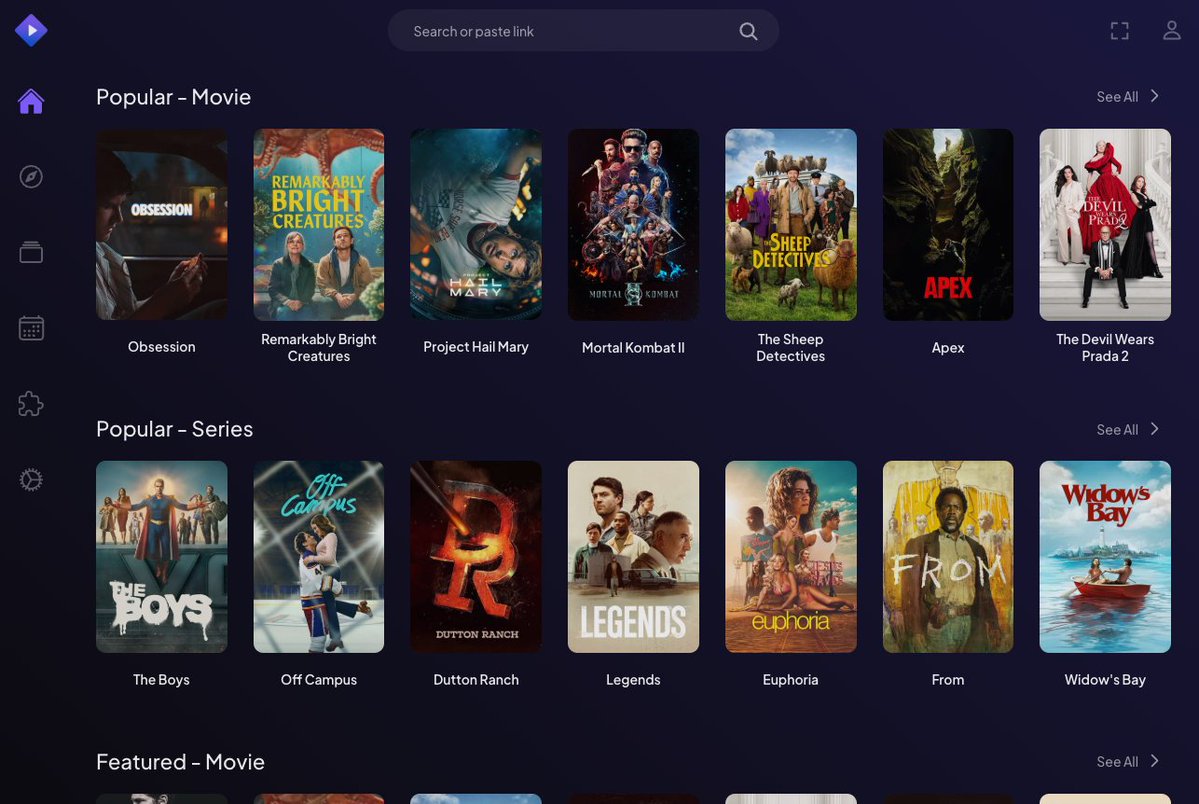
🚨 TWO BULGARIANS JUST KILLED THE STREAMING INDUSTRY.
It's called Stremio + Torrentio. You get 4K content from Netflix, Disney+, Hulu, and HBO Max ��� combined — for free.
Here's how it works.
Stremio is the player. Polished interface. Works on Windows, macOS, Linux, Android, iOS, and TV. Install it once and it looks like any premium streaming app.
Torrentio is the addon. Add it to Stremio in one click. It scrapes every major torrent provider simultaneously and delivers the best available stream straight to your player. 720p, 1080p, 4K. You choose the quality. It finds the source.
→ No account required
→ No subscription
→ Works on every device
→ 4K and HDR supported
→ Subtitles built in
Netflix can't touch this. There is no central server to seize. No company to sue. No domain to kill. It lives on your device and pulls from the open internet.
The entire streaming industry runs on one assumption. That you'll keep paying $70/month instead of spending 5 minutes on GitHub.
That assumption just died in Sofia, Bulgaria.
MIT License. 100% Open-source.
Get the addon here: https://t.co/WxWS91oTrk
Correlations
A few years ago, a friend of mine who runs a very successful systematic hedge fund told me they were struggling.
When I asked why, he said something fascinating:
“The correlations that worked for years have started breaking down.”
And the more time passes, the more obvious it becomes that there’s no such thing as permanent correlations. There are only temporary causalities - relationships that exist for a period of time until they don’t.
Nothing in markets is ordained by God.
Just because something worked for 10, 20, or 50 years does not mean it must continue working forever.
For years, investors believed stocks and bonds naturally hedge one another. Then inflation returned and suddenly both started falling together.
People believed rising yields must hurt stocks. Yet at multiple points over the last few years, yields surged while AI and tech stocks kept ripping higher anyway.
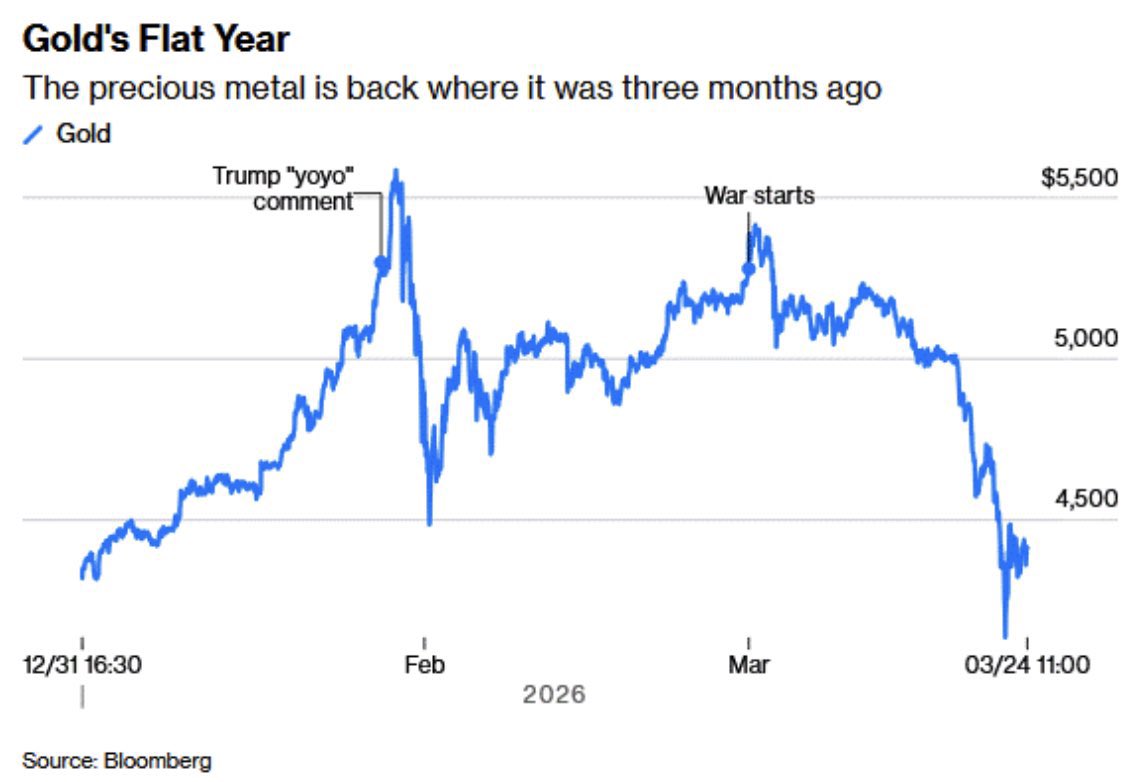
People believed gold had to rally during geopolitical stress, war, money printing, and fiscal deterioration. Then despite many of those exact conditions remaining in place, gold sold off anyway.
People believed the dollar and yields always move together. Then we saw periods where yields rose aggressively while the dollar weakened.
People believed oil spikes must crash equities immediately. Sometimes they did. Sometimes markets ignored them completely.
People believed copper was a flawless global growth indicator. Yet recently copper, equities, yields, commodities, and growth expectations have often sent completely conflicting signals.
At one point, Wall Street reached near-total consensus that gold was heading to $6,000. Every investment banker upgraded their model as price moved higher. Then suddenly, despite the exact same macro conditions remaining in place, gold dropped 10%.
The very reasons people used to explain why gold “had to go up” became the reasons it fell.
Ask Paul Tudor Jones.
The same man who allegedly spent years trying to remove old videos of himself trading from the internet because his edge mattered so much, eventually became another CNBC macro commentator repeating consensus narratives on television.
That alone tells you how fragile “edge” really is in markets.
This is what people forget:
Most “laws” are just temporary patterns that survived long enough for people to mistake them for eternal truths.
Correlations are not laws of physics.
They are crowds temporarily agreeing on a narrative.
INSTEAD OF WATCHING AN HOUR OF NETFLIX TONIGHT.
This 1 hour Stanford lecture by Joel Peterson will teach you more about negotiation and getting what you want than most people learn in years.
Bookmark it and give it an hour, no matter what.