FACT: #COVID19 is NOT airborne.
The #coronavirus is mainly transmitted through droplets generated when an infected person coughs, sneezes or speaks.
To protect yourself:
-keep 1m distance from others
-disinfect surfaces frequently
-wash/rub your 👐
-avoid touching your 👀👃👄
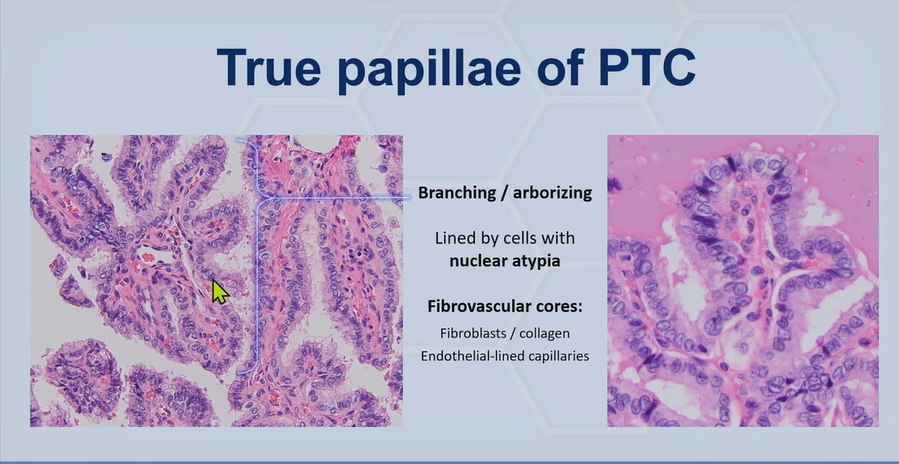
Extrathyroidal Extension
If there are intraoperative findings, gross examination, or radiologic findings supporting ETE into muscle (in addition to microscopic evidence), stage as pT3b.
If only microscopic ETE is present without such supporting evidence, stage as pT1–pT3a based on tumor size.
Dr. Nishino - 2025 Diagnostic Pathology Update #USCAP #pathology #PathX
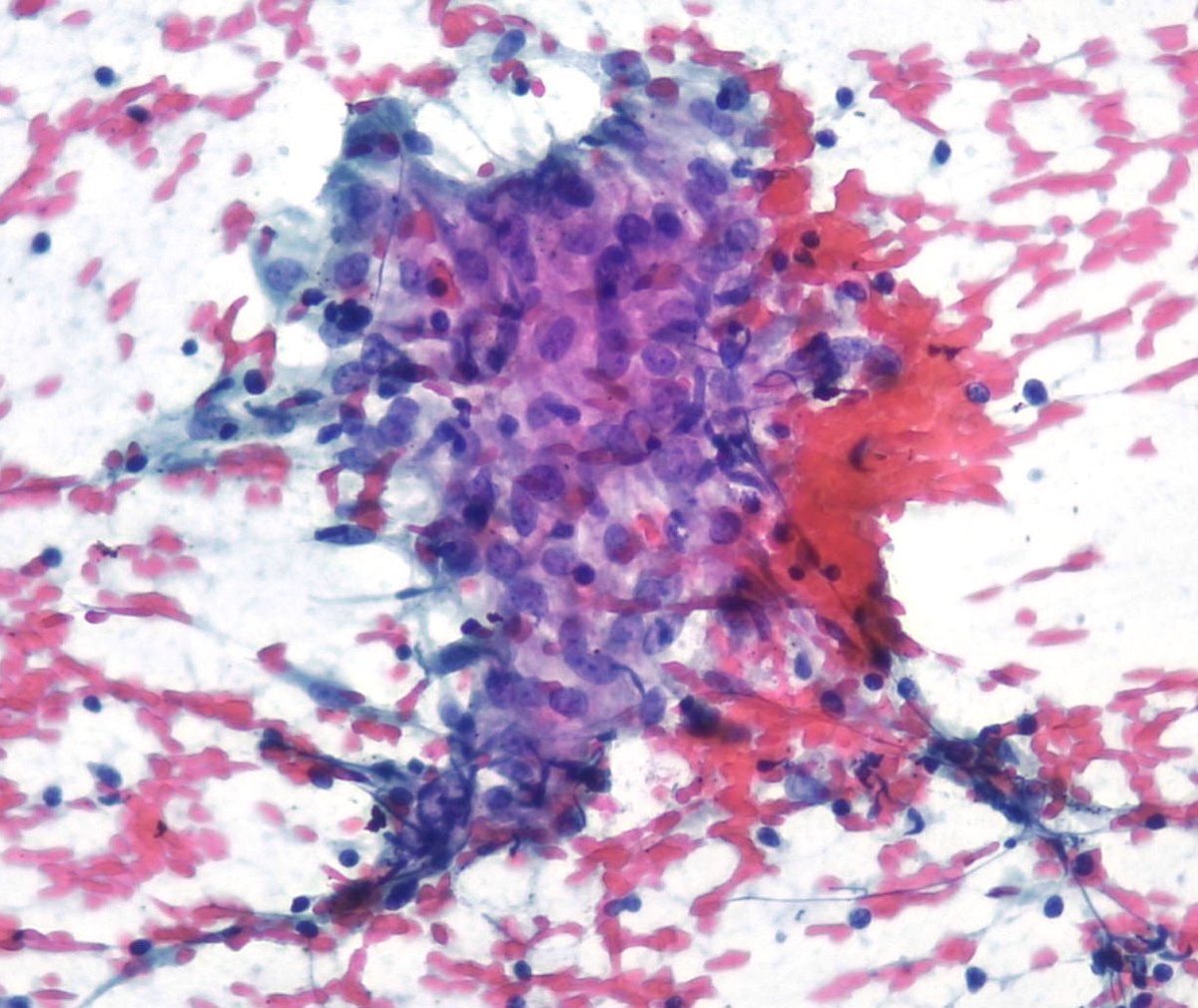
Pleural effusion from a patient with a pelvic mass. Diagnosis?
A) Reactive mesothelial cells
B) Malignant mesothelioma
C) Adenocarcinoma
D) Small cell carcinoma
#CytoPath#PathTwitter#pathology
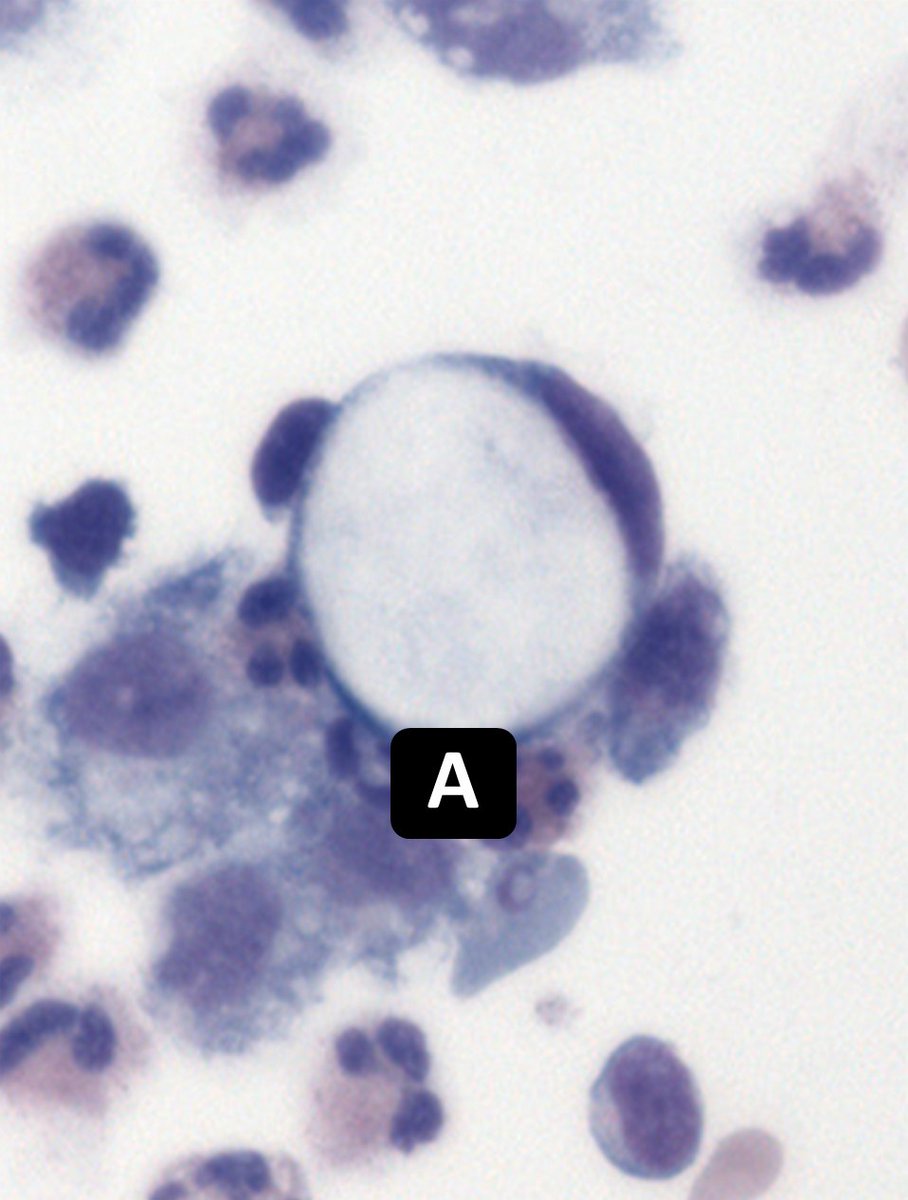
This psammoma body passes the so-called "Pen Test", something I learned yrs ago from my mentor "Dr. Dotty Rosenthal". When in doubt, gently press coverslip while looking at the field with the tip of a ballpoint pen. PBs will show radial fracturing (as here), as opposed to mucin.
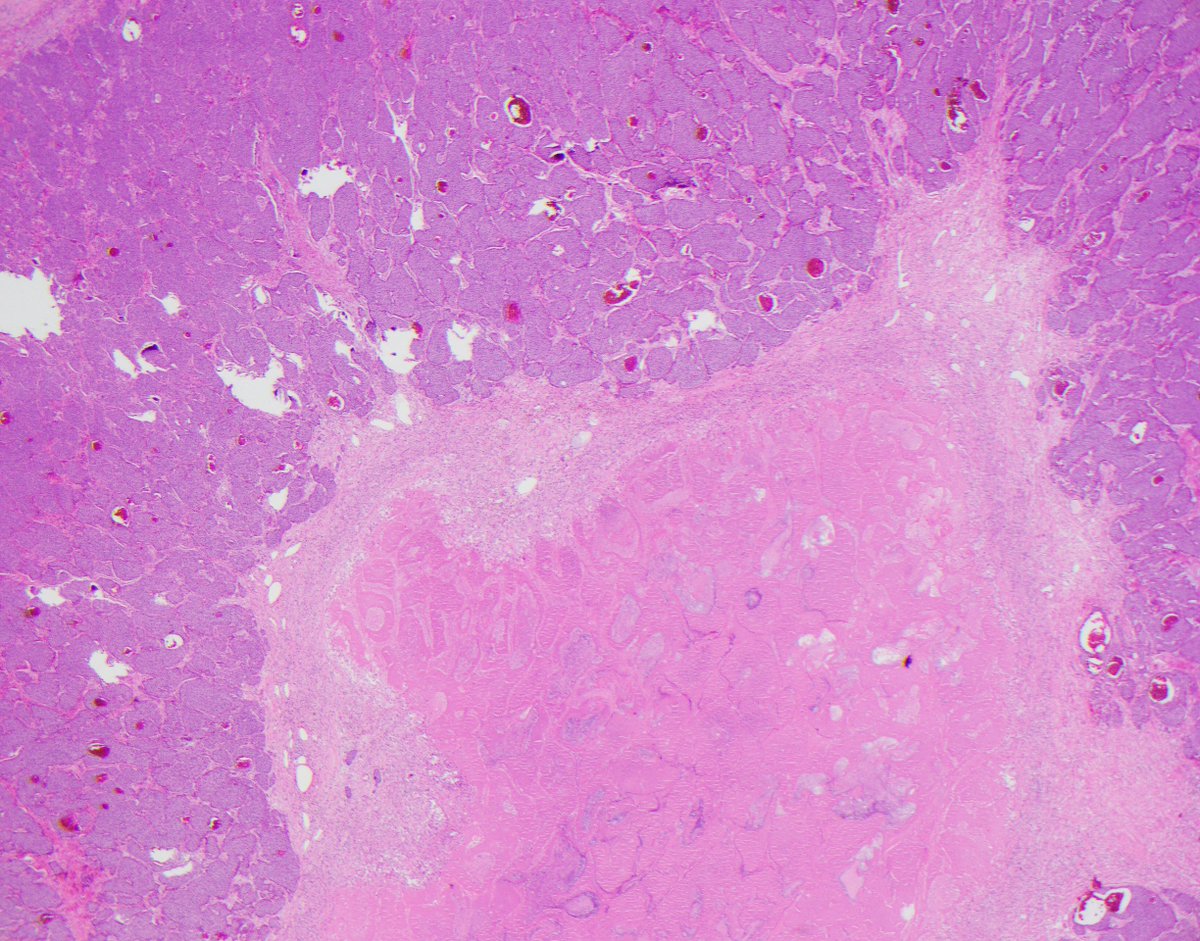
Infarct necrosis important to separate from true tumour necrosis in NETs.2 show true necrosis(abrupt transition, karyorrhectic debris, comedo-like)& 2 show infarct(gradual transition, zonal granulation tissue/myobroblasts)
If you think easy -> retweet
If you think hard -> like
Title: Reimagining WHO Tumor Classifications: A Global Call for Equity
This piece is a brief summary of a thread that has evolved over the past 24 hours. It is by no means complete, but offers a snapshot for those who may not have been following the full conversation.
In recent days, a vibrant and urgent discussion has emerged across the pathology community on Twitter, centered on a fundamental concern: the increasing inaccessibility and inequity of the WHO tumor classification system. Sparked by a tweet from Dr. Vikram Deshpande highlighting the disproportionate reliance on molecular diagnostics in the WHO Blue Books, the thread has grown into a broad critique of structural issues—and a thoughtful call for reform.
Dr. Nathan McGrath (@Nate_path) expressed the dilemma clearly: "How do we find the balance between gold-standard classification and consensus frameworks that don’t rely on high-cost diagnostics but remain evidence-based? Two sets of books?"
Dr. Runjan Chetty (@RunjanChetty) added that clinicians in resource-limited countries often pressure pathologists to deliver care that meets unrealistic global standards—standards shaped by tools they cannot access. Dr. Sanjay Mukhopadhyay (@smlungpathguy) described the current "split at any cost" mentality as increasingly out of step with global needs.
Dr. Steven Drexler (@pathbraindoc) noted that WHO classifications help align diagnosis with treatment, and many therapies now depend on molecular markers. VD responded: "Yes—and precision medicine works. But 80% of the world lacks even basic IHC. When available, molecular testing may cost a year’s salary. WHO’s mission isn’t just accuracy—it’s accessibility."
Dr. Robert Homer (@rjhomer57) argued that WHO classifications are not mandatory in practice. However, VD pointed out that aspirational standards matter: "Patients and clinicians want the best. WHO is viewed as the global gold standard. Families will sell land to afford a molecular test. That power comes with responsibility."
Dr. Rahul Deb (@RahulADeb) called for broader authorship from low- and middle-income countries (LMICs). VD suggested: "Let the core WHO Blue Book be authored almost entirely by LMIC pathologists. Rich countries have the resources and their own guidelines—they don’t need this. If they wish to contribute, let it be through annexes."
Dr. Ananth Vikas (@ananthvikas) optimistically noted that molecular testing is becoming more affordable in India. VD replied: "Yes, but the median monthly income in India is ~$325. Even $500 tests are out of reach. The bigger question is: will these tests change outcomes?"
Dr. Aatur Singhi (@PancPathologist) emphasized the need to help others gain access rather than creating parallel classifications. Dr. Runjan Chetty responded with a sobering reality: "It all boils down to money. Philanthropy only goes so far." Dr. Singhi added that while pro bono efforts help, "we aren’t doing enough to empower those without access."
VD added: "Unless we empower local pathologists, nothing will change. In Malawi, our work only succeeded when we trained and resourced local teams."
Dr. Jerad Gardner (@JMGardnerMD), Dr. Sanjay Mukhopadhyay, and others were acknowledged for offering high-quality free education on YouTube—an initiative I strongly support as a model for equitable global learning.
Dr. Shalini Radhakrishnan (@shalinirkr21) shared a detailed critique: "WHO Blue Books have become glossy, genetically focused, and inaccessible. The rest of the world isn’t reading along—because we can’t." Her thread highlighted the limitations of the NOS ("not otherwise specified") workaround. VD added: "NOS is not a solution. It codifies inequality."
@EphemeralZeph pointed out that even in the U.S., molecular testing can be logistically and financially out of reach. "We’re not molecular-ready at all," they wrote. I agreed: "Even in the richest countries, tests aren’t always affordable or approved."
@shreyans_gaamin raised another important issue: genetic variability across populations. "Southeast Asian data is revealing different evolutionary patterns in cancer," they wrote. VD responded: "A crucial point. Why are we forcing uniform classifications based on North American data? It’s time for more comparative global studies."
Dr. Gunjan Agrawal (@GunjanA08028432) offered a balanced view: "Let’s include only markers that directly affect patient care." VD responded: "Exactly. WHO should publish a classification usable by the majority. Others can publish aspirational documents."
Dr. Toni Sepulveda (@ToniSepulvedaMD) stated that the WHO Blue Books aim to accommodate low-resource regions. I responded: "In the myeloid section alone, >95% of diagnostic criteria require genetics. This isn’t a critique of individuals—many friends worked on these. It’s a systemic issue. As Truman said: the buck stops here."
Dr. Pepe Heffernan (@pepeheffernan) highlighted WHO cytopathology books as being attentive to global applicability. I thanked him and asked: "Isn’t it a contradiction, then, for other WHO publications to not follow this same principle?"
Finally, I posed a question to Dr. Vinay Prasad (@VPrasadMDMPH): "You’ve critiqued pharma’s influence on targeted therapies and FDA shortcuts. But what about the classifications themselves—pseudo-entities built on weak genetics, fueling profit pipelines? Isn’t that the upstream problem?"
This thread is not a rejection of science. It is a call for **balance, access, and global inclusion**. The WHO’s mission is not to create the most advanced classification—it is to create one that works for the world.
And right now, much of the world is still waiting to be included.
Controversial but crucial: The new WHO Blue Books heavily rely on molecular diagnostics, tools inaccessible to up to 80% of the world’s population. Instead of addressing global inequality, they risk deepening it. Radical, inclusive change is urgently needed.
"Many coronavirus disease 2019 (COVID-19) positive individuals exhibit abnormal electroencephalographic (EEG) activity reflecting 'brain fog' and mild cognitive impairments even months after the acute phase of infection..
Abnormal intrinsic electrophysiological brain activity, such as slowing of EEG, reduced alpha wave, and epileptiform are characteristic findings in COVID-19 patients..
Similar slowing of intrinsic brain activity to that of COVID-19 patients is typically seen in patients with mild cognitive impairments, ADRD (Alzheimer's disease and related dementia).."
We must do something before forgetting what to do.
'Parallel electrophysiological abnormalities due to COVID-19 infection and to Alzheimer's disease and related dementia'
https://t.co/BARMbEjie4
“Granulomas all over the place"
EBUS-FNA of hilar LN in a patient with sarcoidosis.
-🍆Epithelioid cells (the hallmark of granuloma).
-⚫️lymphocytes
-☀️no necrosis (in general)
- 🍇isolated multinucleated giant cells. #PathResidents#Cytopath
J'ai profité de ce 15 août pour refaire les affiches au cabinet : actualisation des informations légales (nouveaux tarifs, alimentation du DMP...), et nouvelle clarification sur le port de masques avec les questions fréquentes !
Protect yourself and your loved ones from #COVID19:
🛋️ Stay home if you are sick
🤧Test and contact your doctor for medical care
💪 Get vaccinated against COVID-19 & influenza, especially if you are in an at-risk group
🪟 Ventilate
Wear a mask around others.