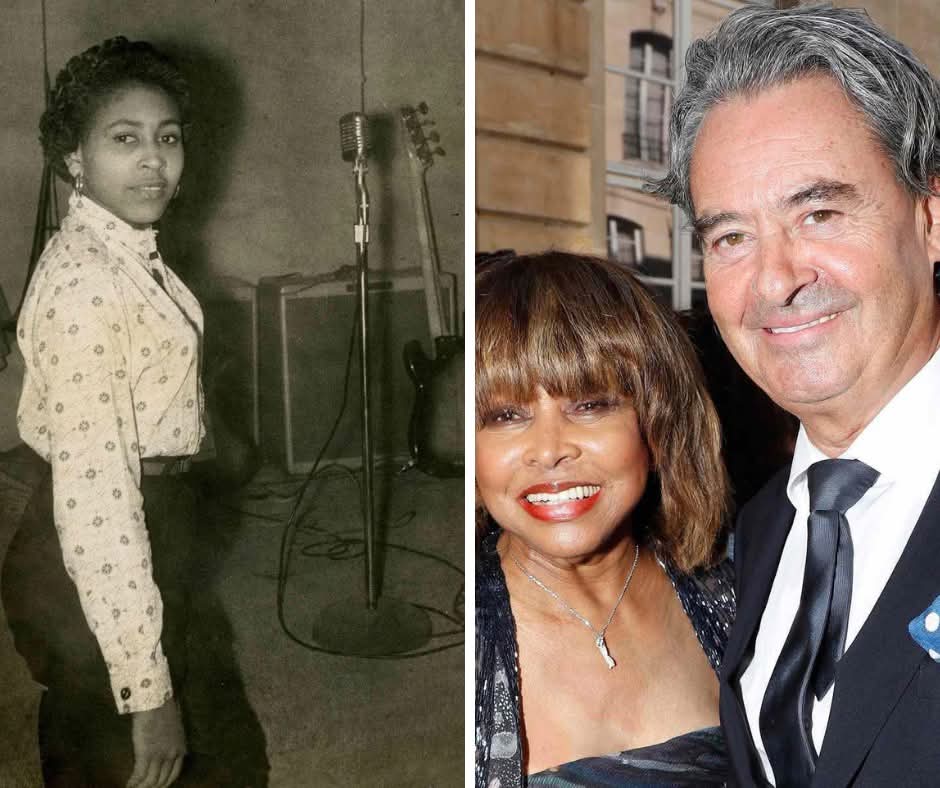
On July 3, 1976, Tina Turner waited until her husband, Ike, fell asleep in their Dallas hotel room. Her face was swollen and bruised from another beating. In her pocket were just 36 cents and a Mobil gas card. Nothing more.
She slipped out of the Statler Hilton and ran. Not toward a car. Not toward help she could call. She ran straight across Interstate 30, weaving through traffic in the dark, nearly hit by a truck, driven by nothing but survival. On the other side stood the Ramada Inn. The manager recognized her instantly, even through the injuries. He gave her a room on the eleventh floor and placed a guard outside her door. For three days, Tina stayed hidden there, too injured to even eat properly, letting her body begin to heal.
Three weeks later, she filed for divorce. When asked what she wanted from sixteen years of marriage, her answer stunned everyone. She wanted nothing except her name. No house. No money. No royalties. Just “Tina Turner.” A name created to control her, now the only thing she could use to rebuild her life.
She walked away with debt, an IRS tax lien, and an industry that believed she was finished. Nearly forty years old, a Black woman in a business obsessed with youth, with no ownership of her past music. The odds were stacked brutally against her.
But Tina refused to accept defeat. She turned to Nichiren Buddhism, chanting daily for strength. She took every job she could find. Game shows. Hotel lounges. County fairs. Corporate events. She even cleaned houses between performances. While the world called her a has-been, she was quietly reconstructing herself piece by piece.
Then came 1984.
At forty-four, she released Private Dancer. It changed everything. The album sold more than twenty million copies. “What’s Love Got to Do with It” reached number one, her first solo chart-topper. She won three Grammy Awards in 1985, performed at Live Aid, and starred in Mad Max Beyond Thunderdome. The world finally recognized her as the Queen of Rock and Roll.
Her second act lasted decades. Record-breaking tours. Twelve Grammy Awards. Over one hundred million records sold. A career rebuilt entirely on her own terms.
And love found her too. Erwin Bach met Tina at an airport in 1986 and never left her side. When her kidneys failed in 2016, he offered her one of his own without hesitation. In 2017, he kept that promise and saved her life.
On May 24, 2023, Tina Turner passed away peacefully in Switzerland at the age of eighty-three, with Erwin beside her. She left behind more than music. She left proof.
It is never too late to reclaim your life. You can begin again at forty. At fifty. At any age. All it takes is the courage to cross the road.
Thirty-six cents. A gas card. And an unbreakable will.
That is how legends are made.
MAKERS OF HISTORY
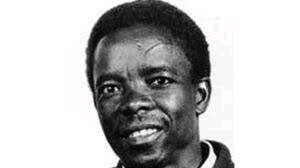
Joseph Ndandarika was born in May 1940 in Harare. He was a Zimbabwean sculptor known for his figurative works and he grew up in Rusape. The artist’s father was employed as a bus driver.
Ndandarika was exposed to art at an early age through his talented grandmother who used to make clay pots for brewing traditional beer. He developed his art skills through clay moulding following in the footsteps of his grandmother.
His mother was also artistic as she occasionally worked as a model for Rusape-based sculptor, Job Kekana.
Ndandarika went through primary school and attended a Catholic boarding school at Serima Mission in the late 1950s.
His natural talent in art was quickly identified at the mission school by Father John Groeber and Cornelius Manguma, who went on to train him in drawing and woodcarving. Fr Groeber also chose Ndandarika to paint several murals inside the St. Mary’s church.
In 1959, he relocated to Salisbury, now Harare. The following year, in 1960, Ndandarika joined Frank McEwen‘s Workshop School, marking the genesis of his rise to world fame.
He became one of McEwen’s leading painters, specialising in landscapes and witchcraft scenes. At the height of his painting career in 1962, Ndandarika did an outstandingly beautiful oil painting titled “Bushmen Running From the Rain” that was acquired by one of the biggest art museums in the world, Museum Of Modern Art (MoMA) based in New York.
After several years of painting, McEwen was bowled over by Ndandarika’s talents as a painter. He sent the talented artist to train in stone sculpture with the legendary late sculptor, Joram Mariga.
Ndandarika fell in love with stone sculpting and within a short time he, again, proved his ingenuity in this art genre. He gradually shifted more and more towards sculpting during the mid-1960s, ending up featuring in all of McEwen’s major exhibitions that made Zimbabwean stone sculpture famous.
Ndandarika’s name will remain etched in Zimbabwe’s art history records as the man who convinced McEwen to unlock the value in local stone sculpting. He told Rhodesia’s first art gallery director that in Shona mythology, spirits inhabited rock formations and this had a major impact in McEwen’s marketing of Zimbabwean sculpture. McEwen told the world that his sculptors were, “unleashing the spirit in the stone in the course of their work.”Thus, the term, ‘Shona Sculpture’ was born.
The going got a bit tough for all sculptors in the country when McEwen left Rhodesia around 1973 for England.
Ndandarika was able to keep selling through those hard times of the 1970s. During the 1980s Zimbabwean arts revival he had become one of the country’s most prominent “first generation” sculptors.
Ndandarika married Locardia in 1964 and got divorced in 1978 mainly because of disagreements over women’s participation in sculpting. Two of the couple’s children, Ronnie Drigo and Virginia Ndandarika, are also artists. Ndandarika also mentored a number of artists, including Jonathan Mhondorohuma.
Joseph Ndandarika died tragically in May 1991 at the age of 50.
His death was devastating to Zimbabwe’s arts community. In Ndandarika, the country lost one of its most gifted and successful sculptors, widely regarded as one of the world’s best.
If stones could talk then Ndandarika’s pieces would certainly do that.
Here was one artist who could portray the experiences and dilemmas of life, capturing the love, the anger, the hate, the laughter and happiness of our everyday lives. The artist featured in solo and group exhibitions and his works, which won him many awards, have been exhibited and collected worldwide.
There will be seasons when it’s taking longer than you thought. That’s a time to prove to God who you are. You’re not weak. You’re a warrior. You don’t fall apart when trouble comes. You are strong in the Lord.
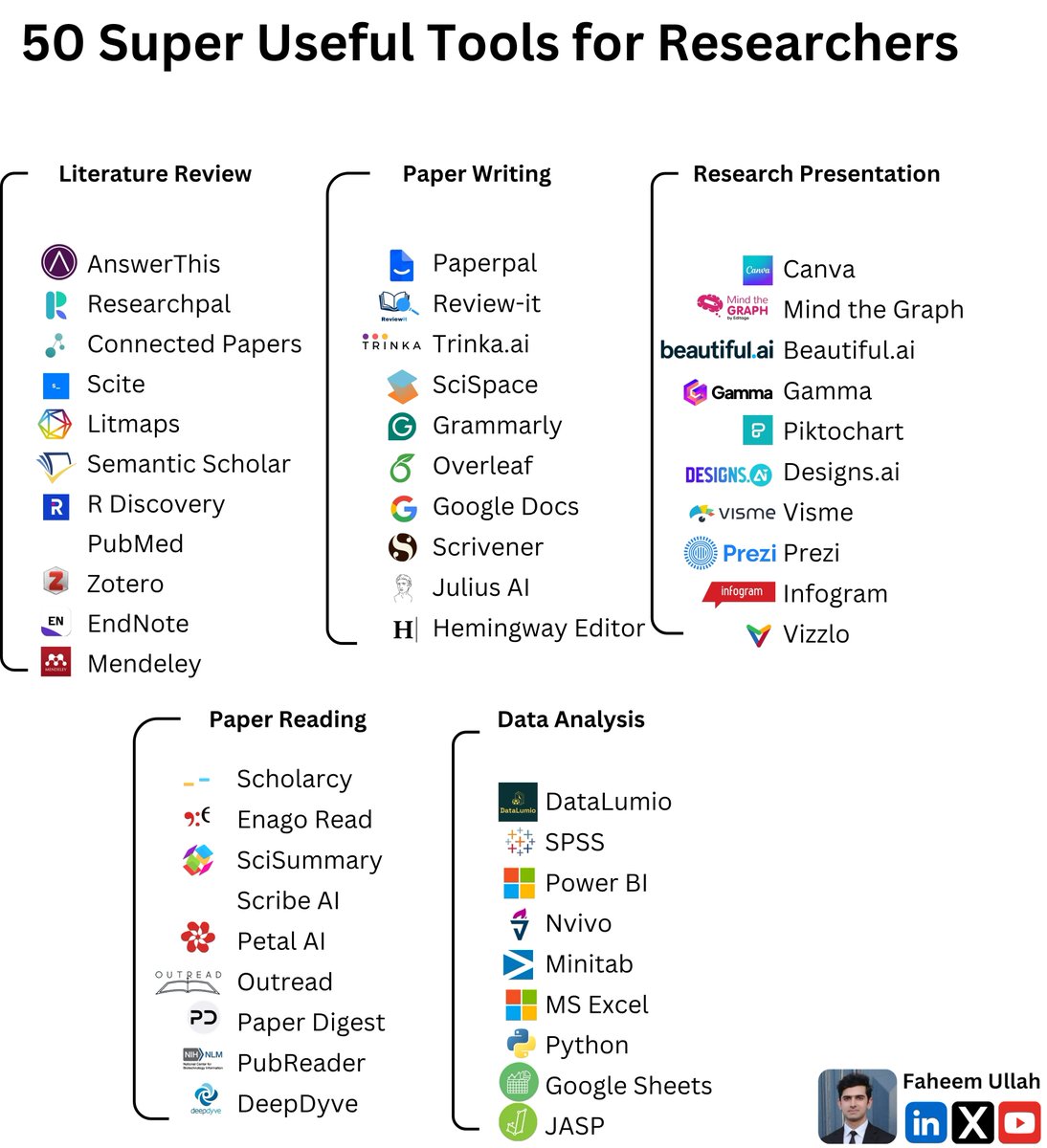
Libgen, Sci-Hub, and Z-library had millions of pirated academic books and papers.
So, they were shut down. We shouldn't use them anyway.
We should help billion-dollar academic publishers get richer.
Anyway, here's how to access these libraries:
Don't do this!
This fragile plant carries the greatest mystery: God uses what is weak to cleanse what is strong.
Hyssop shows us that the Cross is not just victory - it is purification.
And in Christ, the world breathes clean again.
To those in the marketing and advertising space, how do you measure the effectiveness of an advertising campaign?
Is it mainly about reach i.e. number of views/eyeballs?
How do you know that the advert or campaign has converted to sales?
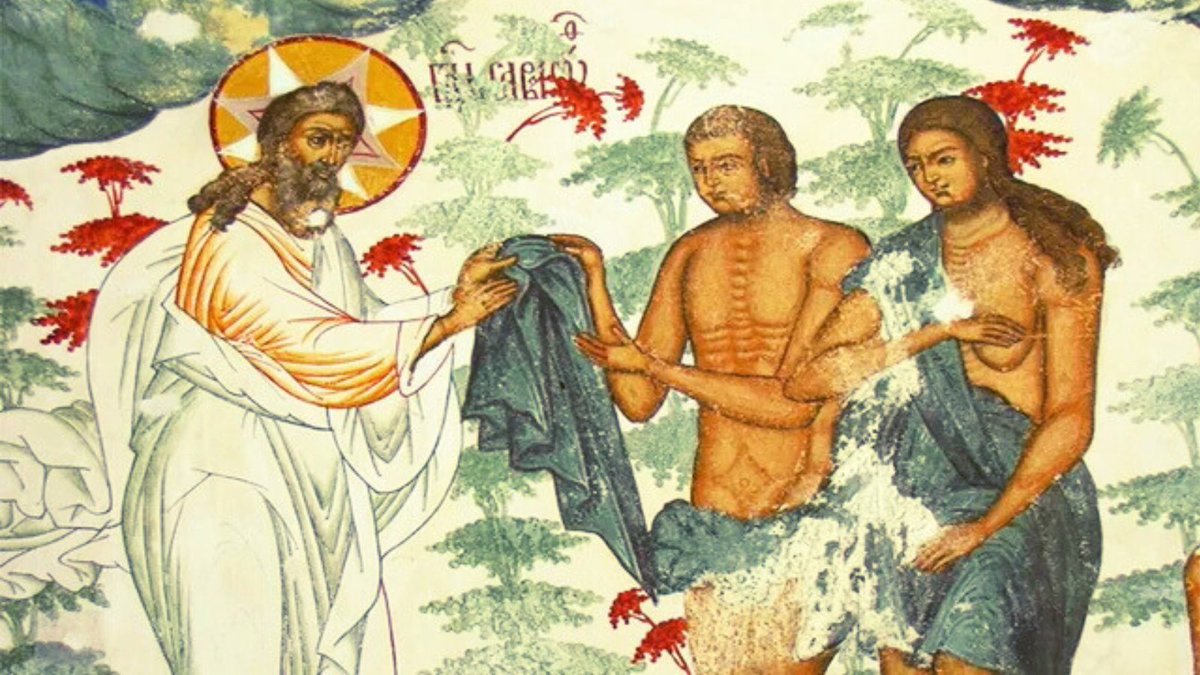
Why did God make clothes for Adam and Eve after they sinned?
There’s a secret hidden in this strange gift - that mercy works through covering.
Once you understand this paradox, everything changes about technology, civilization, and human nature (thread) 🧵 ...
“I will arise and go to my father…”
The Father sees him far off and runs. Mercy meets the sinner before he reaches the door.
He embraces and kisses before even one word of reproach. (Ambrose, De Paenitentia II.18)
Forgiveness moves faster than the returning feet.
“Now I’d like you to tell me all your ex-husband’s good qualities,” the court-ordered therapist told me.
I had just spent an hour recounting the abuse — the gaslighting, the threats, the control that seeped into every part of my life.
I was stunned.
She wanted to find areas of 'shared agreement' and 'shared goals'. She wanted me to work as a team with my ex-husband for the sake of our child.
But abuse is not a communication issue. It is not mutual conflict, a parenting disagreement, a difference in values, or a relationship issue. It is an abuser issue.
It is one perpetrator exerting power and control over another.
No amount of couples therapy, family therapy or mediation will work so long as the abuser carries their deep-rooted attitudes of control, ownership, entitlement, and superiority.
No amount of “better communication” will keep a survivor safe.
And when the court orders a survivor into therapy with her abuser to 'improve family dynamics', they are only giving the perpetrator another platform to abuse.
It's not therapeutic. It’s retraumatizing.
#coercivecontrol
“It’s lonely at the top.” But it doesn’t have to be.
My first taste of Corporate Leadership was when I worked for one of Anglo American Corporation's subsidiaries in Zimbabwe. When I first stepped into a leadership role, I thought I had to be strong, decisive, and always “on.” My calendar was packed, my to-do list endless, and I felt like I had to prove myself every day.
Without realizing it, I started to pull away—from the team, from conversations, from collaboration. Not out of ego, but out of pressure.
Then one day, someone asked me a simple but powerful question:
“Do you actually want our input, or are you just keeping us informed?” That moment stopped me in my tracks.
They didn’t feel heard. They didn’t feel involved and honestly—they were right.
I had unknowingly created distance.
I thought I was protecting my time and staying focused.
But instead, I was closing myself off from the people who mattered most.
Leadership isn't about being untouchable - We often confuse strength with silence. Authority with distance.
But here’s the truth:
Being available doesn’t weaken your leadership—it strengthens it. People want leaders who are real. Leaders who listen. Leaders who are present.
Since that wake-up call, I’ve changed how I lead:
- I block time to connect without an agenda
- I invite feedback before final decisions
- I ask more questions and listen with curiosity
And the difference in team trust, engagement, and collaboration? Massive.
You don’t have to lead alone. Loneliness in leadership often comes from self-isolation. But it doesn’t have to be that way.
Culture is shaped in the quiet moments—check-ins, listening, asking for input.
The more approachable you are, the more your team will bring you real insight.
The more connected you are, the stronger your culture becomes.
So if you’re leading today—at any level—remember:
Be available. Be human. Be there.
Because when you lead with connection, no one—including you—has to feel alone.
#Leadership #Authenticity #Collaboration #TeamCulture #EmotionalIntelligence #ServantLeadership #Trust #ManagementTips
The breakdown of Creation starts with water, moves through insects and animals, and ends with the death of the firstborn.
In Egypt: Pharaoh's son.
At Calvary: God's Son.
We’re still figuring out the role of AI in higher education, writes @cathythorbecke. But the most important parts of learning still can't be automated (via @opinion) https://t.co/UkI55e78Yp