The problem with Jeff Bezos' ideology is that it's based on a false premise. The idea that "six thousand years ago someone invented the plow" is based on a faulty belief that ancient humans functioned as individuals. They did not.
Ancient humans were collectivist. The likelihood that one individual invented anything is slim to none.
This is the myth of the genius.
Archeological evidence demonstrates that for hundreds of thousands of years, early humans congregated around communal gathering places, like the fire, and engaged in problem solving and passing on of shared learning down through generations.
Additionally, the plow (and tools like it) were developed by humans in Mesopotamia, Europe, Egypt, East Asia, sub-Saharan Africa as well as other places - not in one place by one person. This is known as parallel development.
Believing that the plow was invented by one genius is like believing language was invented by one person. It is a silly myth and represents the projection of current moral standards onto past events.
This is called 'presentism' and it is both an uncritical and ignorant way to view history.
Social learning was the main driver of human evolution. Collectivism is how we both survived and progressed as a species.
The myth of the genius is an example of uncritical analysis and a flawed lens used to justify the grotesque hoarding of wealth and obscene inequality that is currently tearing at the social fabric our species.
It needs to be thrown on the trash heap of history.
"Tehran is transparent about its negotiating tactics. “The Iranian negotiation style is generally known in the world as the ‘bazaar style,’ which means continuous and tireless bargaining,” Iranian Foreign Minister Abbas Araghchi wrote in his 2025 diplomatic memoir. “This method is a process of interaction that requires great patience and time,” and thus, “he who gets tired and bored quickly will lose.”" @ksadjadpour@TheAtlantic
WATCH | Former President Thabo Mbeki says unemployment and crime in South Africa are genuine concerns but warns that blaming foreign nationals for the country's economic challenges is misguided.
Two of this farmer's workers had already died from his beatings. The missionary holding the camera knew that. He'd reported the farmer to the police, and he was photographing these wounds for court.
Ludwig Cramer was a failed coffee merchant from Hamburg. He moved to German South West Africa in 1906 and bought a farm. He tied workers up for days, whipped a pregnant Herero woman until she miscarried, and beat workers bloody. His wife Ada helped by cutting the clothes off female victims so he could strike harder. Two of his workers died.
In August 1912 a German colonial court sentenced him to 20 months in prison. On appeal the next year, the sentence was cut to 4 months and a 2,700 Mark fine. It was one of the only times any German settler was punished for any of this. And the worst was already over.
Between 1904 and 1908, German forces had killed an estimated 65,000 to 80,000 Herero, about 80% of the Herero population, and 10,000 Nama, around half of theirs. Historians now call it the first genocide of the 20th century. It started when Chief Samuel Maharero led a rebellion against the seizure of Herero land. General Lothar von Trotha's October 1904 extermination order declared every Herero in the territory was to be killed.
Survivors were driven into the desert to die of thirst, or shipped to concentration camps. Shark Island killed between half and three-quarters of its prisoners. Women there were forced to boil the heads of dead inmates and scrape them clean with shards of glass. The skulls were sent to German universities, where researchers tried to prove white Europeans were biologically superior to Africans.
One of those researchers was a scientist named Eugen Fischer. In 1923, while Hitler was in prison, he read Fischer's textbook on race hygiene. He cited Fischer in Mein Kampf. Fischer's work later helped shape the 1935 Nuremberg Laws, the Nazi race laws that stripped Jews of their rights. When Hitler took power, he made Fischer head of the University of Berlin. The institute Fischer ran trained the next generation of Nazi race scientists, including Josef Mengele's PhD supervisor. Mengele went to Auschwitz, where he experimented on prisoners and sent body parts back to the same institute.
Germany formally apologized in 2021 and offered Namibia €1.1 billion (about $1.3 billion) over 30 years in development aid. But the agreement avoided the words "reparations" and "compensation". Those words could be used against Germany in future lawsuits. Most Herero and Nama leaders walked away from the deal because they were shut out of the talks. Many of the skulls are still sitting in German universities and museums.
Cramer himself died in 1917 in a blasting accident on his farm. His wife Ada wrote a book defending him, arguing that Africans needed to be beaten for their own good. Historians now read it as an early blueprint for the "master race" thinking. That thinking would become Nazism.
The Last Grave at Dimbaza (1973) is a seminal documentary that provided one of the first unflinching looks at the harsh realities of apartheid in South Africa for international audiences. Shot clandestinely with hidden cameras by South African exiles and British filmmakers, the footage was smuggled out of the country to bypass strict censorship laws. The producers included Nana Mahomo, Antonia Caccia, Andrew Tsehiana. Source: IMDb, Youtube
In 2002, I bought my Safaricom line.
Ksh 2499.
I still use it.
It came in a metallic tin, with a booklet (a user manual), and a template for the SIM card.
It was preset on the Taifa Tariff.
Ksh 36 per minute billing during peak, and Ksh 27 per minute billing during off-peak.
Per-minute billing means that even if you talk for 32 seconds, you will be charged the per-minute rate.
At that time, KENCELL (later CELTEL, then ZAIN and now AIRTEL) was everyone's favourite carrier.
Safaricom was struggling to attract subscribers due to KENCELL's awkward commercials that portrayed Safaricom's network as sluggish and chaotic.
But, 2 months later, Safaricom reduced the price of its SIM cards to Ksh 99.
I almost went mad after spending KSH 2499 just two months earlier.
There were massive lines in Safaricom shops in Nairobi and Nakuru.
Nakuru, Kenyatta Avenue, next to Merica Hotel, was impassable for 1 week. There was a Safaricom shop there, and later a Samchi Telecom shop.
A lot of people had bought phones and kept them at home, especially Motorola T190 and Siemens C35, because they couldn't afford SIM cards or the cost of making calls.
A Motorola T190 was selling at KSH 17,999.
A Siemens C35 was selling at 11,499.
Safaricom immediately began selling locked mobile phones that could be used only with Safaricom SIM cards.
Later that year, Kibaki was overwhelmingly elected president, and his regime liberalised the telecommunications industry, and we began advancing in telecommunications technology.
We have come from far!
In a few years, Hollywood will make a movie called ‘Escape from the Strait of Hormuz,’ in which a US Marine fighting through the conflict helps an Iranian girl who dreams of becoming a scientist escape the constraints of her society, start a new life in the United States, and discover her identity as a lesbian.
Imagine if Africa had done the same. Imagine if it did the same starting tomorrow...
In 1969, Norway discovered one of the largest offshore oil deposits in the world.
The Ekofisk field changed everything. Suddenly, this small Scandinavian nation was sitting on extraordinary wealth.
They could have done what most oil-rich countries do: spend it all immediately. Build monuments. Create economic bubbles. Enrich a few while the many suffer. And when the oil runs out, collapse into debt and instability.
Nigeria tried that. Venezuela tried that. Libya tried that.
Norway looked at these cautionary tales and made a different choice.
In 1990, the Norwegian Parliament created the Government Pension Fund Global. The rules were simple but revolutionary. All oil profits would flow into the fund. The fund would invest globally in thousands of companies. And Norway could only withdraw a small percentage each year—originally 4%, now 3%.
The rest would stay invested. Forever.
People thought they were insane.
Why hoard money for people who don't even exist yet? Why not lower taxes, build bigger programs, enjoy the wealth right now?
The Norwegian government had an answer: Because future Norwegians will exist. And they deserve this wealth as much as we do.
In 1996, they deposited the first payment: $150 million.
Then they did something even more remarkable. They stuck to the plan.
Year after year, oil revenues flowed into the fund. Year after year, the fund invested in global markets—stocks, bonds, real estate across 70 countries. Year after year, politicians resisted the overwhelming temptation to raid the fund for short-term political wins.
Every election cycle brought promises to spend more. Every economic downturn brought demands to tap the fund. Every crisis brought calls to break the rules "just this once."
Norway said no. Every single time.
The fund's managers didn't try to beat the market or gamble on hot stocks. They simply bought small stakes in thousands of companies worldwide—around 9,000 today—and held them.
They played the longest game imaginable.
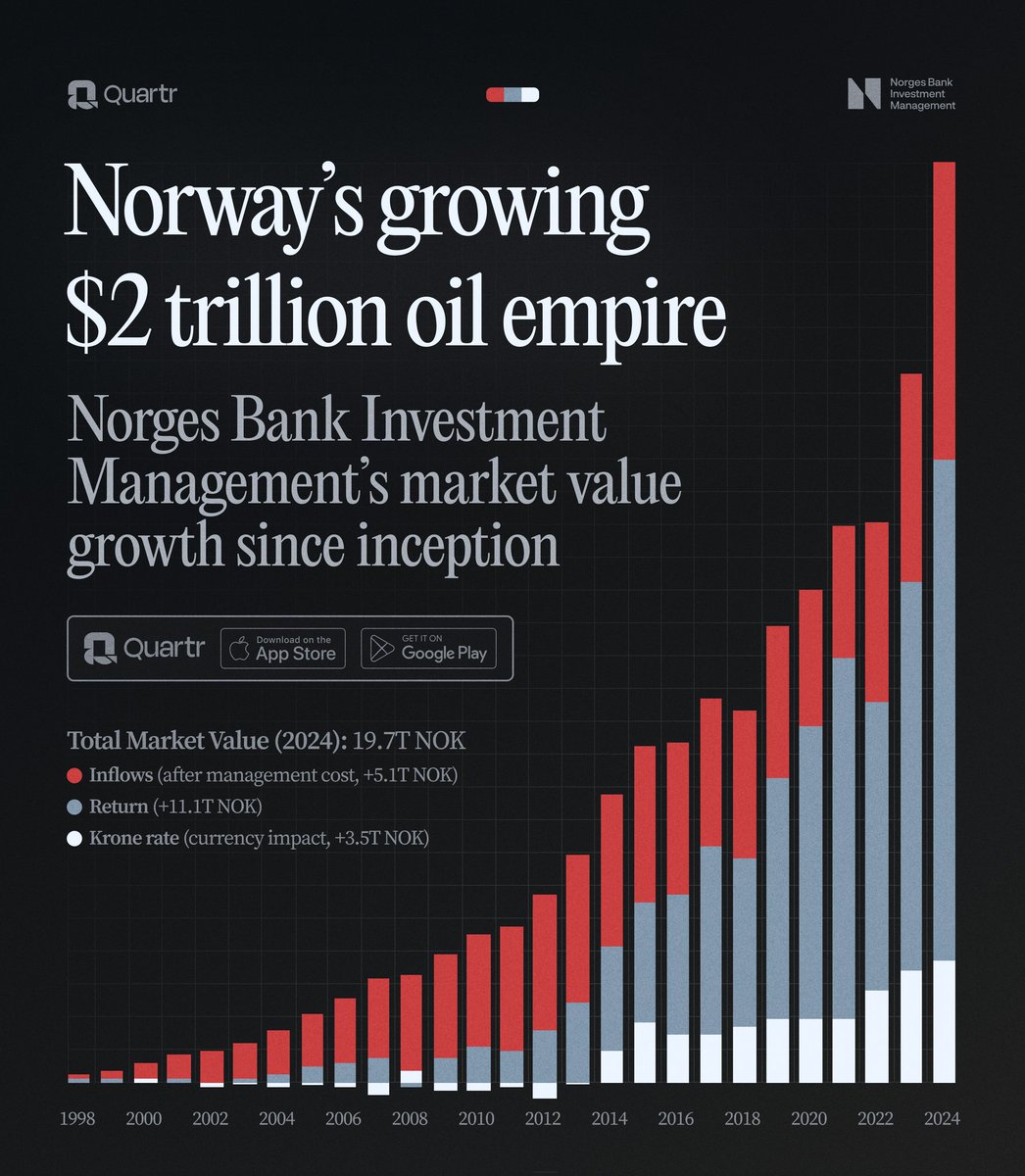
By 2000, the fund was worth $50 billion. By 2010, it had grown to $500 billion. By 2017, it crossed $1 trillion. Today, it has surpassed $2 trillion. For a country of just 5.6 million people, that works out to roughly $340,000 per citizen.
But here's the extraordinary part.
More than half of the fund's value didn't come from oil. It came from investment returns. The fund now generates more income from its global investments than Norway makes from selling oil and gas.
They transformed temporary oil wealth into permanent financial wealth.
The fund owns approximately 1.5% of every publicly traded company in the world. It holds stakes in Apple, Microsoft, Amazon, and thousands of other corporations. When you buy almost anything from almost any major company, a tiny fraction flows back to Norway.
The 3% withdrawal rule ensures the fund will last indefinitely. That 3% provides roughly a quarter of Norway's national budget—funding education, healthcare, infrastructure, and pensions without ever depleting the principal.
Norway's oil will eventually run out. Maybe in 30 years, maybe 50. It doesn't matter anymore. By the time the last barrel is pumped, Norway will have a multi-trillion-dollar fund generating returns forever.
The genius wasn't in discovering oil. Lots of countries found oil. The genius was in the radical decision to save almost all of it, invest it wisely, and resist every political pressure to spend it immediately. It required vision to see beyond the next election cycle.
It required discipline to follow the rules for three decades without exception.
It required humility to admit that future Norwegians deserved this wealth as much as current ones.
In 1996, they started with $150 million. Today, they have over $2 trillion—and growing.
1/
From @WSJopinion: Climate catastrophism has begun to die, the victim of its apostles’ unbelief. Voters have concluded that the private jet-flying alarmists don’t really believe their own claims, writes Barton Swaim. https://t.co/yK9HPridiJ
★ Just published a new episode of Voice of FinTech®: Voice of FinTech Africa Series with Patrick Awori: Kofisi on the Future of Banking with Caroline Kitema from Absa Bank and Tawanda Wenyika from EFT Corp. - Kenya. Listen: https://t.co/igc8Evp8uY
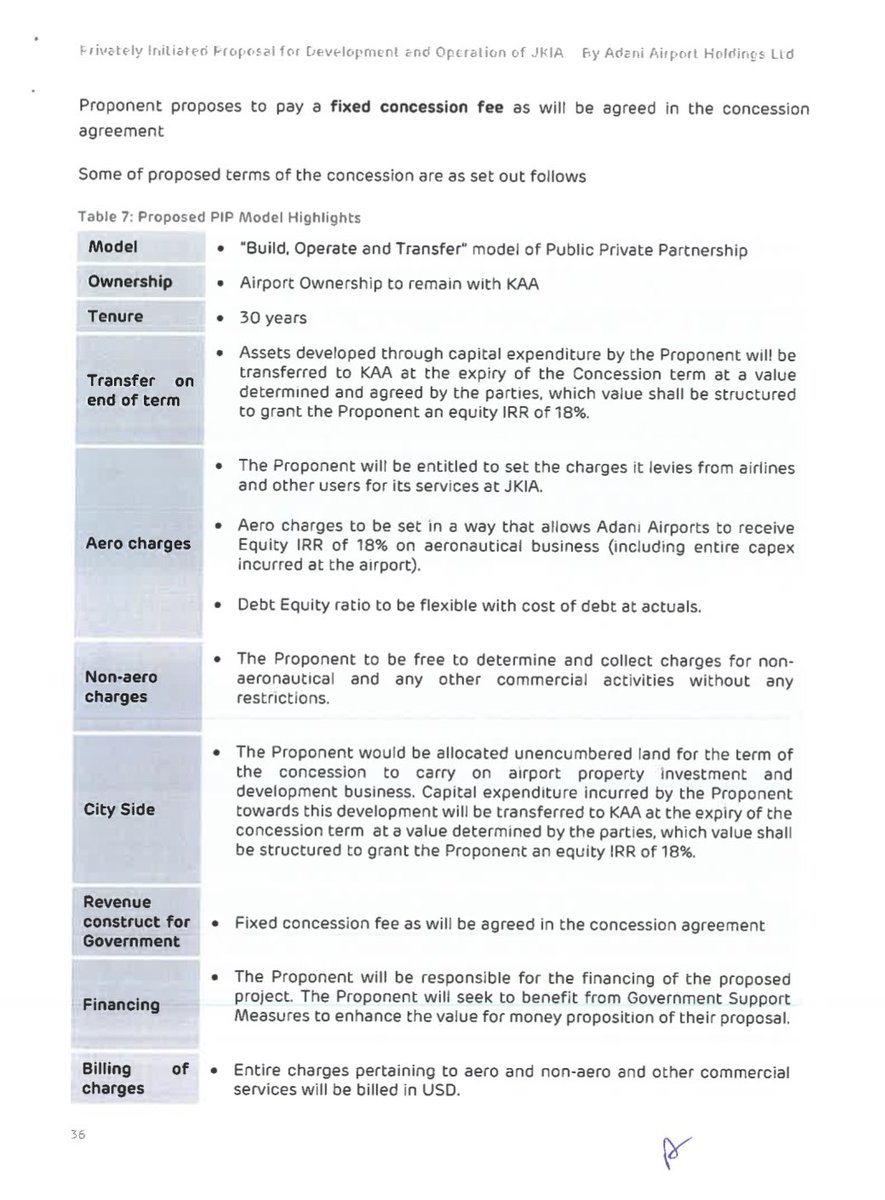
UPDATE: The PPP between @KenyaAirports and @AdaniOnline is SHOCKING! After 30 years of running JKIA they will hand over the project to KAA and will be refunded their CAPEX plus they will be left with 18% equity in JKIA! Further, the project capex is 1.85B USD, if we just recover the Eurobond that never reached Kenya we can finance this project fully.
They also ask the government to avail FREE land where they propose to build city side development like in Frankfurt Airport which may lead to land issues in areas surrounding JKIA. #OccupyJKIA #DrainTheSwamp
Kenyan Philosopher Says Gen-Z Protestors Went Hunting For a Rabbit, And Caught a Buffalo
I am having this conversation with a good Kenyan man, a deep thinker, and he tells me, "President Ruto's govt, tax, and corruption were the target of the recent Gen Z protests, but like most protests, the changes it has been made won't be the most significant or enduring."
"Strange thing to say. What will be then?", I ask.
"Two things. First, the Elite Political Settlement that has governed Kenya for 60 years of independence, about how the riches of this land and power are distributed, is the main casualty. That is over. The young people went against a two-year-old govt, they brought down a 60-year-old Order instead", he said.
"Second, the political authority of the wider Christian church, which was important for fuelling the 1990s democracy wave, is shredded, so they must reset. The mosques have emerged much better. That also tells you that the real fightback will not come from the Ruto govt", he argued.
"Surely, any response has to be political, ideological even. The state is the state, it will deploy its power", I say.
"Maybe in the short-term, but in the long-term, 10 to 20 years, the critical response will be philosophical, spiritual, and economic. There will be no guns. It will be fought on the idea of what Kenya is; there will be big attempt to redefine it.
It will play out even in what is taught in school. Watch for the subtle change in church sermons. The Establishment will reallocate their money, so they are seen to spend it on, for example, saving forests, even building museums, instead of rehabilitating golf courses. The popular music of this country has already changed in three weeks, and expect the books of fiction written by Kenyans that come out from next year to read very different from anything we've seen in the past. That's where the exciting stuff is going to be. The kids went hunting for a rabbit, and caught a buffalo."
I guess that was not entirely unexpected when you have had one too many vanilla lattes.
📸Katie G. Nelson/SOPA Images/LightRocket
MY instant reaction: President William Ruto could have withdrawn the Finance Bill a few days ago and saved lives. But he was obstinate, and I watched police shoot protesters dead for no reason at all
Counties where anti-Finance Bill protests are happening as at 10:50am
1. Nairobi
2. Mombasa
3. Kisumu
4. Nakuru
5. Uasin Gishu
6. Nyeri
7. Laikipia
8. Homa Bay
9. Kisii
10. Turkana
11. Nyeri
12. Narok
13. Nyandarua
14. Kwale
15. Bungoma
16. Tana River
17. Murang'a
18. Makueni
19. Trans Nzoia
For those protesting in Nairobi, keep at it, make them TAYAD. We are coming to back you up.
#RejectFinanceBill2024
Folks,
The National Assembly Finance & Planning Committee's report on Finance Bill 2024 is finally out!
The report is quite loaded with wins, gains & quite a number of unclear areas where the Committee seemed to be giving mixed signals as to what its recommendation is.
Here's a 🧵on what I think we all need to take note of
Singaporean Prime Minister Lee Kuan Yew described how he caught a CIA spy and demanded $100M from the US to develop Singapore.
Instead, the Americans offered to pay him personally to turn him into an American puppet.
This is something African “leaders” can learn from.
Barefoot Gen (1983) is an anime based on Keiji Nakazawa's manga, offering a heartbreaking child point of view on one of the biggest tragedies of the XX century. The author was 6 and he was there when Hiroshima was bombed, 78 years ago #Today
https://t.co/xvAgQH618v
COMING TO AMERICA—Abu Bakar—1310 AD—The Fula, Hausa, & Tuareg
Mansa Musa reported that for the first voyage, "Abu Bakar equipped 2000 ships filled with men and the same number equipped with gold, water and provisions, enough to last them for years, they departed and a long time passed before anyone came back. Then one shop returned and we asked the Captain what news they brought”
The captain replied to Mansa Musa, 'Yes, O Sultan, we traveled for a long time until there appeared in the open sea a river with a powerful current, the other ships went on ahead, but when they reached that place, they did not return and no more was seen of them”
“As for me, I went about at once and did not enter the river”
“Abu Bakar left me (Mansa Musa) to deputize for him and embarked on the Atlantic Ocean with his men. That was the last we saw of him and all those who were with him. And so, I became king in my own right”
Around 1310 A.D. thousands of Manding speakers arrived in the Americas from ancient Mali…
Ibn Fadlullah al-Umari, in his encyclopedia "Masalik al Absar", said the mariners from Mali during the reign of Abubakari made transatlantic voyages...
Al-Umari, obtained his information from Mansa Musa, who was handed the kingship of Mali by Abubakari when he set out to colonize the Americas…
The expeditionary force of Mansa and Abubakari, must have been immense, because the average boat on the Niger, in the 1500's A.D., could carry 80 men…
“At the mouth of River Real [the Bonny River]…there is a very large village, consisting of about 2,000 souls. Much salt is made here, and in this country are to be found the largest canoes, made of a single trunk, that are known in the whole of Ethiopia of Guinea; some are so large that they hold 80 men. they travel distances of a hundred leagues and more down the river” — Pacheo Pereira
SOURCE;
(Ghana Social Science Journal
Volumes 3-4; 1976)
This means that anywhere between 25,000 to 80,000 men may have sailed from Mali along with Abubakari…
“For a long time we have known from the writings of our ancestors that neither I [Montezuma], nor any of those who dwell in this land, are natives of it, but foreigners who came from very distant parts; and likewise we know that a chieftain, of whom they were all vassals, brought our people to this region. And he returned to his native land and after many years came again, by which time all those who had remained were married to native women and had built villages and raised children"
— Montezuma
SOURCE;
(Hernán Cortes, “Letters From Mexico”)
The Aztec leader, Montezuma, explained that his understanding of the ORIGIN of the Aztec was as a people who arrived on the EASTERN shore of Mexico ABOARD SHIPS that had left a land from across the ocean...
The Aztecs named their first colony Mali-nalco...
In Old Mali there is one village called Mali-koma...
The name "Mali" was used with suffixes by Africans to name cities...
We have, in an independent history, the account of those ships leaving Mali at the time the "Aztec" arrived on the EASTERN shore of Mexico...
The writings of Sahagun say the Aztec did not come from the North or Northwest into Mexico…
Sahagun wrote that they arrived by ships coming from the direction of the rising sun (East) and that they landed on the Gulf Coast of Mexico at Panutla (Panuco)
“The first settlers of New Spain countless years ago, coming in ships from the sea, disembarked at Pantutla [Panuco]”
SOURCE;
(John Thomas Short, ‘The North Americans of Antiquity, Their Origin, Migrations, and Type of Civilization Considered’; 1879)
“The apartments are small, low, and in the Moorish style”
“Each of these chiefs has at the entrance of his house, but outside of it, a large court-yard, and in some there are two and three and four very high buildings, with steps leading up to them, and they are very well built; and in them they have their mosques and prayer places”……..
#Africa


![Joe__Bassey's tweet photo. COMING TO AMERICA—Abu Bakar—1310 AD—The Fula, Hausa, & Tuareg
Mansa Musa reported that for the first voyage, "Abu Bakar equipped 2000 ships filled with men and the same number equipped with gold, water and provisions, enough to last them for years, they departed and a long time passed before anyone came back. Then one shop returned and we asked the Captain what news they brought”
The captain replied to Mansa Musa, 'Yes, O Sultan, we traveled for a long time until there appeared in the open sea a river with a powerful current, the other ships went on ahead, but when they reached that place, they did not return and no more was seen of them”
“As for me, I went about at once and did not enter the river”
“Abu Bakar left me (Mansa Musa) to deputize for him and embarked on the Atlantic Ocean with his men. That was the last we saw of him and all those who were with him. And so, I became king in my own right”
Around 1310 A.D. thousands of Manding speakers arrived in the Americas from ancient Mali…
Ibn Fadlullah al-Umari, in his encyclopedia "Masalik al Absar", said the mariners from Mali during the reign of Abubakari made transatlantic voyages...
Al-Umari, obtained his information from Mansa Musa, who was handed the kingship of Mali by Abubakari when he set out to colonize the Americas…
The expeditionary force of Mansa and Abubakari, must have been immense, because the average boat on the Niger, in the 1500's A.D., could carry 80 men…
“At the mouth of River Real [the Bonny River]…there is a very large village, consisting of about 2,000 souls. Much salt is made here, and in this country are to be found the largest canoes, made of a single trunk, that are known in the whole of Ethiopia of Guinea; some are so large that they hold 80 men. they travel distances of a hundred leagues and more down the river” — Pacheo Pereira
SOURCE;
(Ghana Social Science Journal
Volumes 3-4; 1976)
This means that anywhere between 25,000 to 80,000 men may have sailed from Mali along with Abubakari…
“For a long time we have known from the writings of our ancestors that neither I [Montezuma], nor any of those who dwell in this land, are natives of it, but foreigners who came from very distant parts; and likewise we know that a chieftain, of whom they were all vassals, brought our people to this region. And he returned to his native land and after many years came again, by which time all those who had remained were married to native women and had built villages and raised children"
— Montezuma
SOURCE;
(Hernán Cortes, “Letters From Mexico”)
The Aztec leader, Montezuma, explained that his understanding of the ORIGIN of the Aztec was as a people who arrived on the EASTERN shore of Mexico ABOARD SHIPS that had left a land from across the ocean...
The Aztecs named their first colony Mali-nalco...
In Old Mali there is one village called Mali-koma...
The name "Mali" was used with suffixes by Africans to name cities...
We have, in an independent history, the account of those ships leaving Mali at the time the "Aztec" arrived on the EASTERN shore of Mexico...
The writings of Sahagun say the Aztec did not come from the North or Northwest into Mexico…
Sahagun wrote that they arrived by ships coming from the direction of the rising sun (East) and that they landed on the Gulf Coast of Mexico at Panutla (Panuco)
“The first settlers of New Spain countless years ago, coming in ships from the sea, disembarked at Pantutla [Panuco]”
SOURCE;
(John Thomas Short, ‘The North Americans of Antiquity, Their Origin, Migrations, and Type of Civilization Considered’; 1879)
“The apartments are small, low, and in the Moorish style”
“Each of these chiefs has at the entrance of his house, but outside of it, a large court-yard, and in some there are two and three and four very high buildings, with steps leading up to them, and they are very well built; and in them they have their mosques and prayer places”……..
#Africa](https://pbs.twimg.com/media/FzsNzgvX0AAtKni.jpg)
![Joe__Bassey's tweet photo. COMING TO AMERICA—Abu Bakar—1310 AD—The Fula, Hausa, & Tuareg
Mansa Musa reported that for the first voyage, "Abu Bakar equipped 2000 ships filled with men and the same number equipped with gold, water and provisions, enough to last them for years, they departed and a long time passed before anyone came back. Then one shop returned and we asked the Captain what news they brought”
The captain replied to Mansa Musa, 'Yes, O Sultan, we traveled for a long time until there appeared in the open sea a river with a powerful current, the other ships went on ahead, but when they reached that place, they did not return and no more was seen of them”
“As for me, I went about at once and did not enter the river”
“Abu Bakar left me (Mansa Musa) to deputize for him and embarked on the Atlantic Ocean with his men. That was the last we saw of him and all those who were with him. And so, I became king in my own right”
Around 1310 A.D. thousands of Manding speakers arrived in the Americas from ancient Mali…
Ibn Fadlullah al-Umari, in his encyclopedia "Masalik al Absar", said the mariners from Mali during the reign of Abubakari made transatlantic voyages...
Al-Umari, obtained his information from Mansa Musa, who was handed the kingship of Mali by Abubakari when he set out to colonize the Americas…
The expeditionary force of Mansa and Abubakari, must have been immense, because the average boat on the Niger, in the 1500's A.D., could carry 80 men…
“At the mouth of River Real [the Bonny River]…there is a very large village, consisting of about 2,000 souls. Much salt is made here, and in this country are to be found the largest canoes, made of a single trunk, that are known in the whole of Ethiopia of Guinea; some are so large that they hold 80 men. they travel distances of a hundred leagues and more down the river” — Pacheo Pereira
SOURCE;
(Ghana Social Science Journal
Volumes 3-4; 1976)
This means that anywhere between 25,000 to 80,000 men may have sailed from Mali along with Abubakari…
“For a long time we have known from the writings of our ancestors that neither I [Montezuma], nor any of those who dwell in this land, are natives of it, but foreigners who came from very distant parts; and likewise we know that a chieftain, of whom they were all vassals, brought our people to this region. And he returned to his native land and after many years came again, by which time all those who had remained were married to native women and had built villages and raised children"
— Montezuma
SOURCE;
(Hernán Cortes, “Letters From Mexico”)
The Aztec leader, Montezuma, explained that his understanding of the ORIGIN of the Aztec was as a people who arrived on the EASTERN shore of Mexico ABOARD SHIPS that had left a land from across the ocean...
The Aztecs named their first colony Mali-nalco...
In Old Mali there is one village called Mali-koma...
The name "Mali" was used with suffixes by Africans to name cities...
We have, in an independent history, the account of those ships leaving Mali at the time the "Aztec" arrived on the EASTERN shore of Mexico...
The writings of Sahagun say the Aztec did not come from the North or Northwest into Mexico…
Sahagun wrote that they arrived by ships coming from the direction of the rising sun (East) and that they landed on the Gulf Coast of Mexico at Panutla (Panuco)
“The first settlers of New Spain countless years ago, coming in ships from the sea, disembarked at Pantutla [Panuco]”
SOURCE;
(John Thomas Short, ‘The North Americans of Antiquity, Their Origin, Migrations, and Type of Civilization Considered’; 1879)
“The apartments are small, low, and in the Moorish style”
“Each of these chiefs has at the entrance of his house, but outside of it, a large court-yard, and in some there are two and three and four very high buildings, with steps leading up to them, and they are very well built; and in them they have their mosques and prayer places”……..
#Africa](https://pbs.twimg.com/media/FzsNzgsWYAAdS1w.jpg)
![Joe__Bassey's tweet photo. COMING TO AMERICA—Abu Bakar—1310 AD—The Fula, Hausa, & Tuareg
Mansa Musa reported that for the first voyage, "Abu Bakar equipped 2000 ships filled with men and the same number equipped with gold, water and provisions, enough to last them for years, they departed and a long time passed before anyone came back. Then one shop returned and we asked the Captain what news they brought”
The captain replied to Mansa Musa, 'Yes, O Sultan, we traveled for a long time until there appeared in the open sea a river with a powerful current, the other ships went on ahead, but when they reached that place, they did not return and no more was seen of them”
“As for me, I went about at once and did not enter the river”
“Abu Bakar left me (Mansa Musa) to deputize for him and embarked on the Atlantic Ocean with his men. That was the last we saw of him and all those who were with him. And so, I became king in my own right”
Around 1310 A.D. thousands of Manding speakers arrived in the Americas from ancient Mali…
Ibn Fadlullah al-Umari, in his encyclopedia "Masalik al Absar", said the mariners from Mali during the reign of Abubakari made transatlantic voyages...
Al-Umari, obtained his information from Mansa Musa, who was handed the kingship of Mali by Abubakari when he set out to colonize the Americas…
The expeditionary force of Mansa and Abubakari, must have been immense, because the average boat on the Niger, in the 1500's A.D., could carry 80 men…
“At the mouth of River Real [the Bonny River]…there is a very large village, consisting of about 2,000 souls. Much salt is made here, and in this country are to be found the largest canoes, made of a single trunk, that are known in the whole of Ethiopia of Guinea; some are so large that they hold 80 men. they travel distances of a hundred leagues and more down the river” — Pacheo Pereira
SOURCE;
(Ghana Social Science Journal
Volumes 3-4; 1976)
This means that anywhere between 25,000 to 80,000 men may have sailed from Mali along with Abubakari…
“For a long time we have known from the writings of our ancestors that neither I [Montezuma], nor any of those who dwell in this land, are natives of it, but foreigners who came from very distant parts; and likewise we know that a chieftain, of whom they were all vassals, brought our people to this region. And he returned to his native land and after many years came again, by which time all those who had remained were married to native women and had built villages and raised children"
— Montezuma
SOURCE;
(Hernán Cortes, “Letters From Mexico”)
The Aztec leader, Montezuma, explained that his understanding of the ORIGIN of the Aztec was as a people who arrived on the EASTERN shore of Mexico ABOARD SHIPS that had left a land from across the ocean...
The Aztecs named their first colony Mali-nalco...
In Old Mali there is one village called Mali-koma...
The name "Mali" was used with suffixes by Africans to name cities...
We have, in an independent history, the account of those ships leaving Mali at the time the "Aztec" arrived on the EASTERN shore of Mexico...
The writings of Sahagun say the Aztec did not come from the North or Northwest into Mexico…
Sahagun wrote that they arrived by ships coming from the direction of the rising sun (East) and that they landed on the Gulf Coast of Mexico at Panutla (Panuco)
“The first settlers of New Spain countless years ago, coming in ships from the sea, disembarked at Pantutla [Panuco]”
SOURCE;
(John Thomas Short, ‘The North Americans of Antiquity, Their Origin, Migrations, and Type of Civilization Considered’; 1879)
“The apartments are small, low, and in the Moorish style”
“Each of these chiefs has at the entrance of his house, but outside of it, a large court-yard, and in some there are two and three and four very high buildings, with steps leading up to them, and they are very well built; and in them they have their mosques and prayer places”……..
#Africa](https://pbs.twimg.com/media/FzsNzgrWIAABdpb.jpg)







![Joe__Bassey's tweet photo. COMING TO AMERICA—Abu Bakar—1310 AD—The Fula, Hausa, & Tuareg
Mansa Musa reported that for the first voyage, "Abu Bakar equipped 2000 ships filled with men and the same number equipped with gold, water and provisions, enough to last them for years, they departed and a long time passed before anyone came back. Then one shop returned and we asked the Captain what news they brought”
The captain replied to Mansa Musa, 'Yes, O Sultan, we traveled for a long time until there appeared in the open sea a river with a powerful current, the other ships went on ahead, but when they reached that place, they did not return and no more was seen of them”
“As for me, I went about at once and did not enter the river”
“Abu Bakar left me (Mansa Musa) to deputize for him and embarked on the Atlantic Ocean with his men. That was the last we saw of him and all those who were with him. And so, I became king in my own right”
Around 1310 A.D. thousands of Manding speakers arrived in the Americas from ancient Mali…
Ibn Fadlullah al-Umari, in his encyclopedia "Masalik al Absar", said the mariners from Mali during the reign of Abubakari made transatlantic voyages...
Al-Umari, obtained his information from Mansa Musa, who was handed the kingship of Mali by Abubakari when he set out to colonize the Americas…
The expeditionary force of Mansa and Abubakari, must have been immense, because the average boat on the Niger, in the 1500's A.D., could carry 80 men…
“At the mouth of River Real [the Bonny River]…there is a very large village, consisting of about 2,000 souls. Much salt is made here, and in this country are to be found the largest canoes, made of a single trunk, that are known in the whole of Ethiopia of Guinea; some are so large that they hold 80 men. they travel distances of a hundred leagues and more down the river” — Pacheo Pereira
SOURCE;
(Ghana Social Science Journal
Volumes 3-4; 1976)
This means that anywhere between 25,000 to 80,000 men may have sailed from Mali along with Abubakari…
“For a long time we have known from the writings of our ancestors that neither I [Montezuma], nor any of those who dwell in this land, are natives of it, but foreigners who came from very distant parts; and likewise we know that a chieftain, of whom they were all vassals, brought our people to this region. And he returned to his native land and after many years came again, by which time all those who had remained were married to native women and had built villages and raised children"
— Montezuma
SOURCE;
(Hernán Cortes, “Letters From Mexico”)
The Aztec leader, Montezuma, explained that his understanding of the ORIGIN of the Aztec was as a people who arrived on the EASTERN shore of Mexico ABOARD SHIPS that had left a land from across the ocean...
The Aztecs named their first colony Mali-nalco...
In Old Mali there is one village called Mali-koma...
The name "Mali" was used with suffixes by Africans to name cities...
We have, in an independent history, the account of those ships leaving Mali at the time the "Aztec" arrived on the EASTERN shore of Mexico...
The writings of Sahagun say the Aztec did not come from the North or Northwest into Mexico…
Sahagun wrote that they arrived by ships coming from the direction of the rising sun (East) and that they landed on the Gulf Coast of Mexico at Panutla (Panuco)
“The first settlers of New Spain countless years ago, coming in ships from the sea, disembarked at Pantutla [Panuco]”
SOURCE;
(John Thomas Short, ‘The North Americans of Antiquity, Their Origin, Migrations, and Type of Civilization Considered’; 1879)
“The apartments are small, low, and in the Moorish style”
“Each of these chiefs has at the entrance of his house, but outside of it, a large court-yard, and in some there are two and three and four very high buildings, with steps leading up to them, and they are very well built; and in them they have their mosques and prayer places”……..
#Africa](https://pbs.twimg.com/media/FzsNzgwWYAADn8M.jpg)


