Patrick Lencioni is a bestselling author, speaker, and founder of The Table Group. Creator of The Working Genius and author of The Five Dysfunctions of a Team.
Three things to do before hiring anyone:
- Make sure they fit your culture.
- Make sure their Working Geniuses match the job.
- Be radically clear about those first two things.
Here is a very common interview mistake that can cost you.
I get it. When you need a job, every interview feels like a test you have to pass.
But what if you walked in with a different question? Not "How do I get them to want me?" but "Do I belong here?" Does the culture fit my values? Does the work fit my Working Geniuses?
When the answer is yes, everything changes. You no longer have to perform. You simply tell them why you belong there, and you mean it.
Some teams are great with ideas and great at getting things done, and they still get stuck. How is that possible?
Want to know if your team is lacking Activation or one of the other stages? Learn your team's Working Geniuses and look at the team map.
https://t.co/kXi46VCMwU
What can you do if you're missing a certain Working Genius on your team? Hiring someone would be great, but that isn’t always possible. Luckily, there are other ways to bridge the gap:
- Borrow help from someone in another department who has that genius.
- Draw on Working Competencies within your team as a temporary solution.
- Structure the work differently so important work doesn’t get overlooked.
Not sure which geniuses your team might be missing? Have your team take the Working Genius assessment, then review your Team Map together to identify gaps and make a plan to address them.
https://t.co/Q7tybYD9Fq
Just because AI can do something doesn't mean we should hand it over. Knowing your Working Genius helps you recognize which parts of your work give you joy and energy, and which parts leave you drained, so you can protect the work that brings you joy.
When we hand that work over to AI, we're also giving away the fulfillment it would bring to our lives. We're giving up the opportunity to develop and continue growing in those areas.
Find out which work you shouldn't hand over to AI. Discover your Working Geniuses:
https://t.co/fIL1gZnJX8
Before I ask someone on my team to change, I need to own my part. That doesn't remove their responsibility, it just means I'm willing to practice what I'm asking of them.
Watch the full conversation on The Dov Baron Show: https://t.co/yIobKlnDnq
For more than 20 years, teams around the world have taken our Five Dysfunctions of a Team Assessment. One challenge keeps rising to the top: avoidance of accountability. Even the best teams struggle with it.
Contrary to what many people think, accountability isn’t just the leader’s job. As leaders, we have to set the example, but even more importantly, we need to help our team members feel comfortable holding one another accountable. Peer pressure is the most effective form of accountability on a team.
Build a healthy team. Discover where your team can improve with The Five Dysfunctions of a Team Assessment.
https://t.co/Tqif2hmuNY
Fatigue around stories related to AI set in long ago for me. I find it all to be a little bit overwhelming and sometimes confusing.
So, here is my simple take. It's twice as bad as people who think it's wonderful think it is. But it's only half as bad as people who think it's horrible think it is.
The good news is, like most things in life, the most important part of this is how each of us decides to interact with it.
Here are four declarations that shape how I judge the use of AI.
Where exactly does artificial Intelligence fit within the lexicon of business and organizational health?
If you're anything like me, you might find it overwhelming to even consider the implications of this question... but I believe putting it into the right context will allow us to at least begin to understand where it belongs. Ultimately, the goal should be to utilize AI where it is most impactful, while avoiding misuse in areas where it shouldn't be relied on.
If you want to know where AI fits (and doesn't fit) in business, check out my latest article, Putting AI in Its Proper Place:
https://t.co/nQXUuAtf1y
Your two geniuses tell you what you love to do. Your pairing tells you how you'll go about it.
There are only 15 pairings. Do you know which one is yours?
Discover the pairing that describes how you work best. Find your Working Genius:
https://t.co/kXi46VCMwU
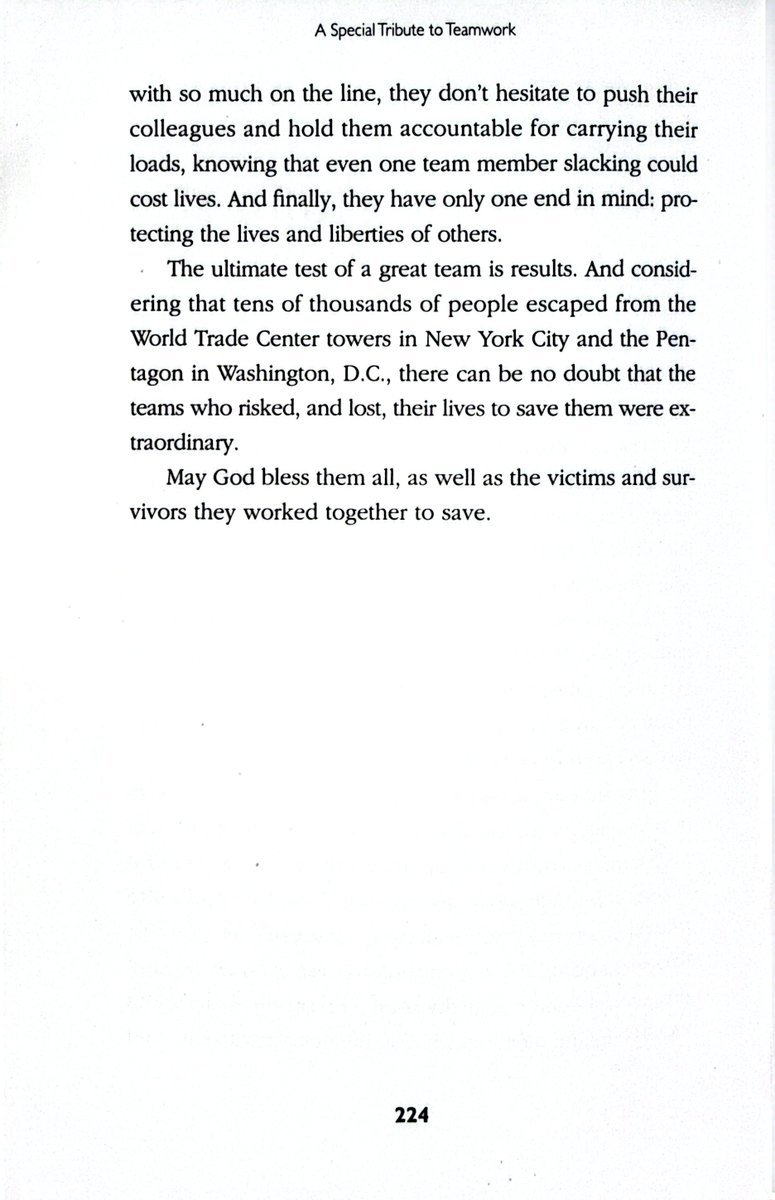
Twenty-five years ago today I finished writing my book The Five Dysfunctions of a Team, mere hours after the tragedy that we now call 9/11. I thought it might be a good idea to republish the short commentary I included at the end of that book that day, which was a tribute to the teamwork that brought ordinary people to do extraordinary things to save the lives of strangers, even at the expense of their own lives.
May God bless those brave men and women, and may He bless their families.
Your greatest competitive advantage at work isn't your resume, your network, or even your work ethic.
It's knowing what you're built to do, and putting yourself in a position to do it.
Find your Working Genius and get to know your competitive advantage:
https://t.co/kXi46VCMwU
Team #1.
The team you're on comes before the team you lead.
Get that order right and everything below it gets healthier.
More in The Advantage: https://t.co/vG0PVqNlKv
One of the biggest mistakes managers make is one I've made many times myself.
We see one of our people doing something wrong, and we don't call it out. It's uncomfortable, so we wimp out and tell others close to us instead. The pressure builds, and eventually we lose it on them, ding them in a review out of left field, or let them go. All of it feels unfair, because it is. They never knew.
Letting people know when something needs to change is one of a leader's biggest responsibilities, and it gives the other person much dignity. There is no better way to handle it.
Most meetings are like a stew made with twelve ingredients that don't belong together. We throw administrative, tactical, and strategic conversations into one pot, and then wonder why nobody wants to taste it.
Knowing which meetings to run, and when, might be one of the most relevant skills in management.
If you want to learn how to run your meetings and avoid the meeting stew checkout Death by Meeting: https://t.co/gLfzRMe5ay
Most teams have one meeting for everything. That's why they hate meetings.
These are the different meetings you should be having:
The daily check-in.
The weekly tactical.
The ad hoc strategic.
The quarterly offsite.
This is the way to be effective and avoid having a meeting stew.
If you want to learn how to run these meetings. Checkout Death by Meeting: https://t.co/gLfzRMe5ay
As AI makes everything smarter and easier, the biggest competitive advantage won't be technology.
It will be culture.
Organizational health is about to matter more, not less.
When people talk about trust on a team, they usually mean the wrong kind.
They mean predictive trust, the kind that comes from working with someone long enough that you can guess how they'll behave. It's helpful once in a while, but it has short legs and it keeps you from ever reaching the level of trust that actually builds better teams.
The real value is in vulnerability-based trust. When people can genuinely say "I need help," or "I was wrong," or "you're better at this than I am." It's what allows teams to have healthy conflict and hold each other accountable. I've come to believe it's the core beneath the most important competitive advantage in business.
Want more of that on your team? Have them read The Five Dysfunctions of a Team and take our Online Team Assessment to start building real trust.
The Five Dysfunctions of a Team: https://t.co/QALJRKgvWR
Online Team Assessment: https://t.co/ThXBhNvohC