A Model Y driver started experiencing a medical emergency with chest pain mid-drive & called his son.
His son then remotely rerouted the car – which had FSD Supervised enabled – to the nearest hospital & let them know the vehicle was en route. ER staff were standing by on arrival.
Doctors later confirmed the quick reroute likely saved his life.
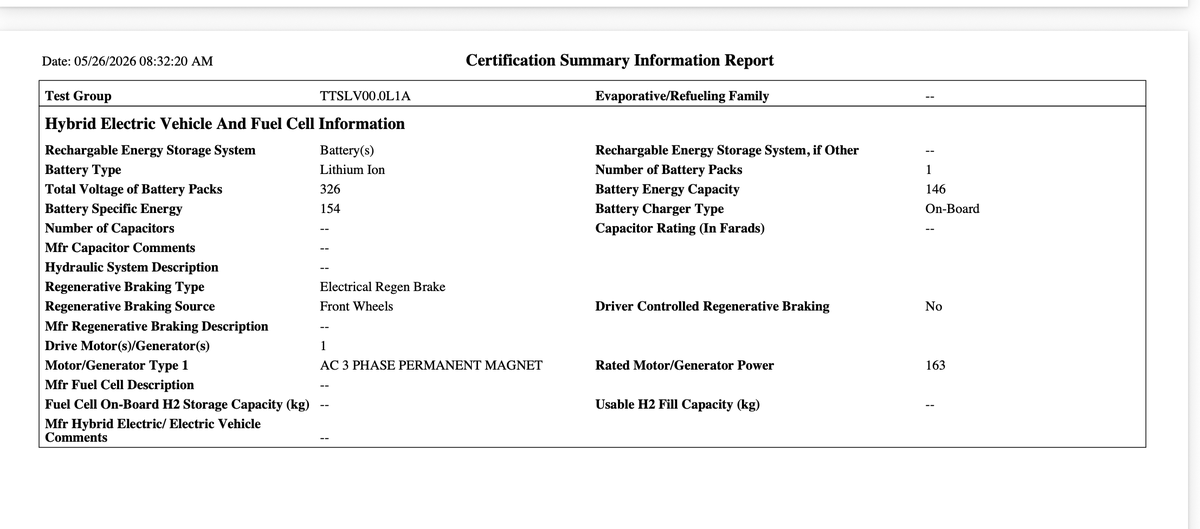
Some Tesla Cybercab specs have been revealed in new EPA certification documents:
• 48 kWh battery pack
• 3,118-lb curb weight (750 lbs lighter than a Model 3 RWD)
• Front-wheel drive
• AC 3-Phase Permanent Magnet Motor
• 219 Rated Horsepower (163 kW)
• GVWR: 3730 lbs
New information about @Tesla's Cybercab has been revealed in public EPA documents.
• Front-wheel drive
• Battery capacity: ~48 kWh
• 219 horsepower
• Curb weight: 3,113 lbs
• GVWR: 3,730 lbs
• Motor power: 163kW
• Voltage: 326v
Equivalent All Electric Range is listed at 418 miles, with 375 miles of highway range, but the final EPA range rating is usually a decent bit lower. Tesla has previously stated the Cybercab has about 300 miles of range.
Filing: https://t.co/pyZCyl7pcm
🚨 BREAKING:
NVIDIA CEO JENSEN HUANG SAID LIVE ON CNBC:
"THE ONLY THING I REGRET IS NOT GIVING ELON MORE MONEY. YOU REALLY WANT TO BE PART OF IT."
HE RUNS THE MOST VALUABLE COMPANY IN THE WORLD THAT WORTHS $5 TRILLION
HE DEFINITELY KNOWS SOMETHING!!
🚨 States and Territories where Tesla Cybercabs have been spotted:
• California
• Texas
• Illinois
• New York
• Massachusetts
• Michigan
• Florida
• Arizona
• Colorado
• Oklahoma
• Virginia
• Georgia
• Nevada
• Missouri
• Pennsylvania
• Washington, D.C. (not a state)
• Washington
3 days ago, Elon Musk sat in front of JP Morgan’s 3,500 wealthiest investors and explained why the AI economy is moving to space:
1. Starship is the first rocket in history designed to be fully reusable. Every other mode of transport... planes, cars, ships... you take reusability for granted. Rockets have always been thrown away after one use. That ends with Starship. Once you achieve full reusability, the only cost is fuel. Starship runs on liquid oxygen and methane. Both are cheaper than jet fuel.
2. Sending cargo to orbit will soon cost less than international air freight. This is not a distant projection. It is the direct mathematical outcome of reusable rockets plus cheap propellant. The economics of space change entirely.
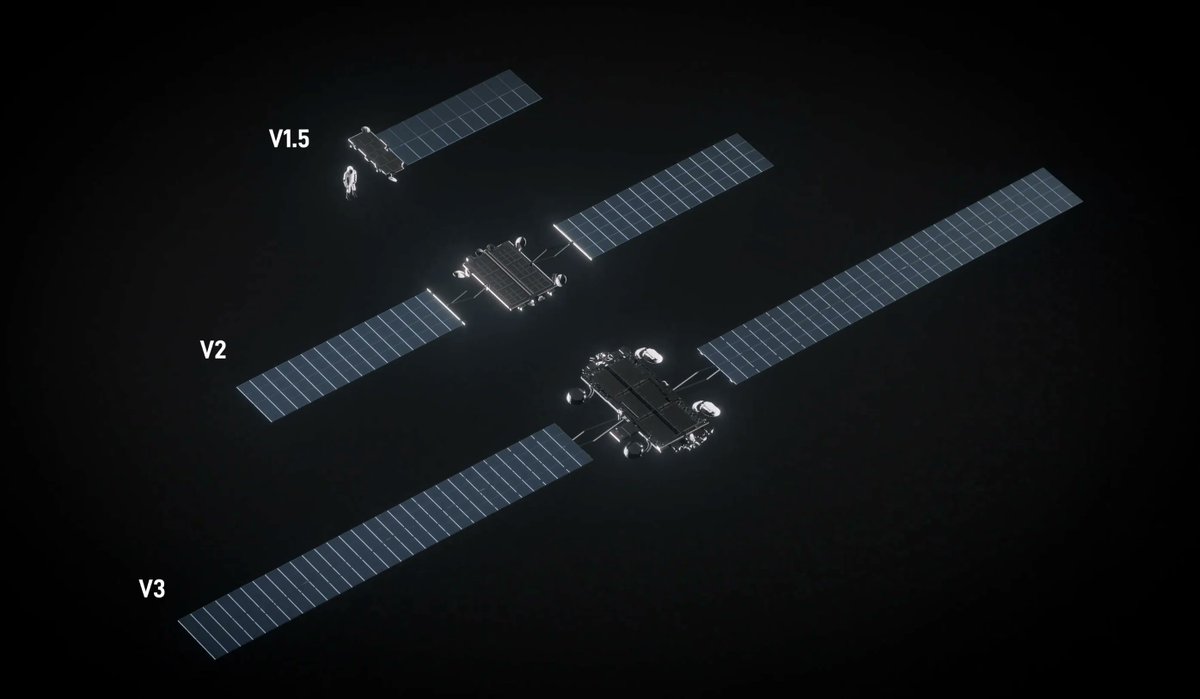
3. Starlink V3 is 10 to 20 times more capable than what's currently in orbit. The satellite is so large it can only launch on Starship. It cannot fit on any other rocket on Earth. 100 times more bandwidth. Half the latency. It may become the highest bandwidth, lowest latency communication system that exists.
4. AI and robots will consume bandwidth at a scale humans cannot picture. Peak human bandwidth is a few hundred bits per second. A computer runs at a trillion. The appetite of AI for data infrastructure will be unlike anything built for human use. Starlink V3 is being built for that world... not this one.
5. Data centers are moving to space. Not as an experiment. As the primary way to scale AI compute going forward. It is increasingly hard to build power plants on the ground. Nobody wants one near their home. Space removes that constraint entirely.
6. From the moon, you can scale to 1,000 terawatts of compute per year. From Earth... maybe 1. The moon has no atmosphere and one-sixth Earth's gravity. You can manufacture solar panels from moon materials and launch data centers with a railgun. No rockets needed. The math on this is not close.
7. Current human civilization uses less than one trillionth of the sun's energy output. You could scale to a million times Earth's entire economy and still be using less than one millionth of what the sun produces. The ceiling on what's possible is so far above us it barely registers as a ceiling.
8. There is not a single high-volume computer memory fab in America right now. Zero. The chips needed to build the AI future do not exist in sufficient quantity anywhere in the Western world. That is why SpaceX is building one. Not to compete. Because there is no other option.
9. SpaceX has been cash flow positive since around 2014. The IPO is not a distress move. Past funding rounds were not even fundraising... they were liquidity events for employees. The company bought back its own stock. The IPO is happening now because the next phase requires capital private markets cannot absorb.
10. The senior team has barely changed in over a decade. The CFO has been there 15 years. Musk joined as the seventh employee in 2002. He says people who believe in the mission don't leave. And above technical skill, he now looks for one thing... whether someone is genuinely a good person.
SpaceX has just officially unveiled its AI1 satellite, the first generation of its AI satellite.
Overall Specs:
• 150 kW peak compute payload
• 120 kW average compute payload
• 70 kW per ton
• Compute provider interchangeable
Dimensions:
• Wingspan: 70 meters
• Deployed height: 20 meters
Thermal System:
• 110 m² deployable liquid radiator
• Redundant pumping loops
• Integrated micrometeoroid shielding
• Deployable liquid radiators
Solar Power System:
• 150 kW solar array
• 250 W/m²
• SpaceX-manufactured solar technology from Bastrop, Texas
Architecture:
• Centralized compute module
• Large deployable solar arrays
• Deployable liquid-radiator thermal management system
• AI-focused compute satellite design ("AI1 satellite")
Elon: "The AI satellite is much simpler than a Starlink satellite. The AI satellite is essentially a lot of solar cells, you still need some laser links, but you don't have all of the super complex antennas that you have on a Starlink satellite. The easier one to design for is the AI satellite. It's bigger. A lot of this is technology we've already made with the Starlink V3 satellites."
When @elonmusk beams in virtually for a high-stakes fireside chat with JPMorgan Chase CEO Jamie Dimon, the conversation goes completely out of this world.
The discussion was packed with massive milestones—from the bombshell that SpaceX is going public to plans for lunar AI data centers and the urgent need for the Terafab chip revolution.
Here is the ultimate breakdown of their discussion:
💵 SpaceX has been self-funding and cash-flow positive for a decade
Before the decision to go public, SpaceX didn't actually need to raise money to survive. The company has been cash-flow positive since around 2014–2015, meaning its private equity rounds were exclusively held to provide liquidity for employees and early investors.
"We've been positive cash flow for quite a long time, I think, since around 2014-2015. And we've been self-funding. In fact, in our sort of private equity rounds, they actually have not been fundraising rounds. They've been liquidity rounds for investors and employees because we give everyone at the company stock."
🚀 The upcoming capital growth phase requires massive funding
The primary trigger for going public now is an unprecedented capital expenditure phase. SpaceX is preparing to deploy an immense constellation of over 100,000 Next-Gen communication satellites and construct massive AI data centers in orbit.
"we are embarking on a significant capital growth phase where we're going to put in over probably 100,000 satellites, probably over 100,000 satellites, just for communications... And then we're also doing the AI data centers in space, which is another massive capital endeavor."
📡 Starlink V3 introduces a massive bandwidth breakthrough
The custom chips designed by SpaceX for the V3 satellites will completely alter global communications, offering 100 times the bandwidth of the current system and slashing latency in half by operating at a lower altitude. They are so large—the size of a small bus—that Starship is the only rocket on Earth capable of launching them, carrying 50 at a time.
"The version three is, depending on how you count it, 10 to 20 times more capable than the version two satellite. And there were three chips that the SpaceX chip design team taped out that are specific to this... Which means it's 100 times more bandwidth than the SpaceX's Starlink system currently on the surface. And also half the latency because the altitude will be about half altitude."
🤖 AI and robots possess an insatiable appetite for data
Musk points out that expanding infrastructure into space is vital because future AI and robotic systems will demand an astronomical amount of bandwidth compared to the relatively low data transmission rates of human beings.
"And the future with AI and robots is actually going to require a lot more bandwidth than we currently use. Because you can imagine like what's the bandwidth of a human? Peak bandwidth of the human is a few hundred bits per second. But bandwidth of a computer can be a trillion bits a second. So the appetite for bandwidth of AI and robots is going to be enormous."
☀️ Space solves the looming terrestrial power plant crisis
Building traditional power plants on Earth faces heavy community resistance. Moving data centers into space unlocks unlimited energy generation via solar power ("star power") without disrupting Earth's environment, tapping into an energy source that accounts for 99.8% of the solar system's mass.
"It's increasingly difficult to build power plants on the ground. There are very few people who want a power plant in their backyard... But actually if we go to space, we can go far beyond the electricity generation of both. In fact, this is going to sound kind of crazy. But you could actually increase human energy by a factor of a million and still be using much less than a millionth of the sun's energy."
🌕 The Moon is a 1,000-Terawatt compute launchpad
While Mars remains the long-term goal, the Moon is the immediate fast-track location for massive scaling. Because it lacks an atmosphere and has low gravity, SpaceX can use electromagnetic rail guns to shoot AI data centers into deep space from the lunar surface, scaling power to an incredible 1,000 terawatts per year.
"I just think that we can build a self-sustaining city on the moon faster than we could do so on Mars. And there's also the potential... you can use an electromagnetic accelerator, a rail gun or mass driver. Basically, you don't need to use rockets to do AI data centers into deep space from the moon... We can do a thousand terawatts or more from the moon."
🪐 Mars is the ultimate "fixer-upper" planet
Mars is being targeted as a full-scale terraforming project. Due to its atmosphere and gravity levels, warming up the planet could eventually unlock liquid oceans and allow humans to walk around without spacesuits.
"And if you warm up Mars, you could one day make Mars like Earth. And with like liquid oceans and life. And where you could walk outside without a spacesuit type of thing. So Mars is, I call Mars a fixer upper of a planet. But it's got a lot of potential."
🚂 SpaceX is the modern-day Union Pacific Railroad
Musk rejects the idea that SpaceX is moving into the hospitality or hotel business for space tourism. Instead, he views the company as a foundational infrastructure provider, comparable to the historic railroads that opened up the American West.
"We're kind of like Union Pacific, you know. You know, when they built Union Pacific back in the day, people thought they were crazy. Because like, why are you trying to carry all this cargo and people to California? No one's there. But now California is the biggest state in the country."
♻️ Starship's core disruption is 100% reusability
The true holy grail of Starship is full reusability, which drops orbit access costs down to the mere price of fuel. Because it utilizes ultra-cheap liquid oxygen and methane, shipping cargo to space will become more economical than flying cargo across Earth's oceans on an airplane.
"The fundamental breakthrough of Starship is that it will be the first orbital rocket that is fully reusable... And the propellant we use for Starship is liquid oxygen and liquid methane, which is the cheapest propellant you could possibly get... which means that you should be able to actually send cargo to space for less than the cost of cargo on an airplane going on a trans-oceanic trip."
🔄 Starship V4 targets hourly launch cadences
SpaceX's engineering pipeline is aiming for staggering operational frequencies and massive payloads. While Starship V3 targets 100 tons to orbit, the upcoming V4 variant is designed to carry over 200 tons and launch on an hourly schedule.
"Because Starship V3 is aiming to do 100 tons to orbit with full reusability. And then Starship V4 we're aiming for over 200 tons per mission. And then being able to launch every hour."
☁️ Orbital data centers are entirely weather-proof
Space-based AI data centers are highly practical because they are simpler to construct than communication satellites. Data is beamed via lasers between satellites, and then beamed to the ground using cloud-penetrating radio frequencies that completely bypass bad weather.
"The AI data center would be much simpler by comparison. Because it's really just solar power plus radiator... The connection would happen no matter what the weather is. Because once you connect via the lasers to the Starlink communication constellation, the Starlink communication to the ground uses frequencies that are cloud penetrating."
🇺🇸 The U.S. faces a catastrophic "Zero Memory Fab" crisis
A major vulnerability in domestic tech infrastructure is that the U.S. currently manufactures zero high-volume computer memory chips. Even with new facilities arriving online between 2028 and 2030, domestic supply will not match the exponential requirements of AI, which is why Musk is aggressively building the Terafab.
"there's not a single high volume computer memory fab in America right now. Zero. There's one being built in Idaho by Micron. But that will not reach volume production until I believe 2028. And there's something being built in New York, but they are in, I think, 29 and 30. And this is a tiny fraction of the memory that's needed... That's why we need to do the Terafab."
🧠 SpaceX will offer proprietary AI chips and software
While the orbital data center network will remain an open marketplace capable of running third-party hardware like NVIDIA GPUs, Google TPUs, or Amazon Trainium, SpaceX plans to deploy its own in-house AI chips and software stack in the near future.
"So if NVIDIA GPUs can be put on it, Google TPUs can be put on it, Amazon Trainium or any other chips that you want to put on, can be put on. We'll also offer our chips in the future and I think we also want to offer our software, our AI software as well in the future."
🛡️ Starshield handles critical national intelligence
Musk emphasizes his deeply pro-American stance, highlighting SpaceX's specialized Starshield division as a crucial backbone for the U.S. military and national intelligence agencies.
"We have a division called Starshield which provides military communications. And you know, there's some other stuff that's kind of classified, I guess. We can't be talking about that. But we are helping the Department of War and intelligence part of the government. We're a vital element of that."
👥 Executive retention fuels the mission
The core leadership bench at SpaceX is defined by extreme longevity, driven by a deep collective belief in turning science fiction into reality. Top executives like Gwynne Shotwell have remained with Musk for over two decades.
"I guess Gwynne was, I think, around the seventh person to join the company. And that was 2002. It's just went to like 24 years. And generally the senior executives at the company, you have a very long tenure. I think Brent Johnson's been, you see, over 15 years... because people really believe in the mission, I think they want to stay and they want to keep building it."
❤️ Character overrides IQ in leadership
Reflecting on how he has evolved over 20 years, Musk notes that he has become significantly more laid back. He has also learned that a candidate's moral character and heart are just as vital to a company's success as raw intellectual horsepower.
"Well, I think I'm probably more chill than I used to be... And one of the things I've found over time... is that like in terms of like recruiting people to the company and having people work with the company, like their individual abilities and their intellectual capabilities matter a lot, but it also matters if they have a good heart. It's not just about whether somebody has a certain IQ or whatever, but just are they like a good person, that matters a lot."
Starlink V3 satellites
Bandwidth per Satellite:
• V2: 96 Gbps
• V3: 1,024 Gbps
Bandwidth per Launch:
V2: 2,600 Gbps
V3: 61,000 Gbps
Deployment per Launch:
• V2: 27 satellites (on Falcon 9)
• V3: 60 (on Starship)
Starlink V3 satellites will begin to be deployed in late 2026 on Starship.
🚨 BREAKING:
NVIDIA CEO JENSEN HUANG JUST SAID LIVE ON CNBC:
"INVESTING IN SPACEX, ANTHROPIC AND OPENAI WILL BE SIMILAR TO BUYING $AMZN, $GOOGL, OR $META IN THE EARLIEST DAYS."
THIS GUY RUNS THE WORLD’S LARGEST COMPANY WITH $5.43 TRILLION CAPITALIZATION
HE DEFINITELY KNOWS SOMETHING!!
This New Glenn rocket explosion released 20% of the energy of the Hiroshima atomic bomb and that wasn't even the bad part:
→ The pad: LC-36 is the only pad on Earth that launches New Glenn and now it's gone. Over $1B to build. SpaceX needed 7 months to rebuild after a similar hit.
→ The deadline: Amazon needs 1,618 satellites up by July 30 to keep its FCC license. It has ~300. The rocket that was supposed to help fix that just blew up twice in a row
SpaceX made us believe that landing rockets on barges was a normal expectation. Turns out rocket science is hard after all. Wishing the team a speedy recovery 🚀
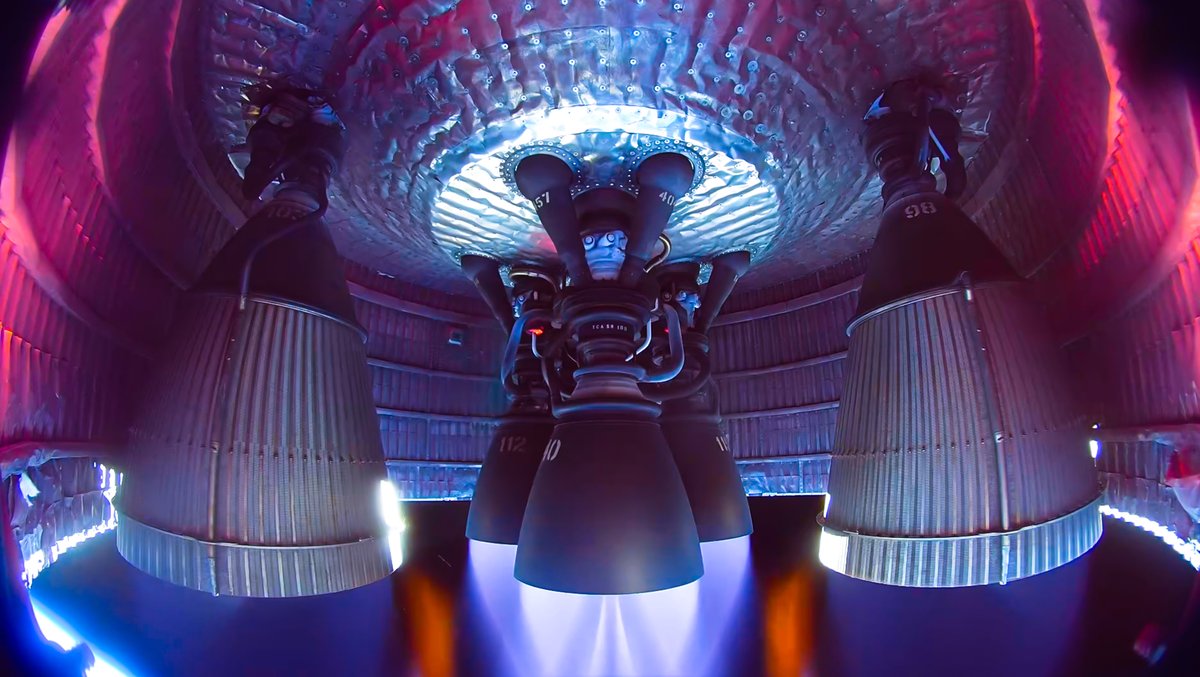
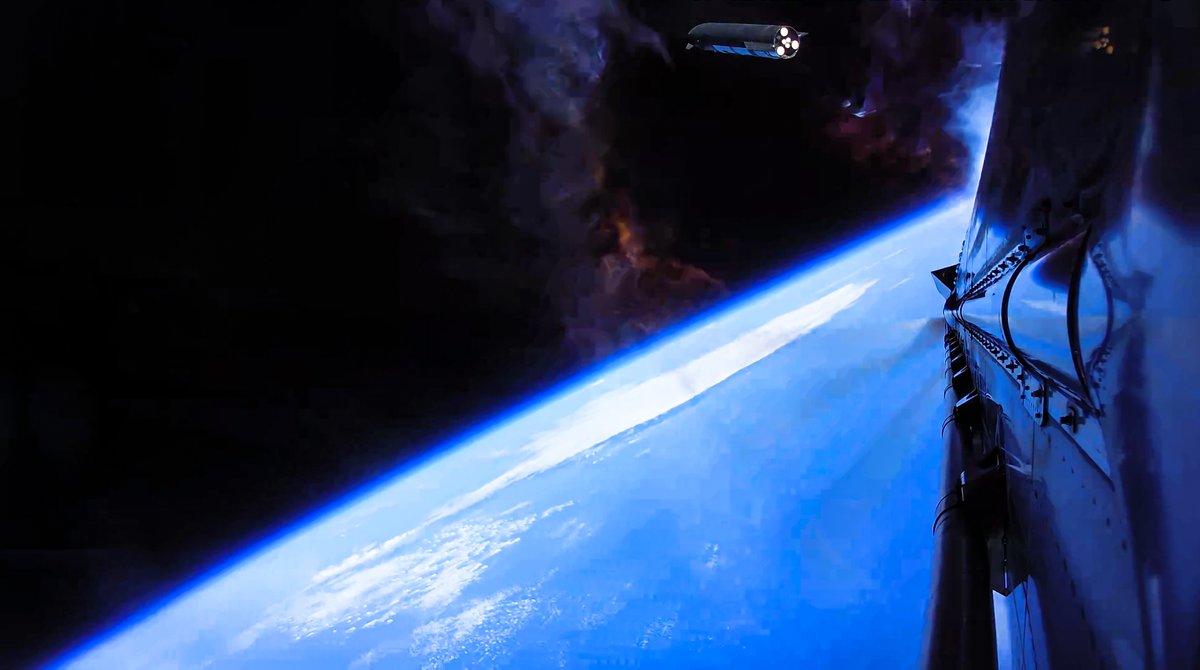
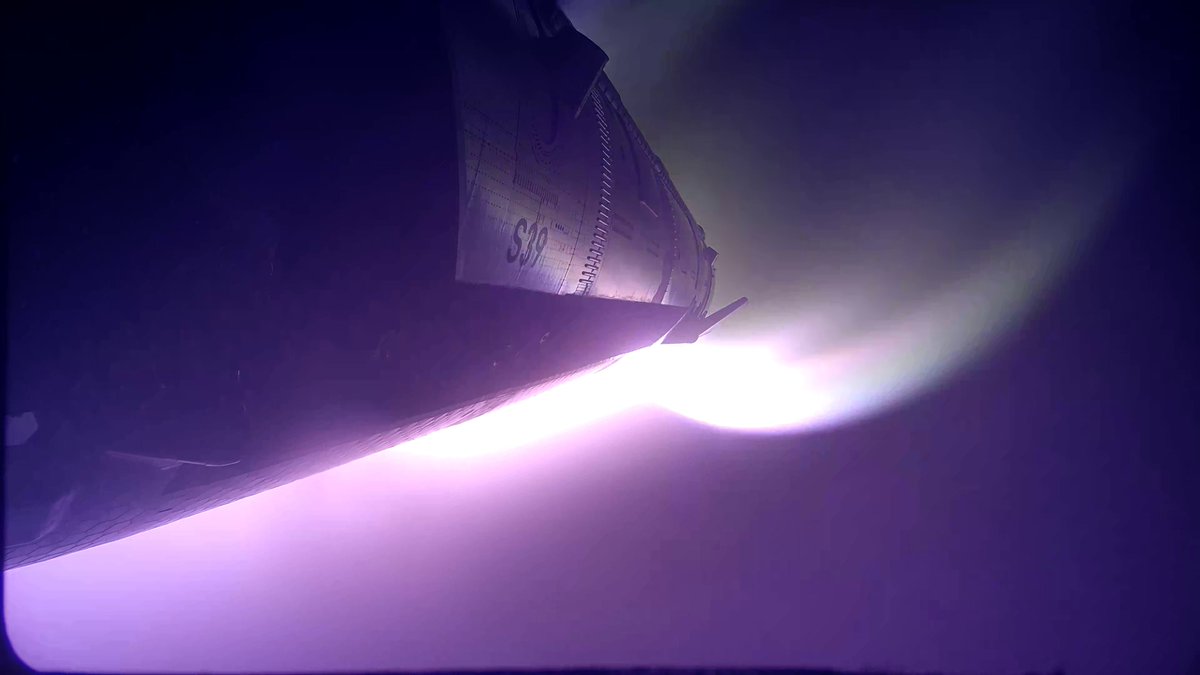
Onboard views from Starship and Super Heavy V3, which are equipped with upgraded cameras capable of streaming 4K video through every phase of flight via @Starlink