VP of research and innovation @edchoice / surveys on K-12 education, schooling, ideas / alum @BrookingsInst, @IllinoisPolSci, @univofdayton / views are my own
Last month I had the opportunity to present a new paper at the PEPG conference "School Choice: Tradeoffs and Evidence-Based Policy Making" — analyzing more than a decade of public opinion data on ESAs, school vouchers, and charter schools.
I also focus on subgroup trends and question framing/wording effects in our monthly and annual national surveys.
Thanks to @Paul_E_Peterson, @MichaelTHartney, and the @edchoice team for their support throughout. @EducationNext@TaubmanCenter
It was great learning from a lot of the other presenters and speakers. I definitely enjoyed it.
@tpress87 and I recently surveyed ~600 teachers nationally and found that 85% thought screens took up too much class time. Here's our piece out this morning in @RealClearEd.
https://t.co/PvlATcIxu0
My latest discusses microschooling's regulatory maze.
"Rules that are unclear, overly broad, or designed only for large institutions can make it harder for small, more personal models to take root."
Link in the comments 👇
At 150,000 students, we are managing the longest school choice waitlist in the country. We will keep providing updates as more students receive funding. Get the latest details here: https://t.co/ipzx8GvXth
As conservative education politics increasingly focuses on school choice, privatization, and parental authority, my new @AnnenbergInst paper w/ @d_m_houston explores whether rural Republicans think about ed policy in similar ways as non-rural Republicans. https://t.co/YYDI032UNe
I’m in the process of launching a new journal in education thought, policy, and practice. If you are interested or know someone who is, send them my way.
The NAEP proficiency myth
NAEP proficient is not synonymous with grade level. NAEP officials urge that proficient not be interpreted as reflecting grade level work. It is a standard set much higher than that. Scholarly panels have reviewed the NAEP achievement standards and found them flawed. The highest scoring nations of the world would appear to be mediocre or poor performers if judged by the NAEP proficient standard. Even large numbers of U.S. calculus students fall short.
As states consider building benchmarks for student performance into accountability systems, they should not use NAEP proficient—or any standard aligned with NAEP proficient—as a benchmark. It is an unreasonable expectation, one that ill serves America’s students, parents, and teachers–and the effort to improve America’s schools.
https://t.co/kVSDDYPQb1
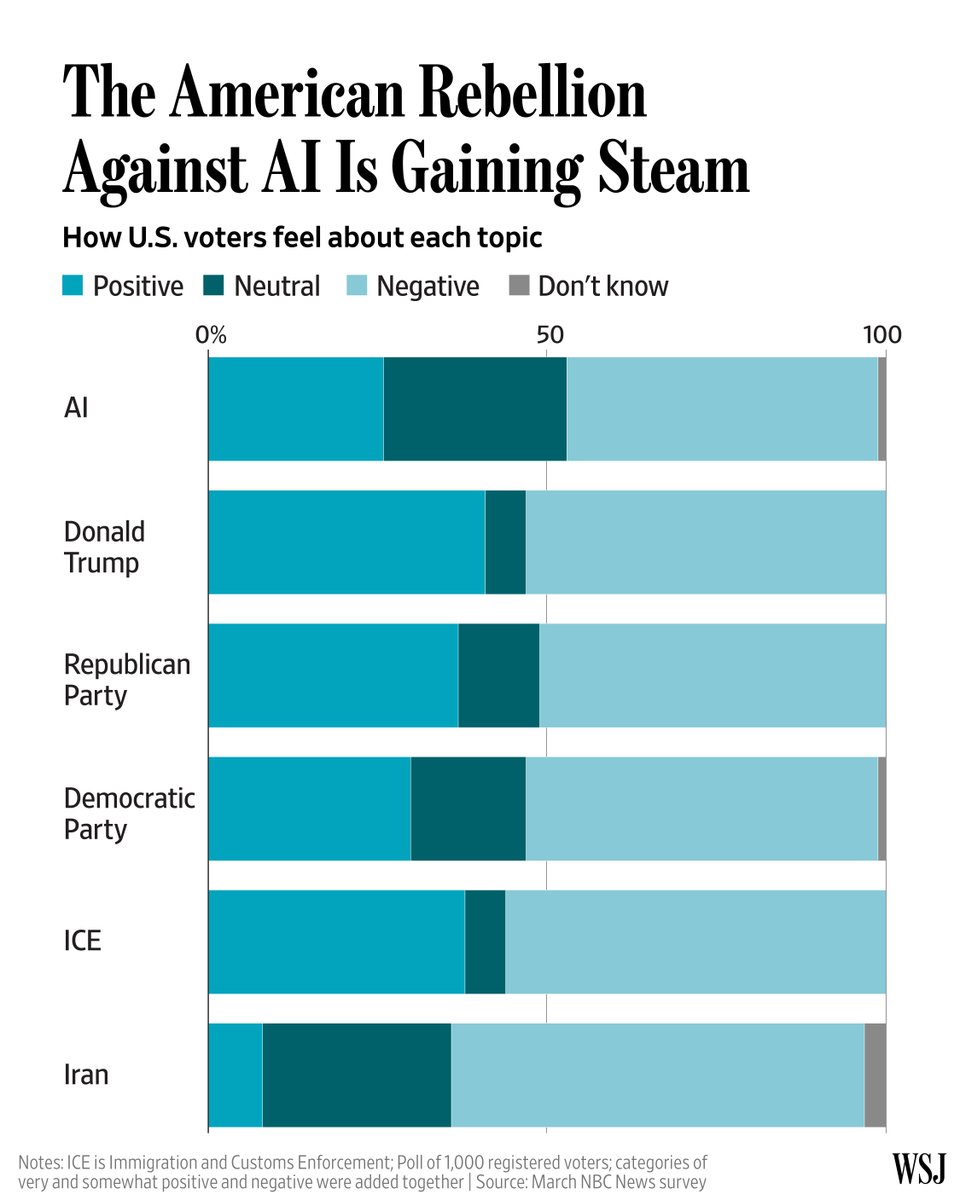
Pope Leo XIV in his first encyclical citing Hannah Arendt's Origins of Totalitarianism to warn AI risks producing the exact condition Arendt identified as the prerequisite for totalitarian domination by destroying people's ability to discern between fact and fiction.
I almost hesitate to promote this, because it wasn't really intended to be a piece. I just sort of sat down and it came out. Maybe someone else out there has the same type of day today, and it'll speak to them.
https://t.co/xSMUDOrHcC
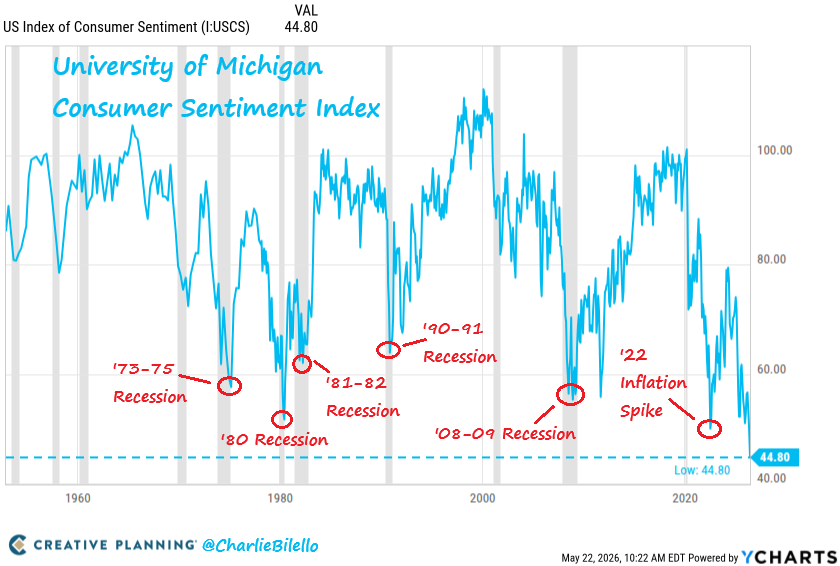
The US consumer sentiment index from the University of Michigan goes back to 1952.
It has never been lower than it is today.
Video: https://t.co/8USvFpWxZN