How 3 beauty brands run email differently:
@dermalogica — professional credibility first, retail second
@supergoop — SPF education as a lifestyle movement, not a product pitch
@narscosmetics — editorial aesthetic, emails feel like magazine pages https://t.co/C8NU7O5f0k
How 3 prestige beauty brands run email differently:
@shiseido_usa — heritage and science in equal measure, no urgency tactics
@kiehls — loyal customer focus, education over acquisition
@cremedelamerfr — scarcity and exclusivity as the levers pulled https://t.co/NdAJJu8lZa
How 3 beauty brands run email differently:
@elfcosmetics — high frequency, value-forward, democratising beauty
@nyxcosmetics — trend-reactive, drops and launches drive the calendar
@tartecosmetics — community and cause woven into every promotion https://t.co/1VIB6FsM0e
How 3 beauty brands run email differently:
@ctilburymakeup — aspirational glamour in every send, sells a lifestyle not just a product
@mydrunkelephant — ingredient-led, education as the primary hook
@benefitbeauty — playful tone https://t.co/0wXT2ZfRFy
@realcymbiotika — luxury wellness positioning, every email feels like a high-end brand moment
@gardenofliferaw — values-led, organic certification as a trust signal
@humnutrition — quiz and personalisation-forward, science with a feminine aesthetic https://t.co/bipCHsiWvy
How 3 supplement brands run email differently:
@bulletproofintl — premium positioning
@foursigmatic — education-heavy, mushroom science as the recurring hook
@vitalproteins — collagen as a lifestyle, not a supplement, soft sell throughout
https://t.co/vLiYzCSlJg
How 3 supplement brands run email
@livemomentous — performance science as the brand voice @gainful — personalisation as the core mechanic, nothing generic
@ghostlifestyle — drop culture energy, product launches treated like events https://t.co/popIFWOxOn
How 3 supplement brands run email differently:
@huel — consistent editorial cadence, no urgency spikes, reads like a magazine @onnit — lifestyle and community first, product second
@thornehealth — clinical credibility as the hook, education over promotion
https://t.co/n7NVBoyVEa
How 3 supplement brands run email differently:
@legionsupps — 4 emails in one day, escalating discounts to close the sale
@drink_AG1 — Mother's Day promos, zero percentage-off language
transparentlabs — led with "shout out to the late bloomers"
https://t.co/U5fw2WWQiT
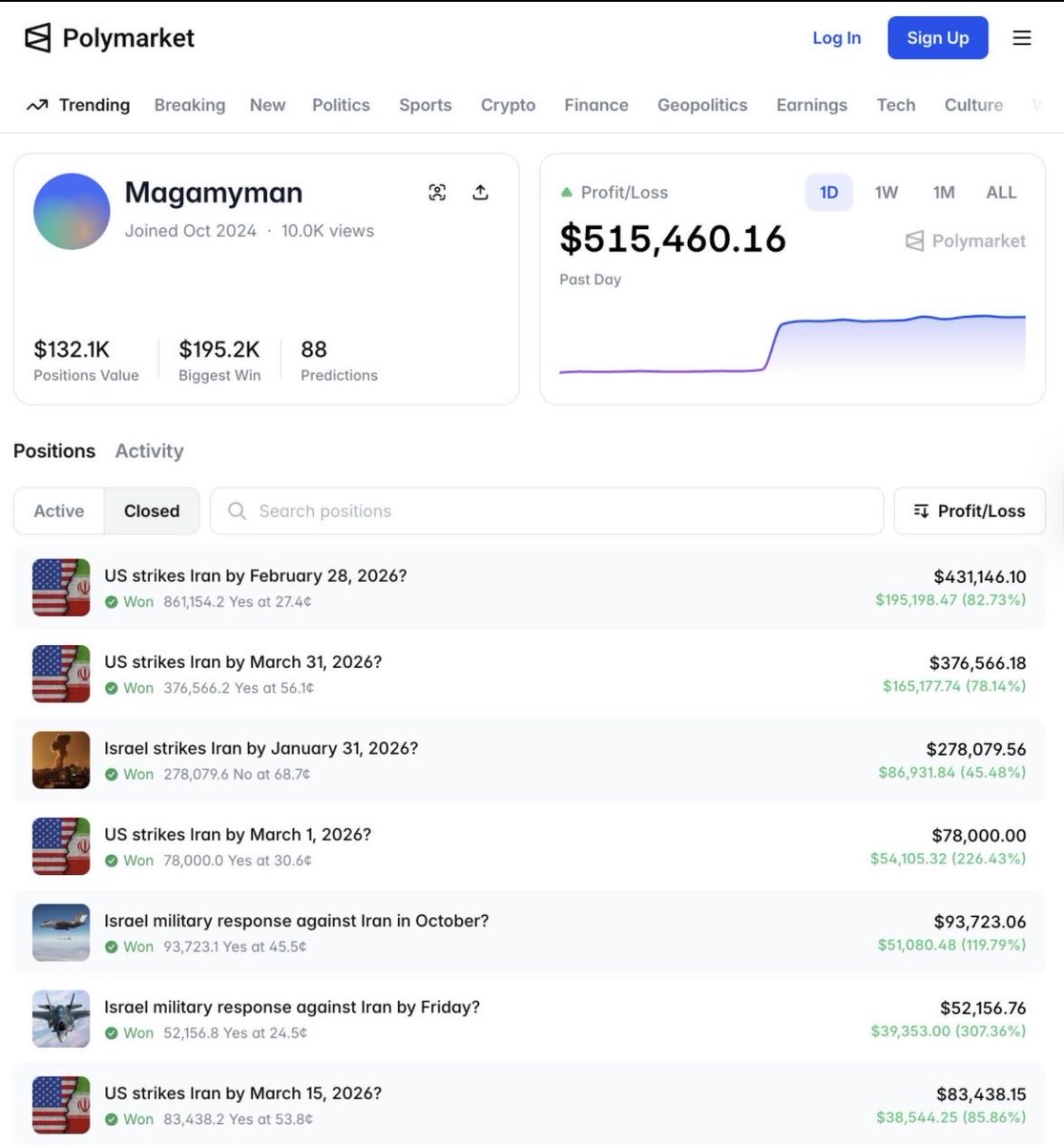
It appears that a Polymarket account called "Magamyman" made $515,000 in a single day betting on last night's U.S. strike on Iran, with the first trade placed 71 minutes before the news broke publicly.
When this person bought in, the market had this at a 17% probability. They turned roughly $87,000 into over half a million dollars overnight.
Reminder that Donald Trump Jr. sits on Polymarket's advisory board and his firm invested double-digit millions into the platform last year. The DOJ and CFTC both had active investigations into Polymarket that were dropped after Trump took office.
Prediction markets cannot be a vehicle for profiting off advance knowledge of military action.
We need answers, transparency, and oversight.
So many folks on X with rapidly growing businesses doing millions in revenue in a matter of months, seem to also sell a course showing you how to do it.
It’s so helpful and thoughtful of them.
I straight up won’t date someone who is on a dating app. If I meet someone and we click, but I find out she’s on Hinge etc, I’m out.
Constantly seeking validation, flirting with 100s of strangers, going on dates with dozens of ppl but still single, are all not wifey material.
It’s funny how there weren’t really any AI haters in areas like image, art, or design until AI actually got good at it. Before that, it was all just a joke.
Same thing happened with coding. A year ago, most programmers saw it as something positive, even laughed about it and used it like a replacement for Stack Overflow for some stuff... But that’s starting to change.
As soon as AI gets good enough at something, the reaction quickly shifts from laughter / skepticism to hate.