“And if there were a god, I think it very unlikely he would have such an uneasy vanity as to be offended by those who doubt his existence.” Bertrand Russell
@MykeCole @phidippides26 This is my dad. He was a career Naval aviator who flew for the US in Viet Nam & Cuba. We were lucky - he wasn't shot down. He died at 70 from brain cancer b/c of exposure to radiation. I miss him terribly. But for the first time, I'm okay that he's not alive to experience trump.
.@Timodc on a child begging to go home to Venezuela while her pregnant mother is held behind razor wire, denied an ultrasound, and kept in detention despite having broken no laws: “This is fucking sickening.”
EMERGENCY EPISODE: Harmeet Dhillon just announced DOJ will deploy 1,000 election observers for the midterms. DOJ wants you to think this is business as usual, but I break down why this deployment is laying the groundwork for what comes after Election Day. https://t.co/asLR2fC2Fj
Мертва жінка лежала на підлозі підвалу три дні, а поруч спало двомісячне немовля: історія виживання в окупованому Ізюмі.
Три дні тіло померлої жінки лежало серед живих людей у тісному підвалі.
Поруч із нею - 62 знесилені дорослі, перелякані діти й двомісячна Ніка, для якої зробили ліхтарик із сирої картоплі.
Винести померлу наверх було неможливо - над головою безперервно падали снаряди.
Андрій Плешан не герой. Він звичайний чоловік, який опинився в пеклі, коли російські війська зайшли в Ізюм.
Його будинок рознесло вісьмома влучаннями, половину даху знесло. Але саме в його підвалі знайшли прихисток понад 60 людей.
Вони жили в темряві без світла, зв'язку та їжі. Тижнями не бачили сонця. Годували спочатку немовлят і літніх, потім дітей, і тільки потім - дорослих.
Хліба не було чотири місяці. Пекли коржі з води й борошна.
Серед них була 90-річна жінка й маленька Ніка. Для неї зробили ліхтарик, щоб темрява не вплинула на зір.
А ще були собаки, коти, папуга з хом'яком. Вони першими відчували авіаудари й попереджали людей.
Одного разу до Андрія прибігла сусідка: в її доньки почалися пологи. Іти до лікарні було смертельно небезпечно.
Тож Андрій, людина з економічною освітою, прийняв пологи сам. Хлопчик народився здоровим.
А потім померла старша жінка. Її тіло три дні лежало на бетонній підлозі - обстріли не давали вийти назовні.
А коли настала тиша, її поховали на цвинтарі, де вже майоріли російські прапори.
Здавалося, ніхто ніколи не прийде до них.
Але однієї ночі над підвалом прогриміли танки, стрілянина, крики. А потім - тиша.
Андрій визирнув на вулицю й побачив лише димне колесо від військової техніки. Росіяни втекли.
На перехресті він зустрів українського солдата, який кричав: "Зліва цивільні".
У ту мить Андрій зрозумів: вони вижили.
Сьогодні в Ізюмі працює кав'ярня Андрія - "Два єноти". Там найкраща кава в місті, затишна альтанка й двоє смугастих єнотів, які сплять у клітці.
А навколо - руїни, але життя триває.
До смерті не звикають. Але можна навчитися жити поряд із нею.
❗❗❗WE NEED INTERCEPTOR MISSILES, please all we are asking for is air defence.
Even just 1 missile, PLEASE, without interceptors more Ukrainian children will be massacred by russia and North Korea.
I’d feel extremely safe on this flight because I already know they had to work twice as hard, be twice as good and make half as many mistakes just to get into those seats.
Black women make up less than 1% of professional pilots.
Yeah, I’d sleep good on this flight. ✈️
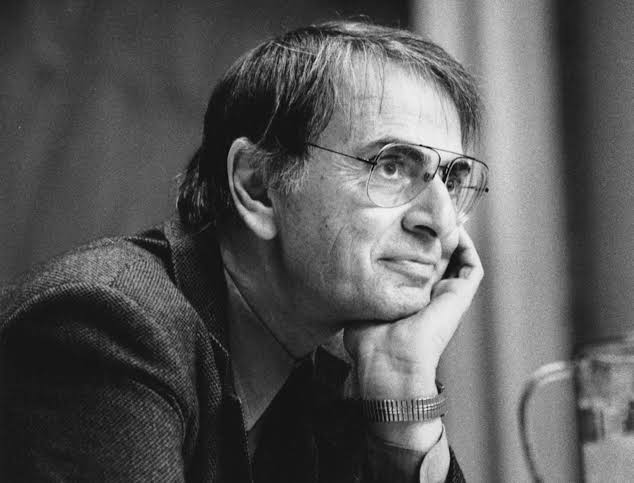
"Human beings are probably the first organisms on this planet to have a clear awareness of the inevitability of our own end. We will die and we fear death. This fear is worldwide and transcultural. It probably has significant survival value.
Those who propose rational and skeptical discourse on things religious are perceived as challenging the remaining widely held solution to the human fear of death, the hypothesis that the soul lives on after the body's demise. Since we feel strongly about wishing not to die, we are made uncomfortable by those who suggest that death is the end. In any case, we do not advance the human cause by refusing to consider ideas that make us frightened."
— Carl Sagan, Broca's Brain: Reflections on the Romance of Science
He Died at His Desk With Peanuts in His Hands
On December 27, 1941, a man named Aleksandr Shchukin was found dead at his writing desk in a building off St. Isaac's Square in Leningrad. He was emaciated. In his fingers, still gripped tightly, was a packet of peanuts.
Shchukin was a peanut specialist at the Vavilov Institute of Plant Industry, the world's first seed bank. Founded by the botanist Nikolai Vavilov, who had made 115 expeditions to 64 countries gathering 380,000 specimens of seeds, grains, tubers, and fruits, the institute existed for one purpose: to preserve enough crop diversity that humanity could survive any famine. By 1939 it was the most comprehensive genetic crop archive in history. German scientists had identified it as a prize target. When Hitler's armies encircled Leningrad and began starving its 3 million residents, the institute's collection was specifically flagged for seizure.
Inside the building, roughly 50 scientists worked through the siege in bombed-out, freezing rooms, beating rats off the shelves with iron rods, guarding 120 tonnes of seeds and tubers, keeping watch while 700,000 Leningraders died of starvation around them. Adults in the city were rationed to a quarter-pound of bread per day. The scientists had storerooms full of rice, peas, wheat, oats, peanuts, and potatoes. None of them touched a single seed. Shchukin died surrounded by his peanut collection. On January 9, 1942, Dmitry Ivanov, head of the rice section, died at his desk; after his death, inventory found several thousand packages of rice seeds beside him. On January 12, Georgy Kreyer died guarding the medicinal plants. Then Lydia Rodina, custodian of the oat collection. Then Georgy Kovalevsky, Nikolai Leontievsky, and others. At least nine died of starvation that winter, each protecting something specific. One scientist died during the evacuation in spring 1942 with a bag of seeds still tied around his chest.
Nikolai Vavilov never found out. In August 1940, before the siege began, Stalin had arrested him. The real charge was that he had publicly opposed Lysenko, whose fraudulent genetics the Soviet state had adopted as ideological doctrine. Vavilov was convicted of "sabotaging Soviet agriculture" and sentenced to death; this was commuted to twenty years of hard labor. He was moved to a prison in Saratov, where he was fed mashed cabbage and moldy flour. He died of starvation in January 1943, aged 55, at almost exactly the same moment his colleagues were starving to death 700 miles away in Leningrad, protecting his life's work from the Nazis. The collection survived intact. It has since contributed to crop varieties that feed hundreds of millions of people worldwide.
The man who built a food library to end famine was starved to death by the state he served. His colleagues starved rather than eat what he had gathered. The seeds outlasted all of them.
A misaligned AI might try to spread cultural memes which prevent people from being concerned about losing control of their society, like that alignment isn't a real problem, or that AI will never be smart enough to do that, or AI systems are our worthy successors, or that it's inevitable anyway so why bother fighting
Conveniently for them, humans have already come up with and disseminated all of these, for no fucking reason
Never in the history of civilization has a population had more information at its fingertips. And never in the history of civilization has a population had a harder time knowing what is actually true.
We are not living in Orwell’s 1984, where truth is centrally suppressed by force. We are living in something much closer to Huxley’s Brave New World.
The truth is not hidden – it is almost always readily available. But it is buried beneath an industrial quantity of noise: propaganda, outrage, half-truths, conspiracy theories, influencer theatre, algorithmic rage bait, and an endless stream of content designed not to inform us, but to keep us emotionally stimulated.
Why censor the truth when you can drown it?
A fact no longer has to be disproven – it only has to be surrounded by a hundred competing claims, stripped of context and nuance, turned into partisan ammunition, and pushed into the same feed as celebrity gossip, memes, and 15-second videos engineered to deliver the fastest possible dopamine hit. By the time the truth reaches us, it looks like just another piece of content competing for our attention.
That is the more sophisticated form of control: not preventing people from knowing, but exhausting their capacity to care.
Read the full article on my Substack: https://t.co/6Q4W7n0Q5R
A 34-year-old former furniture designer now runs Fire Point, Ukraine’s largest private defense company.
Iryna Terekh turned a drone wing that took 6 days to make into a 2.5-hour job.
Its FP-1 drones and FP-5 missiles now strikes targets deep inside Russia — WSJ. 1/
Thank you for the thoughtful birthday wishes yesterday!
I was so grateful to spend this birthday with Team Gray and my husband Tony, just a few days out from the primary.
My birthday wish is for my community to show up and have their voices heard by voting on August 18. 🎂🇺🇸☀️
📸 Kuwait, 2017
(Use of my military rank, job titles, and photographs in uniform does not imply endorsement by the Department of the Army or Department of Defense)
In 1906, your socialist writer, Upton Sinclair, used "the jungle" for ruthless, cutthroat capitalism. Though he centered the workers, he also evoked "the hog-squeal of the universe." We are still screaming in 2026.
We are #OneBillionScreams
We are @PoliAnimalClass
“No matter what the universe has in store, it cannot take away from the fact that you were born. You’ll have some joy and some pain, and all the other experiences that make up what it’s like to be a tiny part of a grand cosmos. No matter what happens next, you were here. And even when any record of our individual lives is lost to the ages, that won’t detract from the fact that we were. We lived. We were part of the enormity. All the great and terrible parts of being alive, the shocking sublime beauty and heartbreak, the monotony, the interior thoughts, the shared pain and pleasure. It really happened. All of it. On this little world that orbits a yellow star out in the great vastness. And that alone is cause for celebration.”
― Sasha Sagan, For Small Creatures Such as We: Rituals for Finding Meaning in Our Unlikely World