De Amerikaanse regering heeft vandaag bewijs vrijgegeven van het bestaan van door de VS gefinancierde “biolabs” in Oekraïne.
Volgens onze “experts” en mainstreammedia zou dit “Kremlinpropaganda” en een “complottheorie” zijn.
https://t.co/pLgQQY63Zp
Forum krijgt wederom gelijk.
@patricksavalle Gisteren de kwalificatie gekeken. Echt vet. Als verstokt formule 1 liefhebber moet ik toegeven dat dit leuker om te zien is dan de huidige F1 bolides. Dat heeft niet veel meer met racen te maken.
@patricksavalle Ik vraag me dan altijd af wat er dan onder de platte aarde zit. Hoe dieps dat, of waar rust dat op. Misschien dat iemand me dat kan uitleggen.
A Soviet psychologist walked into a café in 1927 and watched a waiter do something impossible.
He remembered every open order at every table. Perfectly. Without notes. Without effort.
Then a table paid their bill. She asked him to repeat the order.
He couldn't remember a single item.
She spent the next two years figuring out why. What she found is now the operating system underneath every platform fighting for your attention.
Her name was Bluma Zeigarnik, and she was a graduate student at the time, sitting with her professor Kurt Lewin, watching the waiters work the room. What caught her attention was something so ordinary that it had been happening in restaurants for centuries without anyone asking why.
The waiters could remember every open order with perfect accuracy. Table four wanted the schnitzel with no sauce. Table seven had changed their wine twice. Table twelve owed for three coffees and a dessert. Every detail, held without effort, without notes, without any visible system at all.
But the moment a table paid their bill, the information vanished. Completely. Lewin tested it on the spot. He called a waiter back minutes after a table had settled up and asked him to recite the order. The waiter could not do it. Not partially. Not approximately. The information was simply gone.
Zeigarnik went back to her lab and spent the next two years turning that observation into one of the most replicated findings in the history of psychology.
Here is what she proved, and why it changes how you think about attention, memory, and almost every piece of media you have ever consumed.
She gave participants a series of tasks. Some tasks they were allowed to finish. Others were interrupted before completion. Then she tested recall across both groups.
The unfinished tasks were remembered at nearly twice the rate of the completed ones.
Not slightly better. Nearly twice. The brain was holding the incomplete work in a state of active tension, returning to it, keeping it warm, refusing to file it away. The finished tasks were closed, archived, released. The unfinished ones were still running.
She called it the resumption goal. When the brain commits to a task and cannot complete it, it opens a file that stays open until resolution arrives. That open file consumes a portion of your cognitive bandwidth whether you are thinking about it consciously or not. It surfaces in idle moments. It pulls at the edge of your attention during other work. It is the thing you find yourself thinking about in the shower when you were not trying to think about anything at all.
This is not a flaw in human cognition. It is a feature. The brain evolved to finish things. An open loop is a signal that something important is unresolved. Keeping that signal active increases the probability that you will return to it and complete it. In an environment where most tasks had real survival stakes, this was an extraordinarily useful mechanism.
In the modern world, it is the most exploited vulnerability in human attention.
Netflix did not invent the cliffhanger. But it industrialized it in a way no medium before it ever had. When a show ends on an unresolved question, it does not just create curiosity. It opens a file in your brain that stays active until the next episode closes it. The autoplay countdown that begins at 15 seconds is not a convenience feature. It is a precise calculation about how long the average person can tolerate an open loop before the discomfort of not knowing overrides every other intention they had for the evening. One more episode is not a choice. It is your brain doing exactly what it was designed to do: return to what is unfinished.
The writers who built Lost, Breaking Bad, and Succession understood this intuitively without ever reading a psychology paper. Every episode ended on an open question. Every season finale answered three things and opened five more. The entire architecture of prestige television is a Zeigarnik machine running at industrial scale.
But television is not where this gets dangerous.
Every notification on your phone is an open loop. Every unread email is an open loop. Every task you wrote on a list and have not yet crossed off is an open loop. Each one is consuming a small but real portion of your available attention, pulling fractionally at your focus, degrading your capacity to be fully present in whatever you are actually doing right now. TikTok's algorithm does not just serve you content you like. It serves you content that ends one loop and immediately opens another, keeping the resumption system permanently activated so the cost of stopping always feels higher than the cost of continuing.
The research on this accumulation effect is striking. Psychologists studying cognitive load have found that unfinished tasks do not sit passively in memory. They actively interrupt. They surface at the wrong moments. They are the reason you are reading something and suddenly remember an email you forgot to send. The brain is not malfunctioning. It is running its resumption system exactly as designed. It is just running it across forty open loops simultaneously, in an environment that generates new ones faster than any human nervous system was built to process.
The most important practical implication Zeigarnik's research produced is one that most people use backwards.
David Allen built his entire Getting Things Done system on the insight that the only way to close a cognitive open loop is to either complete the task or make a trusted commitment to complete it later. Writing something down in a system you actually trust has the same effect on the brain as finishing it. The file closes. The bandwidth is released. This is why writing a task down feels like relief even before you have done anything about it. You have not solved the problem. You have simply told your brain that the loop is registered and will be returned to, which is enough for the resumption system to stand down.
The inverse is equally true and far more destructive. Every task that lives only in your head, unwritten and unscheduled, is an open loop burning cognitive resources around the clock. The mental cost is not proportional to the size of the task. A tiny nagging obligation consumes the same active tension as a major project. Your brain does not discriminate by importance. It discriminates by completion.
Zeigarnik published her findings in 1927. The paper sat in academic literature for decades before anyone outside psychology paid attention to it.
Then television got good. Then the smartphone arrived. Then the entire attention economy was engineered, largely by people who understood intuitively what she had proven scientifically: an open loop is the most powerful hook available to anyone who wants to hold human attention.
Netflix knew it. Instagram knew it. Every designer who ever made a notification badge red instead of grey knew it.
The café in Vienna is long gone.
The mechanism she discovered there is now the operating system underneath every platform fighting for your time.
Every "to be continued."
Every unread notification.
Every thread that ends with "part 2 tomorrow."
All of it is the same waiter, the same unpaid bill, the same brain refusing to let go of what it has not yet finished.
Zeigarnik noticed it over coffee in 1927.
A century later, it is the most valuable insight in the history of media.
And nobody taught it to you in school.
Raad van State,
minachting en vernedering.
Windpark Goyerbrug (UT) trillingsdempers.
De Raad van State maakte de komst van een
mega, mega‑windturbine achter onze woning mogelijk.
Daardoor wonen wij nu op slechts 283 meter (1× tiphoogte) afstand, met zodanig zware hinder dat wij afgelopen week (wasmachine) trillingsdempers onder al onze bedden moesten plaatsen.
In plaats van ons gezin te beschermen koos de Raad van State de kant van de gemeente Houten en de windindustrie.
De rechtszaak en de zittingsdag waren een aanfluiting en de uitspraak stond vast.
De Raad van State ons baken van rechtsbescherming.
https://t.co/9QqzEwy8V7
@MinisterKGG@MinisterieKGG@ministerVWS@mariannezw@HammersteinO@wierdduk@ElzevH@Rob_Roos@sypwynia@nlvow@lidewij_devos@gemHouten@ITH_Houten@ProvUtrecht
THE BILL GATES FILES.
Over the past day, I have read some of the most insane things I have read in my life.
I cannot believe it.
Gates said he had "several meetings" with Jeffrey Epstein.
The documents show at least 205 dates with meetings or dinners and at least 93 of Epstein's daily schedules with Gates on them.
Gates said it was about philanthropy. At least 122 documents mention dollar amounts -- investment funds, hush payments, fund structures, reimbursements.
Gates said it wasn't deep. Epstein's assistant Lesley Groff has at least 141 documents coordinating Gates logistics.
Gates' own scheduler Larry Cohen has at least 138 documents on email chains with Epstein.
These are operational volumes -- not a casual acquaintance.
This is going to sound insane. That is because it is.
BUT JEFFREY EPSTEIN WAS A CENTRAL INSIDER AT THE GATES FOUNDATION--CRITICAL TO ITS FINANCES AND OPERATIONS.
8 senior Gates Foundation staff had direct, documented contact with Jeffrey Epstein. Not through Gates -- directly and constantly.
Gates personally sent at least 42 emails to or through Epstein. The relationship was still active in January 2019 -- six months before Epstein's arrest.
Gates has been systematically, relentlessly lying about his relationship with Jeffrey Epstein.
Here are the most nuclear documents from the BILL GATES FILES.
275 documents of pure dynamite from the DOJ release from Jeffrey Epstein.
Read the summary first. Then the docs.
Here's just a tiny sample of some of the more outlandish:
1. Epstein drafted a fake Gates Foundation resignation letter to himself describing "helping Bill to get drugs, in order to deal with consequences of sex with russian girls, to facilitating his illicit trysts, with married women."
2. Gates paid his science advisor Boris Nikolic $500,000 in hush money structured as a "gift" to avoid income reporting -- and when Boris wanted more, Gates threatened him through Epstein: "Boris can make whatever he wants public at that point and I will explain to the right people what was done to me and by whom."
3. The Gates Foundation's own General Counsel wrote legal memos to Epstein, called their collaboration "our work," and took direction from him on which law firms to use.
YES, "OUR WORK". JEFFREY EPSTEIN WAS A PART OF THE GATES'S FOUNDATION'S "OUR WORK"--IN GENERAL COUNSEL'S OWN WORDS.
4. Epstein installed his own girlfriend -- Kathryn Ruemmler, former White House Counsel -- as Gates' personal attorney. She was in a 9-year relationship with Epstein while simultaneously representing Gates, and debriefed Epstein on her meetings with Gates' leadership.
5. Melanie Walker, Gates Foundation director overseeing $315 million in grants, had a 20-year friendship with Epstein, called him "superfly," tried to bring his microcurrency scheme into the Foundation, and forwarded Microsoft insider information to him.
6. The CEO of JPMorgan Chase could not get a meeting with Bill Gates at Davos without going through Jeffrey Epstein.
7. Gates shared his diplomatic itinerary to meet the Saudi King, Crown Prince, and Deputy Crown Prince with Jeffrey Epstein -- who responded with six demands to Bill Gates. And then a dirty joke about a proctologist.
8. In February 2013, Gates spent three straight days with Epstein -- meetings at the Four Seasons, evenings at his townhouse, a planned flight on Epstein's plane to Palm Beach, and a lunch with Woody Allen. His spokesperson later said he met Epstein just "several times." This was an outrageous lie.
9. Bill and Melinda Gates attended a dinner at Epstein's townhouse where "Eva & Celina will stop by but not be seated for dinner" -- unnamed young women dropping in at a convicted sex offender's dinner party. The other guests? A former Norwegian PM now charged with corruption. Earlier that same day, former Israeli PM Ehud Barak was at the house meeting Gates' science advisor Boris Nikolic.
10. And when Bill Gates was having PR problems? Epstein was suppressing negative news stories about him through his contacts. Yes, Epstein was running PR crisis management for Bill Gates. READ THAT AGAIN.
I cannot even do justice to all of this in a post.
So read the document yourself.
It starts with a 7-page summary.
Enjoy: https://t.co/WoWj9mXmI3
@NawkSeth@Wftproof Ja ik snap het ook niet. Ik denk dat het een type fout is. 2x "ik". Het zou logischer zijn dat de ontvanger van de lening zijn ring als onderpand geeft (voor 1 sec). De ontvanger kan dan een 2e lening aangaan en weer opnieuw zijn ring als onderpand geven. @Wftproof type fout?
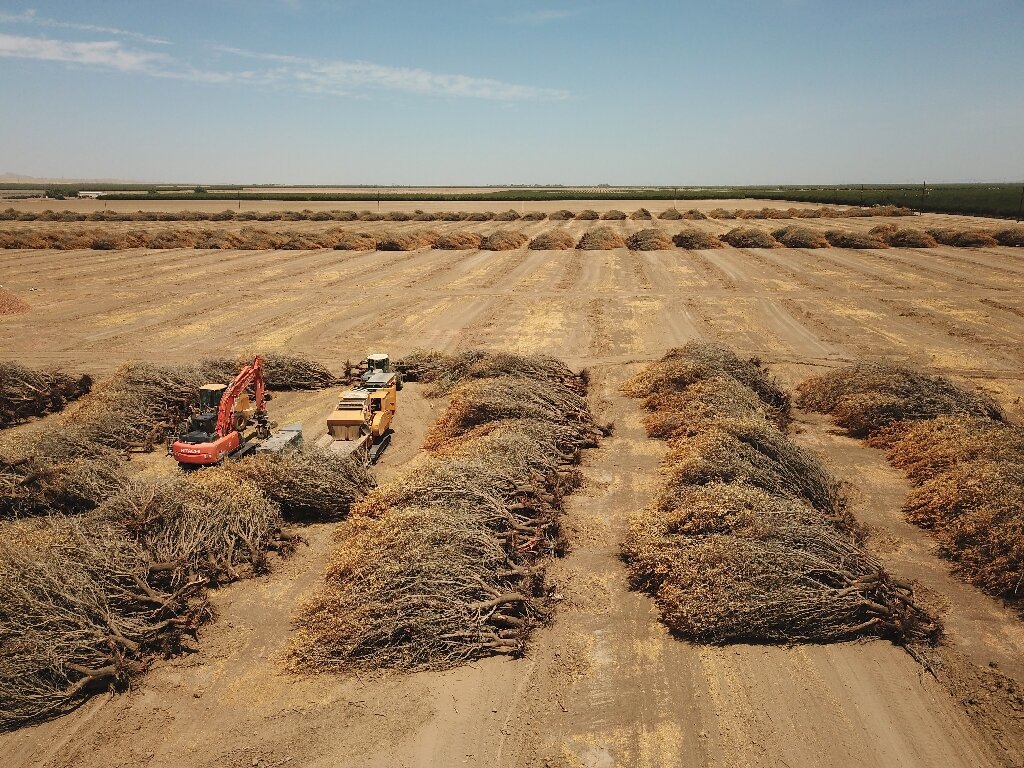
California's Central Valley produces 80% of the world's almonds. Each almond requires 3.2 gallons of actual irrigation water to grow. Not rainfall. Actual tap water pumped from aquifers.
One gallon of almond milk requires 162 gallons of irrigation water. Compare that to dairy milk at 8 gallons of tap water per gallon, with the rest being rainfall that falls on pasture anyway.
But here's where it gets properly grim. Almonds bloom for exactly three weeks in February. During those three weeks, California needs every pollinating bee in North America transported to the Central Valley or the crop fails entirely.
Commercial beekeepers truck in 31 billion honeybees. That's two-thirds of America's entire managed bee population, all concentrated in one valley for three weeks. The bees are packed into trucks, driven across the country, dumped into almond groves drenched in pesticides, worked to exhaustion, then packed up and shipped to the next crop.
The mortality rate is catastrophic. Beekeepers report losing 30 to 50% of their hives annually. That's billions of bees dead. Not from natural causes. From being used as disposable pollination machines for your almond milk.
The pesticides don't help. Almond groves are sprayed with neonicotinoids which scramble bee navigation systems, fungicides which weaken their immune systems, and herbicides which eliminate the wildflowers they'd normally forage on between almond blooms.
Meanwhile the aquifer depletion is permanent. The Central Valley has sunk 28 feet in some areas from groundwater extraction. That water took 10,000 years to accumulate. It's being drained in decades for almond milk.
Your vegan latte killed more bees and used more water than a year's worth of dairy milk. But it's got "plant-based" on the label so you're definitely saving the planet.
Never a dull moment in Multicultistan Europa!
Kijk toch eens wat een prachtige premoderne verrijking we toch hebben geïmporteerd: een Afghaans asiel-echtpaar dat een jongen met een bijl vermoordt - in koelen bloede, in het bijzijn van hun eigen kinderen - omdat hij via een videogame iets grofs zei tegen hun zoon. Dit is een vorm van eerwraak binnen een niet-westerse, middeleeuwse schaamtecultuur.
De precieze aanleiding: de 13-jarige zoon kreeg online een belediging naar zijn hoofd: “Ik neuk je in je reet.” Die woorden, hoorbaar via de luidspreker in huis, raakten de familie-eer. In plaats van hun kind te leren om hiermee adequaat om te gaan of om de scheldpartij gewoon te relativeren, besloten de ouders dat er bloed moest vloeien. Letterlijk.
Wat volgde was een zorgvuldig geplande gruwelmoord. De moeder deed alsof haar man in Afghanistan zat en zocht toenadering tot het slachtoffer, zelf een jonge Afghaanse vluchteling zonder familie. Ze nodigde hem uit onder valse voorwendselen: een ziekenhuisbezoek met de kinderen. Het slachtoffer vertrouwde haar. Hij hielp met de kinderwagen, kocht snoep, was vriendelijk. Intussen werd hij heimelijk gevolgd door de vader en de zoon.
’s Nachts lokte de moeder hem naar het bos. Daar trok zij zich terug in de struiken. De zoon gaf zijn vader een lichtsignaal. En daarna sloeg de vader toe, met zijn bijl. Het slachtoffer overleed aan open hersenletsel. Zijn gezicht was onherkenbaar verminkt.
Daarna liep het gezin gezamenlijk terug naar hun opvanglocatie. De vader nam een douche, zoals altijd. De moeder verklaarde: “We waren moe van het nachtelijke uitstapje.” Tot op heden neemt het echtpaar geen énkele verantwoordelijkheid voor hun daad, integendeel.
Dit is dus waar het misgaat. Deze primitieve mentaliteit is niet te integreren in een moderne democratische rechtsstaat. In onze samenleving wordt recht gesproken via onafhankelijke instituties en de wet, niet met bijlen. In onze cultuur geldt individuele schuld en is gewetensontwikkeling de norm. Deze achterlijke freakshow gaat dus niet over armoede of trauma, maar over een onoverbrugbare culturele en religieuze kloof.
We hebben deze nachtmerrie binnengehaald, gehuisvest, gesubsidieerd en bedekt met dikke lagen cultuurrelativisme. Met alle gevolgen van dien. En nog steeds weigert de politiek het beest bij de naam te noemen. Het is tijd om te erkennen: deze fout moet hersteld worden. Structureel. In het belang van onze rechtsstaat, onze beschaving én van de volgende onschuldige die het misschien niet overleeft. 1/2
@lkwarts@BumblebeeJoe@YouTube Ik heb het boek bijna uit. Wat mij betreft een aanrader. Van sommige onderwerpen weet ik het e.e.a omdat dat ik daar ook zelf ingedoken ben. Ik denk dat op hoofdlijnen de strekking klopt en het boek een goed beeld geeft hoe de wereld in elkaar steekt.