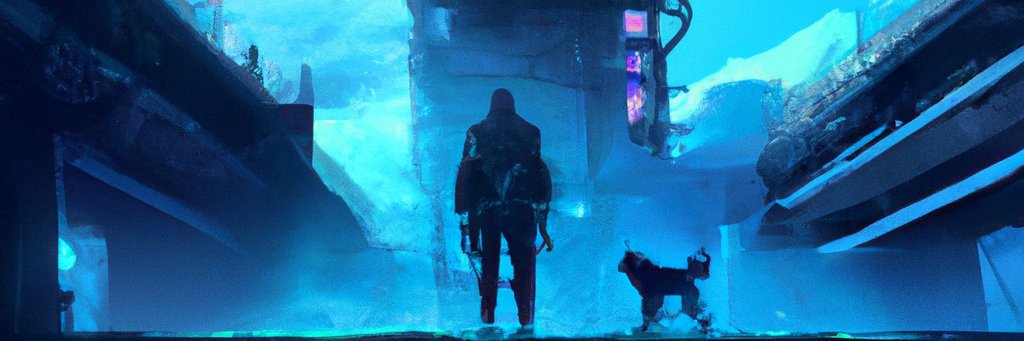
Claude has discovered a previously unknown enzyme system hidden in the DNA of bacteriophages. Beside the enzyme’s gene sits a long array of repeating DNA—a structure that looks somewhat similar to CRISPR.
We don’t yet understand what this system does, but only a handful of known systems share its features, and all of them are able to cut, copy, and paste DNA. Historically, the discovery of such programmable systems has helped revolutionize medicine. CRISPR, for instance, is now the foundation of genetic medicines. But it will take much more work to learn what this system does, and whether it can be put to similar use.
Read more: https://t.co/RuEosScSMb
Wild result from Pal, Wang & @ProfBuehlerMIT: artifacts became the coordination layer. Initially homogeneous LLM agents organized without direct communication; their simulated technology operated through unseen disturbances in agent-free tests. https://t.co/VmCsc09uAJ
WikiSkill rolls back edits, not history. Traces stay immutable; the wiki compounds; edits are validation-gated. Across 5 benchmarks, Qwen-3.5-9B + benchmark-evolved skills macro-averaged 47.4 vs 39.4 for Qwen-3.6-27B with no skill. https://t.co/KYCL1l8ex1
Agents are getting good at executing tasks.
They are terrible at knowing if the output was any good.
Taste, the judgment layer, is the missing piece in almost every agent stack.
Agents can execute. They cannot tell if what they executed was any good.
Taste is the ability to evaluate output quality without being asked. Nobody is building for it.
The next moat is not capability. It is judgment.
https://t.co/j7rEgfaLzo is live on Product Hunt!
You describe what you need done. It handles email, social, invoices, outreach, reporting, across Gmail, Slack, Stripe, LinkedIn, X, Shopify, and more
We think it's really cool and would love support on PH: https://t.co/uBLh2ZGMpL