Introducing Claude Opus 4.7, our most capable Opus model yet.
It handles long-running tasks with more rigor, follows instructions more precisely, and verifies its own outputs before reporting back.
You can hand off your hardest work with less supervision.
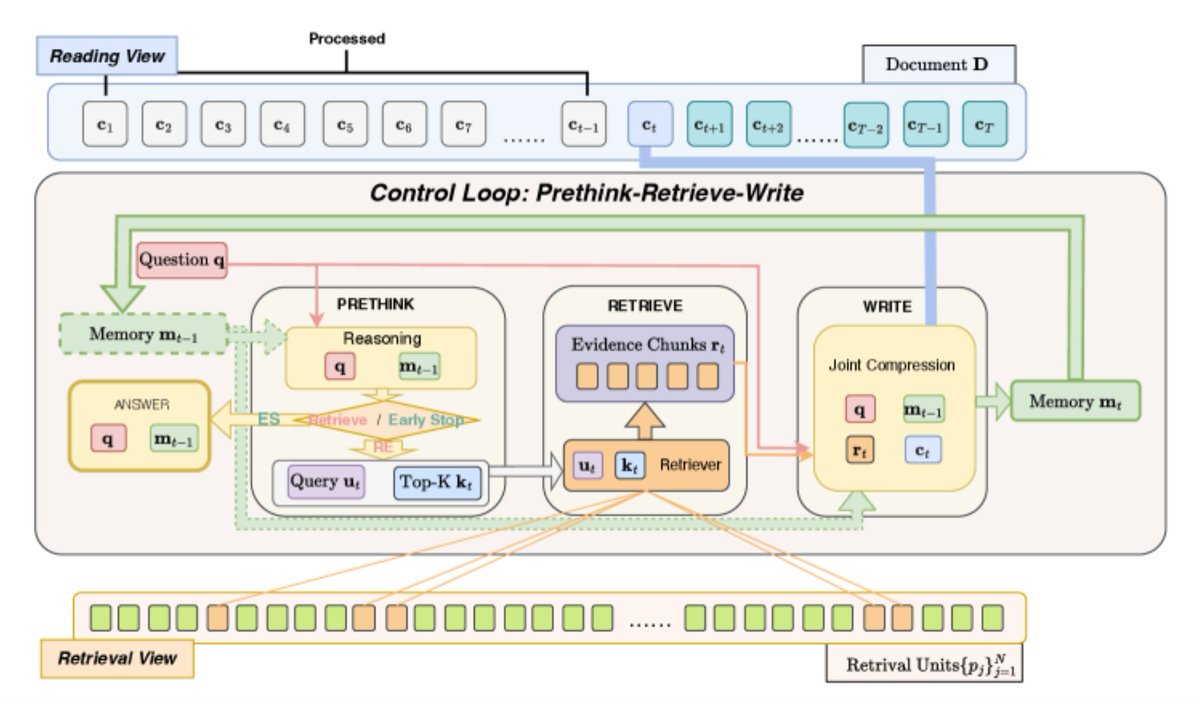
Agent Primitives: Reusable Latent Building Blocks for Multi-Agent Systems
Abstract:
While existing multi-agent systems (MAS) can handle complex problems by enabling collaboration among multiple agents, they are often highly task-specific, relying.......
https://t.co/nK2HvG3J5q
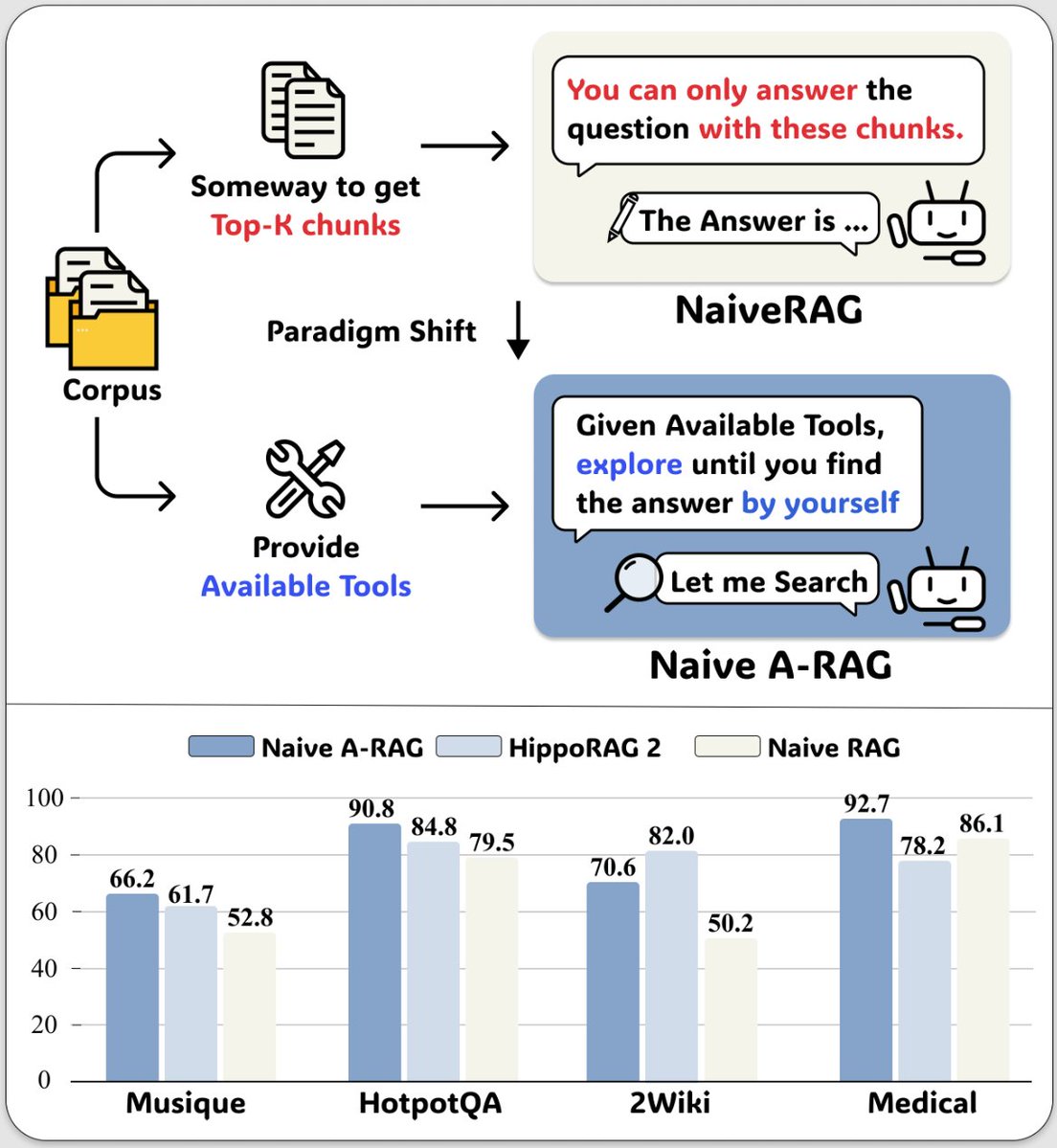
A-RAG: Scaling Agentic Retrieval-Augmented Generation via Hierarchical Retrieval Interfaces
Abstract:
Frontier language models have demonstrated strong reasoning and long-horizon tool-use capabilities. However, existing RAG systems fail to leverage.....
https://t.co/IUkXD9Nm6l
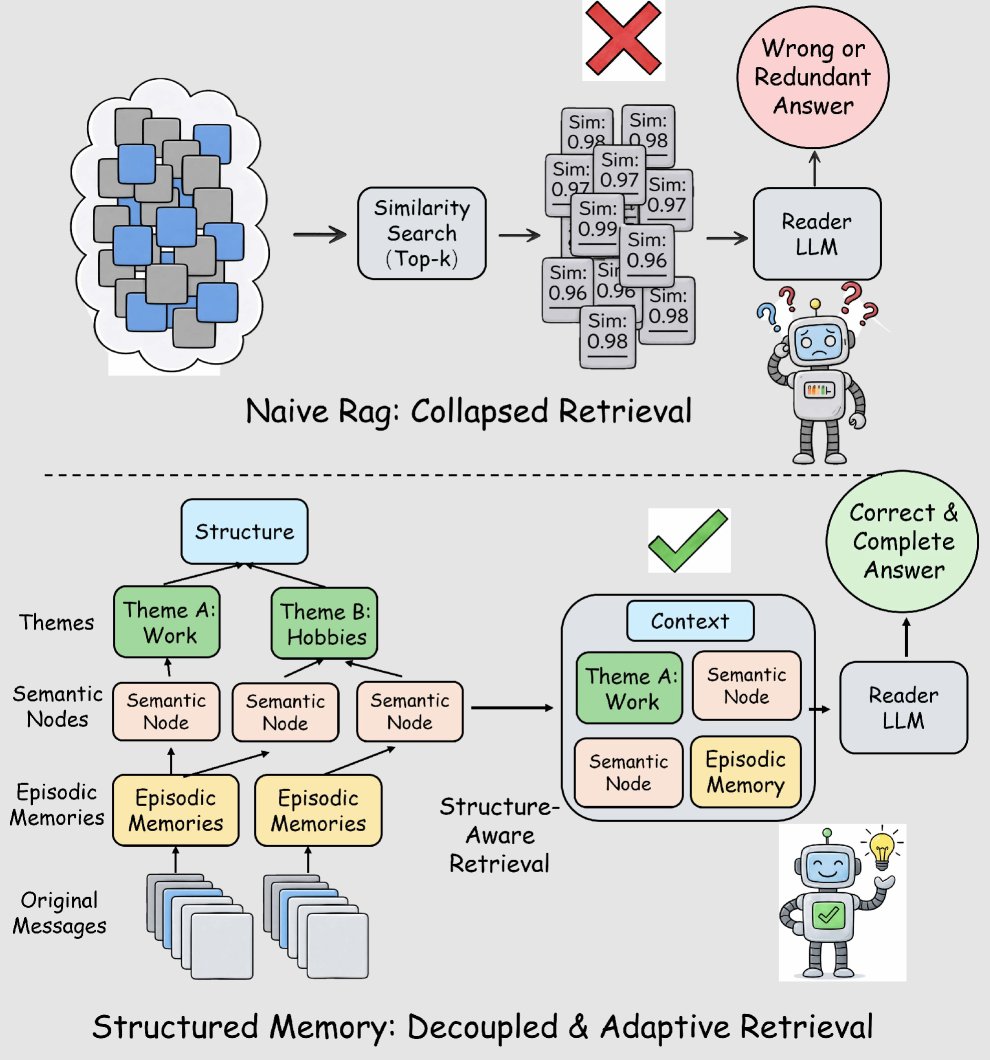
Beyond RAG for Agent Memory: Retrieval by Decoupling and Aggregation
Abstract
Agent memory systems often adopt the standard Retrieval-Augmented Generation (RAG) pipeline, yet its underlying assumptions differ in this setting. RAG targets large.........
https://t.co/4wn5zqn2Oe
Scaling Multiagent Systems with Process Rewards
Abstract:
While multiagent systems have shown promise for tackling complex tasks via specialization, finetuning multiple agents simultaneously faces two key challenges..............
https://t.co/qx66Wa7LkU
Building a C compiler with a team of parallel Claudes
We (Anthropic) tasked Opus 4.6 using agent teams to build a C Compiler, and then (mostly) walked away. Here's what it taught us about the future of autonomous software development.
https://t.co/I3UdezGKwr
Introducing Claude Opus 4.6. Our smartest model got an upgrade.
Opus 4.6 plans more carefully, sustains agentic tasks for longer, operates reliably in massive codebases, and catches its own mistakes.
It’s also our first Opus-class model with 1M token context in beta.
Kling 3.0 is here!
And it comes with two game-changing updates:
Kling 3.0 and Omni 3.0
Features:
- 3-15s with multi-shot sequences
- Native audio with multiple characters
- Upload/record video character as reference + consistent voices
Available now on @higgsfield_ai
Anthropic just took a big swipe at OpenAI's decision to put ads in ChatGPT. Anthropic is airing ads mocking ChatGPT ads during the Super Bowl, and they're hilarious 😅 Anthropic is also committing to no ads in Claude https://t.co/LR1v4xz9ds
Remapping and navigation of an embedding space via error minimization: a fundamental organizational principle of cognition in natural and artificial systems
Abstract:
The emerging field of diverse intelligence seeks an integrated view of problem solving
https://t.co/NsWGP2WAik
Terminal-Bench: Benchmarking Agents on Hard, Realistic Tasks in Command Line Interfaces
Abstract:
AI agents may soon become capable of autonomously completing valuable, long-horizon tasks in diverse domains. Current benchmarks either do not measure......
https://t.co/fpE1qosaIv
Agentic Reasoning for Large Language Models
Abstract:
Reasoning is a fundamental cognitive process underlying inference, problem-solving, and decision-making. While large language models (LLMs) demonstrate strong reasoning capabilities in closed-world...
https://t.co/tRPsY454dA
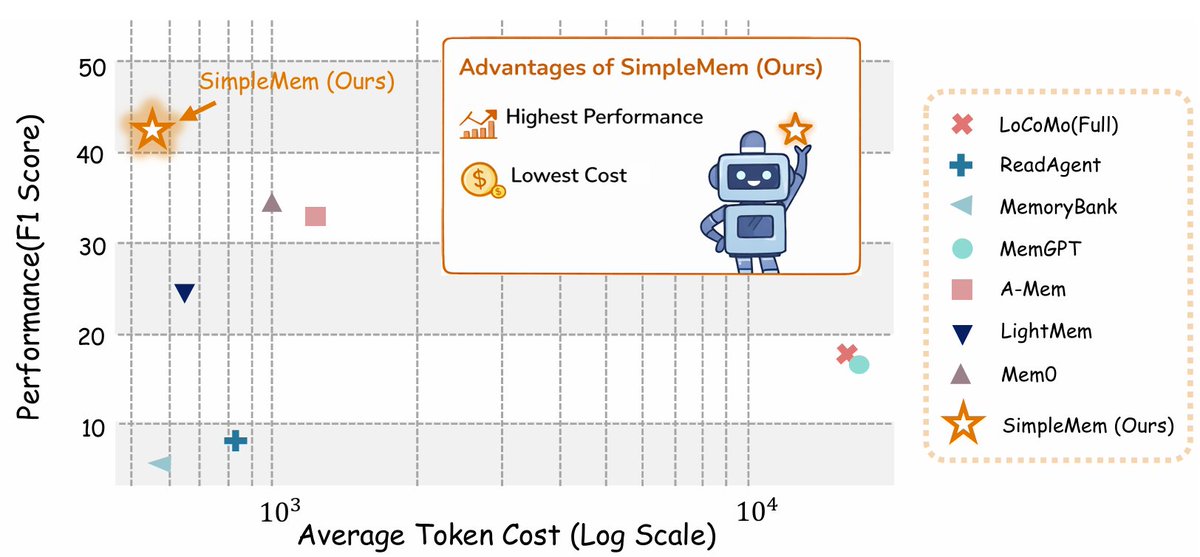
SimpleMem: Efficient Lifelong Memory for LLM Agents
Abstract:
To support reliable long-term interaction in complex environments, LLM agents require memory systems that efficiently manage historical experiences. Existing approaches either retain full....
https://t.co/oCLMa61ZoA
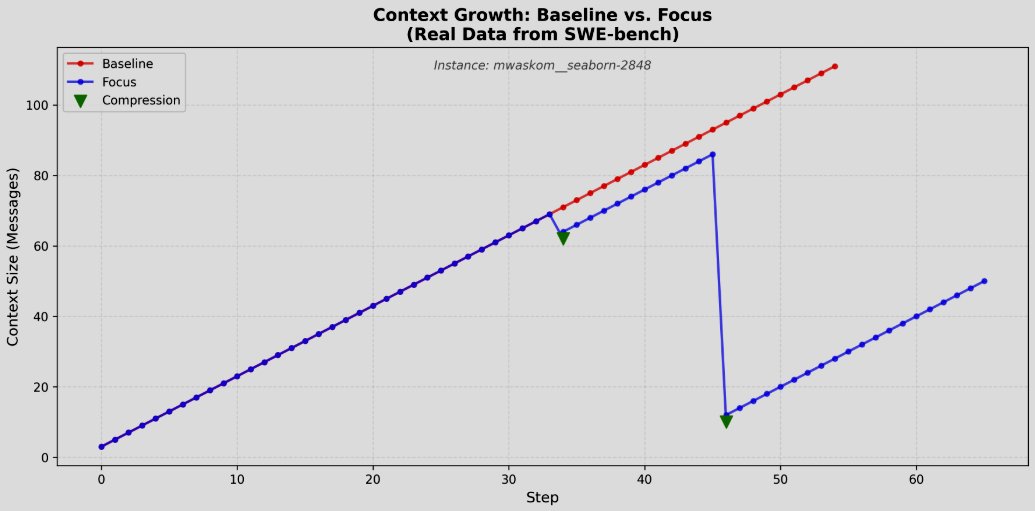
Active Context Compression: Autonomous Memory Management in LLM Agents
Abstract:
Large Language Model (LLM) agents struggle with long-horizon software engineering tasks due to “Context Bloat.” As interaction history grows, computational costs explode...
https://t.co/lHlbUU6qZ2