people still frame prediction markets as a betting product. that misses the bigger thing.
what they're becoming is a new asset class. and asset classes need infrastructure, not apps.
arc is the infrastructure.
Quantum computing introduces long-term risk for digital infrastructure, from wallet signatures to validator integrity and more.
Circle’s post-quantum whitepaper explores Arc’s phased approach to resilience across:
→ USDC
→ Smart contracts
→ Validators
→ Infrastructure systems
Planning for long-term security and institutional adoption.
https://t.co/Kt8d1aPIKz
Grateful to win the @xStocks Hackathon by @krakenfx with @0xdivergence @0xscanty
We built xPrime, a prime brokerage for onchain equities.
Here's some learnings about the potential and mechanics of tokenized equities:
1. Equities are the biggest pool of idle capital in the world. ~$100T in equities, ~$40T in retail brokers sits in spot. In an AI world where value is accruing to equity vs labor, most are structurally underexposed. Services like stock loans & structured products that let users do more with their assets are inaccessible & costly.
2. Tokenized equities enable financial offerings (earn, borrow, trade, spend) on parity to traditional finance, but accessible globally to anyone with internet.
3. Programmability and composability create net new financial surface area. Traditional brokerages are walled gardens. DeFi strategies between markets for spot <> structured vaults <> lending <> perpetuals <> options <> neobanks for RWAs is the new frontier.
4. There's no free lunch. Onchain financial system for equities is not without intermediaries & counterparties. Risk is being shifted to asset issuers, tokenization platforms, KYC'd mint/redeemers, permissioned RFQs...
5. DeFi infrastructure needs to adapt. There's no (and likely not going to be) deep 24/7 onchain liquidity for tokenized assets. Swaps are currently done via KYC'd non-atomic mint/redeem, or atomic RFQ like Cowswap with variable spreads especially after hours. This creates problems liquidating loans & rebalancing vaults. Solving this with T+1 & clearing houses will enable literally trillions of collateral to come onchain unconstrained by DEX liquidity. More collateral -> more demand to borrow -> more yield for lenders -> onchain economic expansion!
Thank you to the hackathon hosts, fellow participants, and sponsors for the great experience. We'll be building more!
Circle Wrapped Bitcoin is coming.
Backed 1:1 by BTC and readily verifiable onchain, cirBTC is being built to work seamlessly with Circle infrastructure and the broader DeFi ecosystem.
Learn more: https://t.co/wWzVBZdIz1
We just launched Circle Nanopayments on testnet, and I want to explain the core problem this solves.
Let’s say you want to charge $0.01 for an API call, especially for agentic use cases.
That seems completely reasonable.
But the gas fee to process that payment costs $0.005. You just lost half your revenue to infrastructure.
Now imagine you want to charge $0.001 per request. The gas fee is still $0.005.
You are now losing money on every single transaction.
The payment literally costs more than the service itself. This is why pay-per-use models have not worked at scale. The infrastructure economics prevent it from working.
The most natural way to price digital services is by usage.
- Pay per API call.
- Pay per computation.
- Pay per data query.
These models are what power agentic commerce, where developers and AI agents need a financial rail built for high-frequency, high-volume payments.
Nanopayments solves this through batched settlement.
Instead of paying gas for every transaction, Circle’s Gateway aggregates thousands of payments and settles them together in a single onchain transaction.
The gas cost is distributed across all of those payments.
Here is the result:
- 1,000 payments that would normally cost $10 in gas fees now cost $0.01 total.
- That brings the cost down to $0.00001 per payment instead of $0.01.
Gas is no longer the limiting factor.
The way it works is straightforward.
You deposit USDC into a Gateway Wallet contract once. That is the only time you pay gas.
After that, every payment is just a cryptographic signature. You sign a message authorizing the transfer, but nothing is immediately broadcast to the blockchain.
The signature is verified instantly, you receive access to the service, and Gateway batches your payment with thousands of others for settlement later.
From a developer perspective, you make a request, the server responds with payment details, you sign the authorization, and you immediately receive the resource.
The entire interaction happens in milliseconds. There is no need to wait for block confirmations, and there are no individual gas payments for each request.
What this enables is true usage-based pricing.
- You can charge $0.001 per API call and maintain margin.
- You can implement pay-per-token pricing for AI inference.
- You can charge per second for streaming services.
Pricing models that were economically impractical because of gas costs now become viable.
This is particularly important for AI agents that need to autonomously pay for services.
An agent cannot operate if every $0.01 payment carries $0.005 in overhead.
When payments cost $0.00001 in overhead, the economics make sense.
Agents can pay for compute, for data, and for API access, enabling an autonomous agent economy.
We are live on testnet today.
Developers can start building with gas-free USDC transfers down to $0.000001.
This is what makes usage-based pricing viable.
https://t.co/H1QRs6omSC
Reach out to me if you need help building with this.
We're at an inflection point.
The internet is evolving from moving information to moving value.
Blockchain, stablecoins, and AI aren't separate trends — they're converging into something much bigger: a reimagined global economic system, built natively on the internet.
We are entering a world where, in my view, tens or even hundreds of billions of AI agents will interact and perform economic functions over the internet.
They'll need programmable digital dollars and open infrastructure to do it. That's exactly what we've been building at Circle.
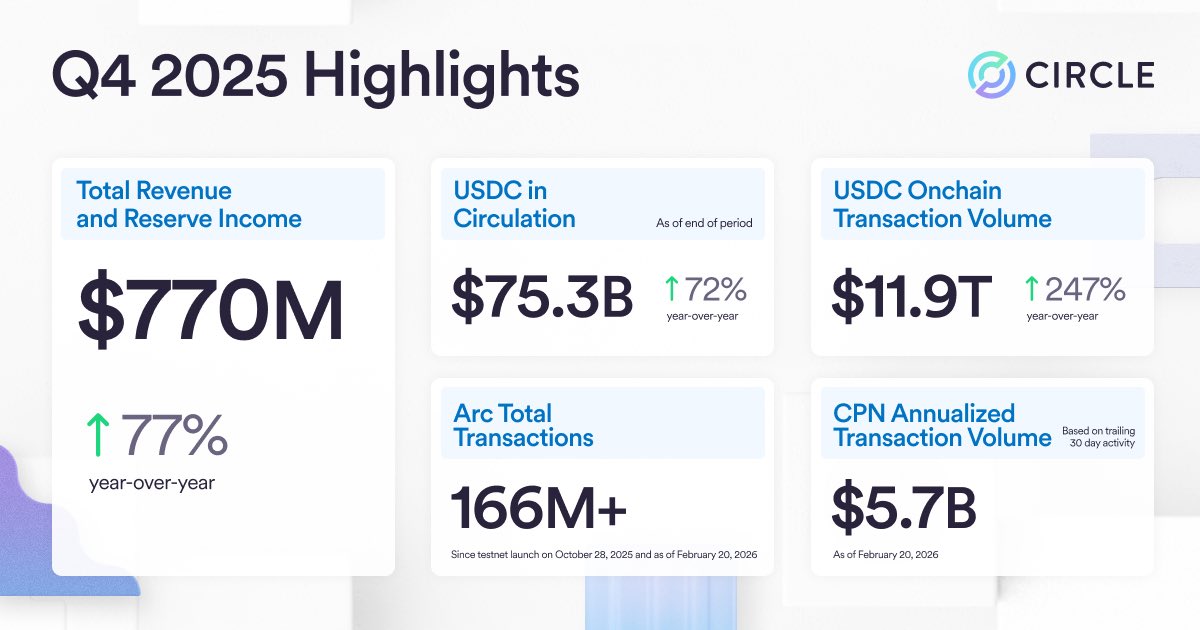
Circle’s Q4 showed this isn't just a vision anymore — it's happening. USDC expansion continued, our share of stablecoin transaction volume approached 50%, and our broader platform expanded well beyond issuance into the infrastructure layer of onchain finance. Arc. CCTP. Circle Payments Network. StableFX. Each one a building block for what comes next.
The opportunity ahead has never been greater. And we're just getting started.
Full results at https://t.co/kG1VoCbj8F
Circle 🤝 @openmind_agi
This is just the beginning of autonomous AI transactions onchain.
Watch Bits, OpenMind’s robot dog, use @USDC and our new agentic commerce solution to complete real machine-to-machine nanopayments to recharge itself.
In case you didn’t know, on Kraken, earning is the default.
Your USDC on Kraken is already earning, automatically.
✔️ 1.75% APR by default
✔️ No setup, no lockups
✔️ Fully tradable & withdrawable
Check it out ⤵️
https://t.co/7xl0cnOtOK
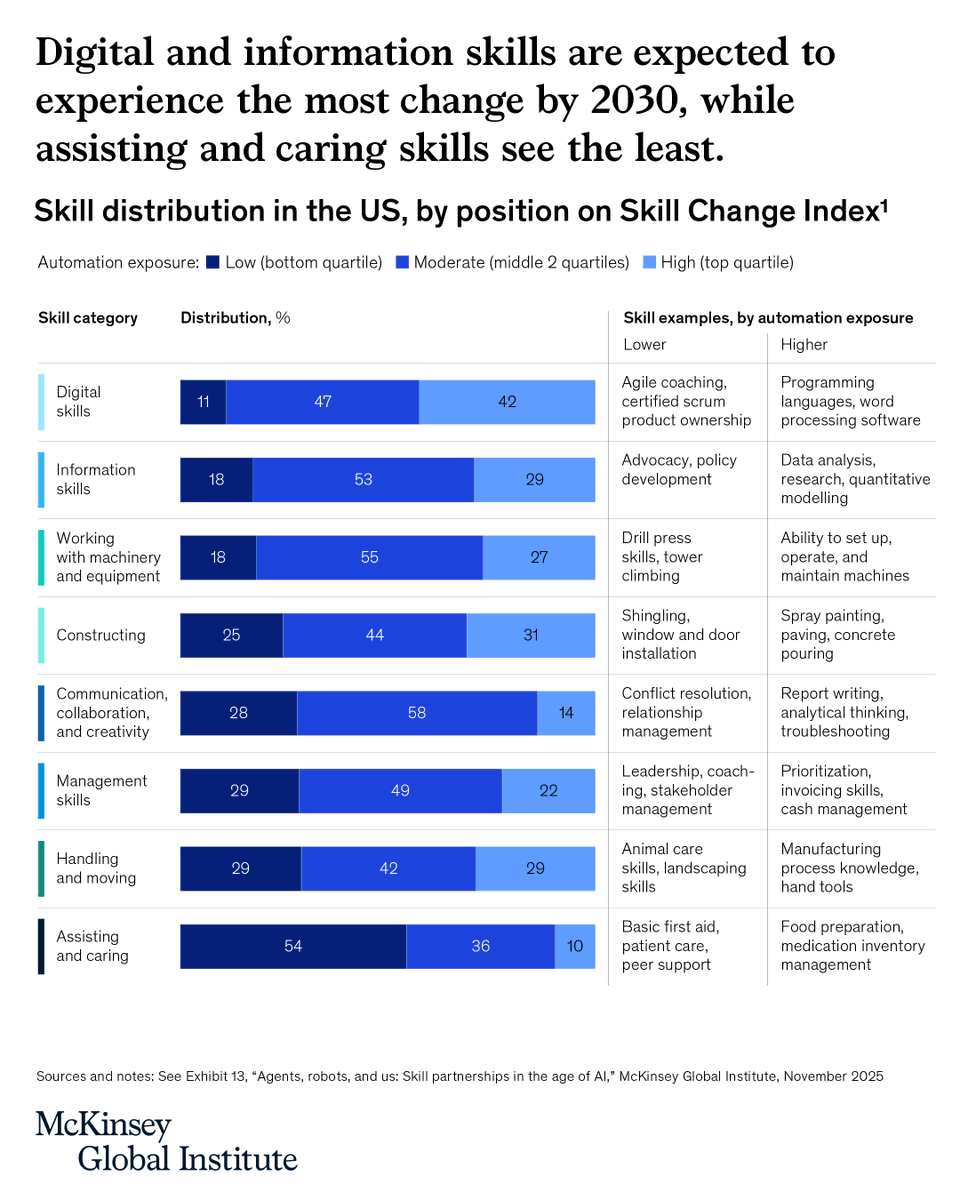
AI is reshaping skills unevenly – digital and information-processing face the fastest change, caring skills the slowest. Our Skill Change Index charts the difference: https://t.co/h1K56uPqPo
AI won’t make most human skills obsolete, but it will change how they’re used.
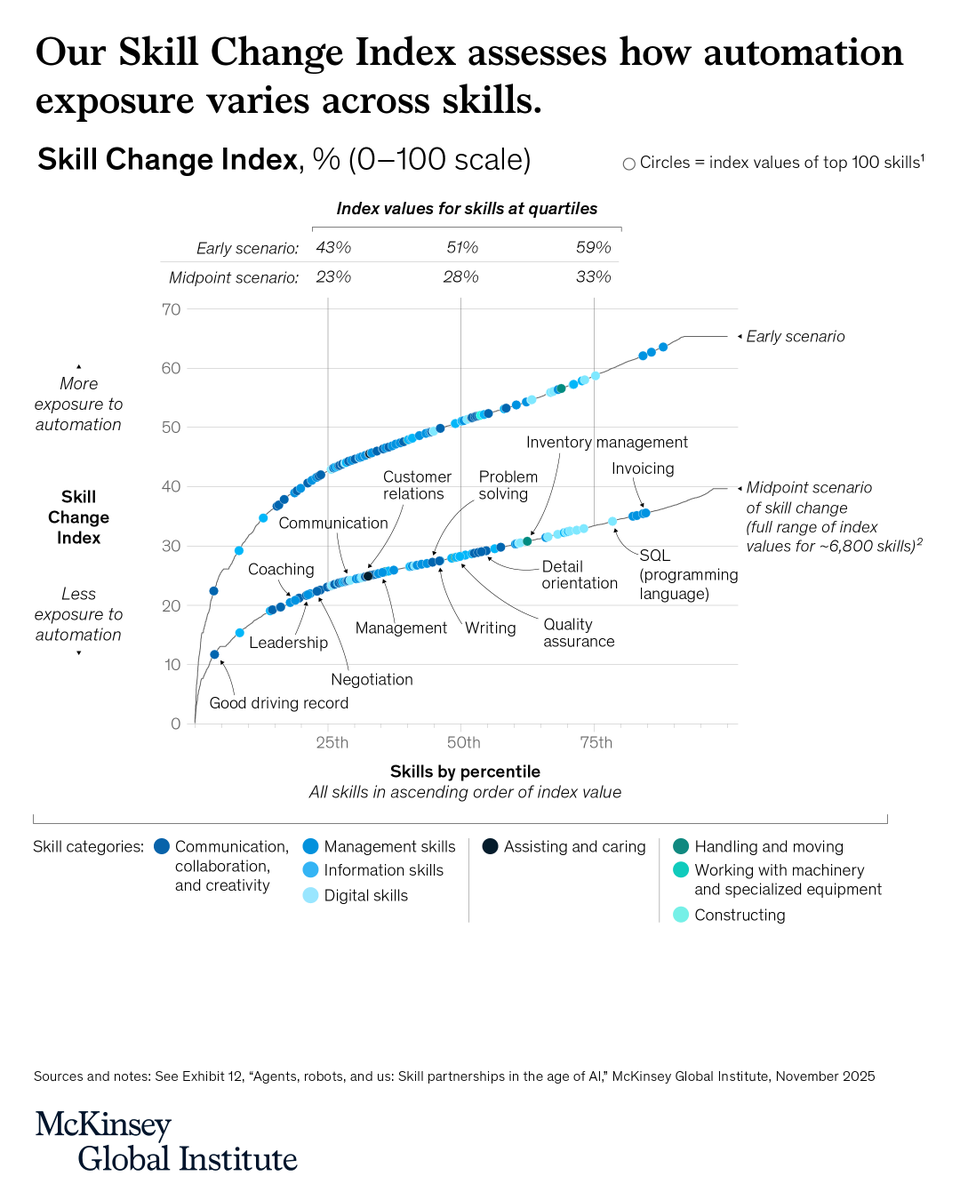
Negotiation, problem solving, and leadership will matter more than ever as people work alongside agents and robots.
Our new Skill Change Index shows which skills will be most, and least, exposed to automation in the next five years: https://t.co/fRXfHF1k56
Capital formation around @Arc
The Arc Builders Fund network includes:
500 Global
Breyer Capital
Canonical Crypto
CoinFund
CRV
Curql Fund
CV VC
DCG
Dispersion Capital
Dragonfly Capital
Electric Capital
Faction Ventures
Fin Capital
Flourish Ventures
Hack VC
Haun Ventures
Headline Asia
Infinity Ventures
IVC
Kindred Ventures
Lightspeed Venture Partners
Nyca Partners
Offline Ventures
SC Ventures
SNZ Capital
Strobe Ventures
https://t.co/zLV9CkQhBH
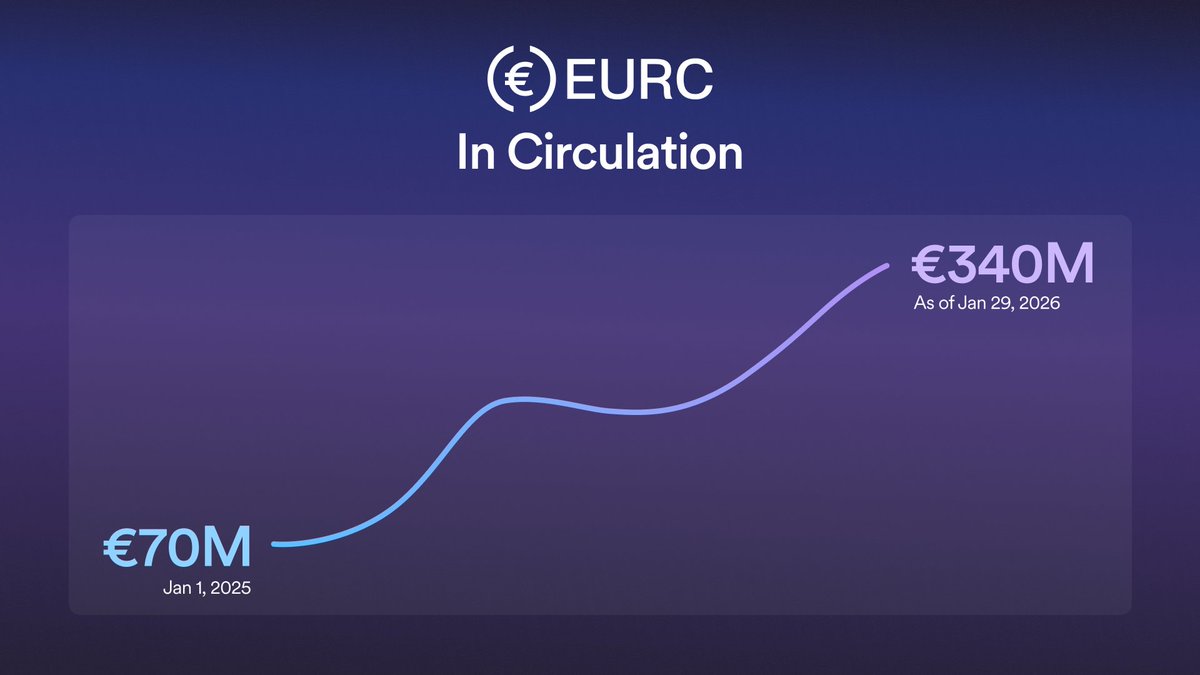
As MiCA moved toward implementation, demand for compliant euro-denominated digital assets accelerated.
EURC became a trusted way to move, hold, and settle euros onchain.
From payments to treasury flows, EURC is bringing the euro into the internet financial system.
Billy Donovan shares a lesson that changed how his players thought about winning.
At Florida, he had a manager track how long the ball was in each player's hands during a game.
He asked one of his starters: "How many minutes do you think you had the ball in your hands for the game?"
The player said 15 minutes when he had played 30.
The real numbers?
"A backcourt player, for the most part, is probably 92% of the game gonna be played without the ball in their hands. A frontcourt player - 95% of their minutes is gonna be played without the ball in their hands."
Think about that. You're playing without the ball almost the entire game.
"It's amazing to me how many players focus on points, points, points. That's what goes on ESPN. That's what gets the highlights."
"But if you're gonna strictly talk about winning and you're really driven and motivated by winning and competing and being a good teammate, you have to look at the fact is -- what am I doing with my 92, 93, 94, 95%?"
"Am I screening? Am I running the floor? Am I on the floor for loose basketballs? Am I rebounding? Am I taking a charge?"
"There's so many ways to impact the game with the amount of time you're on the floor when the ball's not in your hands."
This is what separates good players from winning players.
You control how you show up.
You control your attitude.
You control your effort.
Great teammates master what they do when no one's watching - and when the ball isn't in their hands.
Winning isn't about the glamour. It's about the 95%.
(🎥@Coaching_U )
(🎥@brendansuhr)
The Culture of Currency with @Wyclef Jean is a new docuseries we created in partnership with @timestudiosfilm.
The four-part series explores how culture, creativity, and human-centered financial innovation are reshaping communities worldwide.
Premiering later in 2026.
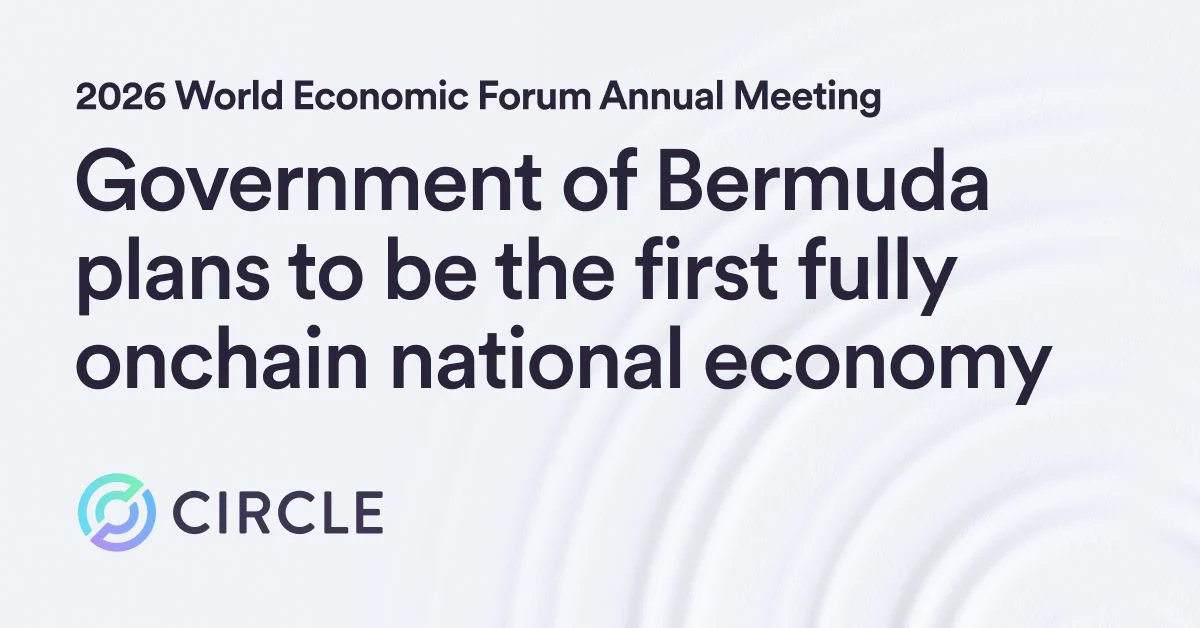
We’re working with @coinbase to support @BdaGovernment in their plans to build the world’s first fully onchain national economy.
We’re expanding access to @USDC, onchain infrastructure, and digital finance education at a national scale.
https://t.co/PYFmy9fVYh
Introducing the Arc Builders Fund
Backing teams building the next wave of real-world financial apps and services on Arc, the Economic OS for the internet.
The Arc Builders Fund provides capital, an investor network, and direct access to Arc’s core teams, helping builders go from first deployment to product-market fit faster.
Whether it’s credit, FX, payments, or agentic commerce, we’re looking for teams solving problems that demand Arc’s unique architecture:
→ Deterministic sub-second finality
→ Low, predictable stablecoin-based gas
→ Opt-in configurable privacy
Build the next era of finance with us: https://t.co/QX6ZLEfzPn
Note: For informational purposes only and not related to fundraising. “Arc Builders Fund” is a Circle Ventures corporate initiative; no fund or vehicle is being formed. Circle Ventures is not an investment adviser or broker-dealer. Investor Network members make independent decisions.
The best protocol to eliminate filler words (ummms etc.) These are otherwise very difficult to eliminate b/c they happen reflexively. Matt Abrahams on the Huberman Lab podcast out now all about how to speak clearly and with confidence.
Now this is 🔥🔥🔥
@CashApp launching stablecoin support in early 2026.
Seeing USDC payments in CashApp has been a mission for Circle for a long time!
56M Monthly Active Transacting Users
Congrats @milessuter and the whole crypto team!