Hi Nick,
I've broken this down. I kept it short, so it is a short read.
Antitrust cases turn on whether the conference has enough market power to restrain trade. Thus, as long as there isn't market dominance by the Big Ten and SEC, then they have more antitrust protection than the current system.
Bilateral MOU for cooperation on joint championship game/playoff, revenue-sharing floors/ceilings, athlete eligibility portability, and limited cross-conference scheduling. CFP LLC, W/M BB LLC, etc, for post-season. Can invite NCAA members in various sports to compete with Big Ten and SEC schools as affiliate members, such as Denver Hockey or wrestling schools.
Antitrust shield via Choh precedent for each conference sets its own internal rules (e.g., roster limits, NIL guidelines, revenue caps based on own conference revenue averages) as long as athletes retain alternatives outside the alliance. No unified cartel behavior.
Antitrust contingency with an annual legal audit. Ready to defend as two competing conferences (per Choh v. Brown market-definition logic).
This model keeps power with ADs and presidents, minimizes bureaucracy compared to the NCAA, leverages Choh for legal breathing room, and builds directly on the self-governance conversations already happening in 2026. It’s not a full professional league, it’s still “college” in branding and academics, but it’s a professionalized governance layer that finally matches the money and realities of modern B1G/SEC athletics.
It assumes the Big Ten and SEC leave NCAA while maintaining separate conference identities to minimize antitrust risk. No single “super-league” cartel, but a bilateral alliance via memorandum of understanding (MOU) for select shared functions. The structure stays school-controlled and media-influenced but not media-run.
And for the record, there is nothing stoping a conference like the Big East from "joining" with the Big Ten and SEC, as an example. Or even the creation of a 3rd power conference that stips away schools from the ACC and Big 12.
Obviously if the Cantwell and Cruz bill passed, then things will depend on what is inside the bill for what still needs to get done at the conference level.
Top of the seventh, and the entire stadium rose at once.
Forty thousand people stood as a single body. No command given. No signal I could see. I had been watching a game. Now I was watching a nation stand up for something, and I did not yet know what.
I stood faster than all of them. Whatever was coming, I would not be the last man on his feet.
Then they sang. About peanuts. About not caring if they ever came back. A hymn of total devotion, sung by a people who had clearly decided this ground was worth defending. I did not know the words. I sang the shape of them. Loudly.
(I am told I was a full beat behind for the entire song. I was not behind. I was holding the rear.)
The song ended. Everyone sat.
I did not.
A man does not stand for a thing and then sit back down forty seconds later as though it never mattered. I had risen. The matter was not settled. So I held my post, scanning the field, guarding a lead that was — I will be honest — not even ours.
"Down in front!" a man called.
"I am watching," I said, "for all of us."
"Buddy, you're blocking the whole row."
He was right. I was failing the very people I had stood to protect. There is no honor in shielding a man from the thing he came to see. I sat. It was the hardest retreat of my life.
The cheapest seat in the house still buys you the right to stand when your heart says stand. The trick is knowing when your heart is just showing off.
They won, by the way. I like to think the standing helped.
So tell me, America — forty thousand strangers stood up together for a song about snacks, and not one of them was embarrassed. I have never felt more at home anywhere. What is that? What did I just feel?
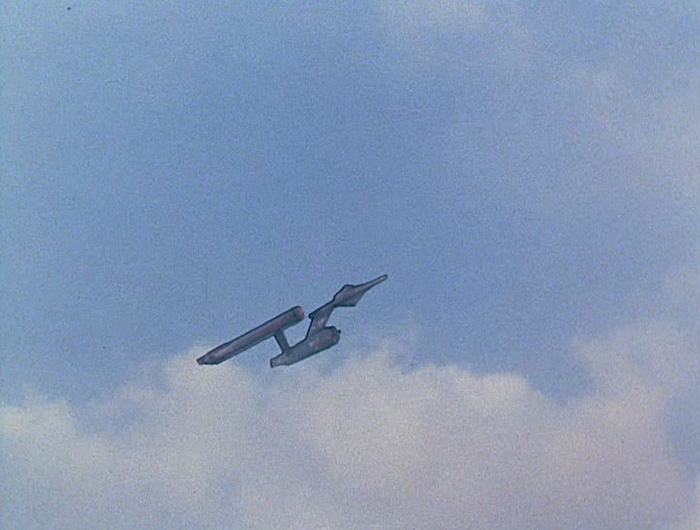
On this day in 1982, Star Trek II: The Wrath of Khan hit theaters and instantly became the greatest Star Trek movie ever made.
Ricardo Montalbán’s Khan was the perfect villain against @WilliamShatner as Admiral James T. Kirk, the Genesis Device raised the stakes, and Spock’s sacrifice… well, we’re still not over it. Too soon!
DID YOU SPOT IT? In Kirk’s apartment, right there in the background, sits a beautiful Silver Commodore PET computer — a perfect slice of 70s/80s tech in the 23rd century. (Kirk collected 20th Century artifacts)
June 2017 Admiral Kirk's silver Commodore PET was sold for $6,000. What an incredible piece of Commodore / Star Trek history this computer is.
Happy 44th anniversary to one of the most rewatchable sci-fi films of all time! Who’s watching the movie tonight as well?
In 2019, I wrote an article called “Just about every nation has secret missile platforms hidden in shipping containers,” but at the time, I was being a little hyperbolic about the emergence of systems like Russia’s Club-K.
But these days, the hyperbole is definitely gone.
🚨 SPACEX JUST GOT FAA APPROVAL TO TEST ITS NEW “STARFALL” CAPSULES.
These are not regular reentry vehicles.
SpaceX’s new circular Starfall capsules are designed to bring up to 1,000 kg of payload back from orbit safely, repeatedly, and at scale.
They can launch on either Falcon 9 or Starship, perform in-space manufacturing, then reenter and splash down in the Pacific for rapid recovery.
Why this matters:
• Enables true commercial in-space manufacturing (microgravity + vacuum) that can be returned to Earth
• Could become a “proliferated successor” to the ISS for self-sustaining space industry
• Opens the door to rapid point-to-point cargo delivery from orbit to anywhere on Earth
• Directly competes with companies like Varda that have been flying similar missions on SpaceX rockets
The deeper implication is massive:
We are moving from “occasional experiments in space” to routine manufacturing and logistics in orbit.
If Starfall works at scale, companies could build factories in space, produce high-value materials that can’t be made on Earth, and ship them back down regularly all without needing a full space station.
This is one of the clearest steps yet toward a real, self-sustaining commercial space economy.
What do you think will in-space manufacturing finally become a serious industry, or is this still too early?
Follow for more frontier space and future technology.
No spoiler comment.
If they had wrapped up the Moff Gideon storyline in a movie instead of the series it would have been the biggest/best Star Wars movie since the ROTJ @themandalorian
Roster payroll (direct revenue sharing) is the next major trigger event for a major splintering event within college athletics
Federal court approval of the billions of dollars for the House Settlement allows Division I schools to directly share athletic revenue with athletes. This professionalizes compensation at the elite level and is the catalyst for splintering because mainly only Power 2/elite programs can sustainably meet the full payroll cap, attract and retain top talent via massive payments, and compete at the highest level.
The result is an inevitable structural break among the poor D1 universities and the rich D1 universities.
This type of major event in college athletics is nothing new. Remember history.
1852: Harvard vs. Yale rowing race becomes the first intercollegiate athletic competition, shifting college sports from purely intramural/student-led activities to organized inter-school rivalries and establishing the competitive model that defined American college athletics
1869: Rutgers vs. Princeton football game marks the birth of intercollegiate football
1895–1896: Formation of the Western Conference (predecessor to the Big Ten)
1905–1906: Football’s deadly season (18 deaths, 159 serious injuries) triggers a national crisis; President Theodore Roosevelt intervened with White House summits, resulting in the creation of the Intercollegiate Athletic Association of the United States (IAAUS) in 1906
1951–1952: Walter Byers named NCAA executive director; the Association seizes control of live football telecasts and establishes a national office with enforcement powers
1972: Passage of Title IX
1973 & 1978: NCAA membership divided into Divisions I, II, and III (1973), followed by football subdivisions (I-A/FBS and I-AA/FCS in 1978)
1984: U.S. Supreme Court ruling in NCAA v. Board of Regents
2021: NCAA Alston Supreme Court
@RobertMSterling About 5 months ago I had a flight from Wichita to Atlanta get delayed and had a similar experience with a pilot coming out and addressing passengers at the gate. The gesture well received.
China pressures Iran into opening the strait and Trump pulls back on Taiwan? Is that the deal?
Access to CHIPS is a bigger threat to our national security than anything going on in the Middle East folks.
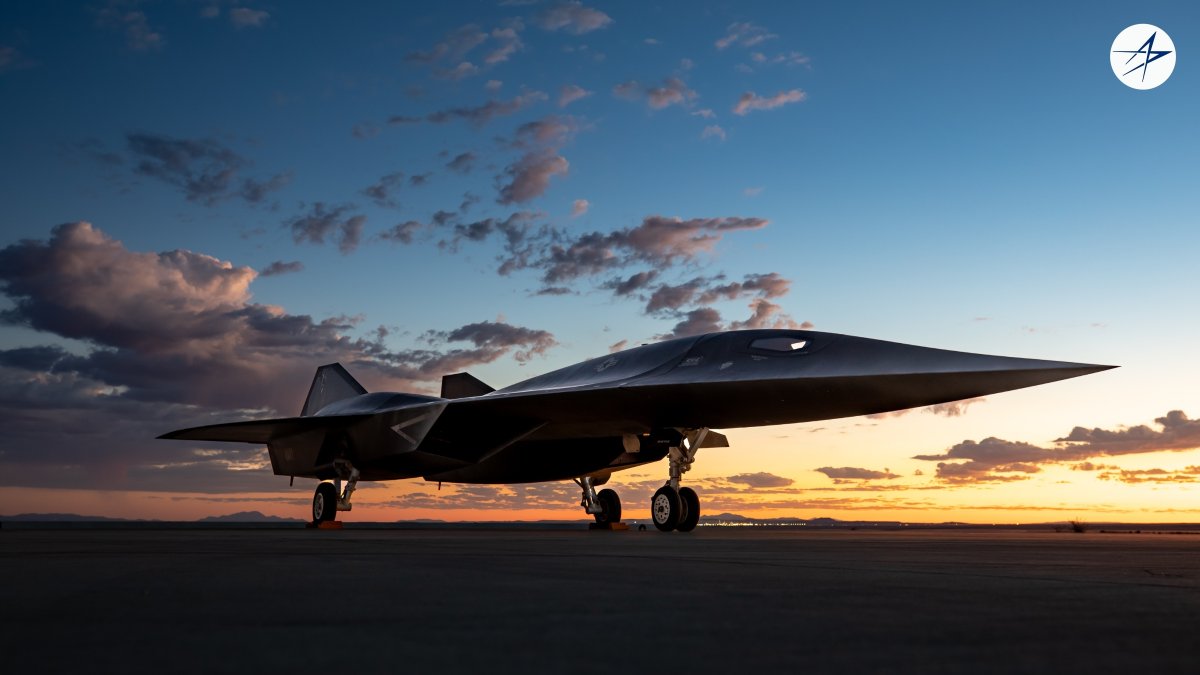
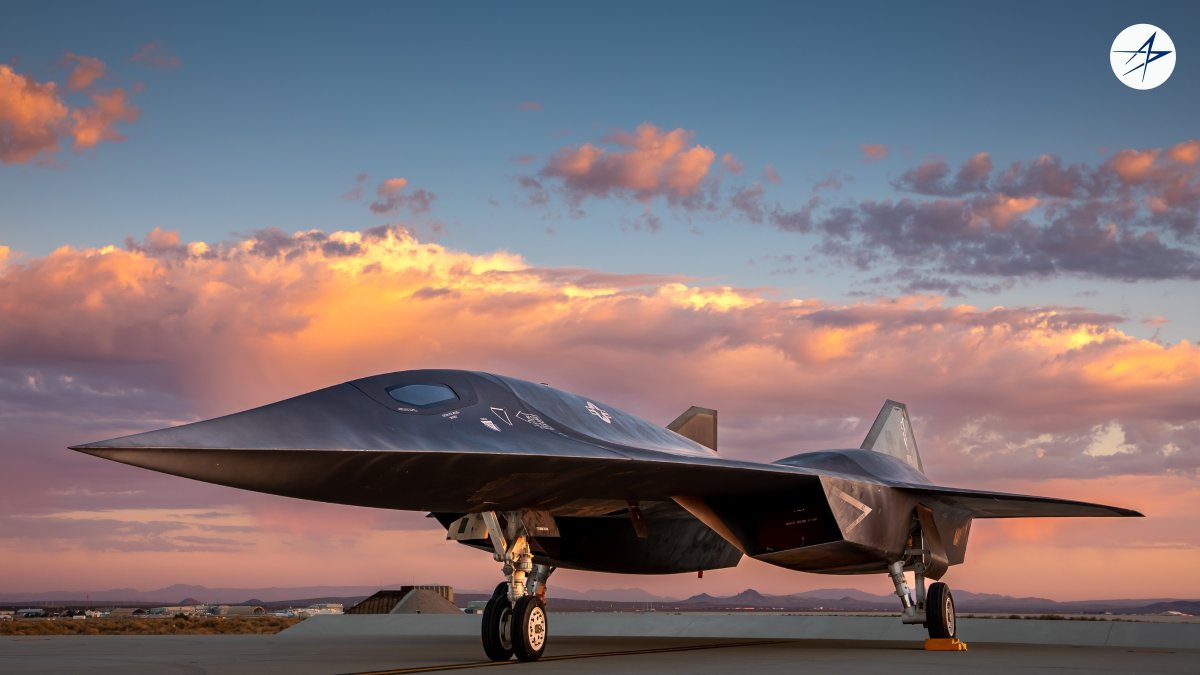
It's #NationalTopGunDay! Check out a few of our favorite shots. 📸🦨
Darkstar may live on the big screen, but the mindset behind it has always been real. Skunk Works® was built on impossible ideas, breakthrough technology and redefining the future.
Okay folks, this qualifies as BREAKING NEWS!
Harold “Sonny” White, the warp drive pioneer behind NASA’s EagleWorks Lab, just stepped out of stealth with Casimir Inc. to unveil MicroSPARC: the first battery free chip to harvest continuous electrical power straight from the quantum vacuum via the Casimir force.
The 5 mm × 5 mm device uses millions of custom microscale Casimir cavities fabricated on a substrate. Inside each cavity, two fixed conductive walls create a region of negative vacuum pressure (the well known Casimir effect). Stationary micropillars anchored in the middle act as antennas. Electrons from the cavity walls then quantum tunnel to the pillars because the interior is a lower energy “quieter” zone — and the probability of tunneling back is orders of magnitude lower. This one way “quantum ratchet” flow generates a measurable DC current with no external power source or moving parts.
Prototypes already fabricated at university nanofab facilities (Texas A&M AggieFab, MIT.nano) have been tested in RF-shielded, low noise chambers for weeks. The team reports outputs ranging from millivolts to volts at picoamp to microamp levels using precision electrometers and Kelvin Probe Force Microscopy. Target performance for the first commercial chip: ~1.5 V at 25 µA (≈40 µW continuous). Stacking and scaling could reach milliwatts or even watts per device.
Initial applications are ultra low power: always on IoT sensors, wearables, and medical implants. Longer term roadmap includes trickle charging phones, powering small electronics, and eventually grid independent homes or EVs. Commercialization is targeted for 2028, starting at ~$100/W before dropping toward $10/W.
White ties the work directly to his earlier theoretical paper on emergent quantization from a dynamic vacuum and sees it as a practical power source for the deep-space missions he’s long championed.
Extraordinary claims require extraordinary evidence, and independent scientists have so far declined public comment. But if the engineering scales as hoped, MicroSPARC would represent a genuine paradigm shift: continuous, maintenance free power drawn from the fabric of spacetime itself.
A bold leap from warp-drive theory into real hardware. Progress (and vacuum-powered chips) marches on.
Photo: MicroSPARC | Casimir Inc.
Source: https://t.co/11tlwNSf71
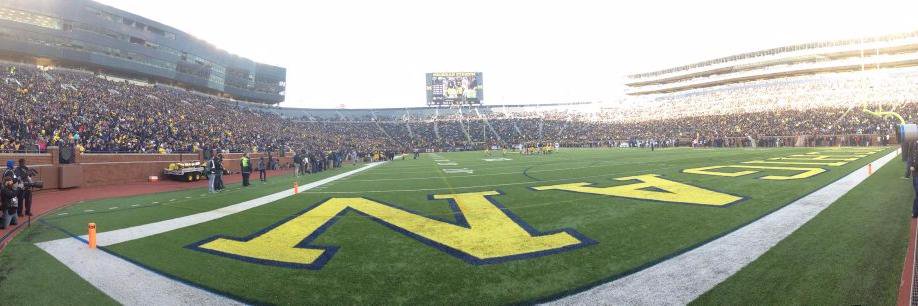
My son is in Ireland and he was golfing with two Irishmen and he told them he went to the University of Michigan and they said “is that the one that wins everything in sports?” Yes. Yes it is.
Winston Churchill fought his depression with bricks. He'd lay them for hours at his country home in Kent. He joined the bricklayers' union. And in 1921 he wrote about why it worked. It took psychology another 75 years to catch up.
He called his depression the "Black Dog." It followed him for decades. His method for fighting it back was as basic as it sounds: laying brick after brick, hour after hour.
Churchill spelled out his theory in a long essay for The Strand Magazine. People who think for a living, he wrote, can't fix a tired brain just by resting it. They have to use a different part of themselves. The part that moves the eyes and the hands. Woodworking, chemistry, bookbinding, bricklaying, painting. Anything that drags the body into a problem the mind can't solve by itself.
Modern psychology now calls this behavioral activation. It's one of the most-studied depression treatments out there. Depression sets a behavior trap. You feel bad, so you stop doing things, and doing less means less to feel good about. Feeling worse makes you do even less. The loop tightens until you can't breathe inside it.
Behavioral activation breaks the loop from the action side. You schedule the activity first, even when every part of you doesn't want to. Doing it produces small rewards: a wall gets straighter, a painting fills in, a messy room gets clean. Those small rewards slowly rewire the brain. Action comes first, and the feeling follows.
Researchers at the University of Washington put this to the test in 2006. They studied 241 adults with major depression and compared three treatments: behavioral activation, regular talk therapy, and antidepressants. For the people who were most severely depressed, behavioral activation matched the drugs. It beat the talk therapy. A 2014 review of more than 1,500 patients across 26 trials backed up the result.
Physical work like bricklaying does something extra on top of this. It crowds out rumination, the looping bad thoughts that grind people down during the worst stretches of depression. Bricklaying needs both hands and gives feedback brick by brick: each one is straight or crooked. After an hour you can see exactly how much wall you built. No room left for the mental chewing.
The line George Mack used in his post, "depression hates a moving target," is good poetry. The science behind it is sharper. Depression hates a brain that has somewhere else to be.