In a paper published today in Nature Geoscience, we show that temperature anomalies in other tropical oceans kept the trade wind strong even as the El Niño was growing.
https://t.co/Nk7eghAieY
Our new paper shows that greenhouse warming and El Nino are a simple recipe making 2023 & 2024 the hottest years in a row. With a crude RCP4.5 radiative forcing, our tropical Pacific pacemaker simulation reproduced the 2023 warming remarkable well.
https://t.co/D961hSNieV
Study by @pczhang1998, @xie_climate et al. shows that El Niño in the preceding winter has a stronger influence on the East Asian summer #monsoon than La Niña because of the asymmetry in #ENSO evolution. @Scripps_Ocean@UCSanDiego https://t.co/mgTYmBguvI
Heavy summer rainfall from the Yangtze River to Japan is often preceded by El Nino. See our paper “Why East Asian monsoon anomalies are more robust in post El Niño than in post La Niña summers?” https://t.co/lN2OetcP3W
My first paper is out! Thanks my boss @Nick_Lutsko and everyone who helps me!!
TLDR: The seasonal superrotation on Earth's troposphere is shaped by the competing effects of eddy momentum convergence and mean flow deceleration.
Dive into the world of climate modeling with Scripps climate science professor @Nick_Lutsko. Learn more about his research focused on understanding the basic physics of the climate system including climate sensitivity, temperature variability and more. ⬇️
https://t.co/V1Xt7aRtMe
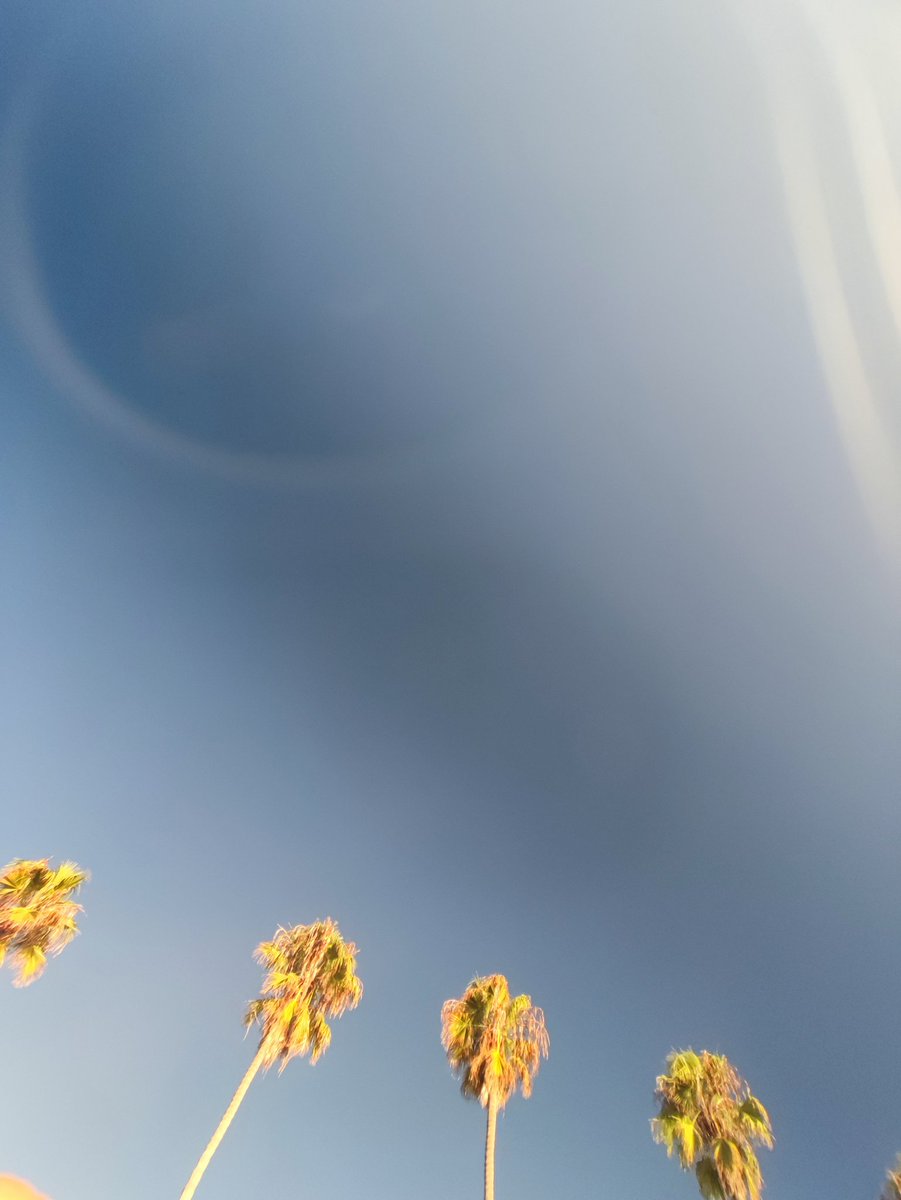
This afternoon I watched the sky and realized what I learned from textbook is really true...
The maximum polarisation of Rayleigh scattering is at 90 degrees angle, making a dark band through polarised sunglasses 👇