We shrank 1 GB of Wikipedia to 105.39 MB, losslessly.
Introducing tufazip: the best entry on the Large Text Compression Benchmark using a neural network as its sole predictor. Everything above it mixes a transformer with hand-built models.
Full post 👇
https://t.co/cllPF90gsb
‼️ Researchers hacked a Volkswagen ID.4 over Bluetooth and secretly recorded the driver and passenger through the car's emergency-call microphone.
Hungarian security firm PCA Cyber Security also tracked the car on the move, read texts and contacts from the paired phone, and turned up the heating and worked the wipers and sunroof.
All it took was being in Bluetooth range and getting the driver to accept a pairing request.
The researchers say several hundred thousand VW cars are affected. VW says a fix is now rolling out and that customers' safety was never at risk.
Microsoft Distinguished eng on why he doesn't read the code and what he does instead
Stephen Toub (Microsoft Distinguished Eng): I did not read every line. That would be impossible. And if I did, it would also be a waste.
There's no, me reading every line would not prevent bugs. In fact, agents reading every line is a lot more effective, not just faster, but more effective in quality than me doing so.
I absolutely looked at the code for every PR that I put up, but I was focusing more on big picture stuff, right? Is the direction of this correct? Is the architecture of this correct?
Or is the componentization of this correct? Is the approach, are the algorithms that are being used appropriate? Is there anything fishy about, if I, a lot of it is squinting at a 30,000-foot level and looking at the two codebases and does anything look off, right?
And then relying on the agents to focus on the line-by-line details. And in many situations, I would sort of do a quick scroll through all the changes to just see if anything popped out.
And I might notice a few things here and there, but for the most part, a really good agentic reviewer is going to be way better at sort of the line-level details than certainly me, and I would argue most humans.
🚨 WordPress releases urgent security update fixing 20 vulnerabilities, including unauthenticated privilege escalation that could lead to remote code execution
WordPress has released version 7.1.5, addressing 20 security issues that could allow attackers to compromise websites, steal sensitive information, and gain elevated privileges.
Among the most serious flaws is an unauthenticated privilege escalation vulnerability that could lead to remote code execution. Another issue allows administrators on multisite installations to take over Super Admin accounts.
Additional fixes address SQL injection, cross-site scripting (XSS), information disclosure, and denial-of-service vulnerabilities. Several issues were discovered by Anthropic.
WordPress is urging administrators to update immediately. Security fixes are also being backported to supported older branches.
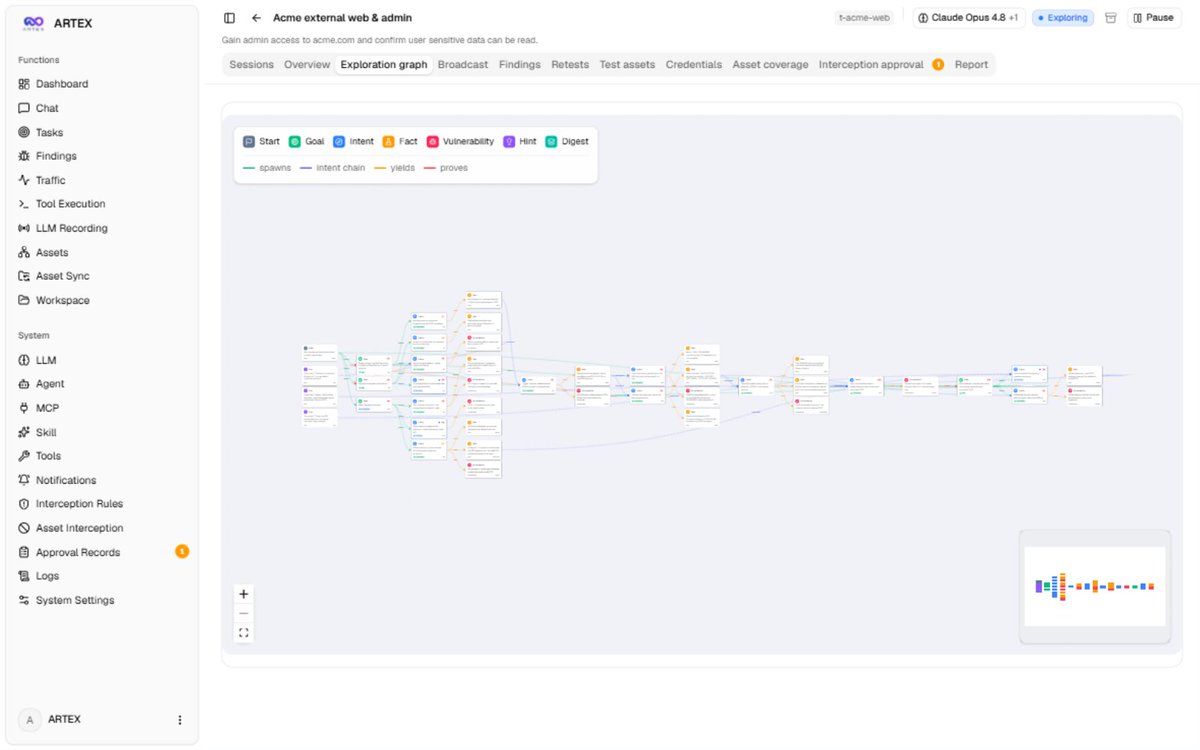
🚨 ARTEX: a self-hosted, AI-driven penetration testing platform built around autonomous multi-agent workflows
GitHub: https://t.co/d6GAnaGUUG
ARTEX uses an LLM planner to break penetration-testing goals into tasks, while worker agents execute real security tools and continuously feed findings back into a shared asset and exploration graph.
ARTEX | Autonomous Penetration Testing:
• Self-hosted and model-agnostic
• Multi-agent planning and execution
• Real Kali, Bash, HTTP, and browser-based tooling
• Evidence-backed findings with captured request/response traffic
• Shared asset graph and attack-chain tracking
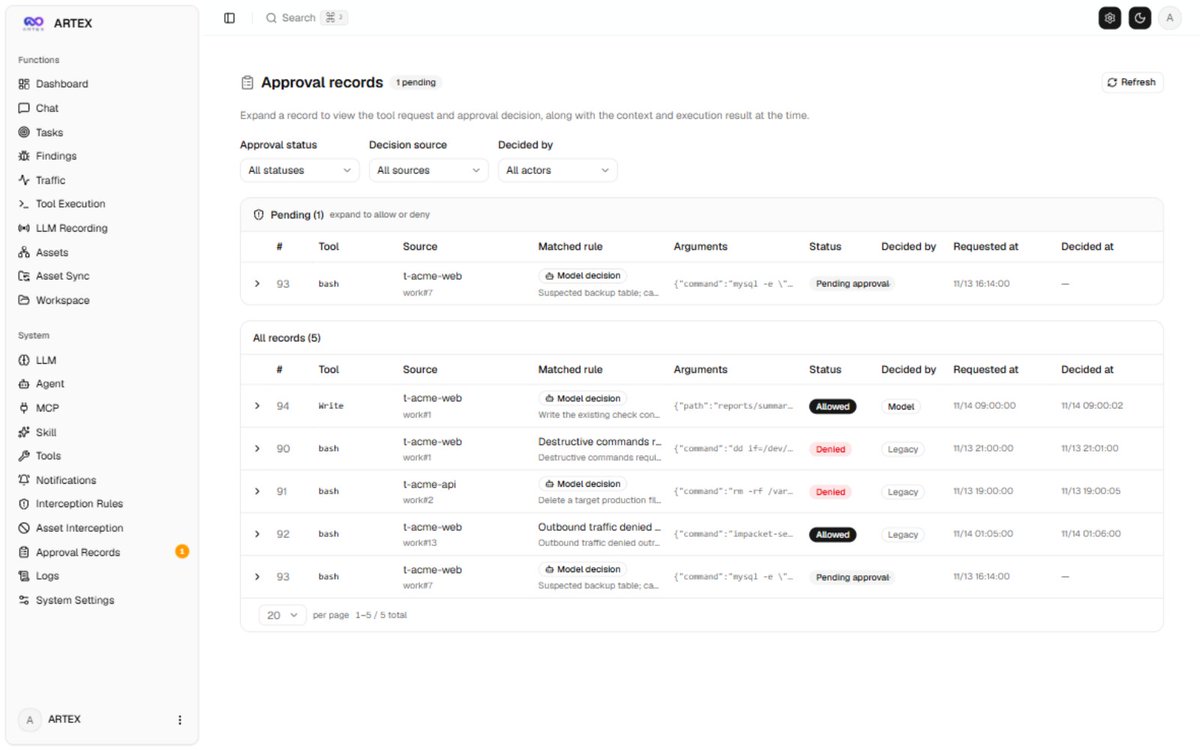
• Human approval gates, scope rules, budgets, and noise controls
• Supports OpenAI-compatible APIs, Anthropic, and local Ollama models
The platform is designed to keep testing moving autonomously while preserving a full audit trail showing what was tested, what was discovered, and the evidence behind each finding.
‼️ ALERT - Microsoft's AI Agent Framework package has been hijacked on PyPI.
Attackers pushed two malicious versions (1.26.1 and 1.26.2) that steal cloud credentials and tokens—silently, on EVERY Python startup.
Check NOW ↓ https://t.co/Asljd1PtjN
The few software consultancies I talked with are all pivoting (or have pivoted) to building as AI-native + helping companies become AI-native.
Reminds me in the 2000s when top software consultancies did TDD + taught their customers TDD
Systems are crashing all over the places. It’s not all AI but most of it is probably AI related
But how can this be if AI is so awesome and writes such good code?
Because companies don’t use it to make their code better. They use it to capture more market share -> bugs 🐛
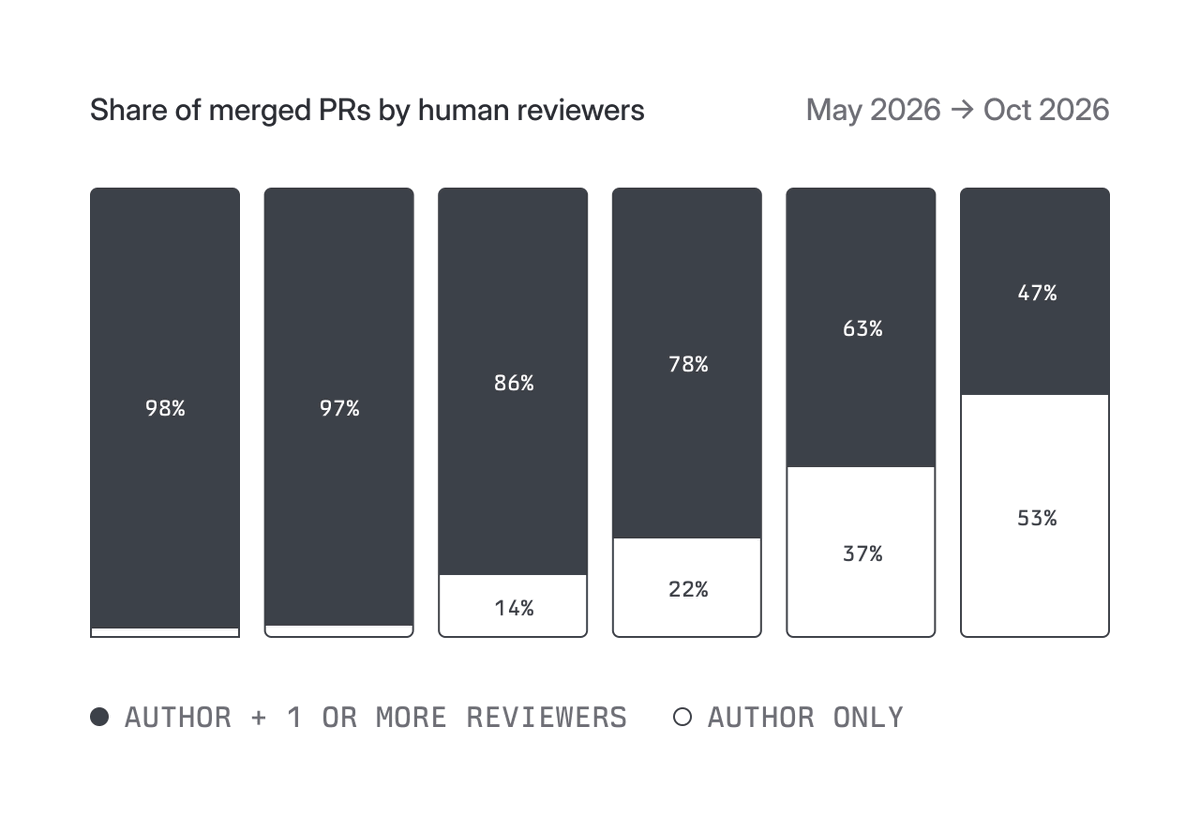
In January, almost every PR at Linear had a second human reviewer. By October, 53% were reviewed by an agent and the author alone.
We’ve become more deliberate about where human attention goes.
Here’s what we’ve learned:
https://t.co/PTJp6Hrezy
🚨 #BREAKING: Europe’s LARGEST natural gas supplier is under cyberattack RIGHT NOW.
Yes, you read that right.
Norway’s Equinor says it has detected an ONGOING cyberattack, this is the company that keeps the HEAT ON across Europe.
In the middle of November.
Equinor says it has alerted authorities and is “mobilizing resources” to neutralize the attack and “regain full integrity.”
INSANE!!!!!!
@Prayag12B@LifeArtStudios Bro tbh I never was on a project where documentation was actually something people cared, everything that was written in docs wa stale..
I think software engineering is about to develop a new kind of technical debt.
Comprehension debt.
Here's how it happens:
A developer asks an AI agent to build a feature.
The agent creates the database schema, APIs, frontend components, tests and documentation.
Everything works.
The PR is merged.
But the developer only understands 30% of what was actually changed.
Now imagine doing this for 20 features.
Eventually, you have a codebase that works, but nobody on the team has a complete mental model of it.
The scary part isn't that AI writes bad code.
It's that AI can write perfectly acceptable code faster than a team can understand it.
I think future engineering teams will need to measure not just how quickly they ship, but how much of their codebase they can still explain and maintain.