Conclusion
These findings indicate that screening continues to be effective in reducing breast cancer mortality many years after cessation of screening and that the level of overdiagnosis associated with long-term follow-up is low
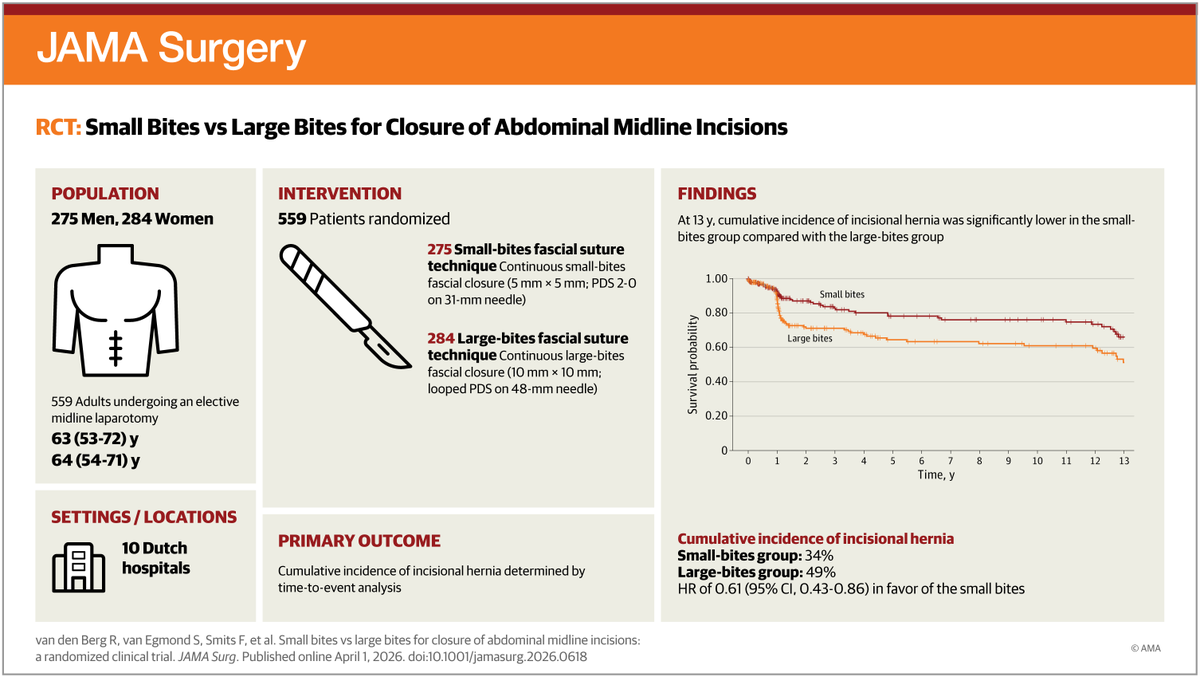
Small-bites fascial closure after elective midline laparotomy reduced long-term risk and size of incisional hernia vs traditional large-bites technique, supporting small bites as standard practice for abdominal closure. https://t.co/QlsAKiNraq
I'm lucky enough to have a great doctor and access to excellent Bay Area medical care. I've taken lots of standard screening tests over the years and have tried lots of "health tech" devices and tools.
With all this said, by far the most useful preventative medical advice that I've ever received has come from unleashing coding agents on my genome, having them investigate my specific mutations, and having them recommend specific follow-on tests and treatments.
Population averages are population averages, but we ourselves are not averages. For example, it turns out that I probably have a 30x(!) higher-than-average predisposition to melanoma. Fortunately, there are both specific supplements that help counteract the particular mutations I have, and of course I can significantly dial up my screening frequency. So, this is very useful to know.
I don't know exactly how much the analysis cost, but probably less than $100. Sequencing my genome cost a few hundred dollars.
(One often sees papers and articles claiming that models aren't very good at medical reasoning. These analyses are usually based on employing several-year-old models, which is a kind of ludicrous malpractice. It is true that you still have to carefully monitor the agents' reasoning, and they do on occasion jump to conclusions or skip steps, requiring some nudging and re-steering. But, overall, they are almost literally infinitely better for this kind of work than what one can otherwise obtain today.)
There are still lots of questions about how this will diffuse and get adopted, but it seems very clear that medical practice is about to improve enormously. Exciting times!
There’s still time to nominate a colleague for an ABS Trustee post. All nominations should be submitted by 10am on Monday 9 February 2026. Find out more: https://t.co/49tNLoWrlG
Would you like to get more involved with the ABS? We are calling for expressions of interest for vacancies on several ABS Committees. The deadline for applications is the 9 February 2026 at 10am. Find out more: https://t.co/7jVBL1bDLO
Have you taken part in our National Nursing Survey? If you are working in a nursing role in breast care, please help us identify key challenges and areas of need so we can better support and strengthen the profession: https://t.co/wd1ecwDHVs
We’re running a webinar for anyone applying for oncology training posts or with an interest in the specialty 💻
Please do share with your networks and help us engage the next generation of oncologists 🗣️
Be the difference. Choose oncology: https://t.co/6IVt9Y1Tyb
🎶 Put your hands up for Detroit, our lovely city!
Win 2 return flights, a 4-night hotel stay & attraction passes with @Delta and @visitdetroit!
✅ Like
✅ Tag a friend
✅ Repost
🕒 Winner picked after 3PM, 9th May.
New report on oncological outcomes of breast-conserving surgery versus mastectomy following neoadjuvant chemotherapy in a contemporary multicenter cohort https://t.co/aIXSkN2ULN #breastsurgery#breastcancer@nature
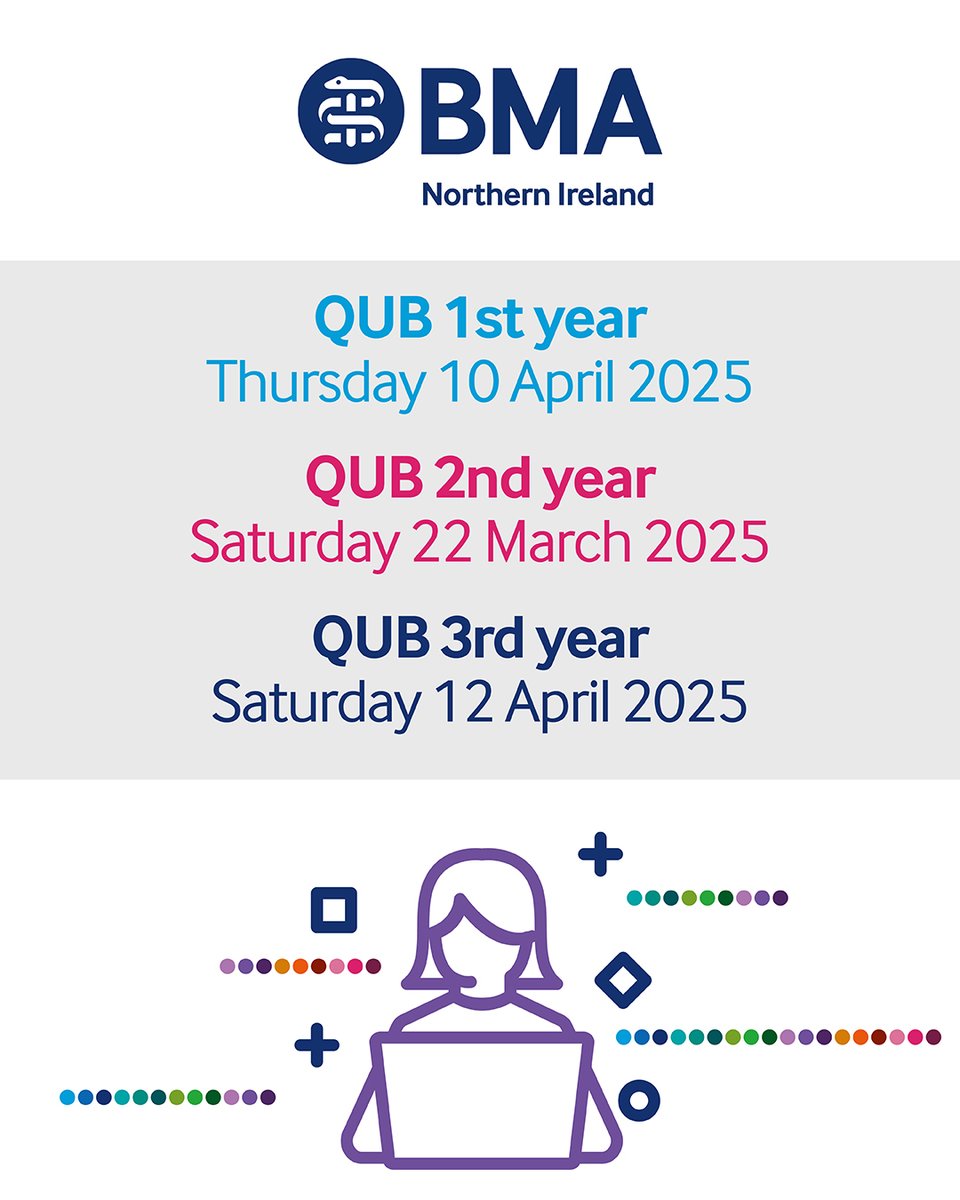
MEDICAL STUDENT REVISION EVENTS 🎓📚💻
Covering core topics relevant for exam preparations and delivered by medical students who have done this before you!
Join us for these popular online sessions.
Mark your calendars and register now: https://t.co/8Z12Dt0HrP
“ When a Clown moves into the Palace, he doesn’t become a King, The Palace becomes a Circus” is a Turkish proverb which is worth heeding in the coming days.
MEDICAL STUDENTS 👨🎓👩🎓
Want to join the BMA Northern Ireland Medical Student Committee? (NIMSC)
Nominations close on Friday, so get involved today!
Visit the BMA Elections site to nominate here: https://t.co/TfzOjapujF
A study in the April issue of @acsJACS examines how home call results in sleep disruption and increased feelings of burnout—even on nights during which the surgeon was never called.
🎥 Lead author @JJcolemanMD offers additional details about the study. https://t.co/c5sARd9D6z