𝗜𝘀 𝗦𝗸𝗶𝗽𝗽𝗶𝗻𝗴 𝗕𝗿𝗲𝗮𝗸𝗳𝗮𝘀𝘁 𝗕𝗮𝗱 𝗙𝗼𝗿 𝗬𝗼𝘂?
You’ve probably been told by your parents that breakfast is the most important meal of the day. It’s such a ubiquitous phrase that it’s almost cliche. What is less commonly known, is the origin of this pervasive phrase. The Daily Telegraph credits dietitian Lenna Cooper with using this phrase in a 1917 article for Good Health magazine, which was published by a Michigan sanitarium operated by Kellogg’s. Cereal genius Dr. John Harvey Kellogg and fellow 7th Day Adventist James Caleb Jackson created the slogan in an effort to promote breakfast cereal. It clearly worked. The food giant made $1.4 billion U.S. dollars in profit in 2019 from its cereals.
Does breakfast really provide the ‘best possible start’ to the day, or is fasting better for us?
A report published in 2019 by the Journal of the American College of Cardiology concluded that skipping breakfast was associated with a significantly increased risk of mortality from cardiovascular disease and all-cause mortality.
https://t.co/tyScJxetZi
Following the publication of this report, the following headlines were produced by 3 major news outlets: “Want to Lower Your Risk for Heart Disease? Eat Breakfast Every Morning” (Healthline) “Eating breakfast? Skipping a morning meal has a higher risk of heart-related death, study says” (USA TODAY)
“Study: Skipping breakfast increases risk of heart disease mortality by 87 percent” (FOX)
Looks like we all need to reach for a bowl of cereal as soon as we get out of bed right?
Absolutely not!
It’s time to review this report critically instead.
This report was produced as a result of the findings from a prospective cohort study looking at 6,550 adults who reportedly ate breakfast every day to people who never ate breakfast, and then following up with them (about 19 years later on average), tallying up the deaths from cardiovascular disease and deaths from all causes.
One question the newspapers failed to ask/report on about the population studies is: was eating breakfast or not eating breakfast the only difference between the 6,550 adults who took part in this study? The authors of the study reported that “participants who never consumed breakfast were more likely to be non-hispanic black, former smokers, heavy drinkers, unmarried, physically inactive, and with less family income, lower total energy intake, and poorer dietary quality when compared with those who regularly ate breakfast.”
Not only that, “participants who never consumed breakfast were more likely to have obesity and higher total blood cholesterol level than those who consumed breakfast regularly.”
There’s more:
What were the participants actually eating for breakfast? We don’t know. The investigators didn’t have information about what foods and beverages they consumed.
Did participants change their breakfast eating (or abstaining) habits over the course of almost 20 years? We don’t know, this information wasn’t collected.
Could there be errors in the classification of the causes of death in the participants? It’s possible.
What constitutes skipping breakfast? Was it the timing of the first meal of the day? We don’t know. Participants were asked, “How often do you eat breakfast?” but there was no definition of what that means, exactly.
'Breakfast is the most important meal of the day' originated as a marketing slogan and, while catchy, should be examined more closely.
Go ahead and skip breakfast if you please. If (as part of everything else you do to improve your quality of health) it makes you feel energized, satisfied, healthy, that's brilliant.
Go ahead and eat breakfast if you please. If (as part of everything else you do to improve your quality of health) it makes you feel energized, satisfied, healthy, that's brilliant brilliant.
There is no clear-cut benefit to being a breakfast skipper or an eater - and your dietary habits are only one piece of a much bigger puzzle that is your health and wellbeing.
Personally, I have not eaten breakfast regularly since I was 15. I never liked breakfast and over a long time, I just adapted to really not wanting to eat in the morning. I currently fast until 1/2 p.m. most days depending on my schedule.
As a health coach, I always defer to my clients’ instincts about when to eat, especially when they’re healthy and tuned into their bodies. In my own personal experience and from my experience working with clients, intermittent fasting is wonderfully freeing for some. It’s very straightforward. For others, especially those with a history of eating disorders and low body image, or for people who hope to leave dieting behind entirely, it can be a slippery slope to unhealthy patterns of restrictive eating.
𝘿𝙤𝙚𝙨 𝙬𝙚𝙚𝙙 𝙝𝙚𝙡𝙥 𝙮𝙤𝙪 𝙨𝙡𝙚𝙚𝙥?
Many people claim that using cannabis products, particularly weed or CBD, aids their sleep. But do these products genuinely enhance sleep quality?
Let's first break down cannabis into two of its primary components:
1. CBD.
2. THC.
CBD is the non-psychoactive component meaning that when you take it, you don’t get high. When you take THC, you do get high, it’s the psychoactive part of the equation.
THC seems to make users fall asleep faster. Many people use THC for this purpose which is totally understandable.
The problems with THC are however two-fold.
The first is that THC seems to block REM sleep.
This is why a lot of people who frequently use THC have difficulty recalling their dreams. As soon as THC users stop using, they often report that they are having vivid, intense, crazy dreams. The reason for this is that a REM sleep rebound mechanism is kicking in. It’s during the middle of the night that THC blocks your REM sleep. Your brain is smart and can work out how much REM sleep you should have had, but didn’t have as a result of your THC use. The result of this is that in the later hours of your sleep (the early hours of the morning), your brain works hard to acquire as much REM sleep as it would have had had you not used THC. Does it succeed in recovering the lost REM sleep needed? No, it never gets back the same amount of REM sleep it would have had you not used THC. Frequent THC use builds pressure for REM sleep. A REM sleep debt. Will you recover the REM sleep you lost as a result of your THC use? No, but you will get back some of it because your brain has been starved for REM sleep for so long.
The second concern for those who rely on THC to fall asleep, arguably a bigger problem than the REM sleep debt you accumulate from frequent THC use is withdrawal dependency.
Many people who use THC to help them fall asleep build a dependence tolerance. They start to need more to get the same sleep benefit. When they stop using, many people suffer from very severe rebound insomnia.
As for CBD, there’s not enough data yet on CBD as a sleep aid for me to recommend its use, although the data is more promising than THC.
The early data on CBD suggests that users fall asleep faster, it reduces anxiety which helps anxiety sufferers enter a more parasympathetic state prior to bed (relaxed, calm state) it does not have the same negative impact on REM, it decreases your core body temperature leading to better sleep, people experience fewer dependency issues and don’t experience insomnia rebounds, and it’s use may help people suffering from PTSD-related sleep problems.
Human beings cannot train themselves to sleep less!
Optimising my sleep has been a journey of many years, even pre @ouraring when I would track my sleep with my @fitbit , which I started doing when I was 15/16.
Over the last 6 years, I have assessed the sleep metrics of 600+ clients. Having collected and reviewed all of this data, it’s so abundantly clear to me that to this day, the majority of people are totally unaware of the significance of sleep, let alone how to optimise it.
- The likelihood you possess the genetic ability to feel well-rested after four to six hours of sleep is 1 in 4 million 🙃
- Approximately 70 million people in the U.S. struggle with sleep disorders.
- Lack of sleep costs the United States over $411 billion dollars and 1.23 million working days annually.
- Humans are the only mammals that willingly delay going to sleep.
- Almost 20% of all car crash accidents and injuries are associated with sleepiness.
- In 1942, Americans had 7.9 hours on average per night compared to 6.8 hours in 2013, which is a 13% decrease.
- You can stay awake for only 19 hours before the degree of cognitive impairment you will experience is equal to being legally drunk.
- Almost 40% of adults report unintentionally falling asleep during the day at least once a month.
If we all slept enough, our healthcare burden would plummet, we would have better mental health and fewer suicides, our businesses would be more productive, and global economies would thrive.
Need I say more?
Is your decision to binge-watch Netflix in bed aiding or hindering your pursuit of a happy, healthy, fulfilled life?
Sleep is NOT an optional lifestyle luxury.
It is a NON-NEGOTIABLE biological necessity 🫡
𝗨𝘀𝗶𝗻𝗴 𝗦𝗮𝗹𝘁 𝗧𝗼 𝗢𝗽𝘁𝗶𝗺𝗶𝘇𝗲 𝗠𝗲𝗻𝘁𝗮𝗹 & 𝗣𝗵𝘆𝘀𝗶𝗰𝗮𝗹 𝗣𝗲𝗿𝗳𝗼𝗿𝗺𝗮𝗻𝗰𝗲
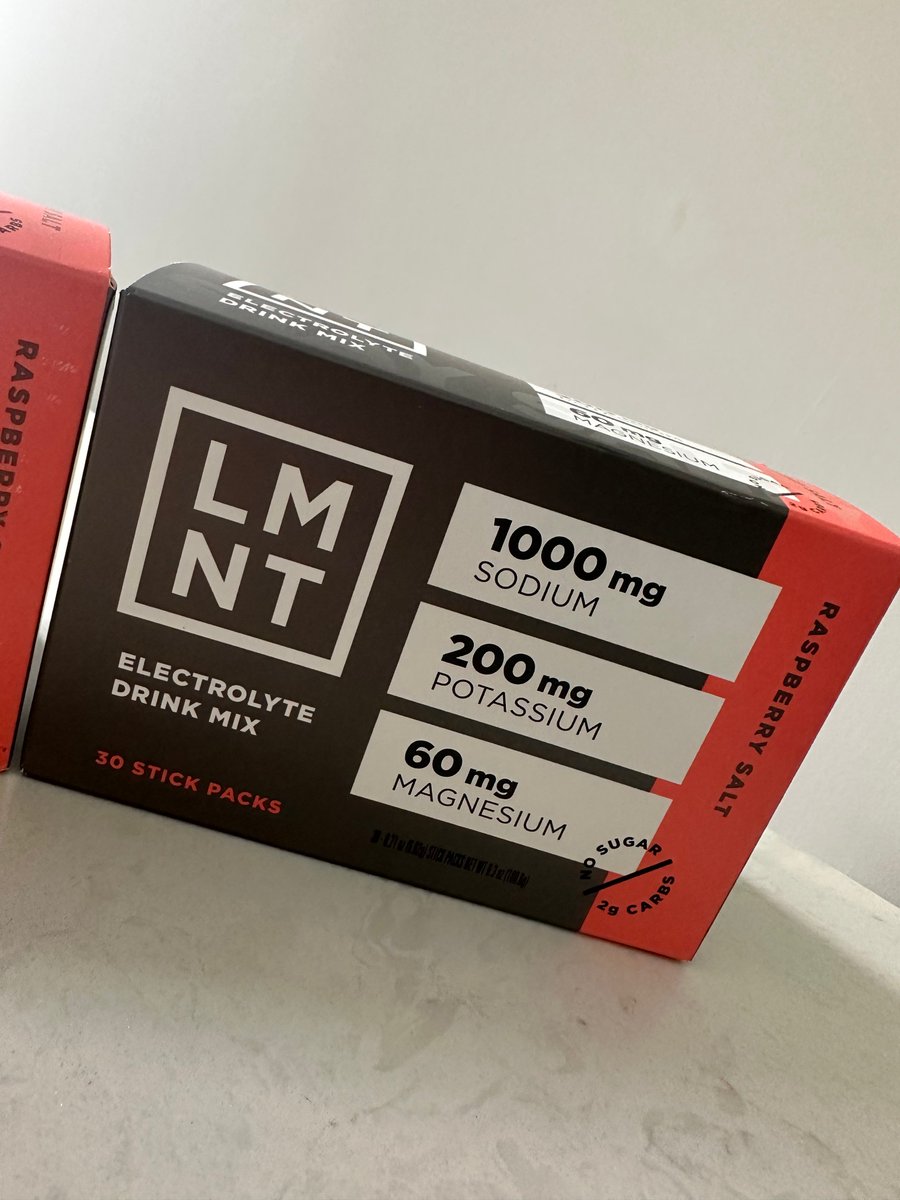
How many of you actively monitor your Sodium, Potassium, and Magnesium intake to ensure you are adequately hydrated daily?
In my seven-year-long career as a health and performance coach for entrepreneurs, I can think of only 5 out of the 600+ one-on-one clients I have worked with that were conscious of the importance of salt in the nervous system and the key role that it plays in mental performance, physical performance, and health.
For the first few years of my career as an aspiring athlete and fitness fanatic, I never gave hydration much thought; I would drink when I was thirsty and thought that was enough.
A few years ago - frustrated with my running, gym, and cognitive performances - having blacked out a couple of times after standing up too quickly - I turned to the internet to find out what was going on. Something was wrong and I couldn’t quite put my finger on what it was. I consulted with a handful of coaches and we unlocked a powerful yet simple insight: I needed more salt.
I started to tinker with DIY electrolyte drink recipes (having been told that every electrolyte product in supplement shops was woefully lacking in sodium, contained loads of sugar, or both) before stumbling upon LMNT (no I am not affiliated to or with LMNT, I just like their product). It wasn’t long before I realized how much better I felt when I got the right amount of sodium (1,000 mg from each LMNT sachet which I take 3-6x per day depending on my level of physical activity) to support my physical and mental performance. I started performing well physically once again, my mental performance was enhanced, my anxiety lessened and the dizziness I used to experience when standing up too quickly was offset entirely.
𝗛𝗼𝘄 𝗺𝘂𝗰𝗵 𝘀𝗼𝗱𝗶𝘂𝗺 𝗱𝗼 𝘆𝗼𝘂 𝗻𝗲𝗲𝗱?
Having tested with the amount of sodium, magnesium, and potassium I supplement daily given that I train twice a day most days, I have concluded that I require a fairly high intake in order to perform optimally (athletes lose up to 7 grams of sodium per day in hot climates) so I strive to surpass my baseline of 4-6 grams of daily sodium (coming from both the LMNT sachets and the food I consume daily). Other people may need less sodium and I will discuss how you can determine your optimal sodium intake and why sodium levels need to be uniquely tailored to an individual's lifestyle in a video that will be uploaded here in Skool shortly.
You need to be particularly conscious of your sodium intake on diets lacking in - or which cause the rapid loss of sodium. This includes:
1. Low-carb and ketogenic diets: A low-carb diet keeps insulin low, which consequently makes your kidneys excrete sodium at an increased rate.
2. Paleo and whole foods diets: Processed foods contribute to 70% of sodium intake for people in the US.
3. Fasting: Just like low-carb diets, fasting maximizes insulin (increasing sodium excretion) and decreases sodium intake via food (during the fasting period).
But isn’t salt bad for your health?
The 4-6 gram baseline target I have referenced above comes from a 2011 JAMA study which found that 4-6 grams of sodium per day was the sweet spot for minimizing heart attack and stroke risk. https://t.co/RVSdFc3UMk
To be clear, 4-6 grams is a starting point. Individuals with the aforementioned diet and lifestyle factors often need more.
If you want me to expand on this topic and create more content on how to optimally hydrate (which I will be doing for members of our free course), or if you have any questions pertaining to this topic (which you can ask me within my free course community), be sure to click the link below to gain immediate access to my FREE Peak Performance Program course.
https://t.co/fo4KHkLWZj
My personalized daily supplements have been a game changer for my quality of health 🔑
My supplementation has been personalized for me based on the blood tests I complete every 3 months to ensure my supplement formula improves my micronutrient deficiencies 👌
Peak Performers!
We're looking for 5 new clients to join the freshly updated version of my 1-2-1 coaching program, where you'll learn how to unlock your health and performance potential using my Peak Performance Protocol.
Would that help you?
Drop me a DM and let me know 🤝
Just recorded a 🔥 podcast with the man who has generated over $40M in sales for his agency clients @jeremynickmoser
The full episode will be uploaded on Wednesday 17th 🤝
Love Charlie Munger's framework for how to do business:
1. Don't sell anything you wouldn't buy yourself.
2. Don't work for anyone you don't respect and admire.
3. Work only with people you enjoy.
Simple.
After ten days of just seven hours of sleep a night, the brain is as dysfunctional as it would be after going without sleep for twenty-four hours.
Don't be a dumbass, prioritise your sleep 🔑