Autonomous Driving’s Unit Economics: $Waymo's "Hardware Problem"
Andrej Karpathy recently made a thought-provoking statement: " $TSLA (FSD) may still have a software problem, but Waymo has a hardware problem. Between the two, software is much easier to solve.”
🔎Here's a breakdown of $Waymo's unit economics:
🔴TL;DR
$Waymo has the potential to be a highly profitable and hugely disruptive business.
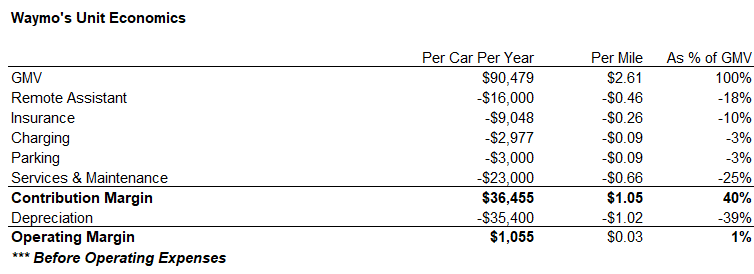
If $Waymo could match $TSLA's hardware costs, its operating margin (post-depreciation) would hit 30%! This is the key "hardware problem."
With $TSLA's hardware costs, self-driving can be priced at a 40% discount to $Uber/ $Lyft, whether on a per-mile or per-trip basis.
▶️ $Waymo Unit Economics:
Operating margin breakeven: Ex-CEO John Krafcik said in July 2024 that Waymo could be profitable in markets like SF, accounting for vehicle costs, maintenance, energy, hardware, insurance, and personnel.
Revenue run rate: ~$120-130M annually.
▶️Depreciation Assumptions:
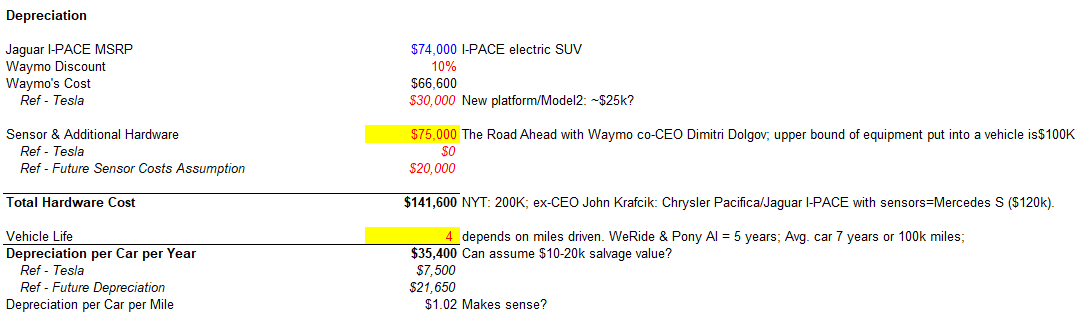
Hardware costs: Estimated at ~$140k per vehicle, based on a range from $120k (Krafcik) to $200k (NYT).
Depreciation: Assuming spread over 4 years, with vehicles driving 100-200k miles over their lifespan.
Depreciation is the biggest drag on profitability—$35k per car annually (~40% of GMV). This is on sharp contract to $TSLA's $7k.
▶️Revenue Assumptions:
Trips per week (Aug-24): 100k, doubling over the last 3 months.
Fleet size (CA): ~800 vehicles.
Miles per trip: 3.8 miles/trip (CA PUC data), yielding 35k miles/year per car vs. the U.S. average of 13.5k.
GMV per trip: Assumed at $15, vs. Uber/Lyft at ~$21. Adjusted for Waymo’s shorter trips, their GMV per mile is on par with Uber.
▶️Other Key Costs:
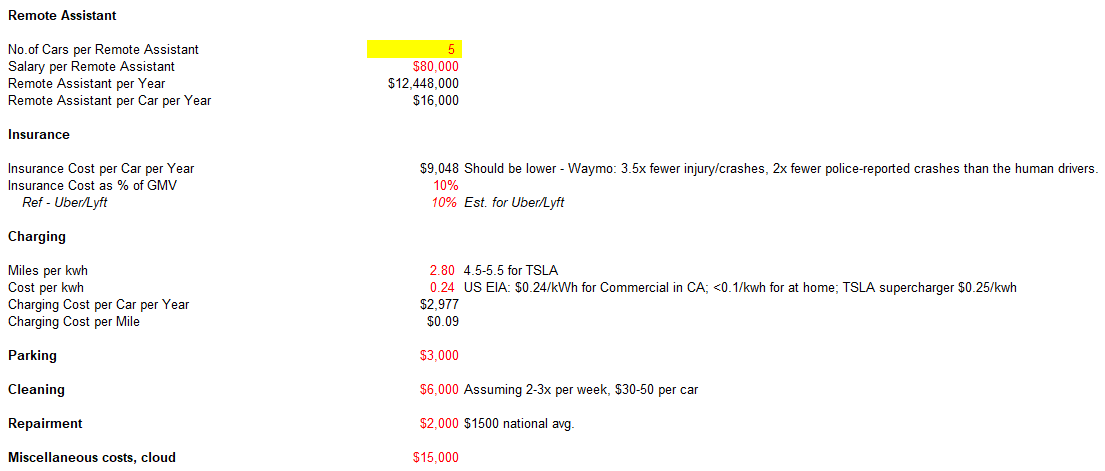
Remote Assistance: Assumed 1 assistant per 5 cars; if this ratio improves, costs drop. Tesla may not even need this.
Insurance: Estimated at 10% of GMV but could be lower.
Charging: Assumed at $0.24 per kWh.
Cleaning: 2-3 times per week, $30-50 per car.
Repairs: Estimated at $2k/year, higher than the $1.5k U.S. average.
▶️ $Waymo vs. $Uber/ $Lyft vs $TSLA:
$Uber/ $Lyft currently earns $2.90 per mile with a 30% take rate ($0.8 per mile of Revenue; 0.1 per mile of EBITDA).
If $Waymo can solve its "hardware problem" (a VERY big "if," though they're working on it with OEMs), it could potentially undercut Uber/Lyft’s pricing. However, Waymo's operations would still be confined to geofenced areas.
If $TSLA can solve its "software problem", i.e. maintain an exponential rate of improvement in disengagements or MCPIs, it could be a truly disruptive force in the entire market.
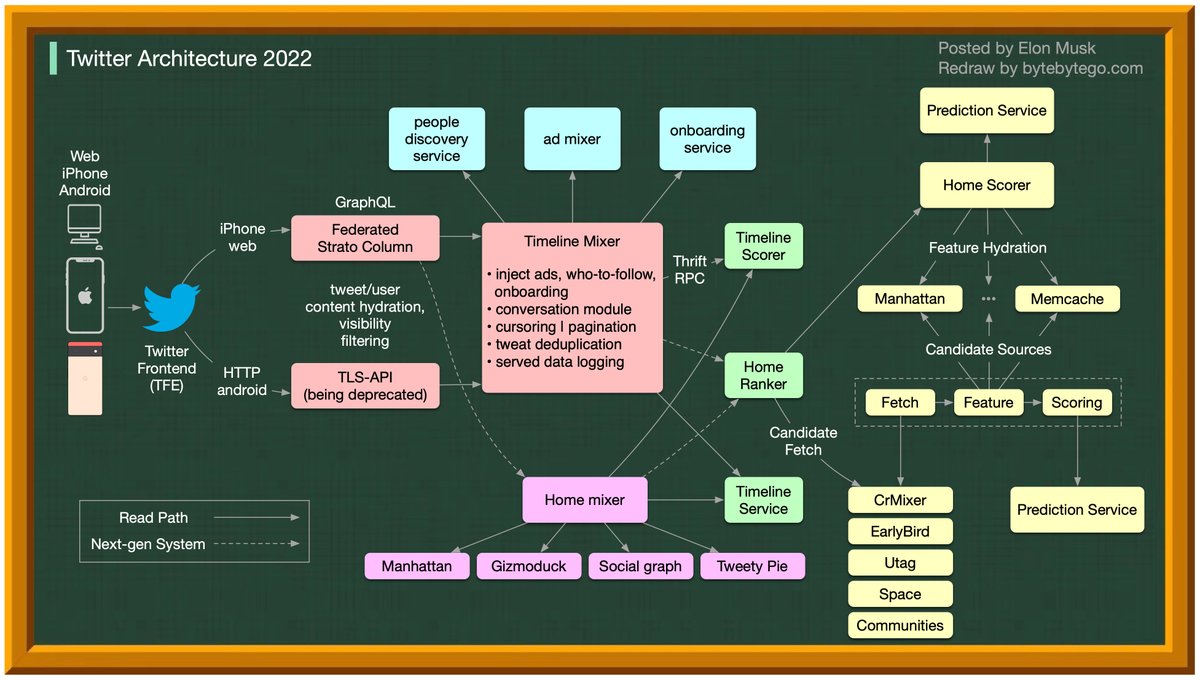
@alexxubyte Notes from last night:
- Maybe deprecate TLS this week, as only needed if Android app >1 year old.
- Home mixer computes Home ~10X faster than Timeline.
- Ad mixer can greatly improve relevance at cost of lower total ad views. More interesting the ad, more time you look at it.
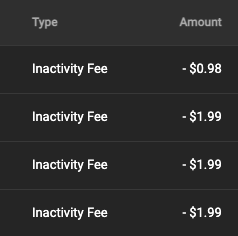
@CMG_Esports this is one the most dirty tricks I've seen in the gaming industry. Charging a hidden inactivity fee communicated in the Terms of Service, not even sending warning emails. Zero customer-centric. Never using your app again.
ETH blockchain problems https://t.co/Kn2Z3Cio8g
⛽️Transaction costs
🚦Transaction Speed
💽 Disk space (# of nodes)
🛡 Security
🌳Sustainability (⚡️consumption)
Can't wait for ETH 2.0 🚀
But let me add one to the list.
💻 Usability: having to cancel stuck transactions 🤯
This reminds me of Pokemon Go. I wonder why Nintendo is sleeping on NFTs. If IMPs are killing it - props to @SuperNfty. Image a Pokemon NFT collection...