RESUMEN ANALÍTICO DE 🌴MARBELLA VICE🌴
Tras 71 días hoy llega el informe final interactivo.
Podéis consultar toda esta información en mi página web:
https://t.co/uGEKStZsHA
(Se recomienda visualizar en PC o en modo escritorio desde móvil)
¡Dentro hilo!
(1/11)
🚨Ya está disponible Gemini 3!!
El modelo más potente hasta la fecha acaba de salir con muchas novedades y mejoras pero sobre todo con unas métricas increíbles.
Aquí los puntos claves. 👇
Spatial reasoning: Se mejora el poder reconocer datos o conceptos en el espacio proporcionando mejoras para identificar objetos en capturas de pantalla o en campos como XR o robótica.
https://t.co/hbRRvi3KYn
This is Gemini 3: our most intelligent model that helps you learn, build and plan anything.
It comes with state-of-the-art reasoning capabilities, world-leading multimodal understanding, and enables new agentic coding experiences. 🧵
He desglosado todo en mi último post: desde los beneficios clave y cómo implementarlo paso a paso, hasta las desventajas y cómo evitar los errores frecuentes.
¡Échale un vistazo y comienza a ahorrar costes!
https://t.co/0JnQ30t9Ss
[3/3]
⏳💸¿Quieres ahorrar costes de tu aplicaicón de LLM? ¿Quieres reducir la latencia de las respuestas?
En el nuevo blog hablo de la Caché Semántica.
A diferencia de la caché tradicional, preguntas similares pueden usar la misma respuesta previamente cacheada.
[1/3]
Esto se traduce en:
💰 Ahorros masivos en el uso de tokens.
⚡️ Respuestas instantáneas para una UX superior.
🧠 Una arquitectura más eficiente e inteligente.
[2/3]
Si te suena interesante y quieres mejorar tu calidad de vida en los proyectos te dejo mi blog donde hablo con más detalle de ello.
https://t.co/MmpR5o3YjM
3/3
⏳¿Cuántos minutos has perdido en tu último proyecto mirando la terminal mientras pip install resolvía dependencias?
En el blog de hoy hablamos de una solución: UV
Es un gestor de paquetes de Python escrito en Rust desarrolado por @astral_sh e increiblemente rápido
1/3
¿Por qué deberías usarlo?
🚀 Velocidad Extrema: Es de 10 a 100 veces más rápido que pip
🛠️ Todo-en-Uno: UV reemplaaza pip, venv, pip-tools e incluso pipx
💾 Caché Global Inteligente: Ya no es necesario que tengas 20 copias de pandas. UV usa una caché global.
2/3
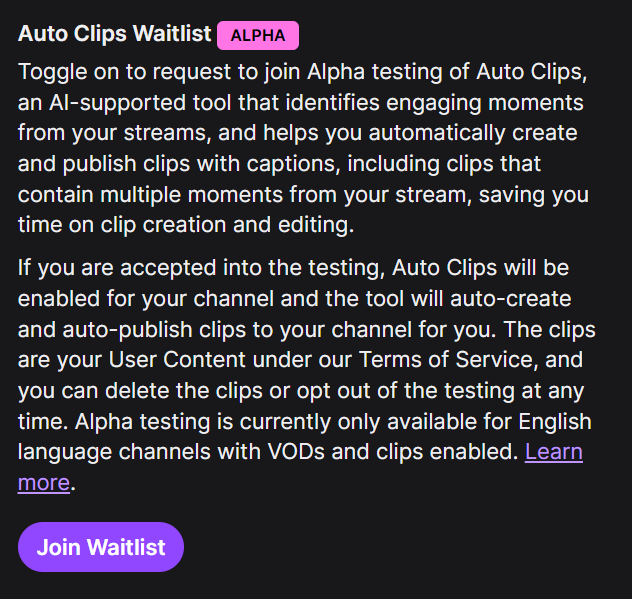
You can now join the Waitlist for Twitch's upcoming AI-supported Alpha "Auto Clips" tool.
Auto-Clips will automatically create and publish the most engaging moments of your stream - and allow you to say "clip that" to generate a 60 clip.
https://t.co/rjunaCkYQ7
Excited to release new repo: nanochat!
(it's among the most unhinged I've written).
Unlike my earlier similar repo nanoGPT which only covered pretraining, nanochat is a minimal, from scratch, full-stack training/inference pipeline of a simple ChatGPT clone in a single, dependency-minimal codebase. You boot up a cloud GPU box, run a single script and in as little as 4 hours later you can talk to your own LLM in a ChatGPT-like web UI.
It weighs ~8,000 lines of imo quite clean code to:
- Train the tokenizer using a new Rust implementation
- Pretrain a Transformer LLM on FineWeb, evaluate CORE score across a number of metrics
- Midtrain on user-assistant conversations from SmolTalk, multiple choice questions, tool use.
- SFT, evaluate the chat model on world knowledge multiple choice (ARC-E/C, MMLU), math (GSM8K), code (HumanEval)
- RL the model optionally on GSM8K with "GRPO"
- Efficient inference the model in an Engine with KV cache, simple prefill/decode, tool use (Python interpreter in a lightweight sandbox), talk to it over CLI or ChatGPT-like WebUI.
- Write a single markdown report card, summarizing and gamifying the whole thing.
Even for as low as ~$100 in cost (~4 hours on an 8XH100 node), you can train a little ChatGPT clone that you can kind of talk to, and which can write stories/poems, answer simple questions. About ~12 hours surpasses GPT-2 CORE metric. As you further scale up towards ~$1000 (~41.6 hours of training), it quickly becomes a lot more coherent and can solve simple math/code problems and take multiple choice tests. E.g. a depth 30 model trained for 24 hours (this is about equal to FLOPs of GPT-3 Small 125M and 1/1000th of GPT-3) gets into 40s on MMLU and 70s on ARC-Easy, 20s on GSM8K, etc.
My goal is to get the full "strong baseline" stack into one cohesive, minimal, readable, hackable, maximally forkable repo. nanochat will be the capstone project of LLM101n (which is still being developed). I think it also has potential to grow into a research harness, or a benchmark, similar to nanoGPT before it. It is by no means finished, tuned or optimized (actually I think there's likely quite a bit of low-hanging fruit), but I think it's at a place where the overall skeleton is ok enough that it can go up on GitHub where all the parts of it can be improved.
Link to repo and a detailed walkthrough of the nanochat speedrun is in the reply.
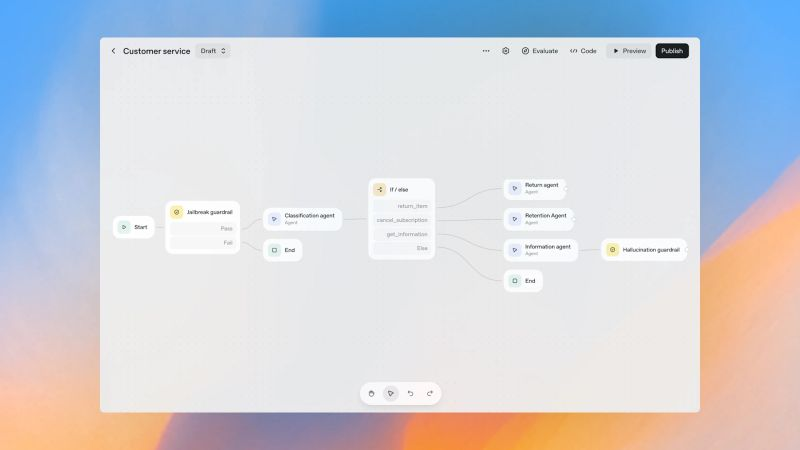
En mi opinión un gran paso para introducir a nuevos usuarios a marcos de trabajo como n8n o make. El marketplace de Apps es la evolución del intento fallido de plugins pero más trabajado, veremos cómo se desarrolla en el paso de las semanas.
🚨Estas son las novedades del OpenAI Dev Day 2025 que tuvo lugar ayer:
Ayer OpenAI presenté grandes novedades como el Apps SDK, AgentKit, Mejoras de Codex y nuevos modelos y APIs
Estas son las novedades⬇️
⚡️ Nuevos Modelos y APIs
- GPT-5 Pro: Ya disponible en la API. Para tareas que exigen esfuerzo
- Sora 2: El modelo de generación de vídeo llega a la API. Misma potencia que la app y sin marca de agua.
- gpt-realtime-mini: Un nuevo modelo de vozen tiempo real. Un 70% más barato








![pedromebo's tweet photo. ⏳💸¿Quieres ahorrar costes de tu aplicaicón de LLM? ¿Quieres reducir la latencia de las respuestas?
En el nuevo blog hablo de la Caché Semántica.
A diferencia de la caché tradicional, preguntas similares pueden usar la misma respuesta previamente cacheada.
[1/3] https://t.co/zNZIYwjYCD](https://pbs.twimg.com/media/G4furT2XAAA_Gt2.jpg)