Me parte la cabeza lo que ocurrió con tantos edificios en Vargas, así que he estado averiguando sobre las últimas hipótesis que se manejan sobre el doblete sísmico y aquí abajo les hago un resumen:
Las Hipótesis Científicas del Desastre
1. Activación en Cadena y Ruptura de Fallas Distintas
La principal hipótesis que sostienen expertos de la UNAM y agencias sismológicas es que no presenciamos un sismo y su réplica, sino una transferencia de esfuerzos mecánicos instantánea.
El primer evento (7.2) rompió un segmento de la Falla de Boconó cerca de San Felipe (Yaracuy) con un movimiento predominantemente oblicuo.
Apenas 39 o 40 segundos después, la energía liberada cargó de tensión y disparó un segundo evento aún mayor (7.5) en la Falla de San Sebastián, con un desplazamiento lateral superficial.
Esta combinación de tipos de movimiento (oblicuo + lateral) sometió a las estructuras a vectores de fuerza cruzados para los que es casi imposible diseñar protección absoluta.
2. El Efecto Logarítmico: El "Engaño" de los Decimales
Psicológicamente, la población tiende a pensar que una diferencia de 0.3 en la escala de Magnitud de Momento (M_w) es mínima. Sin embargo, la liberación de energía es exponencial. Los análisis demuestran que el sismo de 7.5 liberó aproximadamente 2.8 veces más energía destructiva que el primero. La infraestructura del norte del país recibió ese segundo mazazo destructivo cuando ya estaba agrietada, debilitada y con fatiga de materiales por el primer choque.
3. Frecuencia y Resonancia del Suelo de Caracas.
Un factor geológico crucial en Caracas es la profundidad y composición de su cuenca sedimentaria. Las ondas del primer evento alteraron las propiedades dinámicas del suelo, y cuando el segundo sismo golpeó con frecuencias diferentes, se generó un efecto de resonancia. Esto amplificó las ondas sísmicas en zonas específicas de la capital (afectando de manera severa desde sectores residenciales hasta el patrimonio arquitectónico como la Ciudad Universitaria), haciendo que los edificios oscilaran mucho más de lo previsto en los mapas de zonificación estándar.
4. Licuación de Suelos en la Guaira.
En la región de La Guaira, las hipótesis apuntan a que la altísima aceleración sísmica horizontal, prolongada durante un movimiento total que rozó los 3 minutos de vibración, provocó el fenómeno de licuación. Los suelos arenosos y saturados de agua perdieron su firmeza portante por completo, comportándose como líquidos pesados y provocando el colapso de infraestructuras críticas como puentes y malecones costeros por la pérdida de soporte basal, no por fallos estructurales aéreos.
La magnitud y la naturaleza de este doblete sísmico están obligando a que nosotros los ingenieros estructurales de toda la región a replantearse los límites de las normativas de diseño sismorresistente frente a eventos múltiples en fallas de rumbo complejas.
Almost no one knows the full story of Ulysses S. Grant and Robert E. Lee.
In 1847, during the Mexican War, a young Lieutenant Grant served as an obscure regimental quartermaster. Robert E. Lee, already famous, served on General Winfield Scott's elite staff. They crossed paths once. Lee did not remember it.
Eighteen years later, they met again.
April 9, 1865. Appomattox Court House, Virginia. Lee arrived first, in an immaculate gray dress uniform, red sash, embroidered gauntlets, and a presentation sword with a jeweled hilt. He looked like an emperor walking to his coronation.
Grant rode up an hour later, alone, splattered head to boot in Virginia mud, wearing a private's field blouse with no sword, no sash, and no insignia except the dirty shoulder straps of a lieutenant general. The first thing he did was apologize to Lee for his appearance.
The surrender happened in the parlor of a farmer named Wilmer McLean. McLean had fled his old home near Manassas because the first major battle of the war had literally been fought across his front yard in 1861. Four years later the war followed him 120 miles and ended in his front parlor. He later said he could have wallpapered his house with the war.
Before any terms were discussed, Grant tried small talk. He asked Lee if he remembered him from Mexico. Lee politely said he did not. Grant said he had remembered Lee perfectly for almost twenty years.
Then came the terms, and they stunned everyone present.
Officers could keep their sidearms and personal horses. Enlisted men who owned their mounts could take them home for the spring plowing. No prison. No trials. Every Confederate soldier would be paroled and allowed to walk home, on his honor, unmolested by U.S. authority for as long as he kept his parole.
Lincoln had asked for leniency. Grant gave him more than he asked for.
When Lee mentioned, almost in passing, that his men had not eaten in days, Grant ordered 25,000 rations sent across the lines from his own supply trains that same afternoon. The Union army fed the army it had just defeated.
As Lee rode back to his lines on his old gray horse Traveller, Union batteries began firing celebratory salutes and Grant's men started to cheer. Grant rode out himself and shut it down on the spot. "The war is over," he said. "The rebels are our countrymen again, and the best sign of rejoicing after the victory will be to abstain from all such demonstrations."
He later wrote that he felt "sad and depressed" the rest of that day, not triumphant. He could not bring himself to rejoice over the downfall of a foe who had fought so long, so well, and had suffered so much for his cause.
Then came the chapter history almost forgot.
Two months after Appomattox, a federal grand jury in Norfolk indicted Robert E. Lee for treason. The penalty on the books was death by hanging. Lee wrote a single letter to Grant, citing the parole he had been given.
Grant was furious. He went directly to President Andrew Johnson and told him plainly that if the indictment moved forward, he would resign his commission as commanding general of the entire United States Army. He had pledged his personal word to Lee at Appomattox, and no civilian politician was going to break that word while Grant still wore the uniform.
Johnson backed down. The indictment was quietly killed.
The man who beat Lee in war saved him from the gallows in peace.
Twenty years later, Grant was dying of throat cancer in a cottage on Mount McGregor, racing in agony to finish his memoirs before bankruptcy and death caught up with his family. He won by four days. The book sold 300,000 copies and made his widow rich.
At Grant's funeral procession in New York in August 1885, his pallbearers walked side by side: Union generals William Tecumseh Sherman and Philip Sheridan, and Confederate generals Joseph E. Johnston and Simon Bolivar Buckner. The same men who had spent four years trying to kill each other carried the coffin together through a million and a half mourners lining the streets.
Six years later, when Sherman himself died, the old Confederate Johnston traveled to New York again to serve as a pallbearer for his former enemy. It was a freezing February day with cold rain. Johnston, 84 years old, stood through the entire outdoor ceremony with his hat held over his heart. A friend pleaded with him to put his hat back on. Johnston refused. "If I were in his place," he said, "and he were standing in mine, he would not put on his hat."
Johnston caught pneumonia that day. He died a few weeks later.
That is the real ending of the American Civil War. Not at Appomattox. In the rain, at a funeral, with an old Confederate refusing to cover his head out of respect for the Union general he had spent his youth trying to destroy.
Alguien posteó la foto, disculpa no recordar quien. La guardé para enviarla a mi hija.
Si es cierto que se fue a abrazar a su hijo, está foto es HERMOSA.
Carmen Teresa Navas ✝️
"Madre, si me matan, que no venga el hombre de las sillas negras,
ábreme la herida, ciérrame los ojos
y tráeme un pobre hombre de algún pobre pueblo
y esa pobre mano por la que me matan,
pónmela en la herida por la que me muero".
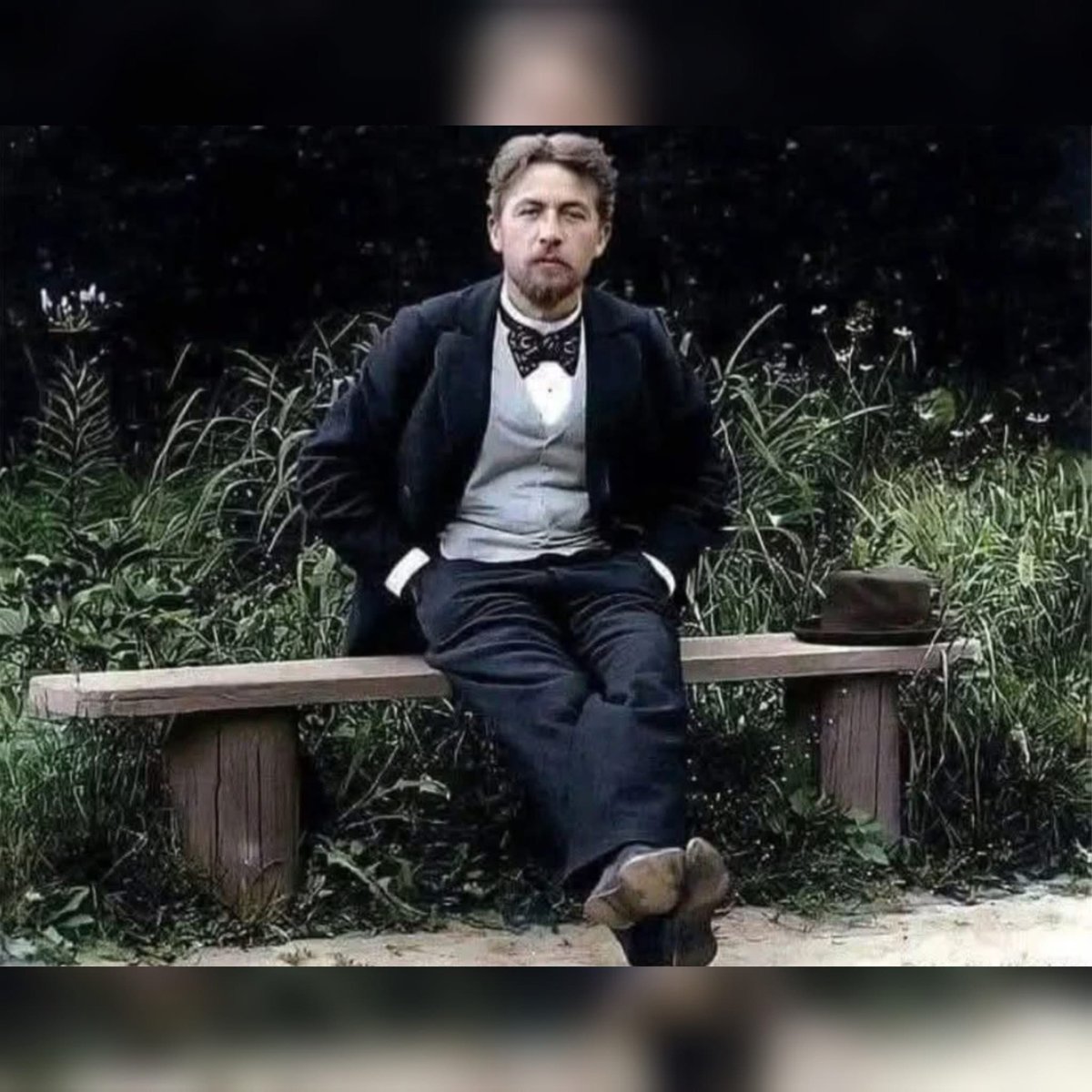
L’un des passages les plus poignants de la littérature russe…
Allons-y, papa.
Anton Tchekhov écrit dans l’un de ses récits :
À l’arrêt d’autobus, un vieil homme et une jeune femme enceinte attendaient ensemble.
L’homme ne cessait de fixer le ventre rond de la femme, intrigué. Puis il osa lui demander doucement :
— Vous êtes à combien de mois ?
La jeune femme semblait ailleurs, perdue dans ses pensées. L’inquiétude se lisait sur ses traits fatigués. D’abord, elle ne répondit pas. Puis, après quelques secondes de silence, elle murmura :
— J’en suis à la vingt-troisième semaine...
— C’est votre premier enfant ? demanda-t-il.
— Oui, répondit-elle d’une voix à peine audible.
— Il ne faut pas avoir peur, ajouta le vieil homme. Tout ira bien, vous verrez.
Elle posa la main sur son ventre, regarda droit devant elle, les yeux brillants, luttant contre ses larmes.
— J’espère… répondit-elle.
Le vieil homme reprit :
— Il arrive parfois que l’on se laisse submerger par des inquiétudes qui, au fond, ne le méritent pas…
— Peut-être…, souffla-t-elle tristement.
Il la regarda avec plus d’attention, plus de compassion.
— Vous semblez traverser une période difficile. Votre mari… n’est-il pas avec vous ?
— Il m’a quittée, il y a quatre mois.
— Pourquoi ?!
— C’est compliqué…
— Et vos proches ? Votre famille, des amis ? Personne pour vous entourer ?
Elle inspira profondément.
— Je vis seule avec mon père… Il est malade.
Un long silence. Puis le vieil homme demanda :
— Est-il toujours ce pilier que vous aviez connu dans votre enfance ?
Des larmes coulèrent sur les joues de la jeune femme.
— Oui… Même ainsi.
— Même dans son état ? Que lui arrive-t-il ?
— Il ne se souvient plus de qui je suis…
Elle prononça ces mots au moment même où arrivait l’autobus.
Elle se leva, fit quelques pas… Puis, se ravisa, revint vers le vieil homme, lui prit doucement la main, et dit avec tendresse :
Allons-y, papa.
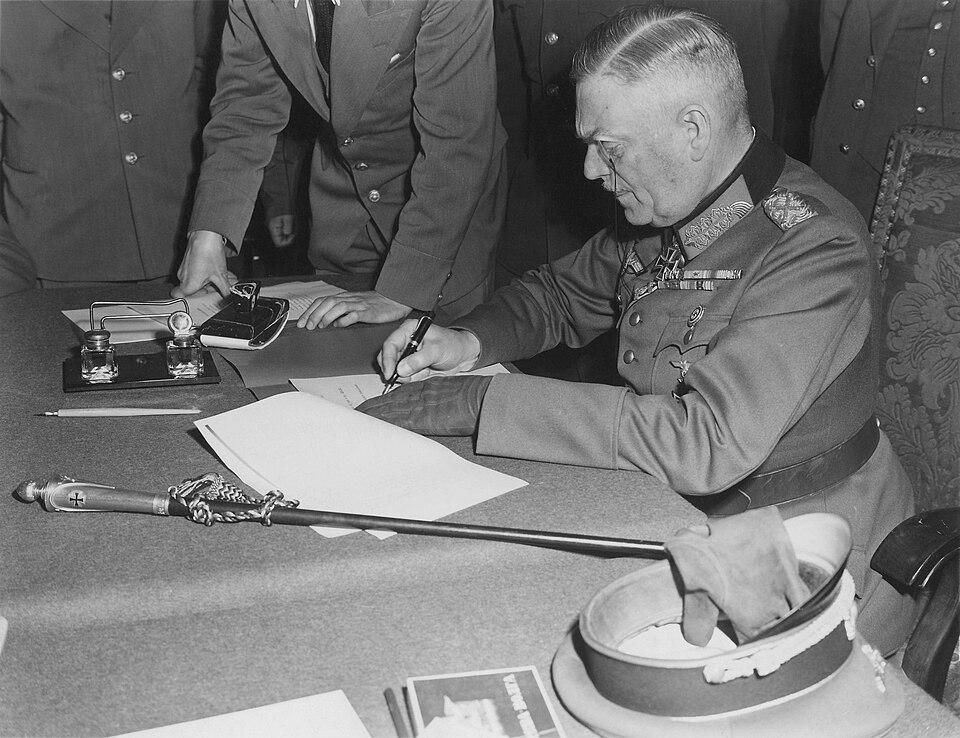
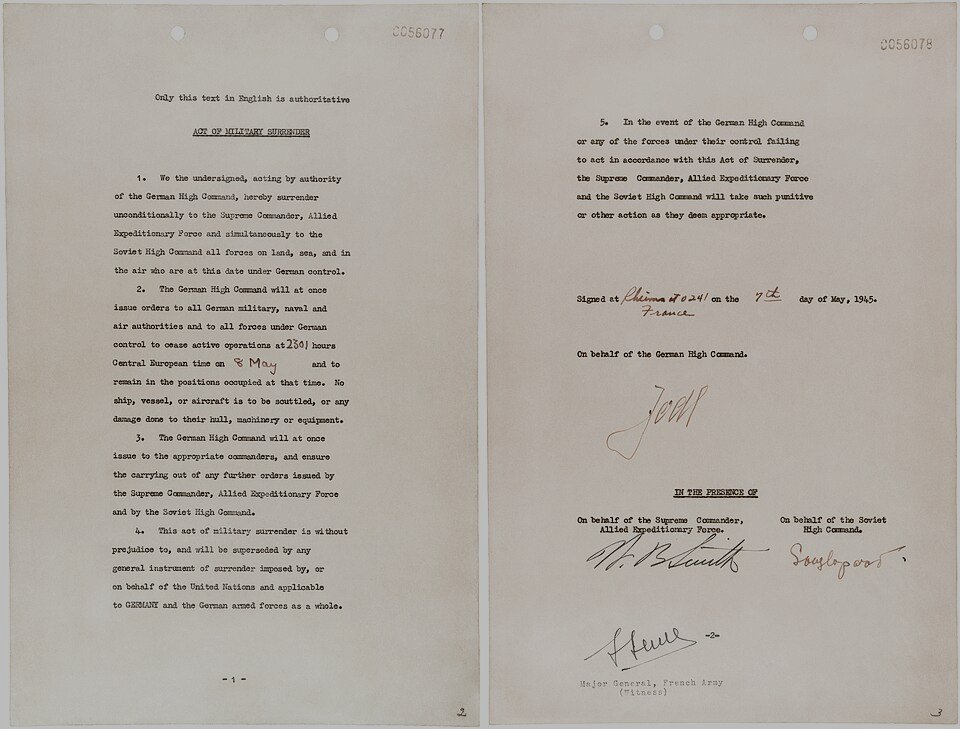
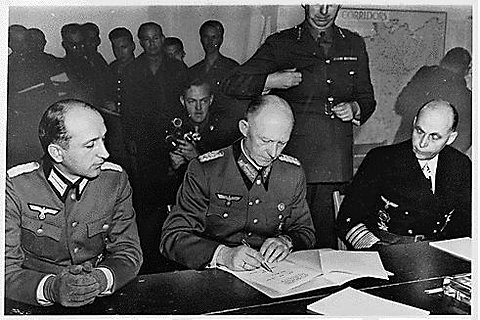
On this night in 1945, Field-Marshal Keitel signs Germany's unconditional surrender to the Allies. The ceremony follows the German surrender by Alfred Jodl on May 7 at Eisenhower's HQ in Reims, France. Stalin insists the surrender be made to the Red Army in the German capital.
RIGHT NOW in 1945, Generaloberst Alfred Jodl marches into Eisenhower's Reims, France headquarters and signs the German Instrument of Surrender. A UPI reporter describes the mood as "cold military punctiliousness." Stalin demands a second surrender take place in Berlin on May 8.
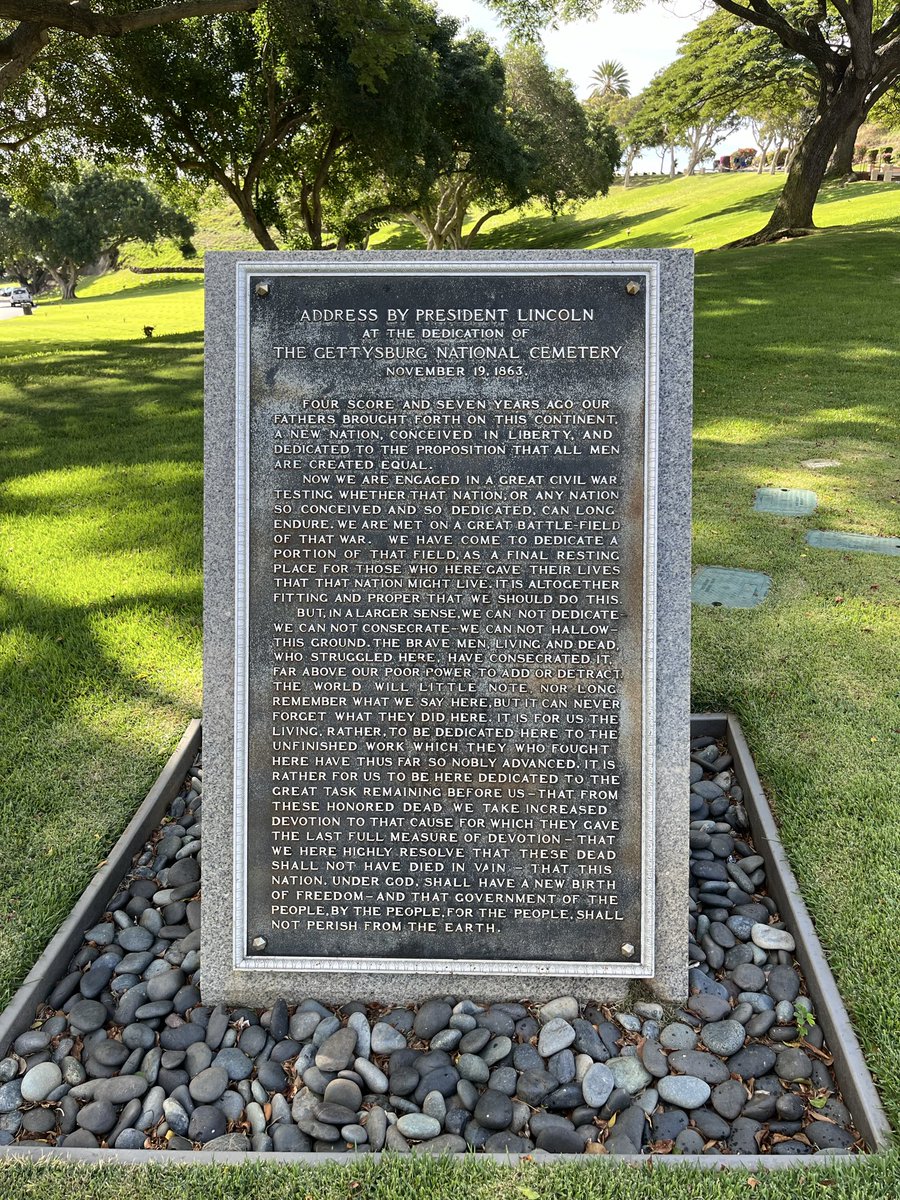
@MilHistNow “The world will little note, nor long remember what we say here…..that this nation, under God, shall have a new birth of freedom-and that Government of the People, by the People, for the People Shall Not Perish From The Earth ”🇺🇸
𝐌𝐞𝐧𝐬𝐚𝐣𝐞 𝐝𝐞 𝐬𝐮 𝐌𝐚𝐣𝐞𝐬𝐭𝐚𝐝 𝐉𝐮𝐚𝐧 𝐂𝐚𝐫𝐥𝐨𝐬 𝐈 𝐥𝐚 𝐦𝐚𝐝𝐫𝐮𝐠𝐚𝐝𝐚 𝐝𝐞𝐥 𝟐𝟒 𝐝𝐞 𝐟𝐞𝐛𝐫𝐞𝐫𝐨 𝐝𝐞 𝟏𝟗𝟖𝟏 𝐚 𝐥𝐚𝐬 𝟏:𝟏𝟒 𝐡𝐨𝐫𝐚𝐬, 𝐞𝐦𝐢𝐭𝐢𝐝𝐨 𝐩𝐨𝐫 𝐓𝐕𝐄.
Al dirigirme a todos los españoles con brevedad y concisión en las circunstancias extraordinarias que en estos momentos estamos viviendo, pido a todos la mayor serenidad y confianza y les hago saber que he cursado a los Capitanes Generales de las Regiones Militares, Zonas Marítimas y Regiones Aéreas la orden siguiente: Ante la situación creada por los sucesos desarrollados en el Palacio del Congreso, y para evitar cualquier posible confusión, confirmo que he ordenado a las autoridades civiles y a la Junta de Jefes del Estado Mayor que tomen las medidas necesarias para mantener el orden constitucional dentro de la legalidad vigente. Cualquier medida de carácter militar que, en su caso, hubiera de tomarse deberá contar con la aprobación de la Junta de Jefes del Estado Mayor. La Corona, símbolo de la permanencia y unidad de la Patria, no puede tolerar en forma alguna acciones o actitudes de personas que pretendan interrumpir por la fuerza el proceso democrático que la Constitución, votada por el pueblo español, determinó en su día a través de referéndum.
FIN
23F /23-F / #23F