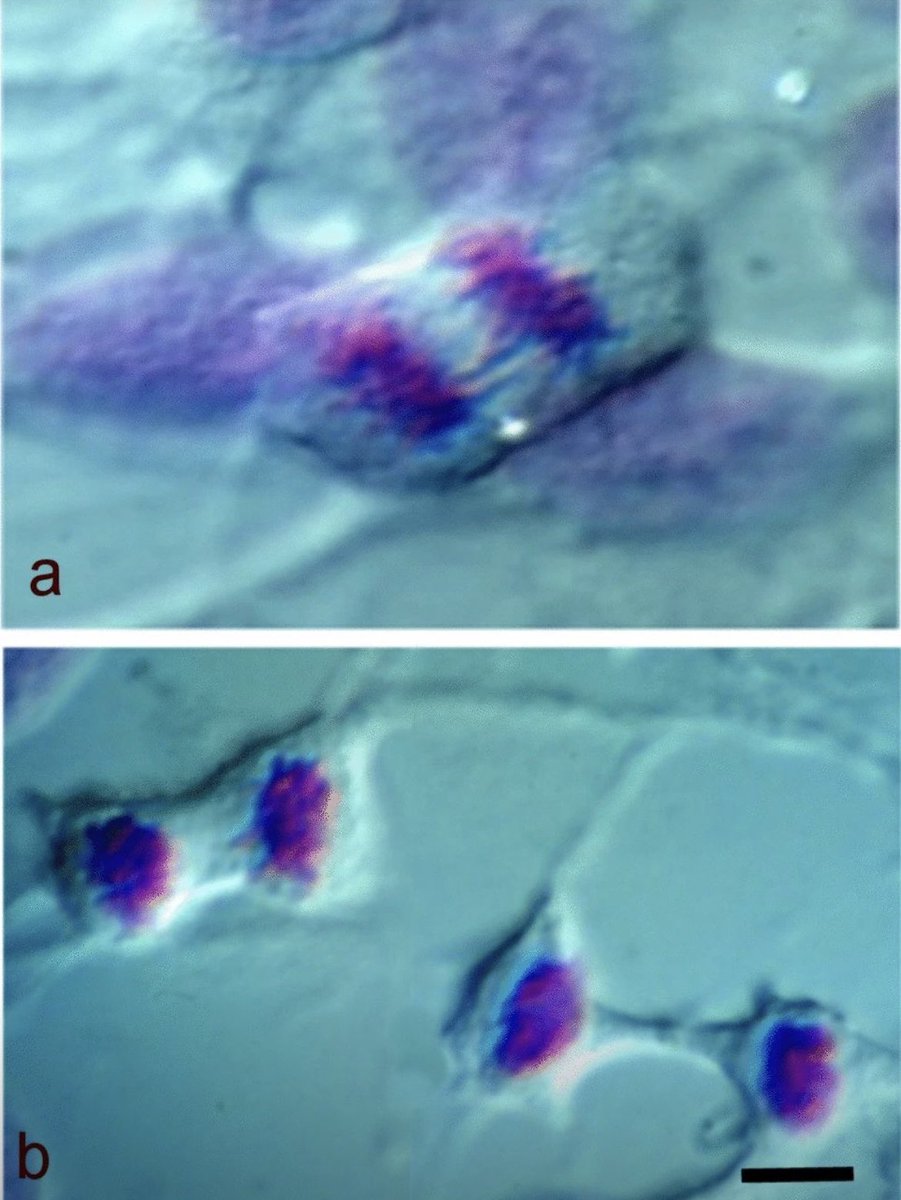
On the #100th anniversary of the discovery of the #Fuelgenreaction, Prof. Biggiogera and my friends Casali and Cavallo traced back the history of this remarkable discovery and how it is still a cornerstone in #optical and #electron#microscopy today: https://t.co/ez5V2uweu2
Extremely proud to announce that the first paper of my #PhD thesis has just been published in @CommsChem. Revealing the #stableisotope composition of the #shellorganicmatrix is helpful for paleoclimate and paleoenvironmental interpretations.
Read it here: https://t.co/LJLDKNHnmS
Il presidente dell’ordine dei biologi che si rivela negazionista climatico potrebbe essere l’ultimo dei suoi problemi. La sezione wikipedia delle sue eroiche gesta antiscientifiche è ben ricca di spunti risibili. Questo giusto per dire che non importa chi siete, anche voi potete diventare presidente di codesto esoterico ordine. L’importante è non smettere mai di sognare in questo nostro gran bel paese in cui nulla è grave perché tutto è grave
Day 11 of great synthetic biology papers.
"BioBits™ Explorer: A modular synthetic biology education kit."
A child can learn about CS by writing an endless number of computer programs on a laptop. Code is cheap & modular. What will be the equivalent to teach biology?
****
There is a real need for modular, easy-to-use kits to teach synthetic biology in the classroom. This paper is a starting point toward that dream.
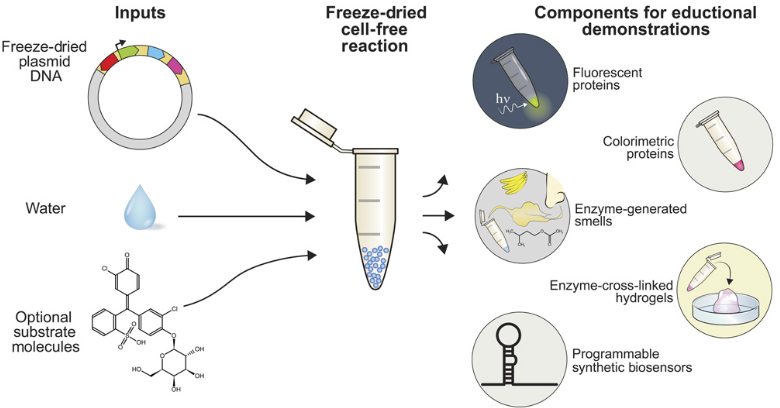
Cell-free systems are a simple way to teach biology. A cell-free extract is basically the "guts" from living cells, with their membranes stripped away. When these extracts are freeze-dried, they become stable at room temperature. And when you add back water, the components that were once inside the cells— enzymes, DNA, RNA—become active again.
Freeze-dried cell-free extracts were used to create lessons that "engage three of the five senses—sight, smell, and touch." Students add DNA, water, and optional molecules to the extracts, which then "activate" and produce fluorescent proteins, enzymes that make smells, or proteins that change colors. It costs about $200 for 30 kits. (https://t.co/ViXNqsXTcp)
A separate paper describes BioBits™ Bright, a kit to make bright, fluorescent proteins for K-12 students. An incubator, imager, and 30 kits costs under $100. (https://t.co/YIeeKCKtIm)
Another kit, BioBits™ Health, is designed to teach students about antibiotic resistance and genetic engineering with CRISPR-Cas9. (https://t.co/VAuEge9xfc)
Many others have also thought about the problem of synthetic biology education. @Aminobiolab sells kits and books that teach various experiments. @TheODINInc sells genetic engineering kits. And @theBentoLab sells a portable "DNA analysis lab," complete with thermocycler and gel imaging station to run PCRs on-the-go.
But the ingredients to engineer biology — cells, fancy equipment, amino acids, lots of chemicals — are expensive and difficult to work with. They also aren'tt modular. If you mix lots of chemicals together, then they get used up and you have to buy more. Biology is not like a computer, where you can use the same circuits to do different things in infinite ways.
So why don't we try to make a cheap, modular kit for biology education? By modular, I mean that a limited number of “ingredients” could be used across a wide range of practical exercises, much like a small number of logic gates can be rearranged to solve incredibly complex computational problems. Cell-free extracts might be a good place to start, but I wish there was also an easy (but safe) way for people at home to assemble DNA building blocks.
Or what if we could place a laboratory in a briefcase, and rearrange atoms again and again so that students didn’t have to buy molecules every time? This is a really hard problem to solve. But a solution would massively open up the bioeconomy and enable millions of students to learn about biology through hands-on exercises. And we need that if we really want to solve climate change, grow more food, make medicines and materials, or realize a solarpunk vision.
Who is thinking about this problem? @SofiasBio @4LOVofScience @gmofutures
🪃Ancient humans hunted animals by throwing a stick like a boomerang. Analysis of a wooden stick thought to be around 300,000 years old suggests it was designed to be thrown rotationally, rather than as a spear. https://t.co/CHMnZXjPVa
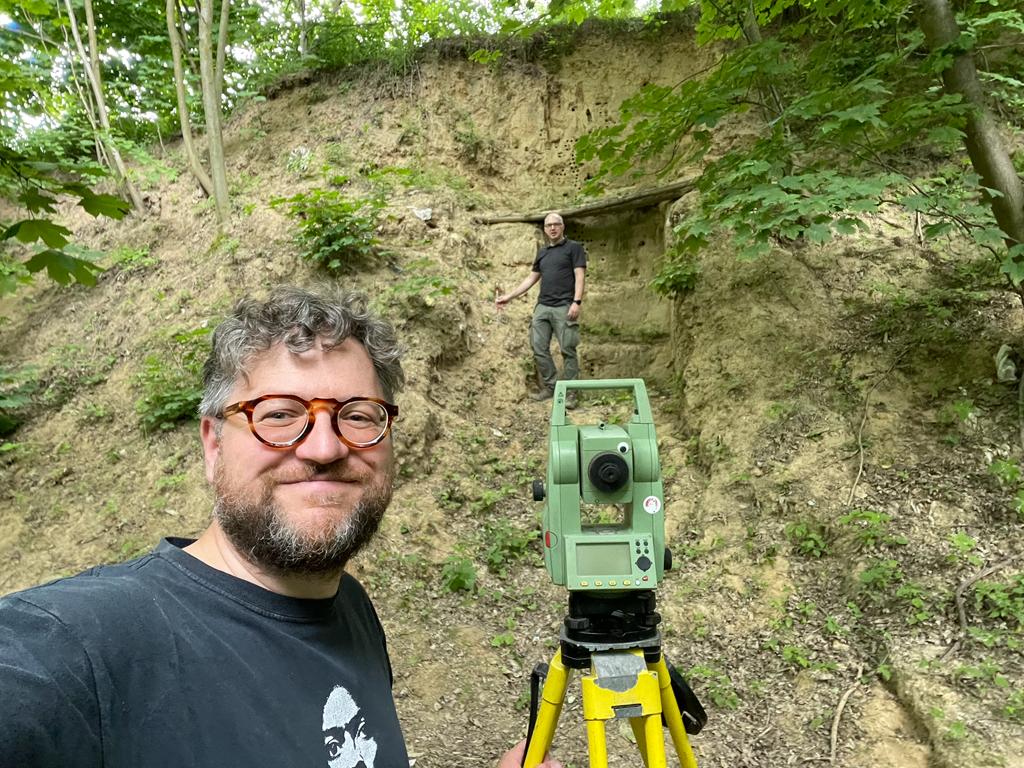
Last day of excavation at Krakow-Zwierzyniec 1, where we discovered a few hundred Aurignacian artifacts. We thank the volunteers for their excellent work and stay tuned for updates on the EUP in Poland with @DStefanski3@TheLeakeyFndtn@Ciamician_unibo#homosapiens#fossifriday
https://t.co/mgqxDJZHBZ
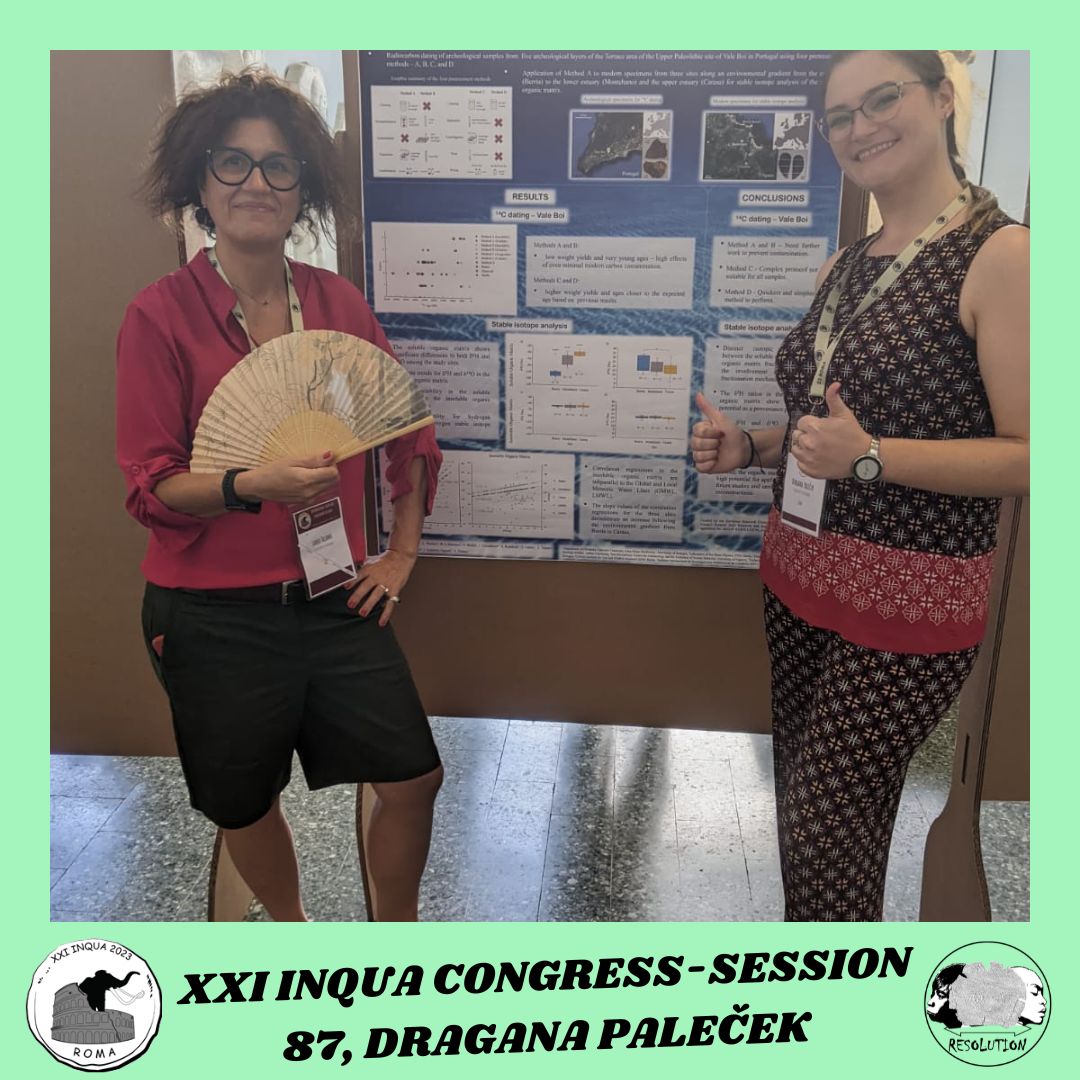
Looking forward to giving a talk at Session 87: Prehistoric hunter-gatherers’ adaptation during the Last Glacial in Europe and taking part to this Congress.
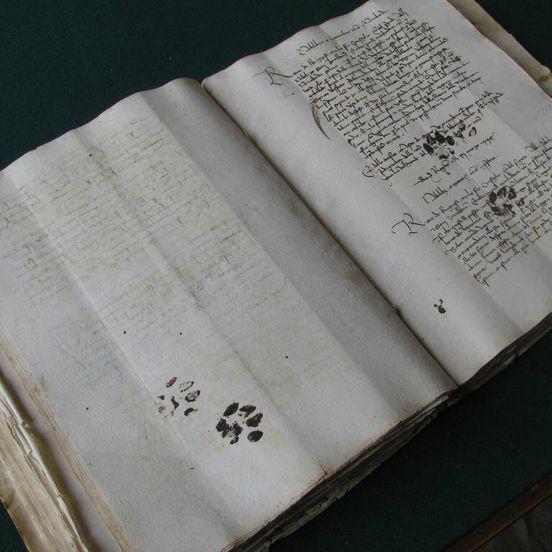
🐈 How the domestic cat conquered Europe #TakeYourCattoWorkDay
This map tracks how our feline friends spread from their homeland in Western Asia, eventually reaching every corner of Europe with the help of the Greeks, Romans, and Vikings
🔗 from 2022 🆓https://t.co/Y6616MNYc5