@livvyswann Great idea @livvyswann - I use profiles to hide the apps on my screen at home or work. It’s not perfect - sometimes a notification slips through. Might give this a go! I am guilty as charged - if they could make portfolio as addictive I would be grand…
Thank you for asking me this question
I generally refrain from comparing medical scandals because they are all tragedies in their own way.
The Bristol heart scandal arose because the unit had demonstrably worse results for paediatric cardiac surgery than other units, but was telling parents the UK average mortality rates rather than the unit’s actual rates. To compound matters, the problems in Bristol were widely known amongst the profession, the Royal College of Surgeons, the Society of Cardio Thoracic surgeons, the Department of Health specialist commissioning group etc. Everyone knew apart from the parents, until a very brave whistleblower called Steve Bolsin spoke up. The public inquiry, which finished nine years after I broke the story in Private Eye, concluded that around three dozen babies might have survived if they’ve been operated on elsewhere over a set period. Over a longer period, Professor Bolsin puts the number at around 170. The real tragedy of Bristol is that it made 198 recommendations, many of which have been subsequently repeated in all the other health scandal since, most notably the Mid Staffs inquiry and more recently the infected blood inquiry. The UK is a world leader in public inquiries, and then we ignore the findings so we can have another public inquiry.
The physician associate scandal may not progress to a public inquiry because so many people have raised concerns early, both here and elsewhere. Various Royal Colleges and the GMC have egg on their face and are reversing, or may shortly be reversing, their positions. Far more NHS staff are speaking up for patient safety and, with a new government in charge, constructive changes are more likely to happen and people will continue to speak up if they don’t.
There have been some well publicised disasters where PAs have either voluntarily or forcibly been put in positions that were beyond their competence, and serious harm and death has resulted. However, this clearly doesn’t just apply to PAs. In the Bristol Inquiry report, it was estimated that around 25,000 people die every year in the NHS from either substandard care, or failure to access care. More recently we seem to have settled on a number of 11,000 avoidable deaths a year. Only a tiny fraction of these will have anything to do with PAs.
I guess what I’m saying is that we need to look at patient safety in the round, and speak up forcibly about every aspect of it. My big lesson from Bristol was that how you raise concerns matters as much as the concerns you raise. I did it in a very aggressive way, that made people pull up the drawbridge and probably delayed constructive change and adversely affected the mental health of surgeons trying to do the hardest operations on some of the sickest children. There are plenty of competent PAs out there doing their best in very difficult circumstances, and suicide rates are high enough amongst NHS workers without making things worse.
If we see everything through the prism of patient safety, safe staffing and skill mix levels, it gives us something to unite around as healthcare workers. As Steve Bolsin famously said about the Bristol case, “if you want to prevent future scandals, never lose sight of the patient.” And the lesson from Bristol for PAs out there is that you have to be very explicit and honest with patients about who you are and what your levels of expertise are. If you give misinformed consent, there is no defence. And hospitals and professional bodies that misrepresent the expertise of PAs are equally culpable.
Does that answer your question?
We are calling for @NHSEngland to review its projections for growth in the physician associate workforce until issues of regulation, standards and national scope of practice are addressed.
Read our full updated statement to the Long Term Workforce Plan: https://t.co/zyMjgZhFYq
🌟🌟🌟Article in Press🌟🌟🌟
Key messages:
1⃣HIE is the most common cause of neonatal seizures, often electrographic only
2⃣ Neonatal-onset epilepsy worse outcome than acute/provokes neonatal seizures
#neonatalseizures#NICU#seizures#ILAE
https://t.co/XgbzDpoFC9
We have written to @AmandaPritchard to raise serious concerns about the way that @NHSEngland are engaging with the national derogations system and we are seeking her urgent intervention. Read the letter:
https://t.co/UmCYlY2OEq
“MAP issues are just a small social media issue”
Is it anymore?
“I don’t do social media”
You should try it
Regulation firmly in focus via @AoMRC
Time for a pause on planned expansion @NHSE_WTE ?
Scope, title, supervision…all needs review
https://t.co/65aCVWfycJ
Also: Get in touch with your local sub-spec depts. There will be plenty of Neurologists and GRID trainees who would be happy to help. @BPNA_org has resources and hold events regarding GRID training.
Two-year neurodevelopmental data for preterm infants <30 weeks 2008–2018
0.4% blind
1% hearing impaired
8% could not walk
9% ≥12m developmental delay
National Neonatal Research Database 🇬🇧
@docevb, @NeenaModi1, @DrCBattersby
https://t.co/0RRgeMFdx6
Politicians play politics. Doctors treat patients. Daily harm in health care from not enough beds or staff - fact. HMG refused to implement independent advice on pay last year for juniors. Doctors do whatever it takes to deliver care; political choice to fund or not fund - fact.
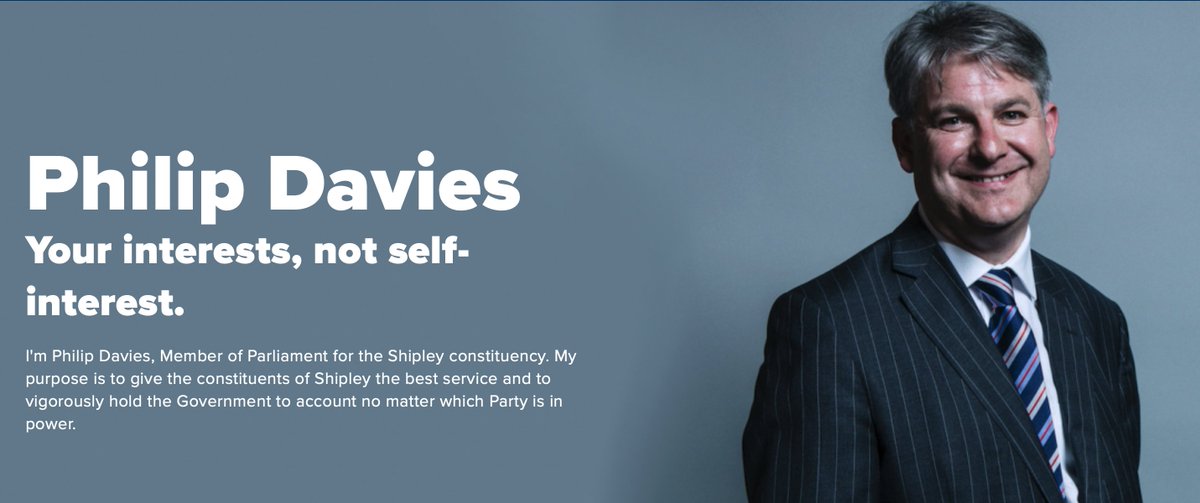
This is MP @PhilipDaviesUK. Much like the rest of the Tory party, he hates doctors. However, it seems he hates them even more than his other crony friends. The tweet below is a reply he sent to a doctor who sent him the BMA letter asking him to support the strikes.
This morning on @bbcr4today the Health Secretary @SteveBarclay said Consultants get a "tax-free pension of £73,000 a year" when they retire.
This is categorically not true, and we expect him to issue an urgent correction. Here's why 🧵 (1/5)