A Calabrian 🏛️🌅 civil engineer engaged in studying the hydrogeological issue 🏞️ worldwide 🌍🌎🌏, doing gardening and learning languages in the free time.
@Pokemon Playing with pokemon cards after 20 years⏳, and inventing new ones 🧑🎨 with my little nephew🧒
We present you...drumroll...Icetale🐉❄️
Stay tuned🎨
#Pokemon25#Pokemon
As I reflect on my sabbatical, I’m proud to share that I’ve dedicated much of my time to developing a free, online e-book:
Applied Geostatistics in Python: A Hands-on Guide with GeostatsPy 📘💻.
Looking back, with 32 comprehensive chapters—each featuring theory, code, data, and fully documented workflows—I feel a deep sense of accomplishment ✨. This resource is not just a collection of technical content but a practical guide to mastering geostatistics in Python 🔍📊.
Leaving industry to join academia has been an incredible opportunity to give back 🎓, and I’m thrilled to see the positive feedback from those learning and applying #geostatistics 🙌. It’s been an exciting journey, and I can’t wait for more people to explore this content 🌍.
Check it out here: https://t.co/k9WQGX0jAM ∀.
I’m developing a series of compelling case studies to illustrate how correlation analysis is influenced by factors such as nonlinearity, outliers, and the mixing of distinct populations.
My goal is to replace static schematics with fully interactive, repeatable demonstrations supported by well-documented #Python code, enabling students to explore these concepts firsthand.
Repeatable education isn’t just a goal—it’s my mission to empower students with tools and knowledge they can directly engage with and apply.
In my #DataAnalytics and #Geostatistics courses, I teach #MonteCarlo simulation through hands-on, real-world examples.
Together, we build a lithium resource uncertainty model, estimating uncertainty in the area, thickness, and grade of the deposit. Then, we run simulations to explore and sample the uncertainty, giving students practical experience in probabilistic modeling.
You can find my #Python dashboard on my GitHub: https://t.co/GyeLhI5KMR. #DataScience #MachineLearning #InteractiveLearning
A plane dropping a curtain of titanium tetrachloride to hide ships in 1923.
The resulting dense white smoke actually consisted of droplets of hydrochloric acid and titanium oxychloride.
Who reviewed this paper?
A few days ago @gcabanac tweeted about a paper that had published a remark that it had been forced to cite irrelevant papers. You can see the tweet here: https://t.co/FpSr5QLPfW. We remarked that if it was not so serious, it would be funny.
Since reading that tweet, we have not been able to get it out of our head, so we thught that we would document it in a little more detail. We are doing this for three reasons.
1️⃣ In our view, it descerves more detail to be made available.
2️⃣ We'd like these details to be be kept as a matter of public record, so we are posting similar posts on our X account and our LinkedIn account.
3️⃣ It should be of interest to this community, so we hope that this raises even further the ethical issues around this topic.
The first image shows the paper that we are looking at. What is interesting is the text that appears on at the end of the introduction (highlighted in red). This appears to show that the reviewer insisted that a set of 13 papers be cited, else they would not accept the paper. It would be interesting to see the review repport, so that we could be certain what had been said. If you want to see the paper, it is available here: https://t.co/mlv5UDdp5T
In the rest of this 🧵, we show the papers that have been asked to be cited (i.e. [35]-[47]). These have been taken from the paper mentioned above. You'll notice (as we have highlighted it) that every paper is "et al." meaning, of course, that there are quite a few authors on each paper.
Gicven that we cannot see all the authors, the other images on this 🧵 shows the full set of authors on each of these 13 papers.
We leave it an an exercise for the reader to hazard a guess as to the reviewr is?
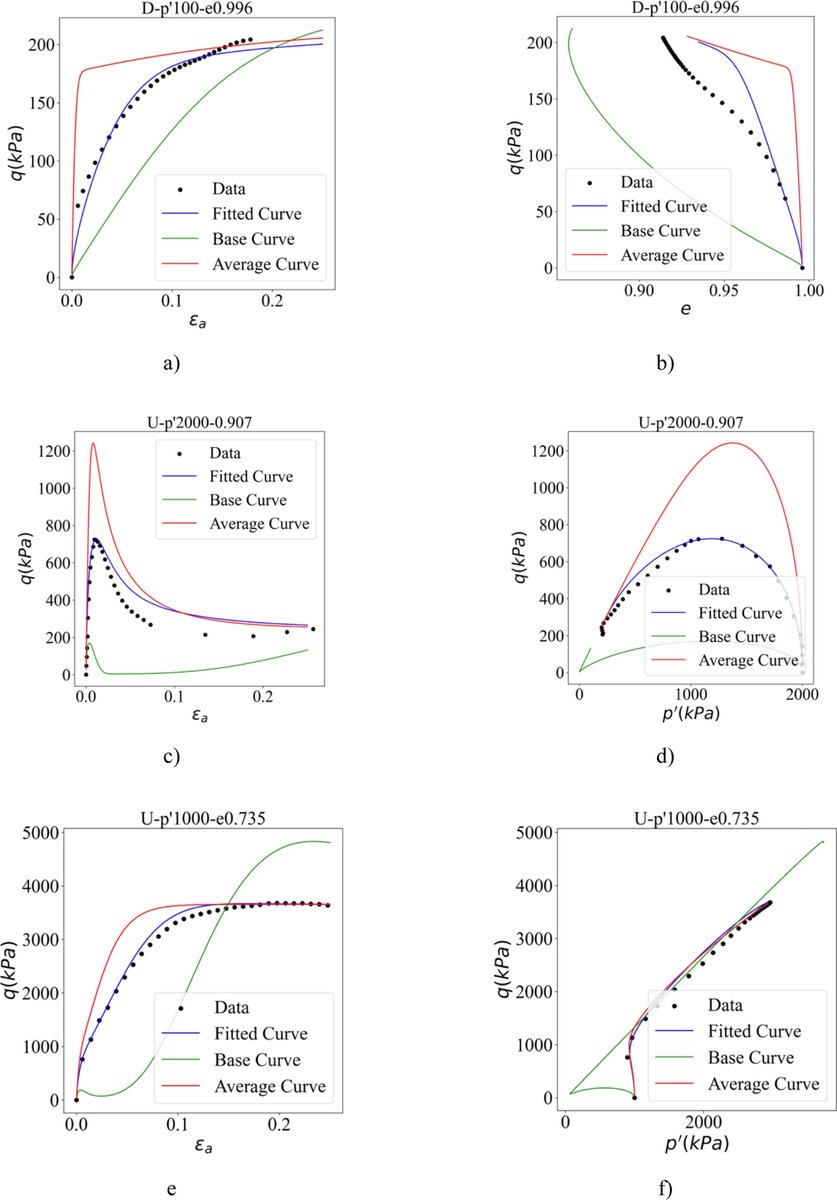
Researchers from Australia and USA propose AlphaZero-Inspired AI for autonomous parameter identification in soil constitutive and finite element models.
https://t.co/qNSqWevODo
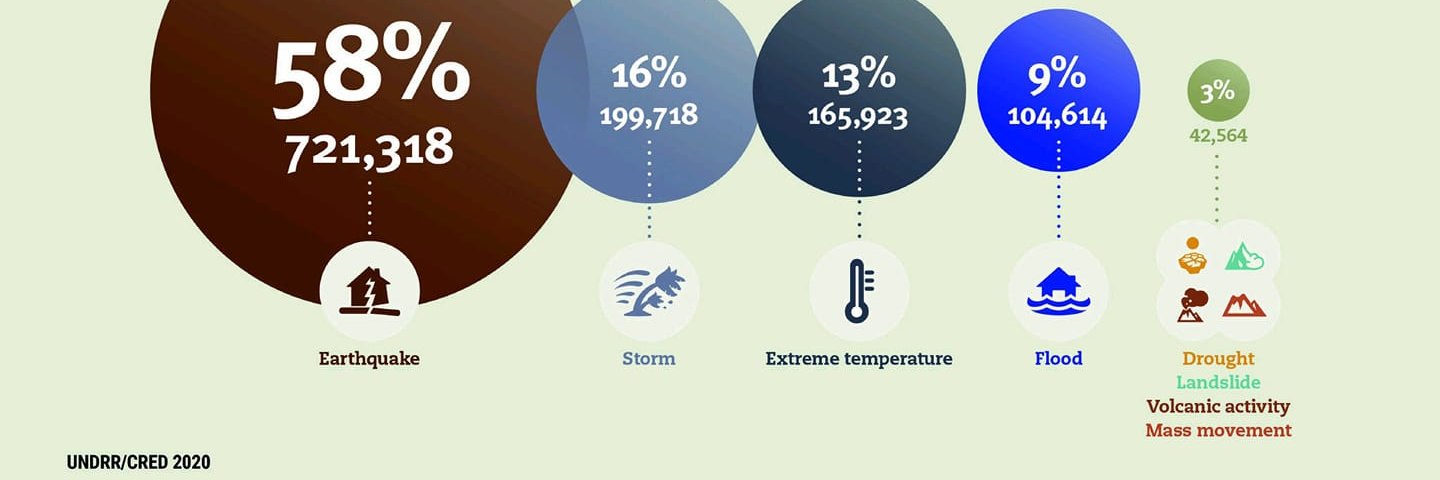
Flooding disaster unfolding right now in Central Europe.
Why is it so bad?
This thread takes a quick look at some of the key ingredients of this record-breaking storm.
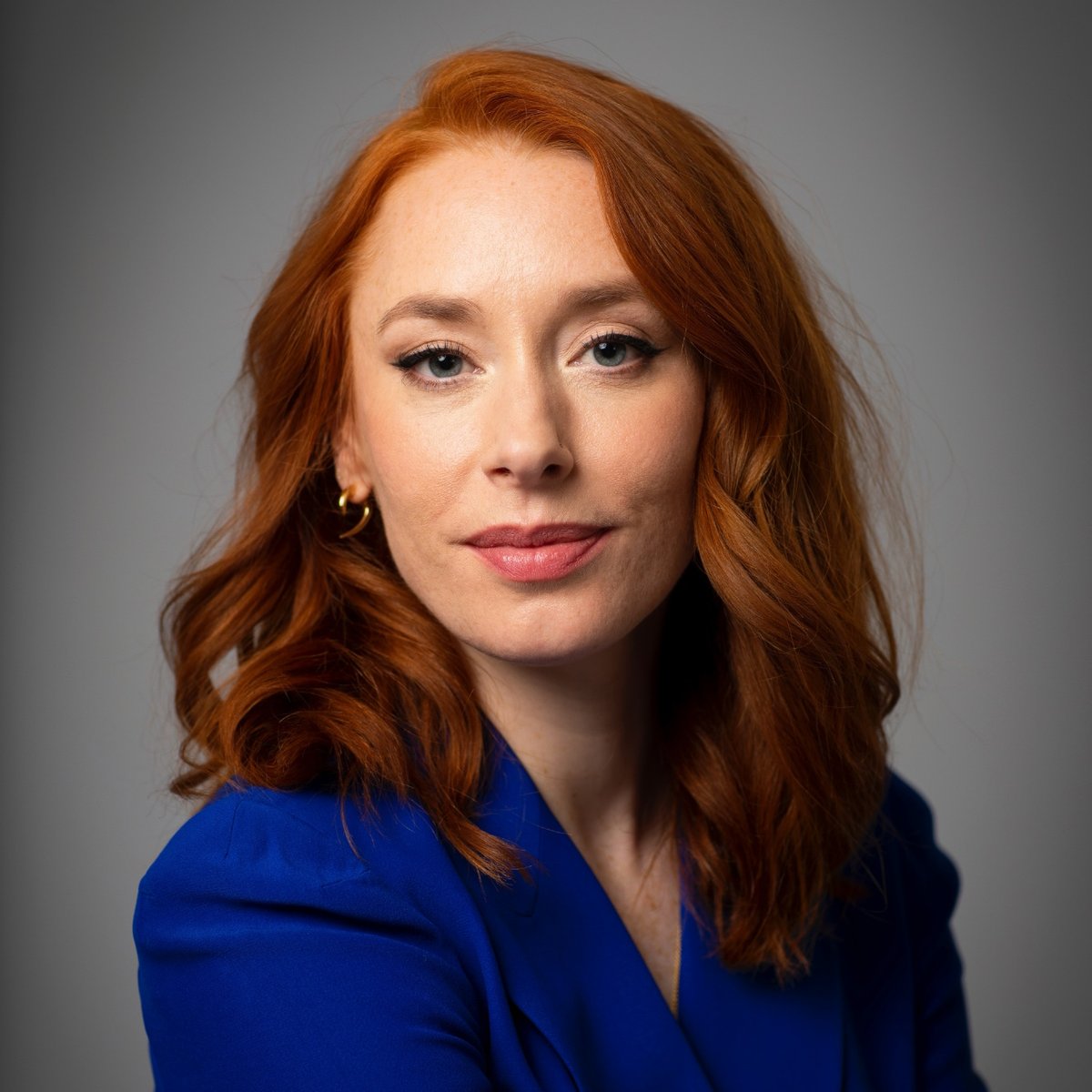
The Royal Society David Attenborough Award and Lecture is awarded to Professor Hannah Fry for her prolific science communication activity as the foremost populariser of maths in the country who continues to inspire young people to pursue maths and physics in fun and exciting ways. #RSMedals https://t.co/J4K3DF8Cqi
You’ve heard of kriging—the best, linear, unbiased estimator that also gives you the kriging variance, a measure of estimation uncertainty. But do you really understand how it behaves?
To help my students grasp #spatial predictions with kriging, I created an interactive #Python dashboard. Dive in, experiment with kriging, and deepen your understanding. Check it out on #GitHub: https://t.co/BjmZINmu8I ∀. #DataScience
another @py_cafe example:
A @networkx_team python script, together with a @threejs viewport. Code can directly be edited in this sandbox https://t.co/E1UpkYwNho
BHS Symposium Registration is OPEN!
Join us 23/24 September at Oxford University.
Register here: https://t.co/jdIAS8aE4J
This is a great opportunity to share ideas as a community. Anyone connected to hydrology welcome!
Want to know how to make engaging graphics to communicate your research? If you missed Jen Christiansen, senior graphics editor @sciam, sharing her top tips in our #EGUwebinar 'How to visualise your science' it's now up on our YouTube channel!
Watch now: https://t.co/lj3dbqQNPM




![fake_journals's tweet photo. Who reviewed this paper?
A few days ago @gcabanac tweeted about a paper that had published a remark that it had been forced to cite irrelevant papers. You can see the tweet here: https://t.co/FpSr5QLPfW. We remarked that if it was not so serious, it would be funny.
Since reading that tweet, we have not been able to get it out of our head, so we thught that we would document it in a little more detail. We are doing this for three reasons.
1️⃣ In our view, it descerves more detail to be made available.
2️⃣ We'd like these details to be be kept as a matter of public record, so we are posting similar posts on our X account and our LinkedIn account.
3️⃣ It should be of interest to this community, so we hope that this raises even further the ethical issues around this topic.
The first image shows the paper that we are looking at. What is interesting is the text that appears on at the end of the introduction (highlighted in red). This appears to show that the reviewer insisted that a set of 13 papers be cited, else they would not accept the paper. It would be interesting to see the review repport, so that we could be certain what had been said. If you want to see the paper, it is available here: https://t.co/mlv5UDdp5T
In the rest of this 🧵, we show the papers that have been asked to be cited (i.e. [35]-[47]). These have been taken from the paper mentioned above. You'll notice (as we have highlighted it) that every paper is "et al." meaning, of course, that there are quite a few authors on each paper.
Gicven that we cannot see all the authors, the other images on this 🧵 shows the full set of authors on each of these 13 papers.
We leave it an an exercise for the reader to hazard a guess as to the reviewr is?](https://pbs.twimg.com/media/GcHPaEpWwAAZCAL.jpg)