To all the @elonmusk fans and @Starlink $TSLA fans - I respect what @SpaceX has built. But let me show you why Starlink Mobile isn't even playing the same game as $ASTS , and why ASTS is trading at a steal right now.
It comes down to spectrum. And once you understand spectrum, the entire D2D picture becomes obvious.
Think of radio spectrum like sound from a speaker. Bass notes are low frequency - they travel far, go through walls, you feel them in the next room.
Treble notes are high frequency - crisp and clear but step behind a wall and they disappear. This is physics. Can't be engineered around no matter how many satellites you launch.
Here's who owns what in D2D:
LOW-BAND - the bass. Goes through walls, buildings, cars.
→ 700 MHz: AT&T and FirstNet own it. Leased to ASTS. FCC authorized for 248 satellites. This reaches you inside your house, in a basement, in a parking garage.
→ 800/850 MHz: AT&T and Verizon own it. Leased to ASTS. FCC authorized. Same indoor penetration.
→ 902-928 MHz: Federal radiolocation band. ASTS filed to test radar here for the Space Force starting June 12. Defense revenue on a different frequency.
Nobody else has D2D authorization on low-band. Not SpaceX. Not Amazon. Not Qualcomm. It's all owned by carriers who spent tens of billions at auctions over decades to lock it up.
MID-BAND — the treble. Outdoor only. Does not penetrate buildings.
→ SpaceX: ~65 MHz owned (AWS-3, AWS-4, H-Block, 1695-2180 MHz range). Paid $17B+ for it through EchoStar. Real spectrum. But current phones don't support these bands. SpaceX's own VP said commercial launch mid-2027. And even then mid-band still doesn't go indoors.
→ SpaceX current D2D: T-Mobile PCS (~1900 MHz), leased. Powers Starlink Mobile today at 3-7 Mbps. Texting and basic data. Outdoors only. T-Mobile CEO said they're seeing "a lot less usage than originally thinking."
→ Amazon/Globalstar: ~25 MHz total. 8 MHz L-band + 16.5 MHz S-band. Asymmetric — caps two-way throughput. Narrowband, not broadband. D2D system not launching until 2028 at earliest. Amazon paid $11.6B for this.
→ Ligado: 45 MHz L-band. FCC approval pending for 7+ years. GPS lobby blocking it.
ASTS'S OWNED SPECTRUM - this is what nobody talks about: → ASTS acquired 40 MHz of Ligado's L-band spectrum for $550M upfront plus $80M per year on an 80-YEAR lease. That's not carrier-leased spectrum. That's ASTS-controlled spectrum with usage rights through 2106. This gives ASTS the ability to operate independently of carriers if needed - a backup path nobody is modeling.
→ ASTS also secured S-band spectrum priority rights for $64.5M.
SPECTRUM ASTS IS FIGHTING FOR:
→ 1675-1680 MHz: Last week ASTS's SVP of Regulatory Affairs Jennifer Manner met directly with FCC staff to argue this band should be auctioned for satellite D2D use. Qualcomm wants it reserved for "sidelink" - terrestrial device-to-device communication for things like vehicle-to-vehicle. If Qualcomm wins, the band gets locked for one ground-based technology. If ASTS wins, it opens more mid-band spectrum for satellite D2D expansion. NTIA already identified this band as a potential D2D candidate. ASTS is fighting to keep the door open and imo ASTS will win.
THE FULL ASTS SPECTRUM POSITION:
Commercial D2D: 700/800 MHz (carrier-leased, FCC authorized, indoor capable)
Owned spectrum: 40 MHz L-band (80-year rights) + S-band priority rights
Defense: 902-928 MHz (radar/PNT for Space Force, testing June 12)
Future expansion: 1675-1680 MHz (fighting Qualcomm at FCC)
Gateway: V-band for feeder links
Now here's why this is a moat and not just a list:
ASTS is the ONLY D2D company with indoor coverage. Low-band penetrates walls. Everything else doesn't. When SpaceX fans say "Starlink will figure it out" - figure out what exactly? They have zero low-band. The carriers who own it will never lease it to a company building a competing network. That's not a technology problem. It's a trust problem. And trust takes decades to build.
ASTS has both leased AND owned spectrum. The carrier-leased low-band gives them indoor D2D today. The Ligado L-band gives them 80 years of independent spectrum rights. Nobody else in D2D has this dual structure.
Carriers are equity investors in ASTS. AT&T, Verizon, Vodafone - they put their own money in. Then all 3 US carriers formed a JV around ASTS technology. They trust ASTS with their spectrum because ASTS makes their network more valuable, not replaceable.
ASTS is playing four spectrum games simultaneously. Carrier-leased D2D. Owned L-band. Defense radar. FCC lobbying for future expansion. Show me another company doing this.
What did everyone pay for spectrum?
SpaceX: $17B+ for 65 MHz mid-band (outdoor only, phones don't support it yet)
Amazon: $11.6B for ~25 MHz narrowband (asymmetric, 2028 at earliest)
ASTS: $550M + $80M/yr for 40 MHz L-band (80-year rights) PLUS free carrier-leased low-band that nobody else can get
SpaceX is valued at $1.75T. Amazon's space division has invested $21B+. ASTS market cap? $35B. With the only indoor D2D spectrum, 80 years of owned spectrum rights, defense radar capabilities, and every major US carrier as a partner.
Bass goes through walls. Treble doesn't. The carriers own all the bass. They gave it to ASTS.
$ASTS - 3 more BlueBird satellites heading to orbit on Falcon 9 this month. The spectrum is locked. The rockets are ready. 🛰️
@SawyerMerritt@TeslaBoomerMama
@MomAngtrades As the old saying goes: You may vote your way in to Socialism but you will have to shoot your way out...,...or flee to a red state and vote for the same stuff there like they do in Nashville.......
United Launch Alliance successfully completed today's launch of the Amazon Leo 7 mission by the Atlas V rocket! All 29 advanced broadband satellites have been deployed into low Earth orbit, bringing the total number launched by ULA to 197. Atlas V has delivered the majority of Amazon satellites into space.
Next up, Leo 8 with another 29 satellites in July.
https://t.co/5bAKrECLty
$ASTS closed at ~$106 heading into a long weekend. Take a breath. Here's what's happening behind the scenes while the market is closed.
Every analyst at Goldman, Morgan Stanley, Deutsche Bank will pull apart the SpaceX S-1 this weekend.
They would be modeling @Starlink 's $11.4B at 63% margins. They will be sizing the $740B D2D TAM. And they would be looking at the named competitor in that filing $ASTS .
Those analyst reports hit desks Tuesday morning. Fresh eyes. New models. Public comparable identified.
All three BlueBird satellites are confirmed ready for June launch. Next week we should hear the specific launch date. Once that gets pinned on the calendar, it becomes real for every investor still on the sidelines.
SpaceX IPO roadshow starts in two weeks. Starlink will be the most talked about business in finance for the next month. Every conversation about Starlink Mobile is a conversation about the D2D market that $ASTS leads in technology and carrier partnerships. New investors and retailers will discover $ASTS through SpaceX's own story.
What I expect in June: $ASTS announces the next batch of satellites for July launch around the same time BB8-10 go up. If manufacturing cadence is proven, the market stops debating whether they can build satellites and starts pricing in the full constellation. That's the shift from "can they execute" to "how fast can they scale."
Things are becoming routine at $ASTS . Satellites built. Satellites shipped. Satellites launched. That's the biggest catalyst of all i.e. when execution becomes boring, the market pays up.
Now the part I want to say directly.
I know a lot of you are sitting on gains right now and thinking about taking profits over the weekend. That's your call. But here's what I learned trading $TSLA for years.
I exited momentum multiple times thinking I'd buy back on a dip. Sometimes I did. Sometimes the stock never came back to my exit price and I watched it run without me. The times I missed the re-entry cost me more than every dip I ever sat through.
Building a thesis is the first hard thing. Building conviction is harder. But the hardest thing is doing nothing while the thesis plays out - sitting through the red days, the bear posts, the volatility, the urge to trade around your position, or taking profits and rotating into something shinier that showed up on your X feed.
I'm not setting price targets. I don't call tops or bottoms. If you want short-term technical levels, @Reformed_Trader charts have been solid - You do You.
What I will say: partnerships are inevitable but useless without hardware in orbit. The hardware is going up next month. The partnerships (google, meta, anduril) will follow. The analyst coverage is coming. The institutional discovery is happening right now over someone's morning coffee at a long weekend house in the Hamptons.
Let it cook.
$ASTS 🛰️
A BlueBird convoy is officially underway.
Two BlueBirds are already making their way to Cape Canaveral, with the third close behind.
Next stop: the launch pad. 🚀 🚀 🚀 🚀 🚀 🚀 🚀 🚀 🚀 🚀
Built in Texas. Broadband from space. Designed to connect directly to everyday smartphones.🌎📶📱
#ASTSpaceMobile #Broadband #ConnectingtheUnconnected #BlueBirds
ASTS - The market grossly misjudging the fact that as of today ASTS has locked up Verizon, AT&T, and T-Mobile which account for north of 75% of US subscribers and by extension like 90% of traffic including smaller players….
It's official:
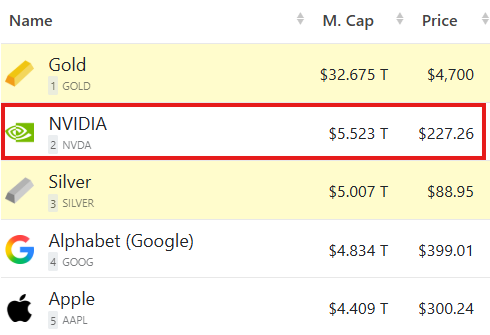
Nvidia, $NVDA, has surpassed silver as the second largest asset in the world, worth $5.52 trillion.
Google is less than 4% away from becoming the second company in history to hit $5 trillion in market cap.
We are witnessing a historic technological revolution.
BREAKING: The Trump Administration is planning to temporarily reduce tariffs on beef imports in an effort to bring down record-high beef prices, per WSJ.
$ASTS: 🤯
If you like 99MBPS for Block-1
And ~200MBPS for Block-2
You're going to love Block-3 midband and Block-4 c-band doing MIMO for over 1GBPS to your phone
$ASTS: SpaceX Rival Soars 6,000% and Proves Meme-Stock Mania Lives On
By Sana Pashankar and Bailey Lipschultz
(Bloomberg) -- Every so often, a tribalistic cry goes out to the community of zealots and space geeks who invest in and obsess over an obscure satellite company called AST SpaceMobile Inc. It’s in essence a rally-around-the-stock moment when it’s plunging.
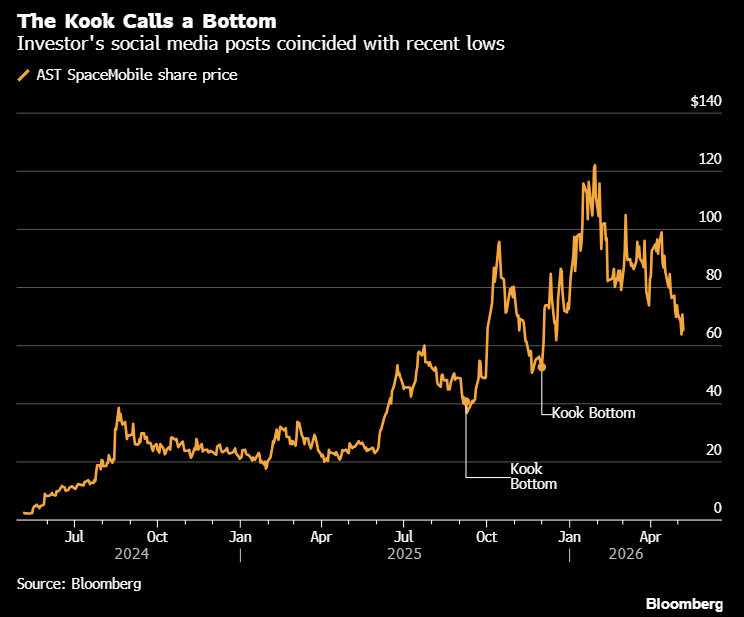
In the vernacular of the SpaceMob, as they call themselves, this is a Kook Bottom, and it starts, naturally, with the Kook. An anonymous oddball of a character, the Kook plays the role of rah-rah bull on most days, firing off posts on X, one after the other, to remind the mob that AST will soon grow into a cash-minting powerhouse with a satellite business that can go toe-to-toe with Elon Musk’s SpaceX.
It’s this unbridled energy — from the Kook and the entire 50,000-strong SpaceMob community — that has improbably turned AST into one of the most expensive stocks in the world. Its market value has swollen to $25 billion, making it bigger than nearly a third of the companies in the S&P 500 despite the fact that its annual revenue, at $71 million, is just a fraction of what those companies rake in.
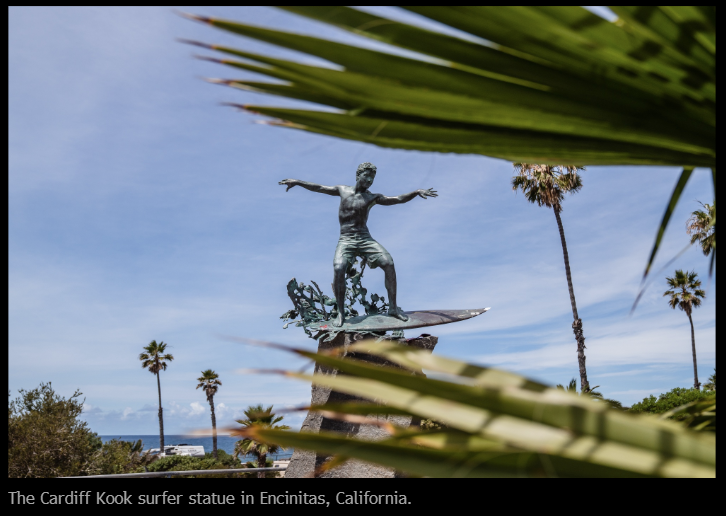
There’s a gravity-defying quality to the whole thing, which makes the stock prone to sudden crashes. If acute enough and long-lasting enough, they can even rattle the Kook himself — to the point where, in a moment of desperation, he begs for an end to all the losses by posting a rendering of the naked rear end of his namesake avatar: the Cardiff Kook surfer statue in California. (Hence the Kook Bottom name.)
Excited chatter among the mob quickly ensues — “finally,” “the end is nigh” and so on — which, in turn, is often followed by a steady burst of buy orders that nudge the stock right back up.
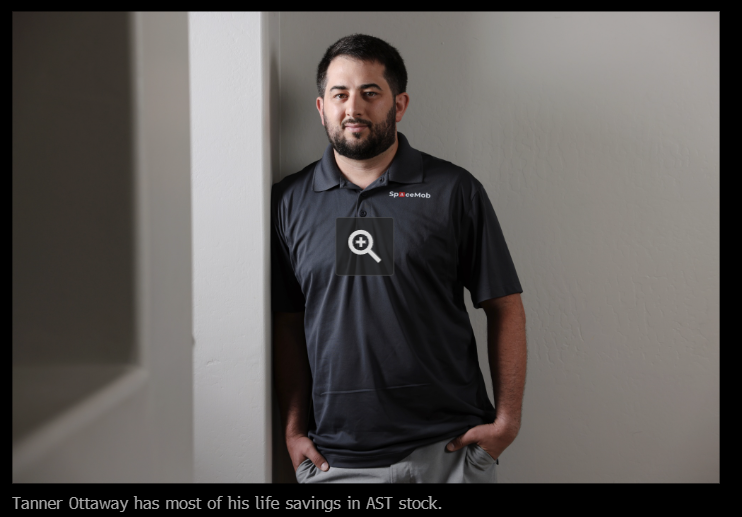
“There’s tons of eccentric people in the mob,” explains Tanner Ottaway, a 34-year-old oil engineer who’s sunk most of his life savings into AST. “You know, if you’re called a mob, that’s going to happen.” But the Kook, Ottaway says, is the straw that stirs the drink. “He definitely creates that energy.”
Over the past decade, any number of meme stocks have exploded onto the scene, handing the armies of day traders that back them both life-changing windfalls and stomach-churning losses. Few, though, have ever reached and sustained the heights that AST has, and none has ever done so while remaining virtually unknown to the broader investing public.
What’s more, AST’s breakneck rally — nearly 6,000% over a 22-month period, at its peak — signals that years after the pandemic unleashed the meme-stock craze and seared the names GameStop and AMC into the American psyche, the movement is not only still alive but, contrary to the prognostications emanating from Wall Street towers, continues to evolve and grow.
Their new-found financial might was on display earlier this spring when word broke that bankers for Musk, an expert at courting the day-trading crowd, were looking to set aside as much as 30% of all shares in the SpaceX IPO for retail investors.
That’s potentially more than $20 billion worth of stock orders, a sum that Steve Sosnick, the chief strategist at Interactive Brokers, said would have been “unimaginable” a decade ago. He used the same term to describe AST’s swollen stock price. It “shows you,” he said, “the evolution of the marketplace.”
The definition of a meme stock depends largely on who you ask — and few of those who have flocked to AST would readily embrace the term.
The companies elevated by the first wave were often deeply troubled name brands championed by nostalgic, winking day traders who made a game of banding together to squeeze short sellers and mock fundamentals-minded Wall Street pros by driving the shares into the stratosphere.
AST isn’t one of those. It’s got promising technology that beams signals from satellites straight to mobile phones, plans to significantly expand its network and deals with major telecom companies like AT&T Inc., Verizon Communications Inc. and Vodafone Group Plc. It counts Alphabet Inc., Google’s parent, among its biggest shareholders. And the SpaceMobbers, unlike some in the meme-stock crowd, insist they are in it for the long haul.
Yet in many ways, AST fits squarely in the meme-stock mold. There’s the always-online fanatics chattering about the stock’s every move; the bro talk and inside jokes; the all-in attitude; and through it all, a conviction that they’re going to get very, very rich — one so strong that it renders traditional methods of valuing a stock almost beside the point.
Peter Atwater, the president of advisory firm Financial Insyghts, said AST’s rise illustrates how the meme-stock craze has morphed from a fad into a more permanent feature of the market. “It’s a strategy,” he said. “Give me innovative, futuristic technology and I will show you an engaged, excited and inexperienced investing community — because that is what they’re drawn to most.”
To many old-school market veterans — folks like Matt Maley at Miller Tabak + Co. — it all remains a bit absurd. Asked back in January for his assessment of the AST rally, Maley, a strategist who started out on Wall Street in the 1980s, called the stock a “disaster waiting to happen” and predicted that sooner or later it would crater some 50%.
Turned out to be sooner: In February, it sank 29% and, by early May, had dropped 48% from its January peak. Maley now figures the rout is just heating up and could push the stock down another 20% or so.
The mob, of course, will likely have something to say about that at some point. And besides, even declines of that magnitude would do little to change the stock's overall trajectory. It remains up some 160% in the past year alone.
That's not to say the company — and by extension the stock — doesn't face challenges. There are plenty of them. For starters, there’s daunting competition from two extraordinarily deep-pocketed rivals: SpaceX, which already operates thousands of Starlink satellites, and now https://t.co/AVXTojYFe4 Inc., which in April agreed to purchase rival satellite firm Globalstar Inc. to enter the space-to-cellular business that AST is targeting. AST is racing against those foes — and its own deadline — to put 45 more satellites into orbit this year and begin commercial service. Those plans were dealt a major blow in April, when its first launch of the year upon a Blue Origin rocket failed.
AST was founded nearly a decade ago by Abel Avellan, a Venezuelan engineer who had created and sold another satellite company for $550 million. In 2021, AST went public via a special purpose acquisition company, or SPAC, a backdoor route to the markets that took off just as the pandemic gave rise to the generation of day traders who would rally behind meme stocks.
Avellan has maintained a relatively low-key following as CEO, unlike Palantir Technologies Inc.’s Alex Karp, Musk and other tech-industry executives who have basked in their fame. He also hasn’t embraced the meme celebrity the way AMC Entertainment Holdings Inc.’s Adam Aron did after the theater-chain’s stock surge. (Avellan and his staff at AST declined to comment for this story.)
But the company has acknowledged the debt to the SpaceMob. Executives take questions from individual investors first on earnings calls and have invited many to satellite launches in Cape Canaveral, including the most recent one on April 19, where SpaceMobbers watched alongside Avellan and AST President Scott Wisniewski. In a speech at Kennedy Space Center on the morning of the launch, Avellan acknowledged the hundreds of SpaceMobbers who had traveled - some from outside the US - to be there.
The core of the SpaceMob took shape not long after the company went public. There were four of them at first — strangers who had crossed paths on Discord. Only one, the late Steve Larrison, a software engineer from Arizona, went by his actual name. The other three have kept their identities secret and are only known by their online handles: CatSE, a Swedish farmer; Anpanman, a Wall Street veteran who adopted a ruddy-cheeked Japanese superhero as his avatar; and the Kook, a Californian whose name is drawn from surfer slang for a clumsy beginner.
That was intentionally ironic. The Kook fancies himself a savant — an experienced investor who says he started his social media account to warn newbies about the perils of the SPAC market. Asked why he insists on maintaining his anonymity, the Kook responds with a humble brag that risks overstating his fame: it allows him to blend in and avoid the trappings of celebrity.
In the Discord chat the four men started — which, in a nod to CatSE, they called the ASTS NATO Alliance — they spent hundreds of hours studying the company’s technology, business model and financial prospects. They started posting their findings online to prove to the world, they said, that it was sleeping on what could be the next Google or Nvidia.
As the SpaceMob, and its obsession with the most minute of AST developments, grew, detractors on social media mocked them as a bunch of “crazies” and “zealots.” The group monitored the number of cars in the parking lot of AST’s Midland, Texas headquarters; found ways to tap into military radar and astronomer data to follow its satellites in orbit; tracked corporate jet flights and built software to find AST’s regulatory filings. They formed a tight bond -- to the point that when Larrison died in 2023, Anpanman said he had his remains compressed into a diamond and buried near a satellite launch site in Cape Canaveral.
Much of the mob’s excitement centered around the company’s innovative approach to satellite development. AST's are outfitted with huge, waffle-shaped antennae that are so powerful they can provide reception directly to people’s mobile phones, opening up a new market that traditional satellites weren’t able to tap. (Their unique shape has, in classic meme-stock fashion, turned the waffle into the mob’s food of choice).
Ottaway, the oil engineer, was an early convert. He bought his first shares back in 2021, just another in a long line of SPAC deals he was investing in at the time. But he became intrigued by AST’s technology and began to pore through the mob’s musings on Reddit, night after night, while he rocked his infant daughter to sleep. The more he read, the more convinced he became the company was onto something big. By 2024, he had invested almost all of his and his wife's savings in the stock.
Things went horribly at first. The stock quickly crashed about 50%, a detail Ottaway kept from his wife. “For a long time, she didn’t even know about AST.”
The breakout moment for the stock came in May 2024, when AST signed a commercial agreement with AT&T. Two weeks later, the company announced another deal with Verizon, effectively locking down the two largest mobile service providers in the country and challenging SpaceX’s own pact to work with T-Mobile US Inc. The stock price more than tripled in 2024 and then again in 2025.
According to Ottaway’s calculations, his family’s stake is worth some $8 million today.
Even for those with far smaller investments, like Kevin Chen, the windfall has been transformative. A building-code consultant in western Canada who goes by #Kevbot in SpaceMob circles, Chen says he's begun to contemplate things, like opening a bakery for his fiancée, that he had never thought possible. The stock has “changed the whole outlook of my life,” he said.
There's still been any number of stomach-turning twists, like the one that recently tanked the stock price and sent the Kook into his latest tizzy. But for all his hand-ringing, he swears that he’s rarely, if ever, doubted the company’s long-term prospects.
The same goes for Ottaway. He says he wouldn’t consider selling even part of his stake until the stock breaches $250 — a price that’s more than triple its current level.
His attachment to the mob, meanwhile, only seems to grow. When AST announced the timing of its satellite launch last month, he ditched his family vacation and grabbed the next flight to Orlando to watch it, promising his wife he’d buy her a diamond necklace to make up for it.
“I have a vision,” Ottaway said, “and I’m gonna see it out.”
$ASTS: 🚨RAKUTEN SALES ARE COMPLETE
Final-fucking-ly.
See latest 13D linked below.
Remaining shares: 15,510,078 (5.3% of Class A Common Stock outstanding as of February 26, 2026)
Date: April 27, 2026 Transaction: Sale
Number of Shares: 400,000
Average Price Per Share: $76.3098
Date: April 28, 2026 Transaction: Sale
Number of Shares: 430,000
Average Price Per Share: $73.9463
Date: April 29, 2026 Transaction: Sale
Number of Shares: 70,500
Average Price Per Share: $70.3395
Date: April 30, 2026 Transaction: Sale
Number of Shares: 1,800,000
Average Price Per Share: $73.2644
Date: May 1, 2026 Transaction: Sale
Number of Shares: 870,000
Average Price Per Share: $72.0739
Date: May 4, 2026
Transaction: Sale
Number of Shares: 970,000
Average Price Per Share: $69.2240
Date: May 5, 2026 Transaction: Sale
Number of Shares: 969,577
Average Price Per Share: $65.3255
https://t.co/yXyuqX0dd2