In the long run, the opportunities that are right for you have a way of finding you. Sometimes you wish so dearly that a new relationship or a big chance will go your way. It can feel like heartbreak when it falls through. But you have to dust yourself off and keep reaching and keep working. Water always finds its level. Stay in the game, keep your energy high, and do your best each day. You'll find the moments that are meant for you.
Many speed training gurus will focus on obscure information that is frankly really inflated.
Do the vanilla things that you know work in the applied setting and are confirmed by great research over time.
It's not what might work- it's what always works year after year.
Its hard to believe this paper w/ @Physical_Prep was published >12 years ago!
We outlined the key practical applications of VBT
It's been cited >200 times in research papers (probably more tbh)
If you want the full paper, let me know and I'll send it through
Summary below 👇
The 4M Framework of Growth & Maturation of Young Athletes
Measure | Manage| Modify| Mitigate
Thanks to Nikolay Georgiev & Rob Anderson
Read it here: https://t.co/xY6eS2vBFC
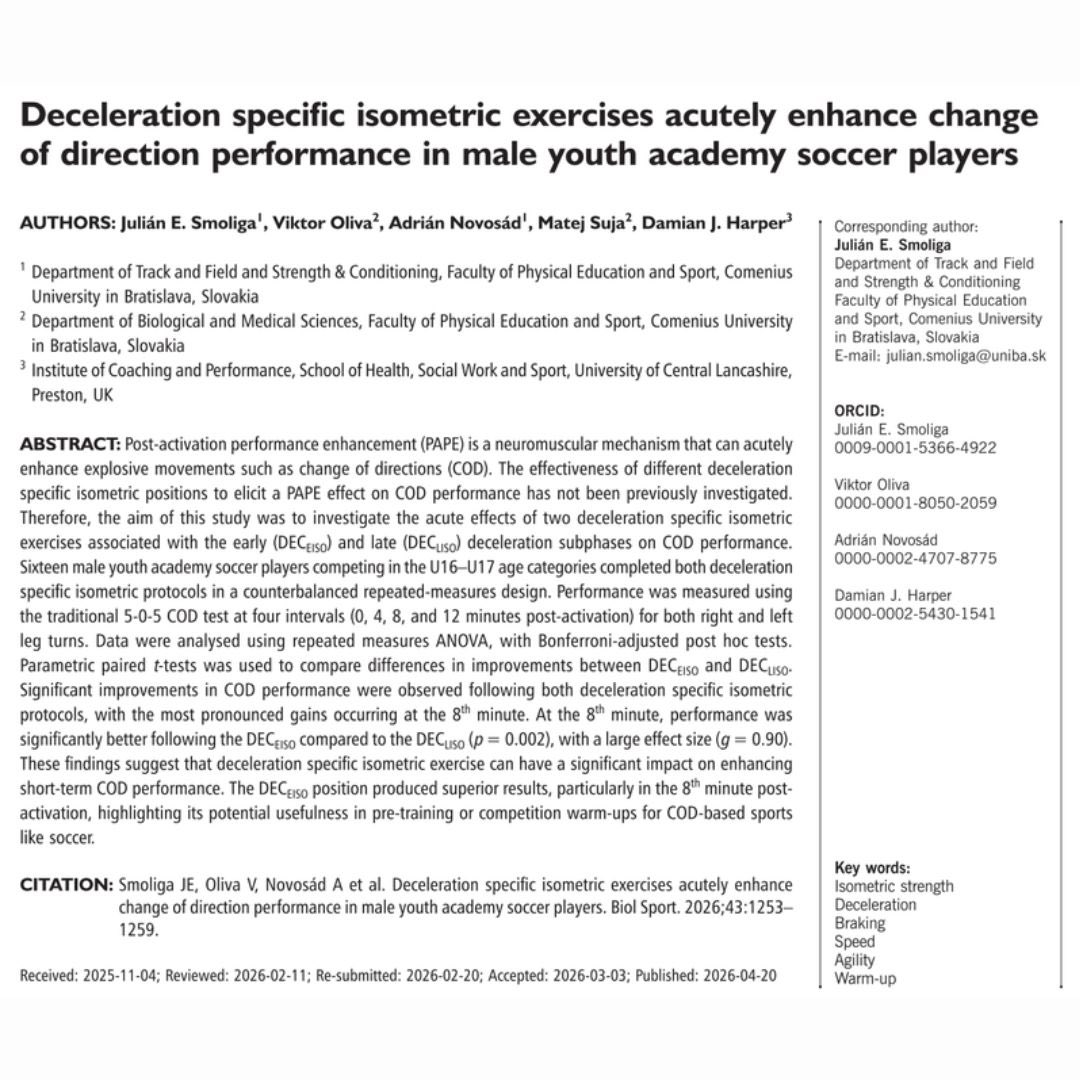
🚨 Just Published 🚨
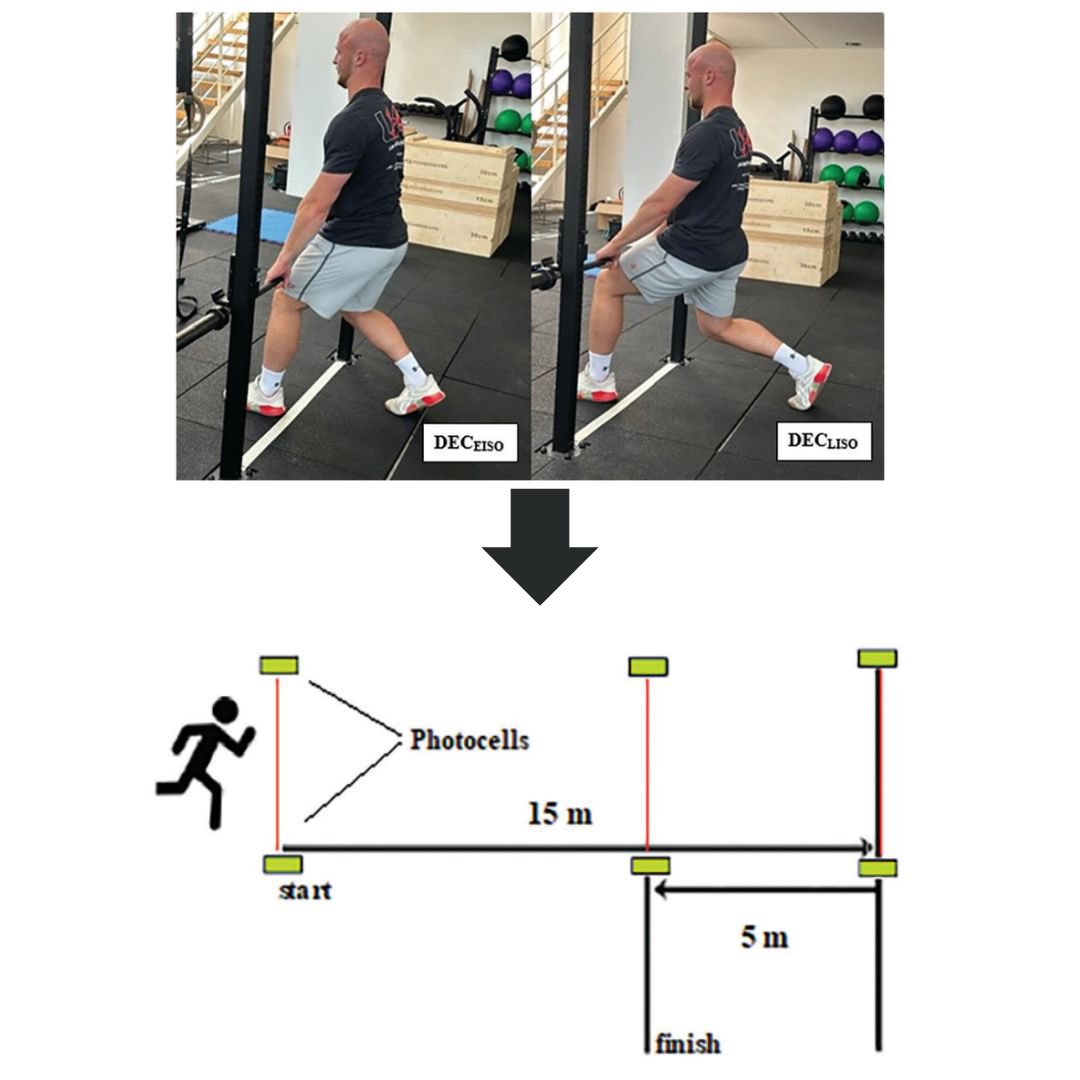
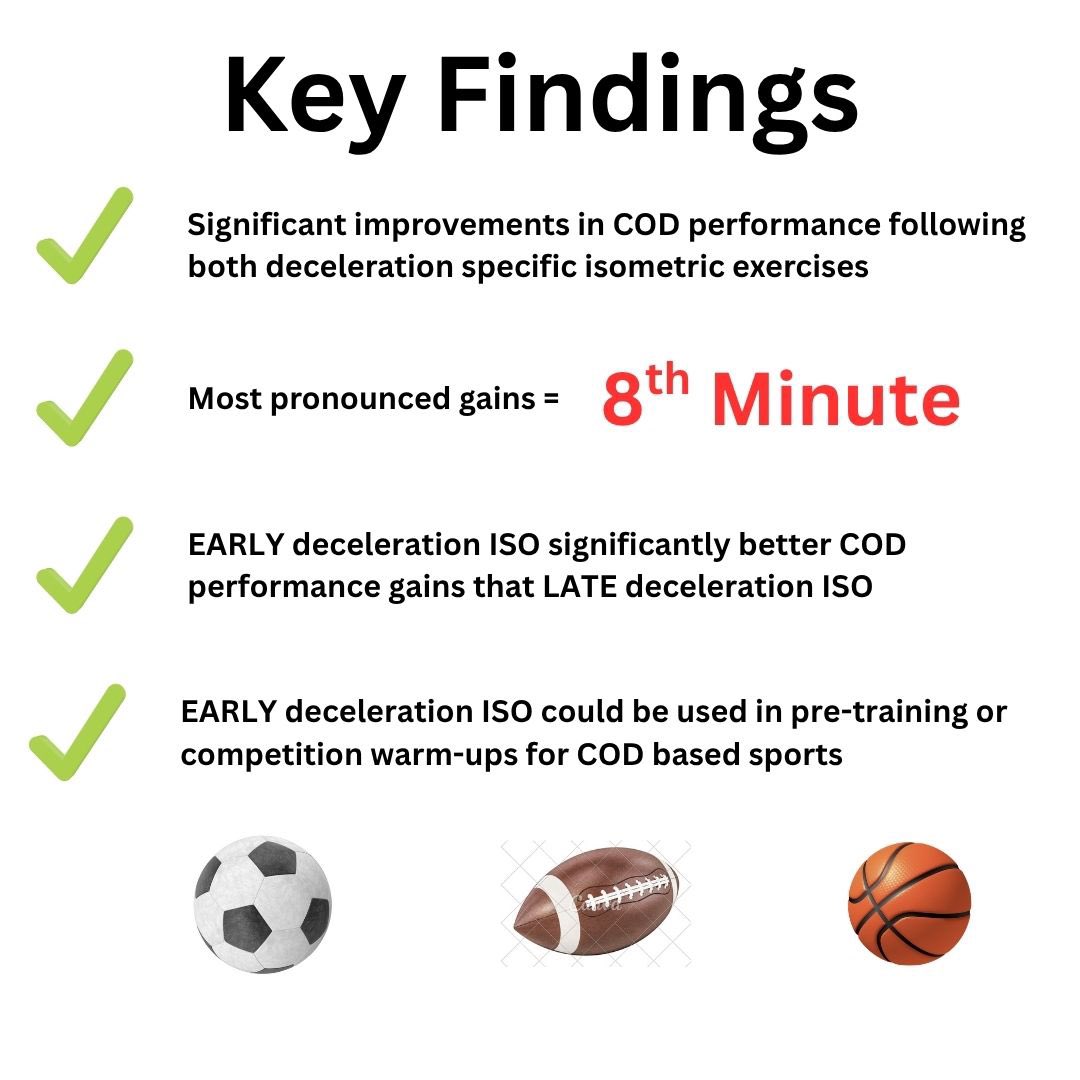
DECELERATION specific isometric exercises acutely enhance change of direction performance in academy ⚽️ players
✔️ 8th min most pronounced gains & with early DEC-ISO position
✔️ Application to pre-training or competition warm-ups for COD sports 🏈⚽️ 🏀👇
Some 20+ years ago, when I was studying exercise science, nutrient timing was viewed as a cornerstone of muscle growth. We were taught about the so-called “anabolic window,” which suggested that protein needed to be consumed within ~45 minutes after training to avoid going catabolic and missing out on gainz. Some even argued that timing mattered more than total daily intake.
To get clarity on the topic, I collaborated with @thealanaragon and James Krieger in 2013 on a meta-analysis examining the effects of post-exercise protein intake on hypertrophy (PMID: 24299050). The initial results showed a statistically significant benefit to protein timing, seemingly supporting the anabolic window concept. However, when we adjusted for total daily protein intake, the effect disappeared—there was no significant difference between consuming protein immediately post-workout versus delaying intake for more than two hours.
At face value, these findings suggest that the anabolic window is largely overstated and that total daily protein intake is the primary driver of hypertrophy—a conclusion that has since become widely accepted. That said, it’s worth noting that nearly every study in the subanalysis still trended in favor of protein timing, although the magnitude of effect was generally trivial to small. Research conducted since publication of our paper does not appear to refute our analysis.
IMO, the practical takeaway is that protein timing is of minimal importance for most people, provided they’re training in a fed state. If you’re eating regular meals—say, three per day—and training after one of them, stressing about immediate post-workout protein likely won’t make a meaningful difference. On the other hand, if you train fasted, consuming protein soon after exercise becomes more relevant for maximizing hypertrophy, although the effect is still probably modest.
For those aiming to fully optimize muscular development (e.g., bodybuilders), it makes sense to consume protein immediately after training regardless of when you had your last meal. There’s really no downside, and even small advantages can be practically meaningful.
https://t.co/H1xf3MPpJy
Healthy & Convenient actions / behaviours
This is v2 after some initial feedback, but I still want some more help to make it more complete.
Idea being there are both healthy & unhealthy behaviours that are convenient & inconvenient.
Most exercise advice focuses on how much you train. This paper shows the real question is what kind of cellular architecture you’re building.
This systematic review and meta-regression synthesizes data from 425 human studies to quantify how different exercise modalities reshape mitochondrial content and skeletal-muscle capillarization, two core determinants of metabolic health and endurance capacity.
The mechanistic takeaways:
• Training intensity is the dominant driver of mitochondrial expansion.
High-intensity and sprint-interval training produced ~2–4× greater increases in mitochondrial markers compared with traditional endurance training when normalized for time.
• Volume still matters, but differently.
Mitochondrial adaptations scale with training intensity × volume, whereas capillary growth depends more on intervention duration (≥8 weeks) than intensity alone.
• Capillarization and hypertrophy are not the same adaptation.
Capillary density and capillaries per fiber increased even when cross-sectional area did not, reinforcing that vascular remodeling is a distinct biological response.
• Trainability is context-dependent.
Untrained individuals showed larger relative gains, but well-trained individuals still adapted, especially under higher-intensity stimuli, contradicting the idea of a hard “adaptation ceiling.”
• Age, sex, and disease status did not negate adaptation.
Young vs. old, male vs. female, and healthy vs. cardiometabolic or pulmonary disease groups all demonstrated meaningful mitochondrial and vascular remodeling with appropriate training exposure.
I'm sum, exercise is not merely a behavioral intervention, it is a dose-dependent biological signal that remodels mitochondrial density, oxidative capacity, and skeletal-muscle microvasculature. Intensity determines how much adaptation you get; duration determines how completely the tissue remodels.
A relevant section from Atomic Habits for anyone building a new habit this year:
People often think it's weird to get hyped about reading one page or meditating for one minute or making one sales call. But the point is not to do one thing. The point is to master the habit of showing up. The truth is, a habit must be established before it can be improved. If you can't learn the basic skill of showing up, then you have little hope of mastering the finer details. Instead of trying to engineer a perfect habit from the start, do the easy thing on a more consistent basis. You have to standardize before you can optimize.
Watching sprint and VO2 Max discourse playout we forget Goodhart's Law - "When a measure becomes a target, it ceases to be a good measure" this strikes hard in sports science. We chase metrics like VO2 max or sprint times, but when they turn into KPIs, athletes game the system: overtrain for a lab score, neglect holistic health, or dope for numbers.
Using elite training methods for youth athletes is just insecure egos. Fundamentals are not level-specific; they are the roots for long-term growth and reap benefits immediately. Confidence is coaching what is needed. Coach social media free for a week and detox!
Regular viewers will already know that time under tension is irrelevant for bodybuilding, but for some reason there wasn't an FAQ entry so here it is. Read more in the weekly free Patreon article.
🔎'Exaggerating' or 'amplifying' certain information in the environment is a powerful way that the coach can guide players attention towards useful information for action.
📨You are not taking away options but making certain options more inviting for them
💻 Webinar - Available to Download Now!
'Building a High-Performance LTAD Framework within an English Premiership Rugby Academy'
👥 Lorenzo Consonni & Simon Webster
Download the full webinar here: https://t.co/r0LUJkGV6A
#LTAD#YouthDevelopment