I agree nutrition needs to be taught more but why put the onus on docs to relay that info to the public? We learn what smoking does to the body and tell patients to stop but they still smoke. Why not teach nutrition to everyone in elementary, middle and high school?
Hiring for another me at VA Boston! 😊 Would love an “all things prostate” partner. Join 5 other full time urologists, two residency programs with 4 residents on service at all times, and be part of the Boston magic. #SoBPD
These crazy guys gave me a teaching award when really the night was all about them. Dr @PerisCast and Dr Jeremiah Dallmer, congratulations on completing residency and moving on to your fellowships. You are two amazingly attended young surgeons.
NYU Reconstructive Urology Fellowship has opening for 2025-2026. High volume (600+ cases) in cutting edge innovative surgery. Contact me for details. [email protected]
Our paper on Robotic vs Open bilateral nephrectomy in PKD is out in @wjurol
🌟 Robotic approach = lower EBL, shorter hospital stay, decreased complication rates, and less severe complications
https://t.co/MzsPRsYvef
@Dr_Amit_Gupta@JohnMastersonMD @CS_Urology
How to write the prescriptions
Check out the new guideline for genitourinary syndrome of menopause
Endorsed by urologists, urogynecologists, menopause and sexual health specialists
https://t.co/gGYDOE9oyQ
Karyn S. Eilber, MD, (@dreilber) shares her reaction to the release of the genitourinary syndrome of menopause guideline. @CS_Urology
https://t.co/jRfBhLeqEx
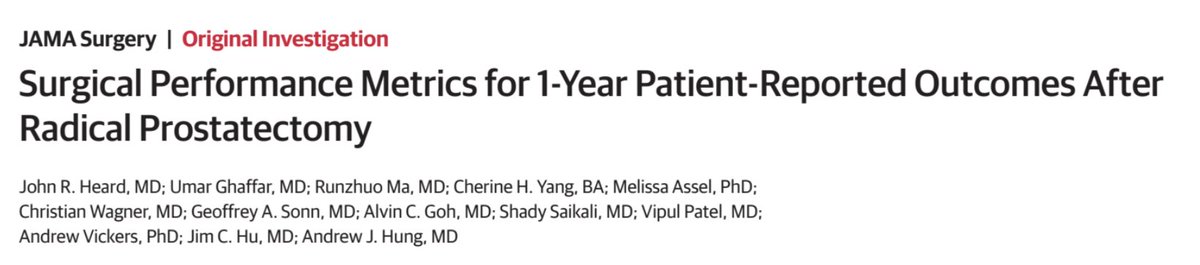
HOT OFF THE PRESS
New @JAMASurgery original article from our team
Surgical Performance Metrics for 1-Year Patient-Reported Outcomes After Radical Prostatectomy. Using performance metrics (technical skills and surgical gestures) collected from videos, we are able to anticipant clinical outcomes one year after surgery. Data from 28 surgeons and 5 international centers.
Funded through the National Cancer Institute (NCI)
https://t.co/3DMecsRWGU
@jimhumd@VickersBiostats@geoffsonn@alvincgoh #ChristianWagner #VipPatel
@CS_Urology @CSCancerCenter @WCMUrology@MSKCancerCenter@StanfordUrology@AmerUrological@AmCollSurgeons
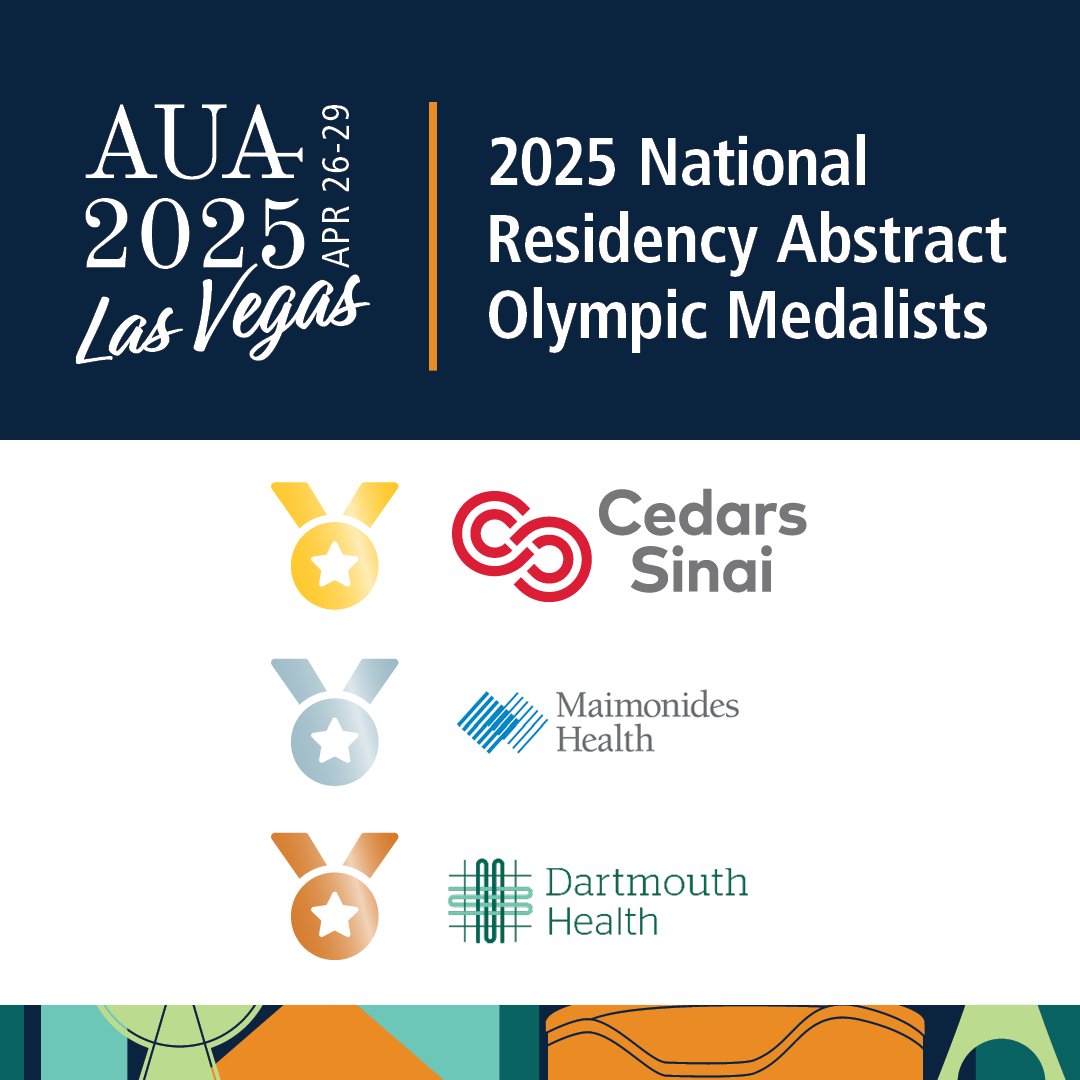
The “John Heard session” @AmerUrological#AUA25 - when 3 of 14 podium talks in the same session were by the same amazing resident @CS_Urology you know someone’s doing some right.
Congrats to the whole Cedars Urology resident family. So proud of you all.
@johnrheard
Today, the AUA released the 2025 Guideline on the Genitourinary Syndrome of Menopause (GSM). This guideline aims to provide clinicians with information regarding identification, diagnosis, counseling and treatment for patients with GSM to optimize symptom control and improve quality of life while minimizing adverse effects.
Click the link to read the full guideline: https://t.co/vDQivxDMRj
Aurash Tavakolian, MD (@antavakolian), is at the podium to present on the multi-institutional experience of #RoboticReconstruction of vesicourethral anastomotic stenosis. #AUA25
Only 23% of female urologists have formal lactation policies at work, with 57% satisfied. Surgeons lack adequate lactation resources despite laws. Clear lactation policies are urgently needed. https://t.co/nuLpKuhGgr
Our paper in @JournalCancer was published this week. Exploring definitions of adverse pathology to predict high risk of mets in men with lower risk prostate cancer. Thanks to @SFreedlandMD and the SEARCH team!
Alternate definitions of adverse pathology to predict a very high risk of metastasis in men with intermediate- and low-risk prostate cancer out on @JournalCancer
https://t.co/Mn8wMvZnM4
Take Home: finding from this study question the clinical value of using AP as an intermediate endpoint in these low- and intermediate-risk PCa populations.
Study evaluated the association between adverse pathology (AP) and long-term outcomes in men with low- or favorable intermediate-risk #ProstateCancer (PCa) who underwent radical prostatectomy (RP). Using a cohort from Veterans Affairs hospitals between 1988 and 2020, AP was defined as grade groups 3–5, stage ≥pT3a, or pN1, and compared across seven alternative definitions. The results showed that while all AP definitions were associated with worse outcomes, such as biochemical recurrence (BCR), metastasis, and prostate cancer-specific mortality (PCSM), the absolute event rates for metastasis were generally low, especially in definitions met by less than 1% of patients.
@PerisCast@kuhlrunnings@jithisup@zklaassen_md@LourdesGuerrios@dr_coops@cjkane10@marthakterris@SFreedlandMD